Loading...
This comparison has not been analyzed yet.
One-time AI generation (~1 minute). Scores and timeline are already available below.
Horloogiyn Choibalsan vs Robert Borden
Robert Borden leads by 7.8 pts · 2 figures compared
…

Horloogiyn Choibalsan
Politician · Modern
49.9Total
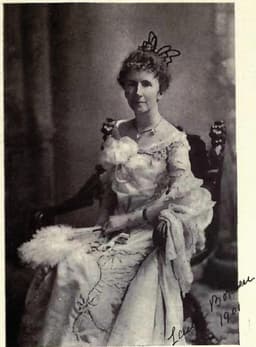
Robert Borden
Politician · Modern
57.7Total
Basic Information
Born
1895
1854
Died
1952
1937
Era
Modern
Modern
Nationality
Mongolia
Canada
Occupation
Politician
Politician
Civilization
Eastern
Western
Score Comparison
Military (10%)
21.2
36.7
Political (20%)
68.0
72.0
Influence (20%)
53.3
56.4
Legacy (20%)
43.3
49.2
Leadership (15%)
53.2
72.0
Strategy (15%)
54.8
60.0
TOTAL
49.9
57.7
Horloogiyn Choibalsan — Complete Timeline
1936 AD
Became Leader of the Mongolian People's Revolutionary PartyPolitical Action◆ Major
Choibalsan consolidated power as the de facto leader of the Mongolian People's Revolutionary Party, succeeding Peljidiin Genden. He initiated a series of purges against political rivals and Buddhist clergy.
Power ConsolidationPurges
Impact: nationaldestructive
Signed the Soviet-Mongolian Treaty of Friendship and Mutual AssistancePolitical Action◆ Major
Choibalsan signed a treaty with the Soviet Union that formalized Mongolia's military and economic dependence on Moscow. The treaty allowed Soviet troops to be stationed in Mongolia and integrated Mongolia into the Soviet sphere.
TreatySoviet UnionAlliance
Impact: regional
1937 AD
Initiated the 'Great Purge' in MongoliaPolitical Action
Choibalsan launched a massive purge of political opponents, Buddhist lamas, and intellectuals, modeled after Stalin's Great Purge. Tens of thousands were executed or imprisoned, and monasteries were destroyed, decimating Mongolia's religious and cultural heritage.
PurgeTerrorBuddhist Persecution
Impact: nationaldestructive
1939 AD
Led Mongolian Forces in the Battle of Khalkhin GolWar◆ Major
Choibalsan commanded Mongolian forces alongside the Soviet Red Army in the Battle of Khalkhin Gol against Japan. The victory secured Mongolia's borders and strengthened Choibalsan's position as a military leader.
BattleWorld War IIJapan
Impact: regional
1940 AD
Implemented Collectivization of AgricultureReform◆ Major
Choibalsan forced the collectivization of Mongolia's nomadic herders into state-owned cooperatives, modeled after Soviet collective farms. The policy led to widespread resistance, economic disruption, and a decline in livestock production.
CollectivizationAgricultureEconomic Policy
Impact: nationaldestructive
1952 AD
Death of Choibalsan and End of Stalinist EraPolitical Action◆ Major
Choibalsan died in Moscow under mysterious circumstances, possibly from poisoning. His death marked the end of the Stalinist era in Mongolia and led to a gradual de-Stalinization under his successor, Yumjaagiin Tsedenbal.
DeathEnd of EraDe-Stalinization
Impact: national
Robert Borden — Complete Timeline
1911 AD
Became Prime Minister of CanadaPolitical Action◆ Major
Borden became the eighth Prime Minister of Canada, leading a Conservative government. His victory was largely due to opposition to Laurier's reciprocity agreement with the United States.
Government FormationElectionConservatism
Impact: national
1914 AD
Led Canada through World War IWar◆ Major
Borden led Canada's war effort during World War I. He committed over 600,000 troops to the conflict, expanded the military, and managed the domestic war economy. The war deeply divided Canada along linguistic lines.
World War IMilitaryWar Effort
Impact: global
1917 AD
Introduced conscription in CanadaPolitical Action◆ Major
Borden's government passed the Military Service Act, introducing conscription for overseas service. The policy was deeply unpopular in Quebec and led to the Conscription Crisis of 1917, which exacerbated French-English tensions.
ConscriptionCrisisQuebec
Impact: nationaldestructive
1919 AD
Secured Canada's signature on the Treaty of VersaillesPolitical Action
Borden insisted that Canada sign the Treaty of Versailles as an independent nation, separate from Britain. This marked a significant step in Canada's evolution from a colony to a sovereign state, gaining a separate seat in the League of Nations.
TreatySovereigntyLeague of Nations
Impact: globalconstructive
This comparison has not been analyzed yet.
One-time AI generation (~1 minute). Scores and timeline are already available below.
Rankings
🥇
Robert BordenLeader
Mil: 36.7Pol: 72.0Inf: 56.4
57.7
🥈
Horloogiyn Choibalsan
Mil: 21.2Pol: 68.0Inf: 53.3
49.9
+7.8 behind
How This Comparison Works
Algorithm
Each figure is scored on 6 dimensions (0—100 scale) based on structured historical data: Military (10%), Political (20%), Influence (20%), Legacy (20%), Leadership (15%), Strategy (15%). The weighted total produces the final ranking.
Data Sources
Scores are computed from structured sub-indicators in the database. Scale factors adjust for era (Ancient ×0.85, Modern ×1.0) and civilization size (Eastern ×1.05, Other ×0.80) to account for differences in population and military scale.
Maximum 3 Figures
Comparisons are limited to 2—3 figures to ensure readability and statistical meaningfulness.
Error Margins
±5 points per dimension — Sub-scores are derived from historical records with inherent uncertainty. Two figures within 5 points on a dimension should be considered roughly equivalent in that area.
Total Score Accuracy
±3 points overall — The weighted combination of 6 dimensions produces a total score with approximately ±3 points of uncertainty. Differences of less than 3 points are not statistically significant— the figures are effectively tied.
Known Limitations
- Historical records are incomplete and uneven across civilizations
- Figures from oral-tradition societies may be underrepresented
- Occupation labels can misclassify multi-role figures
- Scores measure capability and impact, not moral character
- Quantitative scoring is a comparison tool, not absolute truth
Capability Radar
Military (10%) — Battles & Warfare
Battles
15
48
Win Rate
20
47
Expansion
25
56
Political (20%) — Governance & Reform
Reform
60
60
Diplomacy
50
70
Economy
40
55
Influence (20%) — Cultural & Global Reach
Cultural
30
30
Global
30
50
Legacy (20%) — Historical Impact
Historical
40
55
Longevity
20
40
Leadership (15%) — Power & Stability
Tenure
70
65
Stability
30
60
Strategy (15%) — Tactics & Innovation
Strategy
15
57
Tactics
10
58
Reform
30
64
Similar Comparisons
Comments & Discussion
No comments yet. Be the first to share your thoughts!