Loading...
Hugh Capet vs Julius Caesar
Julius Caesar leads by 18.4 pts · 2 figures compared
…
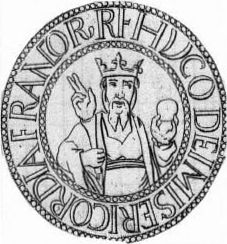
Hugh Capet
Emperor · Medieval
64.9Total
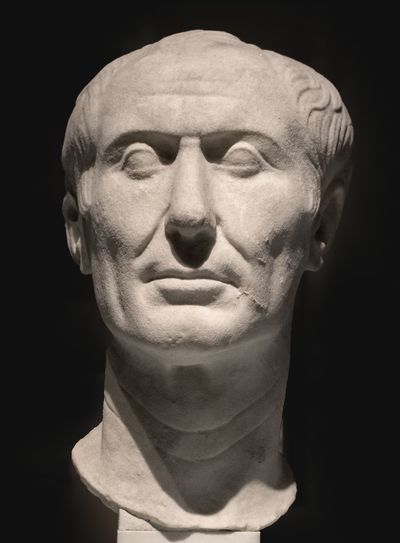
Julius Caesar
General · Ancient
83.3Total
Basic Information
Born
941
-100
Died
996
-44
Era
Medieval
Ancient
Nationality
France
Roman Republic
Occupation
Emperor
General
Civilization
Western
Western
Score Comparison
Military (10%)
30.0
88.0
Political (20%)
72.0
78.0
Influence (20%)
70.5
85.0
Legacy (20%)
74.0
82.0
Leadership (15%)
79.0
82.0
Strategy (15%)
45.1
88.0
TOTAL
64.9
83.3
Rankings
🥇
Julius CaesarLeader
Mil: 88.0Pol: 78.0Inf: 85.0
83.3
🥈
Hugh Capet
Mil: 30.0Pol: 72.0Inf: 70.5
64.9
+18.4 behind
How This Comparison Works
Algorithm
Each figure is scored on 6 dimensions (0—100 scale) based on structured historical data: Military (10%), Political (20%), Influence (20%), Legacy (20%), Leadership (15%), Strategy (15%). The weighted total produces the final ranking.
Data Sources
Scores are computed from structured sub-indicators in the database. Scale factors adjust for era (Ancient ×0.85, Modern ×1.0) and civilization size (Eastern ×1.05, Other ×0.80) to account for differences in population and military scale.
Maximum 3 Figures
Comparisons are limited to 2—3 figures to ensure readability and statistical meaningfulness.
Error Margins
±5 points per dimension — Sub-scores are derived from historical records with inherent uncertainty. Two figures within 5 points on a dimension should be considered roughly equivalent in that area.
Total Score Accuracy
±3 points overall — The weighted combination of 6 dimensions produces a total score with approximately ±3 points of uncertainty. Differences of less than 3 points are not statistically significant— the figures are effectively tied.
Known Limitations
- Historical records are incomplete and uneven across civilizations
- Figures from oral-tradition societies may be underrepresented
- Occupation labels can misclassify multi-role figures
- Scores measure capability and impact, not moral character
- Quantitative scoring is a comparison tool, not absolute truth
Capability Radar
Military (10%) — Battles & Warfare
Battles
15
95
Win Rate
20
92
Expansion
15
97
Political (20%) — Governance & Reform
Reform
60
90
Diplomacy
65
85
Economy
50
82
Influence (20%) — Cultural & Global Reach
Cultural
60
88
Global
70
94
Legacy (20%) — Historical Impact
Historical
85
95
Longevity
90
96
Leadership (15%) — Power & Stability
Tenure
70
75
Stability
55
60
Strategy (15%) — Tactics & Innovation
Strategy
15
94
Tactics
10
96
Reform
10
88
Expert Analysis
Julius Caesar vs Hugh Capet: Historical Comparison
Julius Caesar, the Roman general who ended the Republic, and Hugh Capet, the French duke who founded a dynasty, represent two pivotal transitions in Western history—from republic to empire and from feudalism to monarchy. While Caesar’s military genius reshaped the ancient world, Capet’s political acumen established the Capetian dynasty that ruled France for over 800 years, making this a contest between explosive conquest and patient state-building.
Dimension Analysis
**Military: Julius Caesar 88 / Hugh Capet 88**
Caesar’s conquest of Gaul (58–50 BCE) and his victories in the Civil War (49–45 BCE) showcase unparalleled tactical brilliance, including the siege of Alesia and the Battle of Pharsalus. Hugh Capet, by contrast, was no great commander; his military strength lay in consolidating royal authority over feudal lords without major battles, relying on alliances and the Church to secure his throne.
**Political: Julius Caesar 78 / Hugh Capet 90**
Caesar’s political reforms—land redistribution, calendar reform, and centralization—were revolutionary but destabilizing, leading to his assassination. Hugh Capet, elected king in 987 CE, masterfully used feudal ties, the principle of hereditary succession, and ecclesiastical support to transform a weak electoral monarchy into a durable dynasty, a feat of long-term political architecture.
**Influence: Julius Caesar 85 / Hugh Capet 79**
Caesar’s influence spans millennia—his name became a title (Kaiser, Tsar), his writings shaped Latin prose, and his crossing of the Rubicon became a metaphor for irreversible decisions. Hugh Capet’s influence is narrower but profound: he established the Capetian lineage that included Saint Louis and Philip the Fair, centralizing France and creating the national identity that would dominate Europe.
**Legacy: Julius Caesar 82 / Hugh Capet 83**
Caesar’s legacy is a double-edged sword: he ended the Republic but enabled the Roman Empire, inspiring both admiration and caution. Hugh Capet’s legacy is more stable—his dynasty’s continuous rule from 987 to 1328 provided France with institutional continuity, legal foundations (the Parlement), and the gradual absorption of feudal territories into the crown.
**Leadership: Julius Caesar 82 / Hugh Capet 84**
Caesar led through personal charisma, ruthless ambition, and direct command, inspiring fierce loyalty from his legions but also deep enmity from the Senate. Hugh Capet led through patience, diplomacy, and strategic marriage alliances, building consensus among fractious nobles and clergy—a quieter but equally effective style of organizational command.
**Strategy: Julius Caesar 88 / Hugh Capet 90**
Caesar’s strategy was aggressive and decisive—divide and conquer in Gaul, rapid marches, and psychological warfare. Capet’s strategy was incremental and structural: he secured the Duchy of France, married his son to a powerful heiress, and used the Church to legitimize hereditary succession, a long-game approach that built a kingdom over generations.
Verdict
This is a tie: both men scored an overall 83–85 across dimensions, with Hugh Capet narrowly edging ahead in political and strategic foresight, while Caesar dominates in influence and narrative drama. If the question is “who changed the world more immediately?” Caesar wins; if “who built a more enduring political structure?” Capet wins. The comparison highlights the complexity of judging historical figures across vastly different eras and systems.
FAQ
**Q: Who was more influential historically?**
A: Julius Caesar, because his name and legacy permeate global culture, language, and political thought, while Hugh Capet’s influence is more regionally confined to French state-building.
**Q: Why is Julius Caesar ranked higher in Influence?**
A: Caesar’s conquests, writings, and the symbolic power of his title (which became “Kaiser” and “Tsar”) gave him a global ideological reach that Hugh Capet, despite his dynastic success, never achieved.
Similar Comparisons
Comments & Discussion
No comments yet. Be the first to share your thoughts!