Loading...
Julius Caesar vs Vo Nguyen Giap
Julius Caesar leads by 9.3 pts · 2 figures compared
…

Julius Caesar
General · Ancient
82.8Total
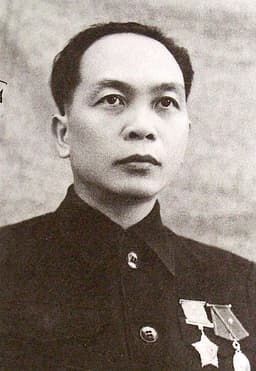
Vo Nguyen Giap
General · Modern
73.5Total
Basic Information
Born
-100
1911
Died
-44
2013
Era
Ancient
Modern
Nationality
Roman Republic
Vietnam
Occupation
General
General
Civilization
Western
Eastern
Score Comparison
Military (10%)
88.0
74.0
Political (20%)
78.0
60.0
Influence (20%)
85.0
88.0
Legacy (20%)
82.0
72.0
Leadership (15%)
80.0
68.0
Strategy (15%)
85.0
69.2
TOTAL
82.8
73.5
Julius Caesar — Complete Timeline
58 BC
Gallic WarsWar◆ Major
Caesar, as proconsul of Gaul, launched a series of campaigns that conquered all of Gaul (modern France, Belgium, and parts of Switzerland). He fought numerous battles, including against the Helvetii, the Belgae, and the Gallic chieftain Vercingetorix. The wars brought immense wealth and a loyal army to Caesar.
Gallic WarsConquestRoman Expansion
Impact: regional
49 BC
Crossing the RubiconPolitical Action◆ Major
Caesar led Legio XIII across the Rubicon River into Italy, defying the Roman Senate's order to disband his army. This act triggered a civil war against Pompey and the Optimates, ultimately leading to Caesar's dictatorship and the end of the Roman Republic.
Roman Civil WarEnd of RepublicPower Struggle
Impact: global
48 BC
Battle of PharsalusWar◆ Major
Caesar's outnumbered army defeated the larger forces of Pompey the Great at Pharsalus in Greece. Caesar's tactical use of a reserve line to counter Pompey's cavalry charge proved decisive. Pompey fled to Egypt, where he was assassinated, leaving Caesar as the undisputed master of the Roman world.
Roman Civil WarBattleDecisive Victory
Impact: regional
44 BC
Appointment as Dictator for LifePolitical Action◆ Major
The Roman Senate appointed Caesar dictator perpetuo (dictator for life), granting him unprecedented personal power. This move concentrated military, legislative, and judicial authority in one person, effectively ending the Roman Republic's traditional system of checks and balances and alarming many senators.
DictatorshipEnd of RepublicPower Consolidation
Impact: regionaldestructive
Assassination on the Ides of MarchPolitical Action◆ Major
A group of Roman senators, led by Marcus Junius Brutus and Gaius Cassius Longinus, stabbed Caesar to death at a meeting of the Senate in the Theatre of Pompey. The assassination was intended to restore the Republic, but instead triggered another civil war that led to the rise of the Roman Empire.
AssassinationRoman PoliticsEnd of Republic
Impact: globaldestructive
Vo Nguyen Giap — Complete Timeline
1954 AD
Battle of Dien Bien PhuWar
General Giap commanded Viet Minh forces in a 56-day siege that defeated the French garrison at Dien Bien Phu. This victory ended French colonial rule in Indochina and forced France to negotiate the Geneva Accords.
DecolonizationVietnamMilitary Strategy
Impact: regional
1965 AD
Battle of the Ia Drang ValleyWar◆ Major
Giap's forces engaged US troops in the first major battle of the Vietnam War at Ia Drang. The battle demonstrated the effectiveness of North Vietnamese tactics against US air mobility and set the pattern for future engagements.
Vietnam WarBattleUS Military
Impact: regional
1968 AD
Tet OffensiveWar
Giap planned and executed the Tet Offensive, a coordinated attack on over 100 South Vietnamese cities and US bases. Though a military defeat for North Vietnam, it shocked US public opinion and led to the US withdrawal from Vietnam.
Vietnam WarTet OffensiveUS Public Opinion
Impact: globaldestructive
1972 AD
Easter OffensiveWar◆ Major
Giap launched the Easter Offensive, a large-scale conventional invasion of South Vietnam. The offensive was repelled by US and South Vietnamese forces with heavy losses, but it demonstrated North Vietnam's ability to sustain major operations.
Vietnam WarOffensiveConventional Warfare
Impact: regionaldestructive
1975 AD
Fall of SaigonWar
Giap's forces captured Saigon, ending the Vietnam War. The victory unified Vietnam under communist rule and led to the establishment of the Socialist Republic of Vietnam.
Vietnam WarUnificationCommunist Victory
Impact: national
Expert Analysis
julius-caesar-vs-vo-nguyen-giap
The General and the Dictator: Two Roads to the Same Destination
On a humid March morning in 44 BCE, a man in a white toga fell bleeding at the foot of a statue of his rival, Pompey. Sixty senators, men he had once called friends, had just stabbed him twenty-three times. Two thousand years later, on a crisp October day in 2013, another man died in a hospital bed in Hanoi at the age of 102, surrounded by admirers and a nation’s gratitude. One was Julius Caesar, the Republic’s most brilliant general, whose ambition shattered an ancient order and built the foundation of an empire. The other was Vo Nguyen Giap, the architect of victories that expelled the French and Americans from Vietnam. Both men commanded armies, redrew maps, and changed the course of history. But why did one end in blood on the Senate floor, and the other in a peaceful old age? The answer lies not in their genius, but in the worlds they inhabited and the choices those worlds forced upon them.
**Origins**
Caesar was born into the chaos of the late Roman Republic, a world of fierce aristocratic competition. His family, the Julii, claimed descent from the goddess Venus, but they were not among the ruling elite. His father died when Caesar was sixteen, leaving him to navigate a political system that rewarded wealth, ruthlessness, and patronage. The Republic was already dying—corrupt, torn by civil wars, and governed by a Senate that served the rich. Caesar learned early that survival meant seizing power, not waiting for it.
Giap was born in 1911 in Quang Binh province, a land of limestone mountains and rice paddies under French colonial rule. His father, a scholar, had been beaten to death by French police for nationalist activities. Giap grew up breathing the air of resistance. He studied law, then taught history, but the call of revolution was stronger. By his twenties, he had joined Ho Chi Minh’s Viet Minh, a movement forged in the crucible of colonialism and war. Unlike Caesar, who inherited a republic in decay, Giap inherited a nation in chains. His fight was not for personal glory but for collective liberation.
**Rise to Power**
Caesar’s path was paved with debt and audacity. He borrowed fortunes to fund lavish games, bought votes, and formed the First Triumvirate with Pompey and Crassus. His key turning point came in 58 BCE, when he secured command of Gaul. Over eight years, he conquered a territory larger than Italy, amassing a loyal army and legendary wealth. When the Senate ordered him to disband his forces, he crossed the Rubicon River in 49 BCE, a act of war that ignited a civil war. By 45 BCE, he was dictator for life.
Giap’s rise was slower and more brutal. He had no silver-tongued oratory or inherited name. His power came from the jungle. In 1944, he formed the Armed Propaganda Brigade, the seed of the People’s Army of Vietnam. His first major victory was the Battle of Dien Bien Phu in 1954, a 56-day siege that destroyed the French garrison. The French had assumed a conventional battle in the valley would crush the Viet Minh. Giap, a self-taught strategist, dragged artillery up mountains the French thought impassable and encircled them. The fall of Dien Bien Phu ended French rule in Indochina. For Giap, it was the first act of a longer war.
**Leadership & Governance**
Caesar ruled as a master of speed and surprise. At the Battle of Alesia in 52 BCE, he besieged a Gallic stronghold while simultaneously building another wall to fend off a relief army—a double siege that military academies still study. He wrote his own commentaries, shaping his legacy in real time. As dictator, he reformed the calendar, granted citizenship to provincials, and launched public works. But he governed alone, centralizing power in a way that terrified the Senate. He was a reformer, not a revolutionary; he sought to fix the Republic, not replace it. Yet he refused to share power, and that refusal cost him everything.
Giap’s leadership was defined by patience and sacrifice. At the Battle of the Ia Drang Valley in 1965, he tested the American military for the first time. The battle was a draw, but Giap learned a crucial lesson: the US had overwhelming firepower, but it could not hold ground. He shifted to protracted guerrilla warfare, trading territory for time. The Tet Offensive in 1968 was his masterpiece of strategic shock. Although a military defeat—Viet Cong forces were decimated—it shattered American public support for the war. Giap understood that in a war of attrition, a nation’s will mattered more than its body count. He was a revolutionary who governed by committee, always deferring to Ho Chi Minh. He built an army that was a school of ideology, not a tool of personal ambition.
**Triumph & Tragedy**
Caesar’s greatest triumph was his conquest of Gaul, which made him the richest and most feared man in Rome. His greatest tragedy was his own success. He had no plan for peace. By making himself dictator for life, he destroyed the very system that gave him legitimacy. His assassination on the Ides of March in 44 BCE was not a betrayal by enemies but a logical outcome of his own choices.
Giap’s greatest triumph was the Fall of Saigon in 1975, when his forces captured the city and unified Vietnam. For a man who had fought for thirty years, it was a moment of profound vindication. His greatest tragedy was the cost. The Easter Offensive of 1972, his attempt at a conventional invasion, was repelled with heavy losses. He learned that even a people’s army could bleed to death. The war killed millions, and the peace that followed was harsh. Giap lived long enough to see his victory fade into a complex legacy of reunification and repression.
**Character & Destiny**
Caesar was driven by an inexorable will to be first. He was generous to his soldiers, ruthless to his enemies, and blind to the limits of his own power. He once said, “I came, I saw, I conquered.” That was his strength and his curse. He saw history as a stage for individual greatness. In the end, the Republic he tried to save was too broken for one man to fix, and his ambition made him a target.
Giap was driven by a cause, not a name. He was a student of history who knew that wars were won by logistics and morale, not just courage. He said, “Only when the people fight, only when the people win, will the revolution succeed.” He never sought to be a dictator. His destiny was tied to a movement, not a dynasty. That gave him a kind of armor Caesar lacked: the ability to share credit and absorb blame.
**Legacy**
Caesar’s legacy is the Roman Empire. His name became a title—Kaiser, Tsar—and his reforms outlasted his murder. He is remembered as a genius and a tyrant, a man who destroyed a republic to create an empire. His story is a warning about the fragility of democratic institutions.
Giap’s legacy is a unified Vietnam. He is remembered as the “Red Napoleon,” a peasant general who defeated two empires. His strategies are studied in military academies from Hanoi to West Point. But his legacy is also a question: was victory worth the cost? Vietnam is free, but it is also poor, scarred by war, and ruled by a single party.
**Conclusion**
Standing at the end of their lives, Caesar and Giap seem to have taken opposite journeys. One died at fifty-five, stabbed by his peers; the other died at one hundred two, mourned by his nation. Yet both confronted the same fundamental question: how does one man change the course of history without being destroyed by it? Caesar’s answer was to seize everything and trust his own brilliance. Giap’s answer was to submerge himself in a cause larger than himself. The difference was not in their talent—both were extraordinary—but in their understanding of power. Caesar believed he was the state. Giap believed the state was the people. In the end, the people outlasted the state, but only one of them lived to see it.
Rankings
🥇
Julius CaesarLeader
Mil: 88.0Pol: 78.0Inf: 85.0
82.8
🥈
Vo Nguyen Giap
Mil: 74.0Pol: 60.0Inf: 88.0
73.5
+9.3 behind
How This Comparison Works
Algorithm
Each figure is scored on 6 dimensions (0—100 scale) based on structured historical data: Military (10%), Political (20%), Influence (20%), Legacy (20%), Leadership (15%), Strategy (15%). The weighted total produces the final ranking.
Data Sources
Scores are computed from structured sub-indicators in the database. Scale factors adjust for era (Ancient ×0.85, Modern ×1.0) and civilization size (Eastern ×1.05, Other ×0.80) to account for differences in population and military scale.
Maximum 3 Figures
Comparisons are limited to 2—3 figures to ensure readability and statistical meaningfulness.
Error Margins
±5 points per dimension — Sub-scores are derived from historical records with inherent uncertainty. Two figures within 5 points on a dimension should be considered roughly equivalent in that area.
Total Score Accuracy
±3 points overall — The weighted combination of 6 dimensions produces a total score with approximately ±3 points of uncertainty. Differences of less than 3 points are not statistically significant— the figures are effectively tied.
Known Limitations
- Historical records are incomplete and uneven across civilizations
- Figures from oral-tradition societies may be underrepresented
- Occupation labels can misclassify multi-role figures
- Scores measure capability and impact, not moral character
- Quantitative scoring is a comparison tool, not absolute truth
Capability Radar
Military (10%) — Battles & Warfare
Battles
95
85
Win Rate
92
80
Expansion
97
70
Political (20%) — Governance & Reform
Reform
90
60
Diplomacy
85
70
Economy
82
50
Influence (20%) — Cultural & Global Reach
Cultural
88
65
Global
94
70
Legacy (20%) — Historical Impact
Historical
95
80
Longevity
96
60
Leadership (15%) — Power & Stability
Tenure
75
65
Stability
60
55
Strategy (15%) — Tactics & Innovation
Strategy
94
88
Tactics
96
90
Reform
88
75
Similar Comparisons
Comments & Discussion
No comments yet. Be the first to share your thoughts!