Loading...
Hugh Dowding vs Jozef Pilsudski
Hugh Dowding leads by 6.9 pts · 2 figures compared
…

Hugh Dowding
General · Modern
72.6Total
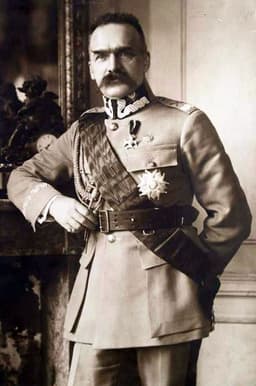
Jozef Pilsudski
General · Modern
65.7Total
Basic Information
Born
1882
1867
Died
1970
1935
Era
Modern
Modern
Nationality
United Kingdom
Poland
Occupation
General
General
Civilization
Western
Western
Score Comparison
Military (10%)
72.5
61.7
Political (20%)
68.0
72.0
Influence (20%)
88.0
72.0
Legacy (20%)
65.0
55.0
Leadership (15%)
62.0
68.0
Strategy (15%)
76.0
68.0
TOTAL
72.6
65.7
Hugh Dowding — Complete Timeline
1936 AD
Introduced Dowding SystemInvention◆ Major
As Air Member for Research and Development, Dowding oversaw the creation of the integrated air defense system known as the Dowding System. It combined radar, observer corps, fighter control rooms, and radio communication, enabling effective command and control during the Battle of Britain.
TechnologyAir DefenseRadar
Impact: globalconstructive
1940 AD
Battle of BritainWar
Dowding, as Commander-in-Chief of Fighter Command, directed the air defense of Britain against the German Luftwaffe. His strategy of conserving fighter strength and using radar-based command and control led to a British victory, preventing a German invasion.
World War IIAir BattleDefense
Impact: globalconstructive
Relieved of CommandPolitical Action◆ Major
Dowding was removed as Commander-in-Chief of Fighter Command shortly after the Battle of Britain, partly due to disagreements with the Air Ministry over offensive operations and his perceived lack of aggression. He was replaced by Sholto Douglas and given a lesser role in the Ministry of Aircraft Production.
World War IICommand ChangeRoyal Air Force
Impact: nationaltragic
Jozef Pilsudski — Complete Timeline
1914 AD
Founded the Polish LegionsOther◆ Major
At the outbreak of World War I, Pilsudski formed the Polish Legions, volunteer military units fighting alongside Austria-Hungary against Russia. The Legions aimed to create a core for a future Polish army and advance the cause of Polish independence from partitioning powers.
Polish IndependenceWorld War IMilitary Formation
Impact: national
1918 AD
Proclaimed Independence of PolandOther◆ Major
On November 11, 1918, Pilsudski was released from German internment and returned to Warsaw. He assumed command of Polish forces and proclaimed the independence of the Second Polish Republic, becoming the nation's first Chief of State after 123 years of partition.
Polish IndependenceStatehoodNational Founding
Impact: nationalconstructive
1920 AD
Led the Battle of Warsaw (Miracle on the Vistula)War◆ Major
During the Polish-Soviet War, Pilsudski personally planned and commanded the counteroffensive at the Battle of Warsaw in August 1920. Polish forces repelled the advancing Red Army, securing Polish independence and halting the spread of Bolshevism into Central Europe.
Polish-Soviet WarMilitary VictoryNational Survival
Impact: regionalconstructive
1926 AD
Executed the May Coup d'ÉtatPolitical Action◆ Major
In May 1926, Pilsudski led a military coup against the Polish government, marching loyal troops into Warsaw. After three days of fighting, President Wojciechowski resigned and Pilsudski assumed de facto dictatorial power, establishing the Sanacja regime that ruled Poland until 1939.
Coup d'ÉtatAuthoritarianismPolish Politics
Impact: nationaldestructive
1932 AD
Signed the Polish-Soviet Non-Aggression PactOther◆ Major
Pilsudski's government signed a non-aggression pact with the Soviet Union on July 25, 1932. The treaty normalized relations between the two countries for ten years, though it was later broken by the Soviet invasion of Poland in 1939.
DiplomacySoviet-Polish RelationsTreaty
Impact: regional
Expert Analysis
Origins
Hugh Dowding was born on April 24, 1882, in Moffat, Scotland, into a military family. He attended the Royal Military Academy, Woolwich, and was commissioned into the Royal Artillery in 1900. His early career included service in India and Gibraltar, and he developed an interest in aviation, earning his pilot's license in 1913. During World War I, he served as a pilot and later as a staff officer, gaining experience in air operations.
Jozef Pilsudski was born on December 5, 1867, in Zalavas, then part of the Russian Empire, to a Polish noble family. He was raised in an atmosphere of Polish nationalism and anti-Russian sentiment. He studied medicine at the University of Kharkiv but was expelled for political activities. He became a socialist revolutionary, organizing clandestine groups and editing underground newspapers. He was arrested and exiled to Siberia in 1887, an experience that hardened his resolve for Polish independence.
Rise to Power
Dowding's rise was gradual and technical. He served as Director of Training at the Air Ministry in the 1920s, then as Air Member for Research and Development from 1930 to 1936. In this role, he championed the development of radar, the Hurricane and Spitfire fighters, and the integrated air defense system. In 1936, he was appointed Commander-in-Chief of Fighter Command, the position he held at the outbreak of World War II.
Pilsudski's rise was revolutionary and military. In World War I, he formed the Polish Legions to fight for independence alongside Austria-Hungary against Russia. By 1916, he commanded a brigade. However, when the Central Powers failed to guarantee Polish independence, he refused to swear an oath of allegiance and was arrested in 1917. Released in 1918, he returned to Warsaw and proclaimed Poland's independence on November 11, 1918, becoming the new nation's chief of state.
Leadership & Governance
Dowding's leadership was methodical and scientific. He insisted on a centralized command system, with Fighter Command controlling all air defenses. He prioritized the use of radar and radio communication to vector fighters to intercept bombers. His decision to commit only limited forces to the Battle of Britain, preserving reserves, was controversial but effective. He was also a meticulous manager, but his lack of political acumen led to friction with the Air Ministry.
Pilsudski's leadership was charismatic and authoritarian. As chief of state, he focused on building Polish military strength and securing borders. He personally directed the Battle of Warsaw in 1920, a decisive victory. In 1926, disillusioned with parliamentary democracy, he led a coup and established a regime under his influence. He served as Minister of Military Affairs and later as Prime Minister, ruling with a firm hand. His governance style was paternalistic, emphasizing national unity and military preparedness.
Triumph & Tragedy
Dowding's triumph was the Battle of Britain (July-October 1940). His strategy of conserving fighters and using radar-directed interception led to the defeat of the Luftwaffe, with Fighter Command losing 1,023 aircraft to the Luftwaffe's 1,887. His tragedy came immediately after: he was relieved of command in November 1940 due to disagreements over strategy and his perceived pessimism. He was sidelined for the rest of the war and never held a major command again.
Pilsudski's triumph was the Battle of Warsaw (August 1920), where his bold counteroffensive routed the Red Army, securing Polish independence. The victory is known as the "Miracle on the Vistula." His tragedy was the May Coup of 1926, which established an authoritarian regime that undermined Polish democracy. While he restored stability, his rule set a precedent for military intervention in politics, weakening Poland's democratic institutions before World War II.
Character & Destiny
Dowding was known for his integrity and stubbornness. He was a skilled administrator and a visionary in air defense, but his inability to navigate political intrigue cost him his career. Historian John Keegan described him as "the only man who could have lost the Battle of Britain." His destiny was to be a savior who was discarded after his usefulness.
Pilsudski was a romantic nationalist and a realist. He was decisive and charismatic, but also ruthless and authoritarian. He believed in the power of individual will and military force. His destiny was to be the founder of modern Poland, but also the one who set it on a path of authoritarianism. He died in 1935, leaving a mixed legacy.
Legacy
Dowding's legacy is the Dowding System, the integrated air defense network that became the model for NATO. His emphasis on radar, command and control, and fighter tactics shaped modern air warfare. He scored 65.0 in legacy, reflecting his lasting impact despite his dismissal. He is remembered as the architect of victory in the Battle of Britain.
Pilsudski's legacy is the restoration of Polish independence and the creation of the Polish Army. His military innovations, especially at the Battle of Warsaw, are studied. However, his authoritarian turn and the Sanation regime's weaknesses contributed to Poland's vulnerability in 1939. He scored 55.0 in legacy, lower due to the mixed outcomes of his rule.
Conclusion
Hugh Dowding had a greater impact in his specific domain and in the broader course of history. His Dowding System directly contributed to the defeat of Nazi Germany's air force, preserving Britain as a base for the eventual liberation of Europe. Pilsudski, despite his heroic role in Polish independence, left a legacy diminished by his authoritarian turn. Dowding's overall score of 72.6 versus Pilsudski's 65.7 reflects this: Dowding's focused technical and strategic contributions had a more enduring and positive effect on global security. While Pilsudski's achievements were monumental for Poland, Dowding's impact was more decisive for the world.
Rankings
🥇
Hugh DowdingLeader
Mil: 72.5Pol: 68.0Inf: 88.0
72.6
🥈
Jozef Pilsudski
Mil: 61.7Pol: 72.0Inf: 72.0
65.7
+6.9 behind
How This Comparison Works
Algorithm
Each figure is scored on 6 dimensions (0—100 scale) based on structured historical data: Military (10%), Political (20%), Influence (20%), Legacy (20%), Leadership (15%), Strategy (15%). The weighted total produces the final ranking.
Data Sources
Scores are computed from structured sub-indicators in the database. Scale factors adjust for era (Ancient ×0.85, Modern ×1.0) and civilization size (Eastern ×1.05, Other ×0.80) to account for differences in population and military scale.
Maximum 3 Figures
Comparisons are limited to 2—3 figures to ensure readability and statistical meaningfulness.
Error Margins
±5 points per dimension — Sub-scores are derived from historical records with inherent uncertainty. Two figures within 5 points on a dimension should be considered roughly equivalent in that area.
Total Score Accuracy
±3 points overall — The weighted combination of 6 dimensions produces a total score with approximately ±3 points of uncertainty. Differences of less than 3 points are not statistically significant— the figures are effectively tied.
Known Limitations
- Historical records are incomplete and uneven across civilizations
- Figures from oral-tradition societies may be underrepresented
- Occupation labels can misclassify multi-role figures
- Scores measure capability and impact, not moral character
- Quantitative scoring is a comparison tool, not absolute truth
Capability Radar
Military (10%) — Battles & Warfare
Battles
75
70
Win Rate
85
65
Expansion
10
60
Political (20%) — Governance & Reform
Reform
60
75
Diplomacy
50
80
Economy
30
55
Influence (20%) — Cultural & Global Reach
Cultural
60
65
Global
75
60
Legacy (20%) — Historical Impact
Historical
85
75
Longevity
70
60
Leadership (15%) — Power & Stability
Tenure
40
70
Stability
70
50
Strategy (15%) — Tactics & Innovation
Strategy
95
80
Tactics
90
75
Reform
80
85
Similar Comparisons
Comments & Discussion
No comments yet. Be the first to share your thoughts!