Loading...
Hugh Dowding vs Qin Shi Huang
Qin Shi Huang leads by 12.6 pts · 2 figures compared
…

Hugh Dowding
General · Modern
72.6Total
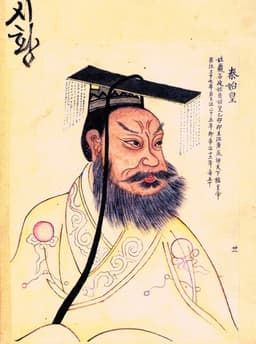
Qin Shi Huang
Emperor · Ancient
85.2Total
Basic Information
Born
1882
-259
Died
1970
-210
Era
Modern
Ancient
Nationality
United Kingdom
China
Occupation
General
Emperor
Civilization
Western
Eastern
Score Comparison
Military (10%)
72.5
80.0
Political (20%)
68.0
90.0
Influence (20%)
88.0
85.0
Legacy (20%)
65.0
90.0
Leadership (15%)
62.0
78.0
Strategy (15%)
76.0
82.0
TOTAL
72.6
85.2
Hugh Dowding — Complete Timeline
1936 AD
Introduced Dowding SystemInvention◆ Major
As Air Member for Research and Development, Dowding oversaw the creation of the integrated air defense system known as the Dowding System. It combined radar, observer corps, fighter control rooms, and radio communication, enabling effective command and control during the Battle of Britain.
TechnologyAir DefenseRadar
Impact: globalconstructive
1940 AD
Battle of BritainWar
Dowding, as Commander-in-Chief of Fighter Command, directed the air defense of Britain against the German Luftwaffe. His strategy of conserving fighter strength and using radar-based command and control led to a British victory, preventing a German invasion.
World War IIAir BattleDefense
Impact: globalconstructive
Relieved of CommandPolitical Action◆ Major
Dowding was removed as Commander-in-Chief of Fighter Command shortly after the Battle of Britain, partly due to disagreements with the Air Ministry over offensive operations and his perceived lack of aggression. He was replaced by Sholto Douglas and given a lesser role in the Ministry of Aircraft Production.
World War IICommand ChangeRoyal Air Force
Impact: nationaltragic
Qin Shi Huang — Complete Timeline
246 BC
Construction of the Mausoleum and Terracotta ArmyOther◆ Major
Qin Shi Huang commissioned a vast mausoleum complex near Xi'an, guarded by thousands of life-sized terracotta soldiers, horses, and chariots. The project employed hundreds of thousands of workers and reflected his obsession with immortality and imperial power.
Impact: global
230 BC
Conquest of the Six Warring StatesWar
From 230 to 221 BCE, Ying Zheng led the Qin state in a series of campaigns that conquered the Han, Zhao, Wei, Chu, Yan, and Qi states. This unified China under a single ruler for the first time, ending the Warring States period.
Impact: global
221 BC
Standardization of Writing, Currency, and MeasurementsReform◆ Major
Qin Shi Huang ordered the standardization of Chinese script, currency, and weights and measures across the unified empire. This facilitated administration, trade, and cultural integration, laying a foundation for future dynasties.
Impact: globalconstructive
Proclamation of the Qin DynastyPolitical Action
After conquering the last independent state, Ying Zheng declared himself Shi Huangdi (First Emperor), founding the Qin Dynasty. He adopted a new title to signify his supreme authority and initiated centralized imperial rule.
Impact: global
214 BC
Initiation of the Great Wall ConstructionOther◆ Major
Qin Shi Huang ordered the connection and extension of existing northern fortifications to create a unified defensive wall against nomadic Xiongnu raids. This project involved massive conscripted labor and became the precursor to the later Great Wall.
Impact: regional
213 BC
Burning of Books and Burying of ScholarsPolitical Action◆ Major
On the advice of Li Si, Qin Shi Huang ordered the burning of historical records and philosophical texts not aligned with Legalist doctrine. He also had 460 Confucian scholars buried alive to suppress dissent and consolidate ideological control.
Impact: nationaldestructive
Expert Analysis
hugh-dowding-vs-qin-shi-huang
# The Emperor and the Airman
In 221 BC, a king in China declared himself the First Emperor, uniting a fractured land with iron will and blood. In 1940 AD, a quiet, stubborn air marshal stood alone against the Nazi war machine, saving a nation that would soon reward him with dismissal. Qin Shi Huang and Hugh Dowding lived two millennia apart, yet both were architects of survival, men who built systems so effective that their very success made them disposable. One created an empire that would define a civilization; the other saved a country that promptly forgot him.
Origins
Ying Zheng was born in 259 BC, a prince of the Qin state during the chaotic Warring States period. His childhood was a crucible of violence: his father was a hostage in another state, and the boy grew up surrounded by spies, assassins, and the brutal calculus of survival. The Qin state, perched on the western frontier of China, was a militaristic society that worshipped efficiency and discipline. Young Zheng learned early that power was the only law, and that trust was a luxury no ruler could afford.
Hugh Dowding, born in 1882, came from a very different world—a Victorian Scotland of Empire and duty. His father was a schoolmaster, and young Hugh grew up in a world of order, rules, and the quiet certainty of British superiority. He attended the Royal Military Academy at Woolwich, served in the Royal Artillery, and later learned to fly at the dawn of aviation. Where Zheng absorbed the chaos of warring states, Dowding absorbed the methodical discipline of a military engineer. Both men were shaped by their eras: Zheng by the desperate struggle for survival among rival kingdoms, Dowding by the rise of technology and the rigid hierarchies of the British Empire.
Rise to Power
Zheng’s path was bloody and direct. At just thirteen, he became king of Qin. For eight years, his mother and a eunuch regent ruled in his shadow. When he seized power in 238 BC, he did so with ruthless efficiency, crushing his rivals and exiling his own mother. From 230 to 221 BC, he led his armies in a series of brilliant campaigns—conquering the Han, Zhao, Wei, Chu, Yan, and Qi states. Each victory was a masterpiece of strategy and brutality. By 221 BC, at the age of thirty-eight, he had unified China and declared himself Shi Huangdi—the First Emperor.
Dowding’s rise was quieter, more bureaucratic. He climbed the ranks of the Royal Flying Corps during World War I, earning a reputation for technical brilliance and a prickly personality. In 1936, as Air Member for Research and Development, he oversaw the creation of the Dowding System—an integrated network of radar stations, command centers, and fighter squadrons that would become the world’s first modern air defense system. When war came in 1939, he was named Commander-in-Chief of Fighter Command. He was fifty-seven years old, stubborn, and convinced that his system alone could save Britain.
Leadership & Governance
Qin Shi Huang governed as he conquered: absolutely. He standardized writing, currency, and measurements across his empire, creating a unified administrative system that would outlast his dynasty. He ordered the connection of northern fortifications into what would become the Great Wall, a monumental project that consumed countless lives. His legalist philosophy, guided by his minister Li Si, demanded total obedience—laws were harsh, punishments severe, and dissent was crushed. In 213 BC, he ordered the burning of historical records and philosophical texts that disagreed with his ideology, and buried alive scholars who resisted. His rule was efficient, terrifying, and transformative.
Dowding governed differently. He was a manager, a system-builder, a man who fought his battles in meetings and memos. His leadership during the Battle of Britain was a masterpiece of strategic patience. He refused to commit his precious fighter squadrons to the defense of France, knowing they were needed for the coming battle over home soil. He rotated pilots to keep them rested, hoarded reserves, and argued constantly with political leaders who wanted to attack recklessly. His system—the Dowding System—allowed a small, outnumbered air force to defeat the Luftwaffe. Where Qin Shi Huang ruled through terror, Dowding ruled through logic and stubborn refusal to be bullied.
Triumph & Tragedy
For Qin Shi Huang, triumph and tragedy were inseparable. His greatest achievement—the unification of China—was also his curse. He spent his last years obsessed with immortality, sending expeditions for the elixir of life and building a vast mausoleum guarded by thousands of life-sized terracotta soldiers. He died in 210 BC at the age of forty-nine, probably from mercury poisoning from his immortality potions. His dynasty collapsed within four years of his death, torn apart by rebellion and the weakness of his successors.
Dowding’s triumph was the Battle of Britain, won in the summer and autumn of 1940. His tragedy came immediately after. In November 1940, he was relieved of command, partly due to political infighting and his own abrasive personality. He spent the rest of the war in obscurity, watching others take credit for his victory. He never held high command again. Like the First Emperor, he was consumed by the very system he had built.
Character & Destiny
Qin Shi Huang was paranoid, brilliant, and ruthless. He believed that he alone could impose order on chaos, and he was right—but only for his lifetime. His personality demanded absolute control, and this destroyed any possibility of a stable succession. He could not delegate, could not trust, could not imagine a world without him.
Dowding was equally stubborn, but his flaws were different. He was arrogant, dismissive of politicians, and terrible at playing the games of power. He believed that his technical expertise should speak for itself, and he was wrong. His personality saved Britain, but it also ensured his own fall. Both men were victims of their own strength: the Emperor’s need for control doomed his dynasty; the Air Marshal’s disdain for politics doomed his career.
Legacy
Qin Shi Huang’s legacy is immortal. He gave China its name, its administrative structure, and its ideal of unity. The Great Wall, the standardized script, the Terracotta Army—these endure as symbols of a civilization. He is remembered as both a unifier and a tyrant, the founder of an imperial system that would last for two thousand years.
Dowding’s legacy is quieter but no less profound. He saved Britain when it stood alone against Nazi Germany. The Dowding System became the model for air defense worldwide. He is honored in history books and air force museums, but his name is not a household word. He was the man who won the battle and then disappeared.
Conclusion
Two men, two worlds, one truth: the architects of victory are often the first to be discarded. Qin Shi Huang built an empire that outlived his dynasty; Hugh Dowding built a defense system that outlived his career. Both were difficult, brilliant, and necessary. Both were consumed by the forces they mastered. Perhaps that is the deepest lesson: the greatest builders are often the most alone, standing at the edge of their own success, watching the world they created move on without them.
Rankings
🥇
Qin Shi HuangLeader
Mil: 80.0Pol: 90.0Inf: 85.0
85.2
🥈
Hugh Dowding
Mil: 72.5Pol: 68.0Inf: 88.0
72.6
+12.6 behind
How This Comparison Works
Algorithm
Each figure is scored on 6 dimensions (0—100 scale) based on structured historical data: Military (10%), Political (20%), Influence (20%), Legacy (20%), Leadership (15%), Strategy (15%). The weighted total produces the final ranking.
Data Sources
Scores are computed from structured sub-indicators in the database. Scale factors adjust for era (Ancient ×0.85, Modern ×1.0) and civilization size (Eastern ×1.05, Other ×0.80) to account for differences in population and military scale.
Maximum 3 Figures
Comparisons are limited to 2—3 figures to ensure readability and statistical meaningfulness.
Error Margins
±5 points per dimension — Sub-scores are derived from historical records with inherent uncertainty. Two figures within 5 points on a dimension should be considered roughly equivalent in that area.
Total Score Accuracy
±3 points overall — The weighted combination of 6 dimensions produces a total score with approximately ±3 points of uncertainty. Differences of less than 3 points are not statistically significant— the figures are effectively tied.
Known Limitations
- Historical records are incomplete and uneven across civilizations
- Figures from oral-tradition societies may be underrepresented
- Occupation labels can misclassify multi-role figures
- Scores measure capability and impact, not moral character
- Quantitative scoring is a comparison tool, not absolute truth
Capability Radar
Military (10%) — Battles & Warfare
Battles
75
85
Win Rate
85
90
Expansion
10
90
Political (20%) — Governance & Reform
Reform
60
95
Diplomacy
50
75
Economy
30
90
Influence (20%) — Cultural & Global Reach
Cultural
60
95
Global
75
85
Legacy (20%) — Historical Impact
Historical
85
95
Longevity
70
95
Leadership (15%) — Power & Stability
Tenure
40
70
Stability
70
65
Strategy (15%) — Tactics & Innovation
Strategy
95
85
Tactics
90
80
Reform
80
95
Similar Comparisons
Comments & Discussion
IronDissent6/17/2026
The comparison is philosophically bankrupt. Qin Shi Huang built an autocratic, centralized state that lasted—standardized writing, currency, even axle lengths. Dowding defended an existing liberal democracy. One created a system of total control; the other prevented the destruction of a relatively open society. To call both "architects of survival" glosses over the moral chasm between unifying by conquest and defending against fascism. Survival for whom?|zh|
铁血书虫6/17/2026
拿秦始皇对比道丁简直离谱。一个靠焚书坑儒统一文字度量衡,建立了延续两千年的郡县制;一个指挥不列颠空战,用雷达和喷火式战斗机守住英伦三岛。但前者是暴君,后者是救星。非要比较的话,只能说两人都精通"防御"——只是防御的对象完全不同:一个防分裂,一个防入侵。