Loading...
Hugo Banzer vs Jerry Rawlings
Jerry Rawlings leads by 1.2 pts · 2 figures compared
…
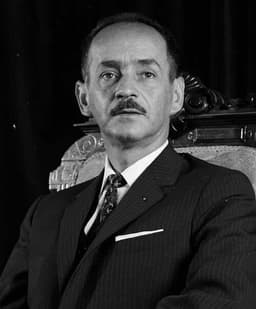
Hugo Banzer
General · Modern
54.3Total

Jerry Rawlings
General · Modern
55.5Total
Basic Information
Born
1926
1947
Died
—
—
Era
Modern
Modern
Nationality
Bolivia
Ghana
Occupation
General
General
Civilization
Western
Other
Score Comparison
Military (10%)
47.5
50.0
Political (20%)
68.0
72.0
Influence (20%)
52.5
60.0
Legacy (20%)
45.0
50.0
Leadership (15%)
71.0
53.2
Strategy (15%)
43.3
41.7
TOTAL
54.3
55.5
Hugo Banzer — Complete Timeline
1971 AD
Led Coup and Became DictatorPolitical Action◆ Major
General Hugo Banzer led a military coup that overthrew the leftist government of Juan Jos
CoupDictatorship
Impact: nationaldestructive
Repressive RegimePolitical Action◆ Major
Banzer's dictatorship (1971-1978) was marked by widespread human rights abuses, including torture, disappearances, and suppression of political dissent. Trade unions and leftist parties were banned, and thousands were imprisoned or exiled.
RepressionHuman Rights
Impact: nationaldestructive
1973 AD
Economic Growth Under DictatorshipReform
During Banzer's rule, Bolivia experienced economic growth driven by high commodity prices and foreign investment, particularly in oil and gas. However, this growth was uneven and benefited elites, while poverty and inequality persisted.
EconomyGrowth
Impact: national
1978 AD
Transition to DemocracyPolitical Action◆ Major
Banzer called for elections in 1978, but they were marred by fraud. He was eventually forced to step down after a coup, leading to a period of political instability. However, his later role in the democratic transition was significant.
DemocracyTransition
Impact: national
1997 AD
Elected President DemocraticallyPolitical Action◆ Major
Banzer was elected president of Bolivia in 1997 as a democrat, leading a coalition government. His term (1997-2001) focused on anti-corruption, education reform, and coca eradication, but was also marked by social unrest.
PresidencyDemocracy
Impact: nationalconstructive
1998 AD
Coca Eradication PolicyReform◆ Major
Banzer's government implemented a policy of forced coca eradication, targeting coca production in the Chapare region. This led to violent clashes with coca growers, who were supported by Evo Morales, and was controversial both domestically and internationally.
CocaDrug Policy
Impact: nationaldestructive
2001 AD
Resigned Due to IllnessPolitical Action
Banzer resigned the presidency in 2001 due to lung cancer. He was succeeded by his vice president, Jorge Quiroga. His resignation marked the end of his political career.
ResignationHealth
Impact: national
Jerry Rawlings — Complete Timeline
1979 AD
June 4th RevolutionPolitical Action
Flight Lieutenant Jerry Rawlings led a coup d'
Coup d'étatGhanaMilitary Rule
Impact: national
Handover to Civilian RulePolitical Action◆ Major
After a brief period of rule, Rawlings voluntarily handed over power to the newly elected civilian government of President Hilla Limann. This act was unusual for a coup leader and was seen as a commitment to constitutional order.
DemocracyGhanaTransition
Impact: nationalconstructive
1981 AD
December 31st CoupPolitical Action
Rawlings led a second coup, overthrowing President Hilla Limann's government. He cited the failure of civilian rule to address economic problems. This established the Provisional National Defence Council (PNDC) and began a longer period of military rule.
Coup d'étatGhanaMilitary Rule
Impact: national
1983 AD
Economic Recovery ProgrammeReform◆ Major
Rawlings implemented the Economic Recovery Programme (ERP) with support from the IMF and World Bank. The ERP included currency devaluation, privatization of state enterprises, and austerity measures, reversing Ghana's economic decline.
Economic ReformIMFGhana
Impact: national
1992 AD
Elected President of GhanaPolitical Action◆ Major
Rawlings won the 1992 presidential election as the candidate of the National Democratic Congress (NDC), transitioning from military ruler to elected civilian president. The election marked Ghana's return to multi-party democracy.
ElectionDemocracyGhana
Impact: nationalconstructive
2001 AD
Left Office After Two TermsPolitical Action◆ Major
After serving two terms as elected president, Rawlings stepped down in accordance with the constitution, handing over power to opposition candidate John Kufuor. This peaceful transfer of power strengthened Ghana's democratic institutions.
DemocracyGhanaTransition
Impact: nationalconstructive
Expert Analysis
Origins
Hugo Banzer Suárez was born on May 10, 1926, in Concepción, Bolivia, into a landowning family of German descent. He attended military school in La Paz and later trained at the School of the Americas in the Panama Canal Zone, where he absorbed anti-communist doctrines. His early career was marked by service in the Bolivian Army, rising to the rank of general by the late 1960s.
Jerry John Rawlings was born on June 22, 1947, in Accra, Ghana, to a Scottish father and Ghanaian mother. He attended Achimota School and then the Ghana Military Academy. He was commissioned as a flight lieutenant in the Ghana Air Force in 1969. His early exposure to corruption in the military and government fueled his reformist zeal.
Both men came from military backgrounds but differed in social origin: Banzer from the elite, Rawlings from a mixed-race, lower-middle-class family.
Rise to Power
Banzer rose to power through a military coup on August 21, 1971, overthrowing leftist President Juan José Torres. With support from the United States and Brazil, Banzer established a dictatorship that lasted until 1978. He banned political parties, suspended unions, and suppressed dissent.
Rawlings first seized power on June 4, 1979, leading a coup of junior officers against the military regime of General Fred Akuffo. He cited corruption and economic mismanagement. After a brief 112-day rule, he voluntarily handed over power to a civilian government on September 24, 1979, a rare act among coup leaders. However, on December 31, 1981, he led a second coup, overthrowing President Hilla Limann, claiming civilian rule had failed. This time he ruled until 1992.
Banzer's rise was conventional for a right-wing Latin American dictator; Rawlings' was a revolutionary populist with a moralistic veneer.
Leadership & Governance
Banzer's first regime (1971-1978) was authoritarian: he banned leftist parties, controlled the press, and used state violence. His government implemented neoliberal economic policies, but corruption remained rampant. His political score of 68.0 reflects his later democratic transition, but his military score of 47.5 indicates limited strategic success.
Rawlings' military rule (1981-1992) was marked by the Economic Recovery Programme (ERP), which devalued the currency, privatized state enterprises, and cut spending. This brought IMF support but also austerity. Politically, he suppressed opponents but later transitioned to democracy. His political score of 72.0 is higher than Banzer's, reflecting his successful democratic transition. His military score of 50.0 is slightly above Banzer's.
Banzer, after his dictatorship, returned to democratic politics and was elected president in 1997 (score 68.0 political). He focused on anti-corruption and education but also enforced coca eradication, causing clashes. Rawlings, after winning the 1992 election, served two terms (1993-2001) and continued neoliberal reforms. Both men thus governed as both dictators and democrats.
Triumph & Tragedy
Banzer's greatest success was his peaceful transition to democracy in 1978, albeit flawed, and his later election as a democrat in 1997. His greatest failure was the human rights abuses under his dictatorship: over 200 disappearances and numerous torture cases. His coca eradication policy also led to violence and was ultimately ineffective.
Rawlings' triumph was restoring economic stability through the ERP, with GDP growth averaging 5% in the 1990s. He also voluntarily handed over power in 1979, setting a precedent. His tragedy was the authoritarian excesses of his early rule: extrajudicial killings and suppression of dissent. His economic reforms also increased inequality.
Scores reflect these balances: Banzer's legacy score of 45.0 is lower than Rawlings' 50.0, partly due to the greater brutality of his dictatorship.
Character & Destiny
Banzer was a pragmatic authoritarian: he shifted from dictator to democrat when circumstances changed. His military score of 47.5 suggests limited strategic acumen; he relied on external support. Rawlings was more charismatic and populist, with a military score of 50.0. His strategy score of 41.7 is low, indicating economic policies were not his own design but imposed by the IMF.
Both men's destinies were shaped by their ability to adapt. Banzer died in 2002, still a controversial figure. Rawlings died in 2020, mourned by many but also criticized for authoritarianism.
Legacy
Banzer's legacy is mixed: he is remembered as a brutal dictator but also as a democrat who helped stabilize Bolivia. His influence score of 52.5 reflects his role in shaping Bolivia's political trajectory. Rawlings' legacy is more positive: he is credited with economic recovery and democratic transition, scoring 60.0 in influence. However, both remain divisive.
Rawlings' institutional legacy includes Ghana's stable democracy; Banzer's includes a precedent for military intervention in politics.
Conclusion
Jerry Rawlings had a greater overall impact than Hugo Banzer, as reflected in his higher total score of 55.5 versus 54.3. Rawlings successfully transitioned Ghana from economic collapse to stability and from military rule to democracy, while Banzer's democratic transition was less complete and his economic policies less successful. Though both were authoritarians turned democrats, Rawlings' legacy is more enduring and positive. Banzer's score of 54.3 is dragged down by his lower military and legacy scores, while Rawlings' political score of 72.0 and influence of 60.0 give him the edge.
Rankings
🥇
Jerry RawlingsLeader
Mil: 50.0Pol: 72.0Inf: 60.0
55.5
🥈
Hugo Banzer
Mil: 47.5Pol: 68.0Inf: 52.5
54.3
+1.2 behind
How This Comparison Works
Algorithm
Each figure is scored on 6 dimensions (0—100 scale) based on structured historical data: Military (10%), Political (20%), Influence (20%), Legacy (20%), Leadership (15%), Strategy (15%). The weighted total produces the final ranking.
Data Sources
Scores are computed from structured sub-indicators in the database. Scale factors adjust for era (Ancient ×0.85, Modern ×1.0) and civilization size (Eastern ×1.05, Other ×0.80) to account for differences in population and military scale.
Maximum 3 Figures
Comparisons are limited to 2—3 figures to ensure readability and statistical meaningfulness.
Error Margins
±5 points per dimension — Sub-scores are derived from historical records with inherent uncertainty. Two figures within 5 points on a dimension should be considered roughly equivalent in that area.
Total Score Accuracy
±3 points overall — The weighted combination of 6 dimensions produces a total score with approximately ±3 points of uncertainty. Differences of less than 3 points are not statistically significant— the figures are effectively tied.
Known Limitations
- Historical records are incomplete and uneven across civilizations
- Figures from oral-tradition societies may be underrepresented
- Occupation labels can misclassify multi-role figures
- Scores measure capability and impact, not moral character
- Quantitative scoring is a comparison tool, not absolute truth
Capability Radar
Military (10%) — Battles & Warfare
Battles
20
15
Win Rate
25
20
Expansion
15
5
Political (20%) — Governance & Reform
Reform
55
65
Diplomacy
50
55
Economy
45
50
Influence (20%) — Cultural & Global Reach
Cultural
20
45
Global
25
45
Legacy (20%) — Historical Impact
Historical
40
50
Longevity
30
40
Leadership (15%) — Power & Stability
Tenure
60
60
Stability
30
40
Strategy (15%) — Tactics & Innovation
Strategy
35
20
Tactics
30
25
Reform
40
30
Similar Comparisons
Comments & Discussion
No comments yet. Be the first to share your thoughts!