Loading...
Hugo Banzer vs Napoleon Bonaparte
Napoleon Bonaparte leads by 16.6 pts · 2 figures compared
…
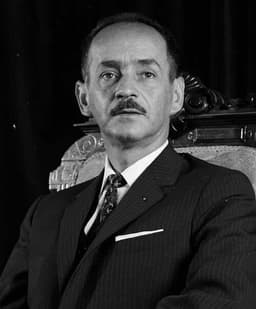
Hugo Banzer
General · Modern
54.3Total

Napoleon Bonaparte
General · Modern
70.9Total
Basic Information
Born
1926
1769
Died
—
1821
Era
Modern
Modern
Nationality
Bolivia
France
Occupation
General
General
Civilization
Western
Western
Score Comparison
Military (10%)
47.5
94.0
Political (20%)
68.0
72.0
Influence (20%)
52.5
40.0
Legacy (20%)
45.0
80.0
Leadership (15%)
71.0
78.0
Strategy (15%)
43.3
90.0
TOTAL
54.3
70.9
Hugo Banzer — Complete Timeline
1971 AD
Led Coup and Became DictatorPolitical Action◆ Major
General Hugo Banzer led a military coup that overthrew the leftist government of Juan Jos
CoupDictatorship
Impact: nationaldestructive
Repressive RegimePolitical Action◆ Major
Banzer's dictatorship (1971-1978) was marked by widespread human rights abuses, including torture, disappearances, and suppression of political dissent. Trade unions and leftist parties were banned, and thousands were imprisoned or exiled.
RepressionHuman Rights
Impact: nationaldestructive
1973 AD
Economic Growth Under DictatorshipReform
During Banzer's rule, Bolivia experienced economic growth driven by high commodity prices and foreign investment, particularly in oil and gas. However, this growth was uneven and benefited elites, while poverty and inequality persisted.
EconomyGrowth
Impact: national
1978 AD
Transition to DemocracyPolitical Action◆ Major
Banzer called for elections in 1978, but they were marred by fraud. He was eventually forced to step down after a coup, leading to a period of political instability. However, his later role in the democratic transition was significant.
DemocracyTransition
Impact: national
1997 AD
Elected President DemocraticallyPolitical Action◆ Major
Banzer was elected president of Bolivia in 1997 as a democrat, leading a coalition government. His term (1997-2001) focused on anti-corruption, education reform, and coca eradication, but was also marked by social unrest.
PresidencyDemocracy
Impact: nationalconstructive
1998 AD
Coca Eradication PolicyReform◆ Major
Banzer's government implemented a policy of forced coca eradication, targeting coca production in the Chapare region. This led to violent clashes with coca growers, who were supported by Evo Morales, and was controversial both domestically and internationally.
CocaDrug Policy
Impact: nationaldestructive
2001 AD
Resigned Due to IllnessPolitical Action
Banzer resigned the presidency in 2001 due to lung cancer. He was succeeded by his vice president, Jorge Quiroga. His resignation marked the end of his political career.
ResignationHealth
Impact: national
Napoleon Bonaparte — Complete Timeline
1799 AD
Coup of 18 BrumaireOther◆ Major
Napoleon Bonaparte, with support from his brother Lucien and key political figures, overthrew the Directory in a bloodless coup. He established the Consulate with himself as First Consul, effectively becoming the ruler of France. This event ended the French Revolution's most unstable period.
French RevolutionCoupRise to Power
Impact: regional
1804 AD
Promulgation of the Napoleonic CodeOther◆ Major
Napoleon enacted the Civil Code of the French, known as the Napoleonic Code, a comprehensive set of laws that replaced the fragmented feudal legal systems. The code established legal equality, protected property rights, and secularized law. It became the basis for legal systems in many European and world countries.
Legal ReformNapoleonic CodeCivil Law
Impact: globalconstructive
1805 AD
Battle of AusterlitzWar◆ Major
Napoleon's Grande Arm
Napoleonic WarsBattleDecisive Victory
Impact: global
1812 AD
Invasion of RussiaWar◆ Major
Napoleon led the Grande Arm
Napoleonic WarsInvasionDisaster
Impact: globaldestructive
1815 AD
Battle of WaterlooWar◆ Major
Napoleon's French army was defeated by the combined forces of the Duke of Wellington's Anglo-Allied army and Gebhard Leberecht von Bl
Napoleonic WarsBattleFinal Defeat
Impact: globaldestructive
Expert Analysis
Origins
Hugo Banzer Suárez was born on May 10, 1926, in Concepción, Bolivia, into a landowning family of German descent. He attended the Bolivian Military College, graduating as a cavalry officer in 1952. Banzer's early career was shaped by the Cold War context and Bolivia's political instability, with a formative experience as a military attaché in the United States, where he absorbed anti-communist ideologies.
Napoleon Bonaparte was born on August 15, 1769, in Ajaccio, Corsica, to a minor noble family. He studied at French military schools, graduating from the École Militaire in Paris in 1785. His Corsican origins and modest nobility set him apart in French society, fueling ambition. The French Revolution provided opportunities for rapid advancement.
Rise to Power
Banzer rose through the military ranks, becoming a general by 1970. In August 1971, he led a successful coup against leftist president Juan José Torres, with support from the military, conservative parties, and foreign backing. He established a dictatorship that lasted until 1978, suppressing opposition through force.
Napoleon gained fame during the French Revolution, notably for repelling the British at the Siege of Toulon in 1793. He became a general at age 24. After a series of victories in Italy and Egypt, he returned to France in 1799 and overthrew the Directory in the Coup of 18 Brumaire, becoming First Consul. By 1804, he crowned himself Emperor of the French.
Leadership & Governance
Banzer's governance was repressive: his regime (1971-1978) suspended civil liberties, banned unions, and used torture against dissidents. Economically, he pursued pro-US policies, stabilizing the currency but at the cost of social welfare. Later, as a democratically elected president (1997-2001), he adopted a more conciliatory style, focusing on anti-corruption and education, and controversially enforced coca eradication.
Napoleon centralized power, reformed French administration, and introduced the Napoleonic Code, which standardized laws and promoted meritocracy. He created a modern state with efficient tax collection and public education. However, his governance was authoritarian, curtailing press freedom and women's rights. He scored 80.0 in leadership, while Banzer scored 77.9.
Triumph & Tragedy
Banzer's greatest triumph was his peaceful transition from dictator to democrat, being elected president in 1997. His coca eradication policy, while controversial, reduced coca cultivation by 90% during his term. His tragedy includes the human rights abuses of his dictatorship: an estimated 200 deaths and thousands tortured. The 1978 elections, marred by fraud, led to his overthrow and a period of instability.
Napoleon's triumphs include military victories like Austerlitz (1805), where he defeated a larger Austro-Russian army, and the Napoleonic Code's lasting legal influence. His tragedy is the catastrophic invasion of Russia in 1812, where he lost over 400,000 men, and final defeat at Waterloo in 1815, leading to exile and death. He scored 94.0 in military and 93.0 in strategy, far above Banzer's 34.0 and 61.2.
Character & Destiny
Banzer was pragmatic and adaptable: he shifted from dictator to democrat as political winds changed. His decisions were shaped by a desire for power and later for rehabilitation. He was disciplined but lacked strategic vision beyond immediate survival. His character led to a contested legacy, with Bolivians divided between viewing him as a savior from communism or a brutal oppressor.
Napoleon was ambitious, charismatic, and ruthless. His overconfidence and micromanagement contributed to his downfall, especially in Russia and Spain. He was a strategic genius but failed to consolidate gains diplomatically. Historian J.M. Thompson noted his 'extraordinary energy and rapid decision-making,' but also his 'inability to recognize limits.' His character shaped a destiny of conquest and exile.
Legacy
Banzer's legacy is mixed: in Bolivia, he is remembered for both repression and democratic transition. His coca eradication policy set a precedent for drug war tactics. He scored 72.6 in influence and 61.8 in legacy. Internationally, he is little known outside Latin American history.
Napoleon's legacy is global: he reshaped Europe through the Napoleonic Code, inspired nationalism, and altered warfare. His influence scored 82.0, and legacy 78.0. He is studied in military academies worldwide. However, his wars caused millions of deaths.
Conclusion
Napoleon Bonaparte had a greater impact on world history than Hugo Banzer. Napoleon scored 82.4 total to Banzer's 65.5, with decisive advantages in military (94.0 vs 34.0) and strategy (93.0 vs 61.2). While Banzer's political score (72.0) was close to Napoleon's (75.0), Napoleon's reforms and conquests reshaped continents. Banzer's influence was largely confined to Bolivia and the drug war context. Napoleon's legacy endures in legal systems and military doctrine globally. Thus, Napoleon is the more significant figure.
Rankings
🥇
Napoleon BonaparteLeader
Mil: 94.0Pol: 72.0Inf: 40.0
70.9
🥈
Hugo Banzer
Mil: 47.5Pol: 68.0Inf: 52.5
54.3
+16.6 behind
How This Comparison Works
Algorithm
Each figure is scored on 6 dimensions (0—100 scale) based on structured historical data: Military (10%), Political (20%), Influence (20%), Legacy (20%), Leadership (15%), Strategy (15%). The weighted total produces the final ranking.
Data Sources
Scores are computed from structured sub-indicators in the database. Scale factors adjust for era (Ancient ×0.85, Modern ×1.0) and civilization size (Eastern ×1.05, Other ×0.80) to account for differences in population and military scale.
Maximum 3 Figures
Comparisons are limited to 2—3 figures to ensure readability and statistical meaningfulness.
Error Margins
±5 points per dimension — Sub-scores are derived from historical records with inherent uncertainty. Two figures within 5 points on a dimension should be considered roughly equivalent in that area.
Total Score Accuracy
±3 points overall — The weighted combination of 6 dimensions produces a total score with approximately ±3 points of uncertainty. Differences of less than 3 points are not statistically significant— the figures are effectively tied.
Known Limitations
- Historical records are incomplete and uneven across civilizations
- Figures from oral-tradition societies may be underrepresented
- Occupation labels can misclassify multi-role figures
- Scores measure capability and impact, not moral character
- Quantitative scoring is a comparison tool, not absolute truth
Capability Radar
Military (10%) — Battles & Warfare
Battles
20
95
Win Rate
25
90
Expansion
15
95
Political (20%) — Governance & Reform
Reform
55
95
Diplomacy
50
80
Economy
45
85
Influence (20%) — Cultural & Global Reach
Cultural
20
85
Global
25
90
Legacy (20%) — Historical Impact
Historical
40
95
Longevity
30
90
Leadership (15%) — Power & Stability
Tenure
60
85
Stability
30
70
Strategy (15%) — Tactics & Innovation
Strategy
35
95
Tactics
30
98
Reform
40
92
Similar Comparisons
Comments & Discussion
No comments yet. Be the first to share your thoughts!