Loading...
Humayun vs King Abdullah II
King Abdullah II leads by 4.1 pts · 2 figures compared
…

Humayun
Emperor · Modern
49.6Total
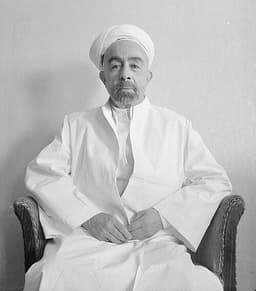
King Abdullah II
Emperor · Modern
53.7Total
Basic Information
Born
1508
1962
Died
1556
—
Era
Modern
Modern
Nationality
Mughal Empire
Jordan
Occupation
Emperor
Emperor
Civilization
Indian
Middle Eastern
Score Comparison
Military (10%)
45.0
20.0
Political (20%)
36.5
72.0
Influence (20%)
58.0
59.0
Legacy (20%)
50.0
42.5
Leadership (15%)
55.3
80.0
Strategy (15%)
43.3
35.7
TOTAL
49.6
53.7
Humayun — Complete Timeline
1539 AD
Battle of ChausaWar◆ Major
Humayun's army was defeated by the Afghan ruler Sher Shah Suri at Chausa in Bihar. Humayun barely escaped with his life, reportedly crossing the Ganges River on a water skin. This defeat led to the loss of Mughal control over Bengal and Bihar, weakening Humayun's position.
BattleDefeatSher Shah Suri
Impact: regionaltragic
1540 AD
Battle of KannaujWar◆ Major
Humayun was decisively defeated by Sher Shah Suri at Kannauj (also known as the Battle of Bilgram). This defeat forced Humayun to flee India entirely, seeking refuge in Persia. Sher Shah Suri established the Sur Empire, which ruled northern India for the next 15 years.
BattleExileSur Empire
Impact: regionaltragic
1555 AD
Restoration of the Mughal EmpireWar
Humayun, with military support from the Safavid Shah Tahmasp I, recaptured Delhi and Agra from the Sur Empire. He defeated the Sur forces at the Battle of Sirhind. This victory restored the Mughal Empire in India, though Humayun died shortly after, leaving the empire to his son Akbar.
RestorationMughal EmpireSafavid Alliance
Impact: regionalconstructive
1556 AD
Death from a FallOther◆ Major
Humayun died after falling down the stairs of his library in Delhi. He was reportedly carrying a load of books when he heard the call to prayer and slipped. His death occurred just months after restoring the Mughal Empire, leaving his 13-year-old son Akbar as his successor.
DeathAccidentSuccession
Impact: nationaltragic
King Abdullah II — Complete Timeline
1999 AD
Ascension to the ThronePolitical Action◆ Major
Abdullah II became King of Jordan upon the death of his father King Hussein. He inherited a stable monarchy and continued his father's policies of moderation and economic reform.
SuccessionMonarchy
Impact: national
2000 AD
Launch of Economic Reform ProgramReform◆ Major
Abdullah II initiated a series of economic reforms including privatization, trade liberalization, and promotion of foreign investment. These policies aimed to modernize Jordan's economy and attract international capital.
Economic ReformPrivatizationDevelopment
Impact: nationalconstructive
2011 AD
Response to Arab Spring ProtestsPolitical Action◆ Major
Abdullah II responded to widespread protests by dismissing the government, enacting constitutional reforms, and promising political liberalization. He avoided the violent crackdowns seen in other Arab states.
Arab SpringPolitical ReformProtests
Impact: nationalconstructive
2014 AD
Role in Anti-ISIS CoalitionWar◆ Major
Jordan joined the US-led coalition against the Islamic State (ISIS) in Syria and Iraq. Jordanian airstrikes targeted ISIS positions, and the country hosted coalition forces and Syrian refugees.
CounterterrorismISISMilitary Coalition
Impact: regional
2021 AD
Failed Coup Attempt by Prince HamzahPolitical Action◆ Major
Abdullah II placed his half-brother Prince Hamzah under house arrest, accusing him of involvement in a foreign-backed plot to destabilize the monarchy. The incident highlighted internal royal family tensions.
Coup AttemptRoyal FamilyPolitical Crisis
Impact: nationaldestructive
Expert Analysis
Origins
Humayun (born 1508) was the eldest son of Babur, founder of the Mughal Empire. He inherited a fragile realm at age 22, with little administrative experience. His early life was marked by constant warfare and the challenge of holding together a disparate collection of territories. In contrast, King Abdullah II (born 1962) was the eldest son of King Hussein of Jordan. Educated at Sandhurst and Oxford, he spent years in the military, rising to become commander of the Jordanian Special Forces. His upbringing was steeped in the complexities of Middle Eastern politics and the legacy of his father's balancing act.
Rise to Power
Humayun's rise was immediate upon Babur's death in 1530, but his rule was contested. He faced rebellions from his brothers and the rising power of Sher Shah Suri. His early victories were undone by defeats at Chausa (1539) and Kannauj (1540), forcing him into exile in Persia. He spent 15 years wandering, eventually securing Safavid military support. King Abdullah II ascended the throne in 1999 upon his father's death, a smooth transition in a stable monarchy. He quickly established himself as a reformer, appointing a new government and launching economic liberalization. His rise was not contested, but he had to navigate the expectations of a population accustomed to his father's long reign.
Leadership & Governance
Humayun's leadership was inconsistent. He struggled to maintain discipline among his nobles and was often indecisive. His governance was overshadowed by his obsession with astrology and poetry, leading to neglect of state affairs. For example, he spent hours in his observatory, delaying military responses. In contrast, King Abdullah II is a hands-on leader, deeply involved in security and economic policy. He personally oversaw Jordan's response to the Arab Spring, dismissing governments and pushing through constitutional reforms. His political score of 72.0 reflects his ability to maintain stability, while Humayun's 36.5 indicates his failures in statecraft.
Triumph & Tragedy
Humayun's greatest triumph was the restoration of the Mughal Empire in 1555, when he recaptured Delhi with Persian aid. This set the stage for his son Akbar's expansion. However, his tragedy was his death in 1556 from a fall down library stairs, a moment of carelessness that cut short his reign. King Abdullah II's triumphs include modernizing Jordan's economy and maintaining stability amid regional chaos. He successfully navigated the Arab Spring by implementing reforms. His tragedy is the ongoing economic hardship and the failed coup attempt by his half-brother in 2021, which exposed internal divisions. While Humayun's military score is 45.0, Abdullah's is 20.0, reflecting their different priorities.
Character & Destiny
Humayun was cultured, tolerant, and scholarly, but also indecisive and prone to fatalism. His character led to his downfall at Chausa, where he hesitated. His destiny was to be a bridge between Babur and Akbar, a restorer rather than a builder. King Abdullah II is pragmatic, cautious, and resilient. He has survived multiple regional upheavals by balancing domestic and foreign pressures. His character—measured and strategic—has kept Jordan stable, but his low strategy score of 35.7 suggests limited long-term vision. Humayun's leadership score is 55.3, Abdullah's 80.0.
Legacy
Humayun's legacy is mixed. He failed to expand the empire but his restoration allowed Akbar to create a golden age. His tomb in Delhi is a UNESCO World Heritage site. King Abdullah II's legacy is still unfolding. He has strengthened Jordan's institutions but faces economic and demographic challenges. His influence score of 59.0 is similar to Humayun's 58.0, but his political score (72.0 vs 36.5) shows greater governance impact.
Conclusion
In a direct comparison, King Abdullah II has had greater impact in his context. His total score of 53.7 exceeds Humayun's 49.6. While Humayun restored an empire, Abdullah has sustained a nation through modern crises. His leadership (80.0) and political acumen (72.0) surpass Humayun's, whose military score (45.0) is higher but insufficient to compensate. The modern monarch's ability to adapt and reform in a volatile region gives him a more consequential legacy.
Rankings
🥇
King Abdullah IILeader
Mil: 20.0Pol: 72.0Inf: 59.0
53.7
🥈
Humayun
Mil: 45.0Pol: 36.5Inf: 58.0
49.6
+4.1 behind
How This Comparison Works
Algorithm
Each figure is scored on 6 dimensions (0—100 scale) based on structured historical data: Military (10%), Political (20%), Influence (20%), Legacy (20%), Leadership (15%), Strategy (15%). The weighted total produces the final ranking.
Data Sources
Scores are computed from structured sub-indicators in the database. Scale factors adjust for era (Ancient ×0.85, Modern ×1.0) and civilization size (Eastern ×1.05, Other ×0.80) to account for differences in population and military scale.
Maximum 3 Figures
Comparisons are limited to 2—3 figures to ensure readability and statistical meaningfulness.
Error Margins
±5 points per dimension — Sub-scores are derived from historical records with inherent uncertainty. Two figures within 5 points on a dimension should be considered roughly equivalent in that area.
Total Score Accuracy
±3 points overall — The weighted combination of 6 dimensions produces a total score with approximately ±3 points of uncertainty. Differences of less than 3 points are not statistically significant— the figures are effectively tied.
Known Limitations
- Historical records are incomplete and uneven across civilizations
- Figures from oral-tradition societies may be underrepresented
- Occupation labels can misclassify multi-role figures
- Scores measure capability and impact, not moral character
- Quantitative scoring is a comparison tool, not absolute truth
Capability Radar
Military (10%) — Battles & Warfare
Battles
35
5
Win Rate
30
5
Expansion
30
5
Political (20%) — Governance & Reform
Reform
25
60
Diplomacy
30
75
Economy
25
55
Influence (20%) — Cultural & Global Reach
Cultural
40
40
Global
40
55
Legacy (20%) — Historical Impact
Historical
55
35
Longevity
50
30
Leadership (15%) — Power & Stability
Tenure
30
70
Stability
20
65
Strategy (15%) — Tactics & Innovation
Strategy
35
15
Tactics
40
10
Reform
20
20
Similar Comparisons
Comments & Discussion
No comments yet. Be the first to share your thoughts!