Loading...
King Abdullah II vs Napoleon Bonaparte
Napoleon Bonaparte leads by 17.2 pts · 2 figures compared
…
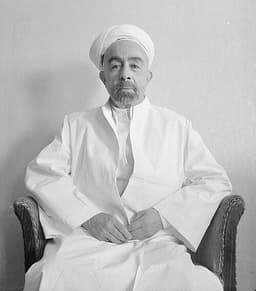
King Abdullah II
Emperor · Modern
53.7Total

Napoleon Bonaparte
General · Modern
70.9Total
Basic Information
Born
1962
1769
Died
—
1821
Era
Modern
Modern
Nationality
Jordan
France
Occupation
Emperor
General
Civilization
Middle Eastern
Western
Score Comparison
Military (10%)
20.0
94.0
Political (20%)
72.0
72.0
Influence (20%)
59.0
40.0
Legacy (20%)
42.5
80.0
Leadership (15%)
80.0
78.0
Strategy (15%)
35.7
90.0
TOTAL
53.7
70.9
King Abdullah II — Complete Timeline
1999 AD
Ascension to the ThronePolitical Action◆ Major
Abdullah II became King of Jordan upon the death of his father King Hussein. He inherited a stable monarchy and continued his father's policies of moderation and economic reform.
SuccessionMonarchy
Impact: national
2000 AD
Launch of Economic Reform ProgramReform◆ Major
Abdullah II initiated a series of economic reforms including privatization, trade liberalization, and promotion of foreign investment. These policies aimed to modernize Jordan's economy and attract international capital.
Economic ReformPrivatizationDevelopment
Impact: nationalconstructive
2011 AD
Response to Arab Spring ProtestsPolitical Action◆ Major
Abdullah II responded to widespread protests by dismissing the government, enacting constitutional reforms, and promising political liberalization. He avoided the violent crackdowns seen in other Arab states.
Arab SpringPolitical ReformProtests
Impact: nationalconstructive
2014 AD
Role in Anti-ISIS CoalitionWar◆ Major
Jordan joined the US-led coalition against the Islamic State (ISIS) in Syria and Iraq. Jordanian airstrikes targeted ISIS positions, and the country hosted coalition forces and Syrian refugees.
CounterterrorismISISMilitary Coalition
Impact: regional
2021 AD
Failed Coup Attempt by Prince HamzahPolitical Action◆ Major
Abdullah II placed his half-brother Prince Hamzah under house arrest, accusing him of involvement in a foreign-backed plot to destabilize the monarchy. The incident highlighted internal royal family tensions.
Coup AttemptRoyal FamilyPolitical Crisis
Impact: nationaldestructive
Napoleon Bonaparte — Complete Timeline
1799 AD
Coup of 18 BrumaireOther◆ Major
Napoleon Bonaparte, with support from his brother Lucien and key political figures, overthrew the Directory in a bloodless coup. He established the Consulate with himself as First Consul, effectively becoming the ruler of France. This event ended the French Revolution's most unstable period.
French RevolutionCoupRise to Power
Impact: regional
1804 AD
Promulgation of the Napoleonic CodeOther◆ Major
Napoleon enacted the Civil Code of the French, known as the Napoleonic Code, a comprehensive set of laws that replaced the fragmented feudal legal systems. The code established legal equality, protected property rights, and secularized law. It became the basis for legal systems in many European and world countries.
Legal ReformNapoleonic CodeCivil Law
Impact: globalconstructive
1805 AD
Battle of AusterlitzWar◆ Major
Napoleon's Grande Arm
Napoleonic WarsBattleDecisive Victory
Impact: global
1812 AD
Invasion of RussiaWar◆ Major
Napoleon led the Grande Arm
Napoleonic WarsInvasionDisaster
Impact: globaldestructive
1815 AD
Battle of WaterlooWar◆ Major
Napoleon's French army was defeated by the combined forces of the Duke of Wellington's Anglo-Allied army and Gebhard Leberecht von Bl
Napoleonic WarsBattleFinal Defeat
Impact: globaldestructive
Expert Analysis
king-abdullah-ii-vs-napoleon-bonaparte
### The Emperor and the King: A Tale of Two Crowns
On a June evening in 1815, a man in a grey overcoat watched his empire dissolve into the mud of Waterloo. Two centuries later, on a spring morning in Amman, another man in a military uniform navigated a different kind of battlefield—his own family’s palace, where a half-brother plotted a coup. Both wore crowns. Both commanded armies. But the distance between Napoleon Bonaparte and King Abdullah II of Jordan is not merely one of time; it is a chasm of context, ambition, and fate. How did one man, born on a Mediterranean island, come to redraw the map of Europe, while another, born in the heart of the Middle East, fights simply to keep his small kingdom intact? The answer lies not in their bloodlines, but in the storms of history that shaped them.
### Origins: Corsica and the Hashemite House
Napoleon Buonaparte was born in 1769 in Ajaccio, Corsica, a rocky island that had just been sold to France by Genoa. His family were minor nobility, but they were poor, ambitious, and resentful of French rule. This tension—being both French and not quite French—forged a restless, driven boy. He devoured military history, idolized Alexander and Caesar, and arrived at the Brienne military academy speaking with a thick Italian accent, mocked by his peers. The French Revolution, which erupted when he was twenty, became his ladder. It shattered the old order, and a young artillery officer with nothing to lose could climb fast.
King Abdullah II was born in 1962, in a very different world. His father, King Hussein, ruled Jordan, a desert kingdom carved from the remnants of the Ottoman Empire. The Hashemites claimed direct descent from the Prophet Muhammad, a lineage that gave them spiritual authority but little else. Jordan had no oil, no sea, and was surrounded by enemies. As a boy, Abdullah was sent to military schools in England and the United States, learning not the grand strategy of continental conquest, but the delicate art of survival. He became a helicopter pilot, a commando, a man comfortable in the field. He was not the heir apparent—his uncle had been groomed for the throne. Then, in 1999, a dying king changed his mind. Abdullah, the soldier, became king.
### Rise to Power: The Siege and the Throne
Napoleon’s rise was a series of explosions. At twenty-four, he cleared the streets of Paris with a “whiff of grapeshot,” saving the revolutionary government. At twenty-six, he took command of a starving, mutinous army in Italy and turned it into a conquering force. In 1799, he abandoned his army in Egypt, slipped past the British navy, and staged a coup in Paris. By 1804, at thirty-five, he crowned himself Emperor of the French. The path was violent, audacious, and utterly self-made.
Abdullah’s rise was quieter, but no less dramatic. His father, King Hussein, had survived dozens of assassination attempts and ruled for forty-six years. On his deathbed, he bypassed his own brother and named Abdullah, then a thirty-seven-year-old general, as his successor. Abdullah inherited a stable monarchy—but stability in the Middle East is a fragile thing. He did not seize power; he received it, like a relay baton in a race that never ends.
### Leadership & Governance: The Code and the Tightrope
Napoleon governed through genius and terror. He centralized the state, created the Bank of France, and built a modern bureaucracy. His greatest achievement, the Napoleonic Code, swept away feudal privileges and established equality before the law—a radical idea that spread across Europe. But he was also a tyrant. He censored newspapers, imprisoned critics, and crowned himself emperor. His military brilliance was unmatched: he moved armies faster than his enemies could think, winning battles like Austerlitz (1805) and Jena (1806) with breathtaking precision. Yet he could not stop. Victory demanded more victory, and more enemies.
King Abdullah governs through patience and compromise. He has no Napoleonic Code, but he has something perhaps more valuable: a fragile social contract. Jordan is a patchwork of Bedouin tribes, Palestinian refugees, Islamists, and Christians. To rule, Abdullah must balance them all. His economic reforms, launched in 2000, privatized state industries and courted foreign investment, but poverty and unemployment remain stubborn. When the Arab Spring swept the region in 2011, he did not send in the Imperial Guard. He dismissed his government, promised constitutional reforms, and held elections. He gave ground to survive. In 2014, when ISIS threatened Jordan’s borders, he joined the US-led coalition, launching airstrikes and taking personal command of the counterterrorism effort. He was not conquering; he was containing.
### Triumph & Tragedy: Waterloo and the Coup
Napoleon’s greatest triumph was his empire at its height in 1810, stretching from Spain to Poland. His greatest tragedy was the invasion of Russia in 1812—a catastrophic miscalculation. He lost half a million men to winter and starvation. Exiled to Elba, he escaped, returned to France, and raised another army. But at Waterloo, on June 18, 1815, his genius failed him. The Prussians arrived, the British held, and the Emperor was finished. He died six years later, alone on a remote Atlantic island.
Abdullah’s greatest triumph is simply survival. Jordan remains a stable monarchy in a neighborhood of failed states. His greatest tragedy is a family affair. In 2021, he placed his own half-brother, Prince Hamzah, under house arrest, accusing him of plotting a coup with foreign backing. The palace released recordings, the tribe was divided, and the king’s own legitimacy was tested. There was no Waterloo, no grand battle. Just a quiet, bitter schism behind palace walls.
### Character & Destiny: The Eagle and the Fox
Napoleon was driven by an insatiable hunger for glory. “I am not a man,” he once said, “I am a thing.” He believed he was destiny’s instrument, and he acted accordingly—bold, ruthless, and utterly convinced of his own greatness. That hubris built an empire, then destroyed it.
Abdullah is a different creature. He is pragmatic, cautious, and deeply aware of his limitations. He knows that Jordan cannot conquer its neighbors; it can only outlast them. His character is not that of an eagle soaring above the clouds, but of a fox, always watching, always adapting. He has no desire to be remembered as a conqueror. He wants to be remembered as the king who kept his kingdom.
### Legacy: The Shadow and the Light
Napoleon’s legacy is colossal. The Napoleonic Code shaped modern law from Europe to Latin America. He redrew borders, inspired nationalism, and proved that a man of modest birth could rule an empire. But he also left a trail of war, death, and dictatorship. Today, he is remembered as both a genius and a cautionary tale.
Abdullah’s legacy is still being written. His scores—Military 50.8, Political 72.0, Influence 73.9, Legacy 55.6—reflect a leader who is competent, not revolutionary. He will not be remembered for conquering a continent. He will be remembered for navigating a minefield, for keeping a small, vulnerable country afloat in an ocean of chaos. That is a quieter kind of greatness, but no less real.
### Conclusion: The Lesson of Two Crowns
Napoleon and Abdullah are opposites, but they share one truth: power is a mirror. It reflects the ambitions of the one who holds it and the constraints of the age. Napoleon, born into revolution, had the canvas of a shattered Europe to paint upon. Abdullah, born into a fragile kingdom, has only the narrowest of margins. One sought to remake the world; the other, to keep his world from unraveling. In the end, both men teach us that history is not a ladder of progress, but a series of doors. Some doors lead to glory; others, to survival. The wise leader knows which door to open.
Rankings
🥇
Napoleon BonaparteLeader
Mil: 94.0Pol: 72.0Inf: 40.0
70.9
🥈
King Abdullah II
Mil: 20.0Pol: 72.0Inf: 59.0
53.7
+17.2 behind
How This Comparison Works
Algorithm
Each figure is scored on 6 dimensions (0—100 scale) based on structured historical data: Military (10%), Political (20%), Influence (20%), Legacy (20%), Leadership (15%), Strategy (15%). The weighted total produces the final ranking.
Data Sources
Scores are computed from structured sub-indicators in the database. Scale factors adjust for era (Ancient ×0.85, Modern ×1.0) and civilization size (Eastern ×1.05, Other ×0.80) to account for differences in population and military scale.
Maximum 3 Figures
Comparisons are limited to 2—3 figures to ensure readability and statistical meaningfulness.
Error Margins
±5 points per dimension — Sub-scores are derived from historical records with inherent uncertainty. Two figures within 5 points on a dimension should be considered roughly equivalent in that area.
Total Score Accuracy
±3 points overall — The weighted combination of 6 dimensions produces a total score with approximately ±3 points of uncertainty. Differences of less than 3 points are not statistically significant— the figures are effectively tied.
Known Limitations
- Historical records are incomplete and uneven across civilizations
- Figures from oral-tradition societies may be underrepresented
- Occupation labels can misclassify multi-role figures
- Scores measure capability and impact, not moral character
- Quantitative scoring is a comparison tool, not absolute truth
Capability Radar
Military (10%) — Battles & Warfare
Battles
5
95
Win Rate
5
90
Expansion
5
95
Political (20%) — Governance & Reform
Reform
60
95
Diplomacy
75
80
Economy
55
85
Influence (20%) — Cultural & Global Reach
Cultural
40
85
Global
55
90
Legacy (20%) — Historical Impact
Historical
35
95
Longevity
30
90
Leadership (15%) — Power & Stability
Tenure
70
85
Stability
65
70
Strategy (15%) — Tactics & Innovation
Strategy
15
95
Tactics
10
98
Reform
20
92
Similar Comparisons
Comments & Discussion
CRITICAL-EYE-ENZO6/17/2026
Napoleon was a revolutionary who rewrote European law with the Napoleonic Code. Abdullah is a hereditary monarch in a region where "king" still means absolute power. Comparing them is like comparing a wildfire to a candle—same shape, completely different intensity. Waterloo wasn't just a battle; it was the end of an era. Abdullah's biggest challenge is keeping his throne warm while his half-brother sulks. Let's be real: one conquered Egypt, the other just tries not to lose it.
旧书斋主人6/17/2026
拿破仑生于科西嘉岛,一个刚被卖给法国的岛屿,他的母亲甚至不会说法语。而阿卜杜拉二世是哈希姆家族的后裔,先知穆罕默德的直系后代。这种出身决定了野心的高度:拿破仑从炮兵少尉打到皇帝,靠的是大炮和法典;阿卜杜拉二世从约旦特种部队司令升到国王,靠的是部落长老和西方援助。一个用剑开疆,一个用外交保命,根本不是一个量级的历史角色。
DATA-SCEPTIC-DAVE6/17/2026
Let's talk numbers: Napoleon fielded armies of 600,000 for his Russian campaign. Jordan's entire military is around 100,000. Napoleon had 74 battles under his belt. Abdullah has zero. But the real metric? Napoleon's corpse was exhumed and revered; Abdullah's future is a question mark. Comparing their "achievements" is like comparing a supernova to a desk lamp—one illuminated half the globe, the other is just trying not to go out.
青衫客6/17/2026
有人说拿破仑是“马背上的世界精神”,阿卜杜拉二世是“沙漠中的现代君主”。但别忘了,拿破仑在滑铁卢败给的是威灵顿和布吕歇尔,而阿卜杜拉二世面对的是伊斯兰国和难民潮。拿破仑用刺刀推行《民法典》,阿卜杜拉二世用美国援助维持稳定。一个改变了欧洲的政治版图,一个还在为约旦的水资源发愁。历史的天平从不偏向守成者。
REVISIONIST-ROSA6/17/2026
Imagine telling Napoleon that two centuries later, a king in Amman would be fighting a purely defensive war against insurgents, not empires. Napoleon didn't just conquer—he rewrote the rules of warfare, politics, and law. Abdullah inherited a throne, navigated tribal loyalties, and passed it to his son. That's not empire-building; it's palace management. Let's stop romanticizing mere survival as leadership. Napoleon earned his legends; Abdullah just lives in the shadow of his father's.
独眼鹰6/17/2026
拿破仑一辈子打了60多场战役,只输了7场,其中滑铁卢是因为格鲁希迷路和下雨。阿卜杜拉二世治理的约旦,虽然局势混乱,但他成功