Loading...
Hussein of Jordan vs Vasily IV
Hussein of Jordan leads by 18.3 pts · 2 figures compared
…

Hussein of Jordan
Emperor · Modern
55.7Total
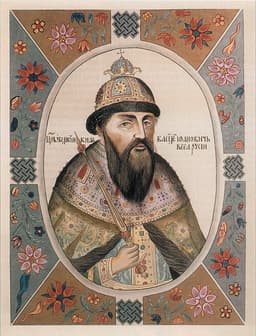
Vasily IV
Emperor · Modern
37.4Total
Basic Information
Born
1935
1552
Died
—
1612
Era
Modern
Modern
Nationality
Jordan
Russia
Occupation
Emperor
Emperor
Civilization
Middle Eastern
Western
Score Comparison
Military (10%)
50.0
14.9
Political (20%)
60.0
26.4
Influence (20%)
59.0
46.3
Legacy (20%)
49.2
36.7
Leadership (15%)
72.0
38.1
Strategy (15%)
38.6
54.8
TOTAL
55.7
37.4
Hussein of Jordan — Complete Timeline
1951 AD
Assassination of King Abdullah IPolitical Action◆ Major
Hussein, then 15, witnessed the assassination of his grandfather King Abdullah I in Jerusalem. This event shaped his political outlook and prepared him for his future role as king.
AssassinationRoyal FamilyJerusalem
Impact: nationaltragic
1952 AD
Ascension to the ThronePolitical Action◆ Major
Hussein became King of Jordan at age 17 after his father King Talal was declared unfit to rule due to mental illness. He was formally crowned in 1953.
SuccessionMonarchy
Impact: national
1956 AD
Arab Dismissal of Glubb PashaPolitical Action◆ Major
Hussein dismissed British General John Glubb, commander of the Arab Legion, asserting Jordanian sovereignty. This reduced British influence and aligned Jordan with Arab nationalism.
DecolonizationArab NationalismMilitary
Impact: national
1967 AD
Six-Day WarWar
Jordan entered the Six-Day War against Israel alongside Egypt and Syria. Israel captured the West Bank and East Jerusalem from Jordan, resulting in a massive influx of Palestinian refugees into Jordan.
Arab-Israeli WarTerritorial LossRefugees
Impact: regionaldestructive
1970 AD
Black September ConflictWar
Hussein ordered the Jordanian military to suppress Palestinian militant groups (PLO) that threatened his rule. The conflict resulted in thousands of casualties and the expulsion of the PLO from Jordan to Lebanon.
Civil ConflictPLOPalestinian Refugees
Impact: regionaldestructive
1994 AD
Signing of the Israel-Jordan Peace TreatyPolitical Action
Hussein signed a peace treaty with Israel at the Arava border crossing, normalizing relations. Jordan became the second Arab state to make peace with Israel, ending a 46-year state of war.
Peace TreatyArab-Israeli RelationsDiplomacy
Impact: regionalconstructive
Vasily IV — Complete Timeline
1606 AD
Bolotnikov RebellionWar◆ Major
Ivan Bolotnikov led a massive peasant and Cossack uprising against Vasily IV, claiming to be a commander of the resurrected False Dmitry. The rebels besieged Moscow but were defeated by Vasily's army in 1607.
RebellionBolotnikovPeasant War
Impact: national
Coronation as Tsar Vasily IVPolitical Action◆ Major
Vasily Shuisky was proclaimed Tsar by a boyar assembly after the overthrow of False Dmitry I. His coronation was irregular, lacking the traditional Zemsky Sobor approval, which weakened his legitimacy.
CoronationBoyarsLegitimacy
Impact: national
1608 AD
Siege of Moscow by False Dmitry IIWar◆ Major
False Dmitry II, another impostor, established a rival court at Tushino near Moscow. Vasily IV's forces were unable to dislodge him, leading to a dual power situation in Russia for over a year.
TushinoImpostorSiege
Impact: national
1609 AD
Treaty of Vyborg with SwedenPolitical Action◆ Major
Vasily IV signed a treaty with Sweden, ceding the fortress of Korela in exchange for Swedish military aid against False Dmitry II and the Polish intervention. This brought Sweden into the Russian conflict.
SwedenTreatyMilitary Aid
Impact: regional
1610 AD
Overthrow and Forced MonasticismPolitical Action◆ Major
After the Polish army defeated Russian-Swedish forces at the Battle of Klushino, boyars overthrew Vasily IV. He was forcibly tonsured as a monk and later handed over to the Poles, dying in captivity in 1612.
OverthrowPolandCaptivity
Impact: nationaltragic
Expert Analysis
Origins
**Hussein of Jordan** was born on November 14, 1935, in Amman, into the Hashemite dynasty, which claimed direct descent from the Prophet Muhammad. His grandfather, King Abdullah I, was a key figure in the Arab Revolt and the founding of Jordan. Hussein was educated at Victoria College in Alexandria and later at Harrow School in England, before attending the Royal Military Academy Sandhurst. His early life was marked by the assassination of his grandfather in 1951, an event he witnessed firsthand, which instilled in him a deep sense of duty and caution.
**Vasily IV**, born Vasily Ivanovich Shuisky in 1552, came from an ancient Rurikid princely family. He served as a boyar under Ivan the Terrible and his successors. His early career was shaped by the political intrigues of the Russian court, where he maneuvered between factions. He was educated in the traditional Russian manner, with emphasis on Orthodox theology and military command. His family had a history of opposition to Boris Godunov, which influenced his later actions.
Rise to Power
Hussein ascended to the throne on August 11, 1952, at age 17, after his father King Talal was declared unfit to rule due to mental illness. His formal coronation took place on May 2, 1953. Hussein quickly consolidated power by dismissing the prime minister who had attempted to reduce the monarchy's authority. He navigated the turbulent 1950s, surviving coup attempts and assassination plots, including one by Syrian-backed rebels in 1957. His early reign was defined by a balancing act between pro-Western and Arab nationalist forces.
Vasily IV rose to power during the Time of Troubles. After the death of Boris Godunov in 1605, a series of impostors and political upheavals shook Russia. Vasily initially supported False Dmitry I but later turned against him, leading a boyar conspiracy that resulted in Dmitry's murder in 1606. Vasily then proclaimed himself tsar, but his coronation was irregular, lacking the traditional support of the Zemsky Sobor. He faced immediate challenges from multiple pretenders and rebellions.
Leadership & Governance
Hussein's leadership was characterized by pragmatic survival. He maintained Jordan's stability through a combination of political reforms, such as the 1952 constitution that allowed for parliamentary elections, and authoritarian measures when necessary. He skillfully balanced relations with the West, the Arab world, and Israel. His governance score of 72.0 reflects his ability to maintain power and adapt. For example, he introduced economic liberalization in the 1970s and 1980s, attracting foreign investment.
Vasily IV's governance was chaotic. He relied on boyar support but failed to establish legitimacy. His military score of 14.9 indicates poor strategic decision-making. He faced the Bolotnikov Rebellion (1606-1607), a massive peasant uprising that he eventually suppressed with difficulty. He then signed the Treaty of Vyborg with Sweden in 1609, ceding territory for military aid, which alienated many Russians. His inability to quell the Tushino camp of False Dmitry II led to a dual power structure.
Triumph & Tragedy
Hussein's greatest triumph was the 1994 Israel-Jordan Peace Treaty, which ended 46 years of war and normalized relations. This scored him a political and legacy boost. He also successfully navigated the 1970 Black September conflict, crushing the PLO and preserving his rule. However, his decision to enter the 1967 Six-Day War was a catastrophe: Jordan lost the West Bank and East Jerusalem, resulting in a massive influx of refugees. His military score of 50.0 reflects his mixed record.
Vasily IV's only notable success was the suppression of the Bolotnikov rebellion. However, his rule was a series of tragedies: the siege of Moscow by False Dmitry II, the Polish intervention, and his eventual overthrow in 1610. He was forcibly tonsured as a monk and later died in Polish captivity in 1612. His political score of 26.4 reflects his failure to unify Russia.
Character & Destiny
Hussein was known for his personal courage and diplomatic skill. He often led from the front, even piloting his own plane. His character was shaped by the assassination of his grandfather, making him wary of threats. He was a pragmatist, willing to make peace with Israel despite Arab opposition. His leadership score of 72.0 reflects his ability to inspire loyalty.
Vasily IV was indecisive and opportunistic. He was a product of the boyar elite, more concerned with personal power than national unity. His strategy score of 54.8 is misleading, as his decisions often backfired. He lacked the charisma to rally support, and his reign ended in ignominy.
Legacy
Hussein's legacy is mixed but enduring. He is remembered as a stabilizing force in the Middle East, a key U.S. ally, and a peacemaker. The peace treaty with Israel remains in effect, and Jordan has avoided major conflicts since his death in 1999. His influence score of 59.0 reflects his regional impact.
Vasily IV is largely forgotten, a footnote in the Time of Troubles. His failure contributed to the chaos that eventually led to the Romanov dynasty. His legacy score of 36.7 is low; he is seen as a weak tsar who could not stem the crisis.
Conclusion
While both rulers faced existential crises, Hussein of Jordan clearly had greater impact. His total score of 55.7 versus Vasily's 37.4 reflects his superior leadership and political acumen. Hussein preserved his throne and his country through decades of turmoil, while Vasily lost both. The peace treaty Hussein signed changed the course of Middle Eastern history, whereas Vasily's reign only deepened Russia's troubles. In the final analysis, Hussein's pragmatic survival and lasting peace legacy outshine Vasily's disastrous tenure.
Rankings
🥇
Hussein of JordanLeader
Mil: 50.0Pol: 60.0Inf: 59.0
55.7
🥈
Vasily IV
Mil: 14.9Pol: 26.4Inf: 46.3
37.4
+18.3 behind
How This Comparison Works
Algorithm
Each figure is scored on 6 dimensions (0—100 scale) based on structured historical data: Military (10%), Political (20%), Influence (20%), Legacy (20%), Leadership (15%), Strategy (15%). The weighted total produces the final ranking.
Data Sources
Scores are computed from structured sub-indicators in the database. Scale factors adjust for era (Ancient ×0.85, Modern ×1.0) and civilization size (Eastern ×1.05, Other ×0.80) to account for differences in population and military scale.
Maximum 3 Figures
Comparisons are limited to 2—3 figures to ensure readability and statistical meaningfulness.
Error Margins
±5 points per dimension — Sub-scores are derived from historical records with inherent uncertainty. Two figures within 5 points on a dimension should be considered roughly equivalent in that area.
Total Score Accuracy
±3 points overall — The weighted combination of 6 dimensions produces a total score with approximately ±3 points of uncertainty. Differences of less than 3 points are not statistically significant— the figures are effectively tied.
Known Limitations
- Historical records are incomplete and uneven across civilizations
- Figures from oral-tradition societies may be underrepresented
- Occupation labels can misclassify multi-role figures
- Scores measure capability and impact, not moral character
- Quantitative scoring is a comparison tool, not absolute truth
Capability Radar
Military (10%) — Battles & Warfare
Battles
15
15
Win Rate
20
10
Expansion
10
5
Political (20%) — Governance & Reform
Reform
60
10
Diplomacy
80
15
Economy
55
10
Influence (20%) — Cultural & Global Reach
Cultural
40
10
Global
55
5
Legacy (20%) — Historical Impact
Historical
55
20
Longevity
50
10
Leadership (15%) — Power & Stability
Tenure
85
20
Stability
65
5
Strategy (15%) — Tactics & Innovation
Strategy
25
10
Tactics
20
10
Reform
30
5
Similar Comparisons
Comments & Discussion
No comments yet. Be the first to share your thoughts!