Loading...
Ibn al-Qayyim vs Ibrahim Pasha
Ibrahim Pasha leads by 10.7 pts · 2 figures compared
…

Ibn al-Qayyim
Politician · Medieval
58.0Total
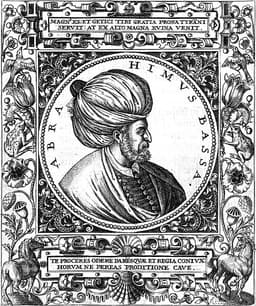
Ibrahim Pasha
Politician · Medieval
68.7Total
Basic Information
Born
1292
1493
Died
1350
1536
Era
Medieval
Medieval
Nationality
Mamluk Sultanate
Ottoman Empire
Occupation
Politician
Politician
Civilization
Middle Eastern
Middle Eastern
Score Comparison
Military (10%)
43.3
60.0
Political (20%)
63.8
78.0
Influence (20%)
58.3
82.0
Legacy (20%)
55.0
52.0
Leadership (15%)
78.0
80.0
Strategy (15%)
40.4
55.0
TOTAL
58.0
68.7
Ibn al-Qayyim — Complete Timeline
1306 AD
Imprisoned alongside Ibn Taymiyyah in CairoPolitical Action
Ibn al-Qayyim was imprisoned with his teacher Ibn Taymiyyah in the Citadel of Cairo for their shared theological views. He remained loyal to Ibn Taymiyyah throughout the imprisonment, continuing to study and write.
ImprisonmentIbn TaymiyyahTheology
destructive
1340 AD
Wrote 'The Provisions of the Hereafter' (Zad al-Ma'ad)Cultural◆ Major
Ibn al-Qayyim completed a comprehensive work on Islamic eschatology and the Prophet Muhammad's life, covering topics from death to the afterlife. The book became a standard reference for Sunni eschatology.
EschatologyProphetic BiographySunni Islam
Impact: regional
Served as a judge (qadi) in DamascusPolitical Action
Ibn al-Qayyim was appointed as a judge in Damascus, where he implemented Hanbali jurisprudence. He was known for his strict rulings and his opposition to Sufi practices, following the teachings of Ibn Taymiyyah.
JudiciaryHanbaliDamascus
1345 AD
Wrote 'The Medicine of the Prophet' (Al-Tibb al-Nabawi)Cultural
Ibn al-Qayyim compiled a treatise on prophetic medicine, combining hadith with Galenic medical theory. He recommended honey, black seed, and cupping as treatments, and criticized unorthodox medical practices.
MedicineHadithProphetic Tradition
Impact: regional
1348 AD
Wrote 'The Soul' (Al-Ruh)Cultural
Ibn al-Qayyim wrote a detailed treatise on the nature of the soul, its survival after death, and the intermediate state (barzakh). He argued for the soul's immortality and its ability to interact with the living.
TheologySoulEschatology
Impact: regional
Ibrahim Pasha — Complete Timeline
1536 AD
Execution by Suleiman the MagnificentPolitical Action◆ Major
Sultan Suleiman ordered the execution of Grand Vizier Ibrahim Pasha, his longtime friend and confidant. Ibrahim was strangled in the Topkapi Palace after being accused of overreaching his authority and possibly plotting against the sultan. His death shocked the Ottoman court.
Ottoman PoliticsExecutionSuleiman
Impact: nationaltragic
Expert Analysis
Origins
Ibn al-Qayyim (1292–1350 CE) was born in Damascus under the Mamluk Sultanate, into a family of legal scholars. He studied under the influential Hanbali theologian Ibn Taymiyyah, becoming his foremost disciple. His education focused on Islamic jurisprudence, theology, and prophetic traditions.
Ibrahim Pasha (c. 1493–1536 CE) was born to a Christian family in Parga, Greece, then part the Venetian Republic. Captured as a slave, he was educated in the Ottoman palace school (Enderun), where he converted to Islam and developed close ties with the future Sultan Suleiman. His upbringing was shaped by military and administrative training.
Rise to Power
Ibn al-Qayyim rose to prominence as a legal scholar through his association with Ibn Taymiyyah. He taught at the Sadr al-Din al-Hanbali school in Damascus and gained a following for his writings. His imprisonment in 1326 alongside Ibn Taymiyyah in Cairo Citadel solidified his reputation as a defender of orthodox theology. After their release in 1328, he continued to write and teach, eventually serving as a qadi (judge) in Damascus.
Ibrahim Pasha's rise was meteoric. As a close childhood friend of Suleiman, he was appointed Grand Vizier in 1523, shortly after Suleiman became sultan. He commanded military campaigns, including the Siege of Rhodes (1522) and the Battle of Mohács (1526), which expanded Ottoman territory. He also served as the sultan's chief diplomat, negotiating with European powers.
Leadership & Governance
Ibn al-Qayyim's leadership was intellectual and moral. As a qadi, he enforced Hanbali law strictly, opposing innovations and mystical practices. His governance approach centered on religious reform, exemplified by his work 'The Medicine of the Prophet', which integrated prophetic traditions with Galenic medicine. He scored 78.0 in Leadership, reflecting his adherence to principle over pragmatism.
Ibrahim Pasha wielded immense political power, scoring 78.0 in Political and 55.0 in Strategy. He centralized administrative control, reorganized the Ottoman military, and built patronage networks. However, his governance style was autocratic; he amassed wealth and power, which alienated other officials. His military score of 60.0 reflects his role in campaigns, though he often delegated command to others.
Triumph & Tragedy
Ibn al-Qayyim's greatest success was his prolific authorship; his 'Zad al-Ma'ad' (Provisions of the Hereafter) remains a widely read work on Islamic eschatology. He also resisted persecution alongside Ibn Taymiyyah, maintaining his integrity. His failure was limited practical impact; his strict rulings as a qadi may have alienated some, and his influence waned after his death until revived by later Salafists.
Ibrahim Pasha's triumphs include the conquest of Hungary and the subjugation of the Safavids, expanding Ottoman influence. He also negotiated the Treaty of Constantinople (1533) with the Habsburgs, gaining territorial concessions. His tragedy was his execution in 1536 on Suleiman's orders, likely due to his growing arrogance and perceived disloyalty. This abrupt end cut short his achievements.
Character & Destiny
Ibn al-Qayyim was characterized by intellectual rigor and loyalty to his teacher. He was systematic in his writings, compiling evidence from Quran, hadith, and tradition. His destiny was shaped by his commitment to orthodoxy, which limited his political influence but ensured his scholarly legacy. He scored 58.3 in Influence, reflecting his enduring but niche impact.
Ibrahim Pasha was ambitious, charismatic, and culturally sophisticated, speaking multiple languages. His close friendship with Suleiman gave him extraordinary power, but his pride and accumulation of wealth led to his downfall. Historical assessments note his administrative skill but also his overreach. His Influence score of 82.0 reflects his central role in Ottoman governance for over a decade.
Legacy
Ibn al-Qayyim's legacy is primarily as a scholar. His works, including 'Al-Ruh' (The Soul) and 'Al-Tibb al-Nabawi', are still studied in Islamic seminaries. He influenced later reform movements, especially Wahhabism and Salafism, which revived his ideas. His Legacy score of 55.0 reflects his importance within a specific tradition.
Ibrahim Pasha's legacy is more ambiguous. He is remembered as a capable grand vizier who helped shape the Ottoman Empire's golden age, but his execution tarnished his reputation. His administrative reforms and architectural patronage (e.g., the Ibrahim Pasha Palace in Istanbul) left a mark, but his impact was largely tied to Suleiman's reign. His Legacy score of 52.0 is slightly lower due to his personal downfall.
Conclusion
Ibrahim Pasha had greater immediate impact, scoring 68.7 overall to Ibn al-Qayyim's 58.0. His political and military actions shaped the Ottoman Empire's expansion and governance during a critical period. However, Ibn al-Qayyim's long-term influence in Islamic thought, though narrower, has persisted for centuries. Taking a stance, Ibrahim Pasha's higher total score reflects his broader, more tangible achievements in statecraft and war, making him more impactful in historical terms. Ibn al-Qayyim remains influential within a specific domain, but Ibrahim Pasha's legacy is more globally significant.
Rankings
🥇
Ibrahim PashaLeader
Mil: 60.0Pol: 78.0Inf: 82.0
68.7
🥈
Ibn al-Qayyim
Mil: 43.3Pol: 63.8Inf: 58.3
58.0
+10.7 behind
How This Comparison Works
Algorithm
Each figure is scored on 6 dimensions (0—100 scale) based on structured historical data: Military (10%), Political (20%), Influence (20%), Legacy (20%), Leadership (15%), Strategy (15%). The weighted total produces the final ranking.
Data Sources
Scores are computed from structured sub-indicators in the database. Scale factors adjust for era (Ancient ×0.85, Modern ×1.0) and civilization size (Eastern ×1.05, Other ×0.80) to account for differences in population and military scale.
Maximum 3 Figures
Comparisons are limited to 2—3 figures to ensure readability and statistical meaningfulness.
Error Margins
±5 points per dimension — Sub-scores are derived from historical records with inherent uncertainty. Two figures within 5 points on a dimension should be considered roughly equivalent in that area.
Total Score Accuracy
±3 points overall — The weighted combination of 6 dimensions produces a total score with approximately ±3 points of uncertainty. Differences of less than 3 points are not statistically significant— the figures are effectively tied.
Known Limitations
- Historical records are incomplete and uneven across civilizations
- Figures from oral-tradition societies may be underrepresented
- Occupation labels can misclassify multi-role figures
- Scores measure capability and impact, not moral character
- Quantitative scoring is a comparison tool, not absolute truth
Capability Radar
Military (10%) — Battles & Warfare
Battles
24
75
Win Rate
31
80
Expansion
30
85
Political (20%) — Governance & Reform
Reform
67
80
Diplomacy
71
90
Economy
74
75
Influence (20%) — Cultural & Global Reach
Cultural
65
65
Global
55
65
Legacy (20%) — Historical Impact
Historical
70
70
Longevity
70
60
Leadership (15%) — Power & Stability
Tenure
63
85
Stability
80
70
Strategy (15%) — Tactics & Innovation
Strategy
36
82
Tactics
37
78
Reform
40
70
Similar Comparisons
Comments & Discussion
No comments yet. Be the first to share your thoughts!