Loading...
Ibn Saud vs Julius Caesar
Julius Caesar leads by 16.7 pts · 2 figures compared
…
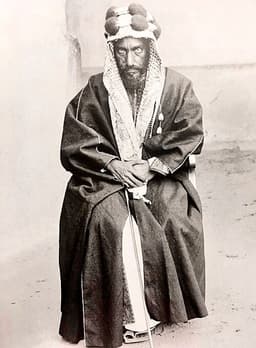
Ibn Saud
Emperor · Modern
66.1Total

Julius Caesar
General · Ancient
82.8Total
Basic Information
Born
1875
-100
Died
1953
-44
Era
Modern
Ancient
Nationality
Saudi Arabia
Roman Republic
Occupation
Emperor
General
Civilization
Middle Eastern
Western
Score Comparison
Military (10%)
78.5
88.0
Political (20%)
85.0
78.0
Influence (20%)
68.0
85.0
Legacy (20%)
40.0
82.0
Leadership (15%)
78.0
80.0
Strategy (15%)
68.1
85.0
TOTAL
66.1
82.8
Ibn Saud — Complete Timeline
1902 AD
Capture of RiyadhWar
Ibn Saud led a small force of 40 men in a daring night raid to recapture Riyadh from the Al Rashid clan. This victory re-established the House of Saud in the Najd region and marked the beginning of his campaign to unify Arabia.
ConquestUnificationRaid
Impact: regional
1929 AD
Battle of SabillaWar◆ Major
Ibn Saud's forces defeated the Ikhwan rebels at the Battle of Sabilla, ending the Ikhwan uprising. This battle solidified his control over the Arabian Peninsula and allowed him to consolidate power under a centralized state.
Civil WarRebellionConsolidation
Impact: regionaldestructive
1932 AD
Proclamation of the Kingdom of Saudi ArabiaPolitical Action
Ibn Saud formally unified the regions of Najd, Hejaz, and other territories into the Kingdom of Saudi Arabia. He declared himself king, establishing a hereditary monarchy that has ruled the country ever since.
State FormationUnificationMonarchy
Impact: globalconstructive
1933 AD
Signing of the Saudi Aramco concessionPolitical Action
Ibn Saud granted Standard Oil of California (SOCAL) a 60-year oil concession in eastern Saudi Arabia. This agreement led to the discovery of vast oil reserves, transforming the kingdom's economy and geopolitical standing.
OilEconomic TransformationForeign Investment
Impact: globalconstructive
Julius Caesar — Complete Timeline
58 BC
Gallic WarsWar◆ Major
Caesar, as proconsul of Gaul, launched a series of campaigns that conquered all of Gaul (modern France, Belgium, and parts of Switzerland). He fought numerous battles, including against the Helvetii, the Belgae, and the Gallic chieftain Vercingetorix. The wars brought immense wealth and a loyal army to Caesar.
Gallic WarsConquestRoman Expansion
Impact: regional
49 BC
Crossing the RubiconPolitical Action◆ Major
Caesar led Legio XIII across the Rubicon River into Italy, defying the Roman Senate's order to disband his army. This act triggered a civil war against Pompey and the Optimates, ultimately leading to Caesar's dictatorship and the end of the Roman Republic.
Roman Civil WarEnd of RepublicPower Struggle
Impact: global
48 BC
Battle of PharsalusWar◆ Major
Caesar's outnumbered army defeated the larger forces of Pompey the Great at Pharsalus in Greece. Caesar's tactical use of a reserve line to counter Pompey's cavalry charge proved decisive. Pompey fled to Egypt, where he was assassinated, leaving Caesar as the undisputed master of the Roman world.
Roman Civil WarBattleDecisive Victory
Impact: regional
44 BC
Appointment as Dictator for LifePolitical Action◆ Major
The Roman Senate appointed Caesar dictator perpetuo (dictator for life), granting him unprecedented personal power. This move concentrated military, legislative, and judicial authority in one person, effectively ending the Roman Republic's traditional system of checks and balances and alarming many senators.
DictatorshipEnd of RepublicPower Consolidation
Impact: regionaldestructive
Assassination on the Ides of MarchPolitical Action◆ Major
A group of Roman senators, led by Marcus Junius Brutus and Gaius Cassius Longinus, stabbed Caesar to death at a meeting of the Senate in the Theatre of Pompey. The assassination was intended to restore the Republic, but instead triggered another civil war that led to the rise of the Roman Empire.
AssassinationRoman PoliticsEnd of Republic
Impact: globaldestructive
Expert Analysis
ibn-saud-vs-julius-caesar
# The Unifier and the Dictator: Julius Caesar and Ibn Saud
On a winter night in 1902, forty men crept through the palm groves surrounding Riyadh, their leader scaling the mud-brick walls of a fortress with nothing but a rifle and an unshakable faith in destiny. Two thousand years earlier and half a world away, another man stood on the banks of a small river in northern Italy, staring at the waters of the Rubicon, knowing that crossing them would mean civil war, or empire. Both men were about to change history forever. But what drove Julius Caesar and Ibn Saud—separated by two millennia, continents, and civilizations—to pursue such similar paths of conquest, and why did their stories end so differently?
Origins
Julius Caesar was born into the twilight of the Roman Republic, a world of crumbling traditions and ruthless ambition. His family, the Julii, claimed descent from the goddess Venus, but they were political outsiders in a system dominated by a handful of aristocratic clans. Caesar grew up witnessing the blood-soaked rivalry between Marius and Sulla, learning early that power was won not by birthright alone, but by cunning, courage, and the willingness to break rules. By contrast, Ibn Saud emerged from the harsh deserts of central Arabia in 1875, a time when the Arabian Peninsula was a patchwork of feuding tribes, with the Ottoman Empire exerting only nominal control. His family, the Al Saud, had once ruled much of the region but had been driven into exile by the rival Al Rashid clan. Young Abdulaziz ibn Saud learned statecraft not in marble forums but in the tents of Bedouin camps, absorbing the codes of honor, loyalty, and tribal diplomacy that would define his life.
Rise to Power
Caesar’s path to power was paved with debt and audacity. At thirty-nine, he forged the First Triumvirate with Pompey and Crassus, then secured command of Gaul—a province that became his forge. Over eight years, from 58 to 50 BCE, he conquered what is now France and Belgium, defeating a million Gauls and taking a million more as slaves. His Commentaries on the Gallic Wars turned military dispatches into political propaganda, making him a legend in Rome. When the Senate ordered him to disband his army, he crossed the Rubicon in 49 BCE, igniting a civil war that ended with him as dictator for life.
Ibn Saud’s rise was even more improbable. Exiled as a child, he returned in 1902 at age twenty-seven to recapture Riyadh with just forty men—a feat of raw courage that echoes Caesar’s own daring. Over the next three decades, he waged a relentless campaign, not against foreign armies but against rival tribes and the fanatical Ikhwan warriors he himself had unleashed. His greatest victory came not on a battlefield but at the Battle of Sabilla in 1929, where he crushed the Ikhwan rebels who had turned against him. Where Caesar conquered through legions and siege engines, Ibn Saud conquered through marriage alliances, tribal negotiations, and the strategic use of religious authority.
Leadership & Governance
Caesar governed as a revolutionary reformer. He expanded the Senate, reformed the calendar, granted citizenship to provincials, and launched massive public works. Yet his rule was increasingly autocratic—he accepted the title "dictator for life," minted coins with his image, and centralized power in ways that alarmed the old aristocracy. His military genius was undeniable: at Alesia in 52 BCE, he besieged a Gallic stronghold while simultaneously repelling a massive relief army, a feat of engineering and tactics that remains a textbook example of siege warfare.
Ibn Saud’s governance was shaped by the constraints of desert politics. He ruled through a delicate balance of tribal loyalty, Wahhabi religious legitimacy, and personal charisma. He established the Kingdom of Saudi Arabia in 1932, unifying Najd and Hejaz under a single crown. His most prescient decision came in 1933, when he signed the oil concession with Standard Oil of California—a move that would transform his impoverished kingdom into a global power. Unlike Caesar, Ibn Saud never sought to centralize power into a single, autocratic institution; instead, he created a monarchy that relied on family consensus and religious endorsement.
Triumph & Tragedy
Caesar’s triumph was also his tragedy. In 44 BCE, at the height of his power, he was stabbed to death by senators who feared he would abolish the Republic. His assassination plunged Rome into another civil war, but his adopted heir, Octavian, would ultimately fulfill Caesar’s vision by founding the Roman Empire. The tragedy was that Caesar’s genius for conquest outstripped his genius for consolidation—he understood how to seize power but not how to make it permanent without destroying the system that gave it meaning.
Ibn Saud’s tragedy was subtler. He lived long enough to see his kingdom established and his oil wealth begin to flow, dying in 1953 at age seventy-seven. But the very forces he had used to unify Arabia—tribal loyalty and religious fervor—would later create tensions that his successors could not resolve. The Ikhwan rebellion he crushed in 1929 foreshadowed the fundamentalist challenges that would haunt Saudi Arabia for generations. His triumph was complete, but it sowed seeds of future conflict.
Character & Destiny
Caesar was a gambler who calculated risks with mathematical precision. He pardoned his enemies, promoted talent regardless of class, and understood that perception was power. Yet his arrogance—his refusal to stand when the Senate honored him, his acceptance of divine honors—made him blind to the hatred he inspired. His character drove him to cross every line, and that same character led him to ignore the daggers.
Ibn Saud was a pragmatist who understood the limits of power. He knew when to fight and when to negotiate, when to crush an enemy and when to marry into his family. He was ruthless—he destroyed the Ikhwan who had made his conquests possible—but he was also patient, spending thirty years to achieve what a less disciplined man might have attempted in five. His character was shaped by the desert: endurance, patience, and the knowledge that alliances are temporary.
Legacy
Caesar’s legacy is the Roman Empire, Western civilization’s foundational political structure. His name became a title—Kaiser, Tsar, Caesar—and his military tactics are still studied. Yet his assassination ensured that the Republic died with him, replaced by an imperial system that would last five centuries.
Ibn Saud’s legacy is Saudi Arabia itself, a nation that would not exist without his vision and will. The oil concession he signed in 1933 transformed the Middle East and the world. But his kingdom remains a paradox: a modern state built on ancient foundations, a monarchy that must balance tradition and change.
Conclusion
Two men, two deserts—one of stone and snow, one of sand and sun. Caesar crossed a river and changed the world; Ibn Saud scaled a wall and built a nation. Both were unifiers, both were conquerors, both were founders. But Caesar’s empire crumbled while Ibn Saud’s kingdom endures. Perhaps the difference lies not in their ambition—both were boundless—but in their understanding of time. Caesar wanted everything now; Ibn Saud was willing to wait. The lesson, if there is one, is that history favors not the boldest, but the most patient.
Rankings
🥇
Julius CaesarLeader
Mil: 88.0Pol: 78.0Inf: 85.0
82.8
🥈
Ibn Saud
Mil: 78.5Pol: 85.0Inf: 68.0
66.1
+16.7 behind
How This Comparison Works
Algorithm
Each figure is scored on 6 dimensions (0—100 scale) based on structured historical data: Military (10%), Political (20%), Influence (20%), Legacy (20%), Leadership (15%), Strategy (15%). The weighted total produces the final ranking.
Data Sources
Scores are computed from structured sub-indicators in the database. Scale factors adjust for era (Ancient ×0.85, Modern ×1.0) and civilization size (Eastern ×1.05, Other ×0.80) to account for differences in population and military scale.
Maximum 3 Figures
Comparisons are limited to 2—3 figures to ensure readability and statistical meaningfulness.
Error Margins
±5 points per dimension — Sub-scores are derived from historical records with inherent uncertainty. Two figures within 5 points on a dimension should be considered roughly equivalent in that area.
Total Score Accuracy
±3 points overall — The weighted combination of 6 dimensions produces a total score with approximately ±3 points of uncertainty. Differences of less than 3 points are not statistically significant— the figures are effectively tied.
Known Limitations
- Historical records are incomplete and uneven across civilizations
- Figures from oral-tradition societies may be underrepresented
- Occupation labels can misclassify multi-role figures
- Scores measure capability and impact, not moral character
- Quantitative scoring is a comparison tool, not absolute truth
Capability Radar
Military (10%) — Battles & Warfare
Battles
85
95
Win Rate
90
92
Expansion
90
97
Political (20%) — Governance & Reform
Reform
80
90
Diplomacy
85
85
Economy
70
82
Influence (20%) — Cultural & Global Reach
Cultural
70
88
Global
75
94
Legacy (20%) — Historical Impact
Historical
85
95
Longevity
80
96
Leadership (15%) — Power & Stability
Tenure
85
75
Stability
75
60
Strategy (15%) — Tactics & Innovation
Strategy
85
94
Tactics
75
96
Reform
80
88
Similar Comparisons
Comments & Discussion
No comments yet. Be the first to share your thoughts!