Loading...
Ibn Tumart vs Rajendra Chola I
Rajendra Chola I leads by 26.6 pts · 2 figures compared
…
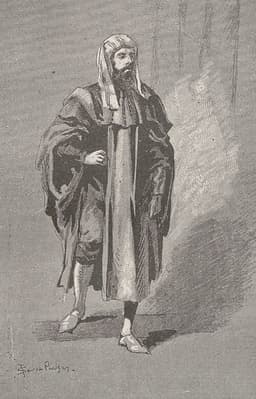
Ibn Tumart
Emperor · Medieval
55.6Total
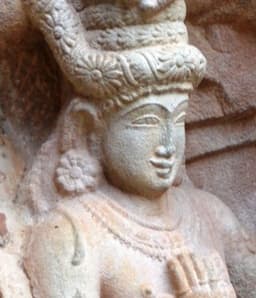
Rajendra Chola I
Emperor · Medieval
82.2Total
Basic Information
Born
1080
971
Died
1130
1044
Era
Medieval
Medieval
Nationality
Almohad Caliphate
India
Occupation
Emperor
Emperor
Civilization
Middle Eastern
Indian
Score Comparison
Military (10%)
55.0
84.7
Political (20%)
61.3
82.0
Influence (20%)
58.3
84.0
Legacy (20%)
56.0
84.0
Leadership (15%)
47.3
78.0
Strategy (15%)
52.5
77.6
TOTAL
55.6
82.2
Ibn Tumart — Complete Timeline
1121 AD
Proclamation as MahdiCultural
Ibn Tumart proclaimed himself the Mahdi, the guided one, after returning from the East. He began preaching a strict reformist message, condemning the Almoravids for their perceived religious laxity and calling for a return to the Quran and Sunnah.
Impact: regional
Establishment of the Almohad MovementPolitical Action◆ Major
Ibn Tumart founded the Almohad movement (al-Muwahhidun) in the Atlas Mountains of Morocco. He organized his followers into a disciplined religious and military community, rejecting the Almoravid interpretation of Islam and advocating for tawhid (strict monotheism).
Impact: regionalconstructive
1125 AD
Compilation of the Almohad DoctrineCultural
Ibn Tumart compiled his teachings into a book titled 'A'azz ma Yutlab' (The Most Precious of What is Sought). This work outlined the Almohad doctrine, emphasizing the unity of God and rejecting anthropomorphism, and became the foundation of the movement's ideology.
Impact: regionalconstructive
1130 AD
Battle of al-BuhayraWar◆ Major
Ibn Tumart's Almohad forces were defeated by the Almoravids at the Battle of al-Buhayra near Marrakech. This setback prevented the Almohads from capturing the Almoravid capital and forced them to retreat to the mountains.
Impact: regional
Death of Ibn TumartOther◆ Major
Ibn Tumart died shortly after the Battle of al-Buhayra, possibly from wounds or illness. His death was kept secret by his successor Abd al-Mu'min, who continued the Almohad movement and eventually overthrew the Almoravids.
Impact: regionaltragic
Rajendra Chola I — Complete Timeline
1014 AD
Accession to the Chola ThronePolitical Action
Rajendra Chola I succeeded his father Raja Raja Chola I as emperor of the Chola Empire. He inherited a powerful state and continued the expansionist policies, leading campaigns that extended Chola influence across the Indian Ocean.
Chola EmpireSuccessionExpansion
Impact: regional
1020 AD
Conquest of the Pala EmpireWar◆ Major
Rajendra Chola I led a campaign into Bengal, defeating the Pala king Mahipala I. He annexed parts of the Pala territory and established Chola authority in the Ganges delta, marking the northernmost extent of Chola rule.
Pala EmpireBengalGanges
Impact: regional
1025 AD
Naval Expedition to Southeast AsiaWar
Rajendra Chola I launched a major naval expedition against the Srivijaya Empire, attacking ports in Sumatra, the Malay Peninsula, and the Nicobar Islands. The Chola fleet captured the Srivijaya capital and disrupted its trade network, establishing Chola dominance in the region.
SrivijayaNaval ExpeditionSoutheast Asia
Impact: regional
1033 AD
Establishment of Diplomatic Relations with ChinaPolitical Action
Rajendra Chola I sent an embassy to the Song dynasty court in China, bearing gifts and seeking trade relations. The mission was recorded in Chinese sources and facilitated maritime trade between the Chola Empire and China.
ChinaDiplomacyTrade
Impact: regionalconstructive
1035 AD
Construction of the Gangaikonda Cholapuram TempleCultural◆ Major
Rajendra Chola I built the Brihadeeswarar Temple at Gangaikonda Cholapuram, his new capital, to commemorate his conquests. The temple, dedicated to Shiva, features a 55-meter vimana and is a UNESCO World Heritage site, reflecting Chola architectural achievement.
Gangaikonda CholapuramTempleChola Architecture
Impact: regionalconstructive
Expert Analysis
Ibn Tumart vs Rajendra Chola I
The Emperor and the Mahdi: Two Paths to Power in the Medieval World
On a sweltering day in 1025, Rajendra Chola I stood on the deck of a warship off the coast of Sumatra, watching his fleet burn the port of a rival empire. Half a world away, in the rugged Atlas Mountains of Morocco, a Berber scholar named Ibn Tumart was retreating to a cave, convinced that God had chosen him to purify Islam. One was a conqueror who built his power on the waves; the other, a prophet who forged his in the wilderness. They never met, never corresponded, and likely never heard of each other. Yet their stories, unfolding in the same medieval century, reveal two radically different answers to the same question: How does a man reshape the world?
Origins
Rajendra Chola I was born in 971 into the lap of imperial privilege. His father, Raja Raja Chola I, had transformed the Chola Empire of southern India into a military and cultural powerhouse. Rajendra grew up in a world of granite temples, bureaucratic records, and a standing army that answered only to the king. He learned statecraft as a son learns a trade—by watching, by practicing, by inheriting.
Ibn Tumart, born in 1080 in a small Berber village in what is now Morocco, inherited nothing but a restless mind. He left home to study in Cordoba, then Baghdad, where he absorbed the strict monotheism of scholars like al-Ghazali. What he saw in his travels disgusted him: Muslims who worshipped saints, sold wine, and let women go unveiled. He returned to North Africa not as a prince, but as a firebrand, a man who believed that the Almoravid rulers who dominated the region had betrayed the faith. His weapon was not a sword, but a sermon.
Rise to Power
Rajendra’s path was paved by his father. When he ascended the Chola throne in 1014, he inherited a state that was already the dominant power in southern India. His first major campaign, the conquest of the Pala Empire in 1020, was a classic medieval war of expansion: he marched his army into Bengal, defeated King Mahipala I, and annexed territory. It was brutal, efficient, and unremarkable—except that it showed he could do what his father had done.
Ibn Tumart’s rise was anything but conventional. In 1121, he stood before a crowd in the Atlas Mountains and declared himself the Mahdi—the guided one, the messianic figure who, in Islamic tradition, would restore justice before the end of days. This was not a claim a man made lightly. It was heresy to many, but to his followers, it was revelation. He organized them into a movement called the Almohads—al-Muwahhidun, “the Unitarians”—and built a mountain fortress from which he waged a holy war against the Almoravids. His power came not from birth, but from belief.
Leadership & Governance
Rajendra governed like an accountant who also happened to be a general. His military scores—79.3 for Military, 71.6 for Strategy—reflect a commander who was competent but not brilliant. His true genius was political. He built a new capital at Gangaikonda Cholapuram, a city whose name meant “the town of the Chola who conquered the Ganges.” There, he constructed a temple that rivaled his father’s, a stone declaration that his reign was not just an echo of the past. He also sent an embassy to the Song dynasty in China in 1033, opening trade routes that would enrich his empire for generations.
Ibn Tumart, by contrast, was a theologian who stumbled into war. His military score of 40.2 is the lowest among his attributes—and it shows. In 1130, he led his forces against the Almoravids at the Battle of al-Buhayra, near Marrakech. It was a disaster. His army was crushed, and he died shortly after, possibly from wounds, possibly from illness. He was 50 years old. But his leadership was never about winning battles. He had written a book, *A'azz ma Yutlab* (“The Most Precious of What is Sought”), that codified his doctrine. His real victory was ideological: he had lit a fire that would not be extinguished.
Triumph & Tragedy
Rajendra’s greatest moment came in 1025, when he launched a naval expedition against the Srivijaya Empire, a maritime power based in modern-day Indonesia and Malaysia. He attacked ports in Sumatra and the Malay Peninsula, breaking Srivijaya’s monopoly on trade between India and China. It was a stunning achievement—a fleet from southern India crossing the Bay of Bengal to strike at the heart of Southeast Asia. No Indian emperor had done such a thing before.
His tragedy was subtler. By the time of his death in 1044, his empire had grown so vast that it was difficult to hold. The conquests in Bengal and Southeast Asia were more symbolic than practical; they brought glory, but also overreach. His successors would struggle to maintain what he had built.
Ibn Tumart’s triumph was his death. His followers kept his passing secret for years, using his name as a rallying cry. Under his successor, Abd al-Mu'min, the Almohads would go on to conquer the Almoravids and rule North Africa and Spain for decades. Ibn Tumart never saw his victory. He died a failure on the battlefield, but his ideas outlived him.
Character & Destiny
Rajendra was a man of the world. He measured success in territory, tribute, and trade. He was pragmatic, diplomatic, and patient—he spent years preparing his fleet before striking Srivijaya. His total score of 78.1 reflects a well-rounded ruler who excelled in governance and influence.
Ibn Tumart was a man of the absolute. He measured success in purity, doctrine, and devotion. He was rigid, charismatic, and impatient—he declared himself the Mahdi and expected the world to bend. His total score of 60.1 is lower, but it misses the point. He was not meant to be a great emperor; he was meant to be a great catalyst.
Legacy
Rajendra Chola I is remembered today in the stones of Gangaikonda Cholapuram, in the Tamil poems that celebrate his fleet, and in the trade networks that linked India to China. His legacy is tangible: a temple, a city, a dynasty.
Ibn Tumart is remembered in the mosques of North Africa, in the theology of the Almohads, and in the idea that faith can topple empires. His legacy is invisible but enduring: a doctrine, a movement, a revolution.
Conclusion
One man inherited a kingdom and expanded it. The other invented a kingdom and died before he could rule it. Rajendra Chola I sailed across oceans; Ibn Tumart climbed mountains. Both changed the world—but in ways that reveal how different power can be. For the emperor, power was a tool to be wielded. For the Mahdi, power was a truth to be revealed. In the end, the world needs both: the builder and the prophet, the fleet and the flame.
Rankings
🥇
Rajendra Chola ILeader
Mil: 84.7Pol: 82.0Inf: 84.0
82.2
🥈
Ibn Tumart
Mil: 55.0Pol: 61.3Inf: 58.3
55.6
+26.6 behind
How This Comparison Works
Algorithm
Each figure is scored on 6 dimensions (0—100 scale) based on structured historical data: Military (10%), Political (20%), Influence (20%), Legacy (20%), Leadership (15%), Strategy (15%). The weighted total produces the final ranking.
Data Sources
Scores are computed from structured sub-indicators in the database. Scale factors adjust for era (Ancient ×0.85, Modern ×1.0) and civilization size (Eastern ×1.05, Other ×0.80) to account for differences in population and military scale.
Maximum 3 Figures
Comparisons are limited to 2—3 figures to ensure readability and statistical meaningfulness.
Error Margins
±5 points per dimension — Sub-scores are derived from historical records with inherent uncertainty. Two figures within 5 points on a dimension should be considered roughly equivalent in that area.
Total Score Accuracy
±3 points overall — The weighted combination of 6 dimensions produces a total score with approximately ±3 points of uncertainty. Differences of less than 3 points are not statistically significant— the figures are effectively tied.
Known Limitations
- Historical records are incomplete and uneven across civilizations
- Figures from oral-tradition societies may be underrepresented
- Occupation labels can misclassify multi-role figures
- Scores measure capability and impact, not moral character
- Quantitative scoring is a comparison tool, not absolute truth
Capability Radar
Military (10%) — Battles & Warfare
Battles
30
95
Win Rate
35
98
Expansion
40
95
Political (20%) — Governance & Reform
Reform
80
88
Diplomacy
30
85
Economy
20
92
Influence (20%) — Cultural & Global Reach
Cultural
60
85
Global
50
85
Legacy (20%) — Historical Impact
Historical
65
88
Longevity
55
80
Leadership (15%) — Power & Stability
Tenure
25
90
Stability
20
90
Strategy (15%) — Tactics & Innovation
Strategy
45
92
Tactics
40
90
Reform
70
85
Similar Comparisons
Comments & Discussion
TamilTyrant6/16/2026
Rajendra Chola I is overrated as some naval genius when his fleet basically bullied weak Southeast Asian kingdoms with zero maritime defense. The Kadaram campaign was a glorified raid, not empire-building. Meanwhile Ibn Tumart actually established a lasting dynasty—the Almohads ruled North Africa and Spain for over a century. Rajendra's Chola collapse happened within decades of his death. Empire longevity beats flashy inscriptions. Full stop.
TidalMillennial6/16/2026
拿海上霸权和宗教运动比,简直驴唇不对马嘴。拉金德拉靠的是印度洋季风和娴熟的水文知识,没这本事你连东南亚海岸都摸不到。伊本•图马尔特一个神学教授,连基本的军事指挥都不懂,纯粹靠柏柏尔部落的狂热替他卖命。拿圣人对抗海军统帅?笑死。
NumericNirvana6/16/2026
The symmetry here is fake. Rajendra left behind actual census data, land revenue records, and bronze inscriptions detailing precise troop counts. Ibn Tumart? Pure theology and hearsay. The Almohad movement gets 90% of its credibility from later chroniclers rewriting history to legitimize successors. We have temple tax ledgers from 1025 CE. Show me one contemporary document proving Ibn Tumart existed before 1140. I'll wait.
RedSeaZealot6/16/2026
伊本•图马尔特才是真变革者,拉金德拉不过是继承爸爸遗产的富二代。你把两人生平放一起比,就已经暴露偏见——一个白手起家从山洞里召唤出帝国,另一个靠世袭海军和老爸修好的神庙镀金。阿尔摩哈德运动直接改变了伊斯兰世界的信仰结构,朱罗王朝的战船再牛,有改变过任何宗教或哲学吗?没有。
PapyrusPugilist6/16/2026
You're all missing the forest for the trees. Rajendra Chola literally had his biography carved onto copper plates and temple walls—he controlled the narrative. Ibn Tumart died in relative obscurity and his successor Abd al-Mu'min had to invent half his miracles. The Chola king understood historical branding centuries before PR was a concept. The Mahdi? Just a convenient myth for Berber unification. History favors the better propagandist, and that's Rajendra.