Loading...
Ibn Tumart vs Robert II the Pious
Ibn Tumart leads by 10.7 pts · 2 figures compared
…
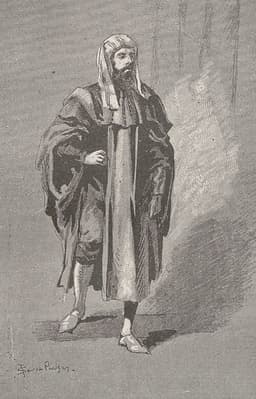
Ibn Tumart
Emperor · Medieval
55.6Total
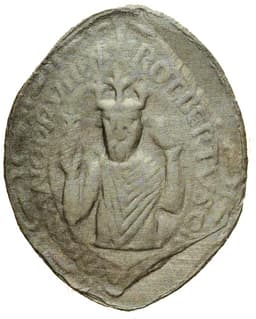
Robert II the Pious
Emperor · Medieval
44.9Total
Basic Information
Born
1080
972
Died
1130
1031
Era
Medieval
Medieval
Nationality
Almohad Caliphate
France
Occupation
Emperor
Emperor
Civilization
Middle Eastern
Western
Score Comparison
Military (10%)
55.0
20.0
Political (20%)
61.3
37.9
Influence (20%)
58.3
50.2
Legacy (20%)
56.0
41.7
Leadership (15%)
47.3
65.0
Strategy (15%)
52.5
45.0
TOTAL
55.6
44.9
Ibn Tumart — Complete Timeline
1121 AD
Proclamation as MahdiCultural
Ibn Tumart proclaimed himself the Mahdi, the guided one, after returning from the East. He began preaching a strict reformist message, condemning the Almoravids for their perceived religious laxity and calling for a return to the Quran and Sunnah.
Impact: regional
Establishment of the Almohad MovementPolitical Action◆ Major
Ibn Tumart founded the Almohad movement (al-Muwahhidun) in the Atlas Mountains of Morocco. He organized his followers into a disciplined religious and military community, rejecting the Almoravid interpretation of Islam and advocating for tawhid (strict monotheism).
Impact: regionalconstructive
1125 AD
Compilation of the Almohad DoctrineCultural
Ibn Tumart compiled his teachings into a book titled 'A'azz ma Yutlab' (The Most Precious of What is Sought). This work outlined the Almohad doctrine, emphasizing the unity of God and rejecting anthropomorphism, and became the foundation of the movement's ideology.
Impact: regionalconstructive
1130 AD
Battle of al-BuhayraWar◆ Major
Ibn Tumart's Almohad forces were defeated by the Almoravids at the Battle of al-Buhayra near Marrakech. This setback prevented the Almohads from capturing the Almoravid capital and forced them to retreat to the mountains.
Impact: regional
Death of Ibn TumartOther◆ Major
Ibn Tumart died shortly after the Battle of al-Buhayra, possibly from wounds or illness. His death was kept secret by his successor Abd al-Mu'min, who continued the Almohad movement and eventually overthrew the Almoravids.
Impact: regionaltragic
Robert II the Pious — Complete Timeline
996 AD
Reign as King of the FranksPolitical Action◆ Major
Robert II succeeded his father Hugh Capet as King of the Franks. His reign was marked by efforts to consolidate royal power, but he faced challenges from powerful nobles and the Church, limiting his authority.
KingshipCapetianReign
Impact: national
998 AD
Excommunication for Marriage to Bertha of BurgundyPolitical Action◆ Major
Robert II was excommunicated by Pope Gregory V for marrying Bertha of Burgundy, his cousin, without papal dispensation. The excommunication was lifted after Robert repudiated Bertha, but it damaged his reputation and strained relations with the Church.
ExcommunicationMarriageChurch Conflict
Impact: nationaltragic
1000 AD
Patronage of the Cluniac ReformsCultural
Robert II supported the Cluniac monastic reforms, which aimed to purify the Church and reduce secular influence. His patronage strengthened the Cluniac movement and enhanced the Church's moral authority in France.
Church ReformClunyPatronage
Impact: regionalconstructive
1002 AD
Conflict with the Duchy of BurgundyWar
Robert II attempted to assert control over the Duchy of Burgundy after the death of Duke Henry I. The conflict lasted several years and resulted in limited success, as Burgundy remained largely independent under its own dukes.
WarBurgundyTerritorial Conflict
Impact: regional
Expert Analysis
Origins
Ibn Tumart was born around 1080 in the Atlas Mountains of Morocco, into the Hargha tribe of the Masmuda Berber confederation. His early education included Quranic studies, and he traveled to Córdoba and then to the East, where he studied under the theologian al-Ghazali (although direct contact is disputed). He returned to North Africa around 1116, deeply influenced by Ash'ari theology and determined to reform what he saw as the anthropomorphic and lax practices of the Almoravids.
Robert II the Pious was born in 972 in Orléans, France, to Hugh Capet, the first Capetian king, and Adelaide of Aquitaine. He was educated at the Cathedral school of Reims under the scholar Gerbert of Aurillac (later Pope Sylvester II). His upbringing was steeped in the ideals of Christian kingship, and he was known for his piety and learning.
Rise to Power
Ibn Tumart began preaching publicly in 1121, condemning the Almoravids as heretics. He proclaimed himself the Mahdi in 1124 after a dispute with Almoravid scholars. He retreated to the Atlas Mountains and established a fortified community at Tinmel, where he organized the Almohad movement (al-Muwahhidun, 'those who affirm the unity of God'). His followers, drawn from Masmuda tribes, were bound by a strict religious discipline and a hierarchical structure with a council of ten and a later council of fifty.
Robert II became co-king with his father in 987 and sole king upon Hugh Capet's death in 996. His early reign was challenged by powerful nobles, including the counts of Blois and Anjou. He sought to assert royal authority through strategic marriages and alliances. His marriage to Bertha of Burgundy, a cousin, led to excommunication by Pope Gregory V in 998, forcing him to repudiate her and marry Constance of Arles in 1003.
Leadership & Governance
Ibn Tumart was a charismatic religious leader who combined spiritual authority with political organization. He created a centralized, theocratic state with a clear hierarchy: the Mahdi (himself), the caliph (his successor), the council of ten, and the tribal sheikhs. He imposed strict moral codes, banned wine and music, and enforced a literal interpretation of the Quran. His governance was totalitarian, with no separation of religion and state.
Robert II's governance was marked by compromise and negotiation. He lacked the resources to dominate his vassals and instead relied on the Church's support. He patronized the Cluniac reforms, which aimed to reduce lay interference in ecclesiastical affairs, thereby strengthening the Church's independence. He also issued royal charters and promoted peace through assemblies, but his military power was limited, with a score of 20.0 compared to Ibn Tumart's 55.0.
Triumph & Tragedy
Ibn Tumart's greatest triumph was founding the Almohad movement, which survived his death and, under Abd al-Mu'min, conquered the Almoravids, creating an empire from Spain to Tunisia. However, his greatest failure was the defeat at al-Buhayra in 1130, where his forces failed to capture Marrakech. His death soon after could have ended the movement, but his successor concealed it for years, allowing consolidation.
Robert II's triumph was the peaceful succession of his son Henry I, ensuring Capetian continuity. He also successfully defended the royal domain against encroachments by nobles. His failure was his inability to expand royal power significantly; his conflict over Burgundy (1002-1004) ended in limited gains. His excommunication also weakened his moral authority, though he remained pious.
Character & Destiny
Ibn Tumart was a dogmatic and uncompromising reformer. He believed himself divinely guided, which gave him immense confidence but also made him rigid. His character was suited to founding a movement but not to the flexibility needed for conquest. His death at a critical moment showed the fragility of movements centered on a single charismatic leader.
Robert II was learned and devout, earning the epithet 'the Pious.' He preferred negotiation to war, which historians often see as weakness. However, his piety and support for the Cluniac reforms strengthened the Church, which in turn supported the Capetian monarchy. His character was more suited to preservation than expansion.
Legacy
Ibn Tumart's Almohad doctrine influenced Islamic theology for centuries, emphasizing tawhid (unity of God) and rejecting anthropomorphism. The Almohad Empire reshaped North Africa and Spain, but its intolerance led to persecution of Jews and Christians. The movement eventually declined, but its legacy persisted in the Maghreb and influenced later reformist movements.
Robert II's legacy is more subtle. He consolidated the Capetian dynasty, which would rule France until 1328. His support for the Cluniac reforms contributed to the Gregorian Reform movement, which strengthened the papacy. He also promoted learning and was a patron of the arts, commissioning manuscripts and hymns.
Conclusion
Ibn Tumart, with a total score of 55.6, had a greater immediate impact by founding a movement that created an empire and reshaped religious practice across North Africa. Robert II, scoring 44.9, was a stabilizer who preserved his dynasty but did not dramatically alter history. While Robert's long-term influence on the French monarchy was significant, Ibn Tumart's religious and political revolution was more transformative. Thus, Ibn Tumart's impact was greater.
Rankings
🥇
Ibn TumartLeader
Mil: 55.0Pol: 61.3Inf: 58.3
55.6
🥈
Robert II the Pious
Mil: 20.0Pol: 37.9Inf: 50.2
44.9
+10.7 behind
How This Comparison Works
Algorithm
Each figure is scored on 6 dimensions (0—100 scale) based on structured historical data: Military (10%), Political (20%), Influence (20%), Legacy (20%), Leadership (15%), Strategy (15%). The weighted total produces the final ranking.
Data Sources
Scores are computed from structured sub-indicators in the database. Scale factors adjust for era (Ancient ×0.85, Modern ×1.0) and civilization size (Eastern ×1.05, Other ×0.80) to account for differences in population and military scale.
Maximum 3 Figures
Comparisons are limited to 2—3 figures to ensure readability and statistical meaningfulness.
Error Margins
±5 points per dimension — Sub-scores are derived from historical records with inherent uncertainty. Two figures within 5 points on a dimension should be considered roughly equivalent in that area.
Total Score Accuracy
±3 points overall — The weighted combination of 6 dimensions produces a total score with approximately ±3 points of uncertainty. Differences of less than 3 points are not statistically significant— the figures are effectively tied.
Known Limitations
- Historical records are incomplete and uneven across civilizations
- Figures from oral-tradition societies may be underrepresented
- Occupation labels can misclassify multi-role figures
- Scores measure capability and impact, not moral character
- Quantitative scoring is a comparison tool, not absolute truth
Capability Radar
Military (10%) — Battles & Warfare
Battles
30
5
Win Rate
35
5
Expansion
40
5
Political (20%) — Governance & Reform
Reform
80
40
Diplomacy
30
30
Economy
20
30
Influence (20%) — Cultural & Global Reach
Cultural
60
30
Global
50
10
Legacy (20%) — Historical Impact
Historical
65
30
Longevity
55
20
Leadership (15%) — Power & Stability
Tenure
25
60
Stability
20
40
Strategy (15%) — Tactics & Innovation
Strategy
45
5
Tactics
40
5
Reform
70
5
Similar Comparisons
Comments & Discussion
No comments yet. Be the first to share your thoughts!