Loading...
Ibrahim Lodi vs Urraca of Leon
Urraca of Leon leads by 9.1 pts · 2 figures compared
…
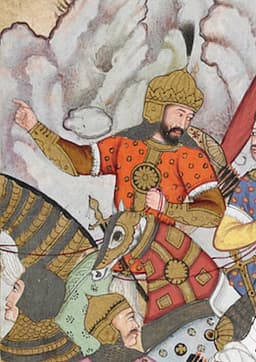
Ibrahim Lodi
Emperor · Medieval
40.6Total
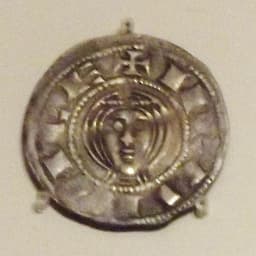
Urraca of Leon
Emperor · Medieval
49.7Total
Basic Information
Born
1480
1079
Died
1526
1126
Era
Medieval
Medieval
Nationality
India
Castile
Occupation
Emperor
Emperor
Civilization
Indian
Western
Score Comparison
Military (10%)
50.0
50.0
Political (20%)
29.3
45.1
Influence (20%)
47.1
56.4
Legacy (20%)
36.7
50.0
Leadership (15%)
48.4
51.9
Strategy (15%)
30.3
35.7
TOTAL
40.6
49.7
Ibrahim Lodi — Complete Timeline
1520 AD
Alienation of the Afghan NobilityPolitical Action◆ Major
Ibrahim Lodi alienated the Afghan nobles by replacing them with low-born officials and treating them harshly. This led to widespread disaffection and rebellions, including the defection of Daulat Khan Lodi to Babur. It fatally weakened his rule.
NobilityPolitical MistakeRebellion
Impact: nationaldestructive
1524 AD
Suppression of the Rebellion of Rana SangaWar
Ibrahim Lodi led a campaign against the Rajput ruler Rana Sanga of Mewar, who had invaded Lodi territory. He forced Sanga to retreat but failed to decisively defeat him. This conflict diverted resources from the growing Mughal threat.
Rajput WarMewarMilitary Campaign
Impact: regional
1526 AD
Battle of PanipatWar
Ibrahim Lodi's army was defeated by Babur's Mughal forces at the First Battle of Panipat. Babur used gunpowder weapons and cavalry tactics to overwhelm the larger Lodi army. Ibrahim Lodi was killed in battle, ending the Lodi dynasty.
BattleMughal ConquestEnd of Dynasty
Impact: globaltragic
Urraca of Leon — Complete Timeline
1109 AD
Accession as Queen RegnantPolitical Action
Upon the death of her father Alfonso VI, Urraca became the first queen regnant in medieval Europe outside Byzantium, ruling the united kingdoms of Leon and Castile. Her accession was unprecedented and challenged traditional gender norms, leading to conflicts with her husband and nobles.
AccessionQueen RegnantGender Norms
Impact: regionalprogressive
Marriage to Alfonso I of AragonPolitical Action◆ Major
Urraca married Alfonso I of Aragon, the Battler, in an attempt to unite the Christian kingdoms against the Almoravids. The marriage quickly soured due to political and personal conflicts, leading to a civil war between Urraca and her husband that lasted for years.
MarriageAragonCivil War
Impact: regionaldestructive
1110 AD
Civil War with Alfonso IWar◆ Major
Urraca fought a protracted civil war against her husband Alfonso I of Aragon, who sought to control her kingdoms. The conflict involved shifting alliances with nobles and the Church, and resulted in widespread destruction. Urraca eventually secured a separation from Alfonso in 1114.
Civil WarAlfonso ISeparation
Impact: regionaldestructive
1113 AD
Defense of the Realm Against the AlmoravidsWar◆ Major
Urraca led military campaigns against the Almoravid Empire, which had launched invasions into her territory. She successfully defended key cities such as Toledo and Zamora, preventing the Almoravids from conquering the Leonese-Castilian heartland. Her leadership maintained Christian control over central Iberia.
DefenseAlmoravidsReconquista
Impact: regionalconstructive
Expert Analysis
Origins
Ibrahim Lodi was born in 1480 to Sultan Sikandar Lodi of the Lodi dynasty, an Afghan empire ruling the Delhi Sultanate. He succeeded his father in 1517, inheriting a fragile polity already strained by factionalism among the Afghan nobility. His upbringing in the imperial court emphasized military command but little diplomatic finesse. In contrast, Urraca of Leon was born in 1080 to King Alfonso VI of Leon and Castile and Queen Constance of Burgundy. As the eldest surviving child, she was groomed for rule, receiving education in governance and Latin. Her father's death in 1109 left her as the first queen regnant in medieval Europe outside Byzantium, inheriting a realm unified by her father's conquests.
Rise to Power
Ibrahim Lodi ascended the throne at age 37, but his rise was marred by immediate conflict with his brother Jalal Khan, whom he executed. He further alienated the Afghan nobility by replacing high-ranking officials with low-born favorites. This led to rebellions, including by Daulat Khan Lodi, who invited Babur to invade India. Ibrahim's political score of 29.3 reflects his inability to consolidate power. Urraca's rise was more complex. Upon Alfonso VI's death, she inherited the kingdoms of Leon, Castile, and Galicia, but faced opposition from her half-sister Teresa and her husband Alfonso I of Aragon. She secured her throne through a strategic marriage, but her political score of 45.1 shows her adeptness at navigating alliances despite constant warfare.
Leadership & Governance
Ibrahim Lodi ruled with an iron fist, centralizing authority but failing to adapt to changing military technologies. His leadership score of 48.4 is undermined by his disregard for noble counsel. He maintained traditional cavalry-based armies, ignoring the potential of gunpowder. At the Battle of Panipat in 1526, his forces were outmaneuvered by Babur's combined use of matchlocks and field fortifications. Urraca, with a leadership score of 51.9, governed through a mix of royal authority and feudal negotiation. She issued charters to towns and monasteries, strengthening her support base. Her military score of 50.0 matches Ibrahim's, but she demonstrated strategic flexibility, leading troops personally against the Almoravids and her husband's forces.
Triumph & Tragedy
Ibrahim's greatest triumph was temporarily suppressing Rana Sanga's invasion in 1518, but he failed to decisively defeat the Rajput confederacy. His tragedy was the Battle of Panipat, where his army of 100,000 was routed by Babur's 12,000, leading to his death and the end of the Lodi dynasty. His military score of 50.0 is inflated by his numerical strength, but his strategy score of 30.3 reflects poor tactics. Urraca's triumphs include defending Toledo and Zamora from the Almoravids and retaining her throne despite a decade-long civil war. Her tragedy was her failed marriage to Alfonso I, which devolved into a bitter conflict that drained her resources. She died in 1126, leaving a fractured kingdom to her son Alfonso VII.
Character & Destiny
Ibrahim Lodi was proud and inflexible, alienating allies and ignoring advice. His character directly caused his downfall: the nobility's defection enabled Babur's victory. His total score of 40.6 reflects a ruler who failed to adapt. Urraca was determined and politically astute, but her temper and personal feuds often exacerbated conflicts. She fought tenaciously for her independence, but her alliances were brittle. Her total score of 49.7 indicates a more capable leader, though still constrained by medieval power structures.
Legacy
Ibrahim Lodi is remembered as the last sultan of the Lodi dynasty, whose defeat at Panipat marked the beginning of the Mughal Empire. His legacy score of 36.7 is low because his impact was largely negative—his incompetence cost his dynasty. Urraca's legacy score of 50.0 reflects her pioneering role as a female monarch. She proved that a queen could rule in her own right, setting a precedent for later Iberian queens. Her son Alfonso VII continued her policies, and her defense of Leon-Castile against the Almoravids helped preserve Christian control in northern Spain.
Conclusion
While Ibrahim Lodi and Urraca of Leon both faced severe challenges, Urraca's overall score of 49.7 compared to Ibrahim's 40.6 underscores her greater effectiveness. Ibrahim's failure to adapt and alienate his nobility led to a swift collapse, whereas Urraca, despite internal strife, maintained her realm and passed it to her son. Urraca's influence on medieval queenship and her successful defense of her territories give her a more enduring impact. Ibrahim Lodi's legacy is largely cautionary, while Urraca's is foundational. Thus, Urraca of Leon had greater historical impact.
Rankings
🥇
Urraca of LeonLeader
Mil: 50.0Pol: 45.1Inf: 56.4
49.7
🥈
Ibrahim Lodi
Mil: 50.0Pol: 29.3Inf: 47.1
40.6
+9.1 behind
How This Comparison Works
Algorithm
Each figure is scored on 6 dimensions (0—100 scale) based on structured historical data: Military (10%), Political (20%), Influence (20%), Legacy (20%), Leadership (15%), Strategy (15%). The weighted total produces the final ranking.
Data Sources
Scores are computed from structured sub-indicators in the database. Scale factors adjust for era (Ancient ×0.85, Modern ×1.0) and civilization size (Eastern ×1.05, Other ×0.80) to account for differences in population and military scale.
Maximum 3 Figures
Comparisons are limited to 2—3 figures to ensure readability and statistical meaningfulness.
Error Margins
±5 points per dimension — Sub-scores are derived from historical records with inherent uncertainty. Two figures within 5 points on a dimension should be considered roughly equivalent in that area.
Total Score Accuracy
±3 points overall — The weighted combination of 6 dimensions produces a total score with approximately ±3 points of uncertainty. Differences of less than 3 points are not statistically significant— the figures are effectively tied.
Known Limitations
- Historical records are incomplete and uneven across civilizations
- Figures from oral-tradition societies may be underrepresented
- Occupation labels can misclassify multi-role figures
- Scores measure capability and impact, not moral character
- Quantitative scoring is a comparison tool, not absolute truth
Capability Radar
Military (10%) — Battles & Warfare
Battles
20
20
Win Rate
10
25
Expansion
15
15
Political (20%) — Governance & Reform
Reform
15
40
Diplomacy
10
50
Economy
15
35
Influence (20%) — Cultural & Global Reach
Cultural
10
40
Global
10
30
Legacy (20%) — Historical Impact
Historical
20
55
Longevity
10
45
Leadership (15%) — Power & Stability
Tenure
30
45
Stability
10
20
Strategy (15%) — Tactics & Innovation
Strategy
15
20
Tactics
15
15
Reform
10
10
Similar Comparisons
Comments & Discussion
No comments yet. Be the first to share your thoughts!