Loading...
Sviatoslav I vs Urraca of Leon
Sviatoslav I leads by 3.1 pts · 2 figures compared
…
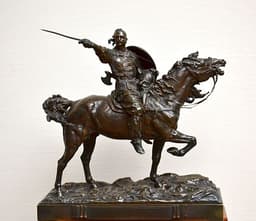
Sviatoslav I
Emperor · Medieval
52.8Total
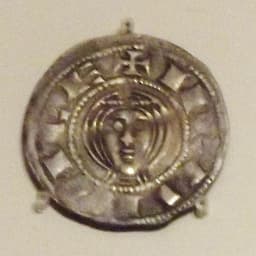
Urraca of Leon
Emperor · Medieval
49.7Total
Basic Information
Born
942
1079
Died
972
1126
Era
Medieval
Medieval
Nationality
Kievan Rus
Castile
Occupation
Emperor
Emperor
Civilization
Western
Western
Score Comparison
Military (10%)
74.0
50.0
Political (20%)
32.2
45.1
Influence (20%)
60.0
56.4
Legacy (20%)
54.0
50.0
Leadership (15%)
41.5
51.9
Strategy (15%)
58.0
35.7
TOTAL
52.8
49.7
Sviatoslav I — Complete Timeline
965 AD
Destruction of the Khazar KhaganateWar
Sviatoslav led a campaign against the Khazar Khaganate, capturing the fortress of Sarkel and sacking the capital, Atil. This destroyed the Khazar state, ending its dominance over the steppes and opening the Volga trade route to Rus control.
Khazar CampaignConquestSteppe Politics
Impact: regional
968 AD
Conquest of BulgariaWar◆ Major
Sviatoslav invaded the First Bulgarian Empire at the request of the Byzantine Emperor. He defeated the Bulgarian army, occupied much of the country, and established his capital at Pereyaslavets on the Danube, threatening Byzantium.
Bulgarian CampaignDanubeExpansion
Impact: regional
971 AD
Battle of DorostolonWar◆ Major
After a three-month siege by Byzantine forces under Emperor John I Tzimiskes, Sviatoslav's army was defeated at Dorostolon. He was forced to surrender, renounce claims to Bulgaria, and withdraw from the Balkans.
Byzantine-Rus WarSiegeDefeat
Impact: regionaltragic
972 AD
Death at the Dnieper RapidsWar◆ Major
Returning to Kiev, Sviatoslav was ambushed and killed by the Pechenegs at the Dnieper Rapids. The Pecheneg chief Kurya made a drinking cup from Sviatoslav's skull. His death ended his expansionist campaigns.
AssassinationPechenegsAmbush
Impact: nationaltragic
Urraca of Leon — Complete Timeline
1109 AD
Accession as Queen RegnantPolitical Action
Upon the death of her father Alfonso VI, Urraca became the first queen regnant in medieval Europe outside Byzantium, ruling the united kingdoms of Leon and Castile. Her accession was unprecedented and challenged traditional gender norms, leading to conflicts with her husband and nobles.
AccessionQueen RegnantGender Norms
Impact: regionalprogressive
Marriage to Alfonso I of AragonPolitical Action◆ Major
Urraca married Alfonso I of Aragon, the Battler, in an attempt to unite the Christian kingdoms against the Almoravids. The marriage quickly soured due to political and personal conflicts, leading to a civil war between Urraca and her husband that lasted for years.
MarriageAragonCivil War
Impact: regionaldestructive
1110 AD
Civil War with Alfonso IWar◆ Major
Urraca fought a protracted civil war against her husband Alfonso I of Aragon, who sought to control her kingdoms. The conflict involved shifting alliances with nobles and the Church, and resulted in widespread destruction. Urraca eventually secured a separation from Alfonso in 1114.
Civil WarAlfonso ISeparation
Impact: regionaldestructive
1113 AD
Defense of the Realm Against the AlmoravidsWar◆ Major
Urraca led military campaigns against the Almoravid Empire, which had launched invasions into her territory. She successfully defended key cities such as Toledo and Zamora, preventing the Almoravids from conquering the Leonese-Castilian heartland. Her leadership maintained Christian control over central Iberia.
DefenseAlmoravidsReconquista
Impact: regionalconstructive
Expert Analysis
Origins
Sviatoslav I was born around 942 AD into the Rurik dynasty, the son of Prince Igor of Kiev and Princess Olga. His father was killed by the Drevlians in 945, leaving Olga as regent. Sviatoslav's upbringing was steeped in Norse-Varangian warrior culture, with a focus on martial prowess. He was raised by his mother, who converted to Christianity, but Sviatoslav remained a pagan. His early education emphasized military tactics and statecraft.
Urraca of Leon was born in 1080 to King Alfonso VI of Leon and Castile and his second wife, Constance of Burgundy. She was raised in a court where her father consolidated power and expanded territories against the Almoravids. Urraca received an education typical for noblewomen, including religious instruction and political training, but she was also exposed to military affairs. Her half-brother Sancho was expected to inherit, but his death in 1108 changed her path.
Rise to Power
Sviatoslav's rise began after his mother Olga's regency ended around 964. He immediately launched a campaign against the Khazar Khaganate, a powerful Jewish state controlling trade routes. In 965, he captured the fortress of Sarkel and sacked the capital Atil, destroying the Khazar state. This earned him a reputation as a formidable warrior. He then turned to the Volga Bulgars and other tribes, expanding Kievan Rus' influence. In 967, Byzantine Emperor Nikephoros II Phokas invited him to invade Bulgaria, which he did successfully, occupying much of the country.
Urraca's rise was triggered by the death of her half-brother Sancho at the Battle of Uclés in 1108. Her father Alfonso VI designated her as his heir. Upon Alfonso's death in 1109, Urraca became queen regnant of Leon, Castile, and Galicia. To secure her position, she married Alfonso I of Aragon in 1109, but the marriage quickly soured due to his attempts to control her lands. Urraca asserted her authority, leading to a civil war that lasted until 1114.
Leadership & Governance
Sviatoslav ruled as a warrior prince, spending most of his reign on campaign. He governed through a decentralized system, leaving his mother Olga in charge of Kiev while he was away. He divided his realm among his sons: Yaropolk in Kiev, Oleg among the Drevlians, and Vladimir in Novgorod. His governance was minimal, focusing on tribute extraction and military expansion. He rejected Christianity, maintaining pagan traditions, which contrasted with his mother's Christian leanings.
Urraca governed as a medieval queen, balancing noble factions and external threats. She used marriage alliances and diplomacy to maintain power. After separating from Alfonso I, she ruled alone, relying on loyal nobles and the Church. She convened councils and issued charters to secure support. Her leadership involved navigating the Almoravid threat, defending key cities like Toledo. She was pragmatic, allying with her half-sister Teresa of Portugal when needed.
Triumph & Tragedy
Sviatoslav's greatest triumph was the destruction of the Khazar Khaganate, which removed a major rival and opened trade routes. His conquest of Bulgaria expanded Rus' influence into the Balkans. His tragedy came at the Battle of Dorostolon in 971, where Byzantine forces under John I Tzimiskes defeated him after a three-month siege. Forced to surrender, he agreed to leave Bulgaria. On his return to Kiev, he was ambushed and killed by Pechenegs at the Dnieper Rapids in 972. His skull was made into a drinking cup.
Urraca's triumph was securing her throne as the first queen regnant in medieval Europe outside Byzantium. She successfully defended her realm against Alfonso I's ambitions and the Almoravids. Her tragedy was the constant civil war and instability during her reign. The marriage to Alfonso I was a failure, leading to a decade of conflict. She also faced rebellions from nobles and her own son, Alfonso VII. She died in 1126, possibly in childbirth, leaving a divided kingdom.
Character & Destiny
Sviatoslav was characterized by his martial focus and disdain for comfort. He lived like his warriors, sleeping on the ground and eating simple food. He was known for his boldness, often announcing his attacks with a warning. His character drove him to constant conquest, but his lack of political acumen led to overextension and death. Historians note his military score of 74.0 against a political score of 32.2, reflecting his imbalance.
Urraca was determined and politically astute, but her reign was plagued by gender bias. She had to assert authority in a male-dominated world. Her marriage to Alfonso I was a strategic miscalculation, but she fought to retain her independence. Her leadership score of 51.9 and political score of 45.1 show a more balanced but less spectacular profile. Her destiny was shaped by the need to defend her birthright against multiple adversaries.
Legacy
Sviatoslav's legacy is mixed. He destroyed the Khazar Khaganate, but his overexpansion led to the loss of Bulgarian gains. His division of the realm among sons caused infighting. He is remembered as a heroic warrior in Russian and Ukrainian folklore, but his pagan stance delayed Christianization. His son Vladimir later converted to Christianity in 988. Sviatoslav's influence score of 60.0 reflects his impact on Eastern European history.
Urraca's legacy is as a pioneering female ruler. She proved that a woman could rule effectively in medieval Europe. Her reign set a precedent for future queens regnant, such as Eleanor of Aquitaine. She defended Leon-Castile against the Almoravids, maintaining Christian control. Her legacy score of 50.0 is modest but significant for gender history. Her son Alfonso VII eventually united the kingdoms.
Conclusion
While Urraca of Leon broke gender barriers and ruled effectively, Sviatoslav I had a greater impact on the geopolitical landscape of Eastern Europe. His destruction of the Khazar Khaganate (scoring 74.0 in military) reshaped power dynamics, enabling the rise of Kievan Rus. Urraca's political challenges (45.1) were significant, but her influence was more regional and institutional. Sviatoslav's total score of 52.8 edges Urraca's 49.7, and his transformative military campaigns outweigh her defensive struggles. Thus, Sviatoslav I had a greater historical impact.
Rankings
🥇
Sviatoslav ILeader
Mil: 74.0Pol: 32.2Inf: 60.0
52.8
🥈
Urraca of Leon
Mil: 50.0Pol: 45.1Inf: 56.4
49.7
+3.1 behind
How This Comparison Works
Algorithm
Each figure is scored on 6 dimensions (0—100 scale) based on structured historical data: Military (10%), Political (20%), Influence (20%), Legacy (20%), Leadership (15%), Strategy (15%). The weighted total produces the final ranking.
Data Sources
Scores are computed from structured sub-indicators in the database. Scale factors adjust for era (Ancient ×0.85, Modern ×1.0) and civilization size (Eastern ×1.05, Other ×0.80) to account for differences in population and military scale.
Maximum 3 Figures
Comparisons are limited to 2—3 figures to ensure readability and statistical meaningfulness.
Error Margins
±5 points per dimension — Sub-scores are derived from historical records with inherent uncertainty. Two figures within 5 points on a dimension should be considered roughly equivalent in that area.
Total Score Accuracy
±3 points overall — The weighted combination of 6 dimensions produces a total score with approximately ±3 points of uncertainty. Differences of less than 3 points are not statistically significant— the figures are effectively tied.
Known Limitations
- Historical records are incomplete and uneven across civilizations
- Figures from oral-tradition societies may be underrepresented
- Occupation labels can misclassify multi-role figures
- Scores measure capability and impact, not moral character
- Quantitative scoring is a comparison tool, not absolute truth
Capability Radar
Military (10%) — Battles & Warfare
Battles
78
20
Win Rate
82
25
Expansion
85
15
Political (20%) — Governance & Reform
Reform
20
40
Diplomacy
35
50
Economy
25
35
Influence (20%) — Cultural & Global Reach
Cultural
55
40
Global
45
30
Legacy (20%) — Historical Impact
Historical
65
55
Longevity
50
45
Leadership (15%) — Power & Stability
Tenure
30
45
Stability
20
20
Strategy (15%) — Tactics & Innovation
Strategy
75
20
Tactics
80
15
Reform
40
10
Similar Comparisons
Comments & Discussion
No comments yet. Be the first to share your thoughts!