Loading...
This comparison has not been analyzed yet.
One-time AI generation (~1 minute). Scores and timeline are already available below.
Idrieus vs Sinmun of Silla
Sinmun of Silla leads by 14.1 pts · 2 figures compared
…
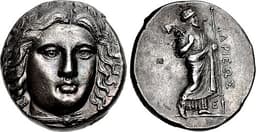
Idrieus
Emperor · Ancient
40.6Total

Sinmun of Silla
Emperor · Ancient
54.7Total
Basic Information
Born
-380
-647
Died
-344
—
Era
Ancient
Ancient
Nationality
Caria
Korea
Occupation
Emperor
Emperor
Civilization
Middle Eastern
Eastern
Score Comparison
Military (10%)
50.0
55.0
Political (20%)
30.8
68.0
Influence (20%)
44.8
51.8
Legacy (20%)
34.2
44.2
Leadership (15%)
48.4
70.0
Strategy (15%)
39.6
45.0
TOTAL
40.6
54.7
Idrieus — Complete Timeline
353 BC
Succeeded Mausolus as ruler of CariaPolitical Action◆ Major
Upon the death of his brother Mausolus, Idrieus became the Hecatomnid ruler of Caria. He continued the policies of his predecessors, maintaining Carian autonomy under Persian suzerainty and overseeing the region's administration.
SuccessionCarian Dynasty
Impact: regional
Construction of the Mausoleum at HalicarnassusCultural◆ Major
Idrieus and his sister-wife Ada completed the construction of the Mausoleum at Halicarnassus, the tomb of Mausolus. This structure became one of the Seven Wonders of the Ancient World, showcasing Carian wealth and Hellenistic architectural influence.
ArchitectureWonder of the World
Impact: globalconstructive
351 BC
Supported the Persian satrap revoltWar
Idrieus provided military support to the Persian satrap Artabazus of Phrygia during his revolt against Artaxerxes III. This action demonstrated Caria's complex relationship with the Achaemenid Empire, balancing autonomy with loyalty.
RevoltPersian Empire
Impact: regional
344 BC
Death and succession by AdaPolitical Action
Idrieus died in 344 BC, after ruling Caria for approximately nine years. His sister-wife Ada succeeded him as ruler, continuing the Hecatomnid dynasty's control over Caria until the arrival of Alexander the Great.
SuccessionCarian Dynasty
Impact: regional
Sinmun of Silla — Complete Timeline
679 AD
Construction of Sacheonwangsa TempleCultural
Sinmun built Sacheonwangsa Temple in Gyeongju, dedicated to the Four Heavenly Kings of Buddhism. The temple was intended to protect the kingdom from external threats and internal strife, reflecting the integration of Buddhist beliefs into state security.
TempleBuddhismSilla
Impact: nationalconstructive
681 AD
Suppression of the Kim Heumdol rebellionWar◆ Major
Sinmun faced a rebellion led by Kim Heumdol, a powerful aristocrat who opposed the centralization of power. The king's forces crushed the revolt, executing the rebels and confiscating their lands. This victory solidified Sinmun's control over the unified kingdom.
RebellionAristocracySilla
Impact: nationaldestructive
682 AD
Consolidation of central governmentReform◆ Major
King Sinmun reorganized the Silla government by establishing a centralized bureaucracy modeled on Tang China. He created new administrative offices and standardized tax collection, strengthening royal authority and reducing the power of local aristocrats.
AdministrationCentralizationSilla
Impact: nationalconstructive
Promotion of Confucian educationReform
Sinmun established the National Confucian Academy in Gyeongju, which taught Confucian classics and trained government officials. This institution promoted Confucian values in governance and created a merit-based system for selecting bureaucrats.
EducationConfucianismSilla
Impact: nationalconstructive
This comparison has not been analyzed yet.
One-time AI generation (~1 minute). Scores and timeline are already available below.
Rankings
🥇
Sinmun of SillaLeader
Mil: 55.0Pol: 68.0Inf: 51.8
54.7
🥈
Idrieus
Mil: 50.0Pol: 30.8Inf: 44.8
40.6
+14.1 behind
How This Comparison Works
Algorithm
Each figure is scored on 6 dimensions (0—100 scale) based on structured historical data: Military (10%), Political (20%), Influence (20%), Legacy (20%), Leadership (15%), Strategy (15%). The weighted total produces the final ranking.
Data Sources
Scores are computed from structured sub-indicators in the database. Scale factors adjust for era (Ancient ×0.85, Modern ×1.0) and civilization size (Eastern ×1.05, Other ×0.80) to account for differences in population and military scale.
Maximum 3 Figures
Comparisons are limited to 2—3 figures to ensure readability and statistical meaningfulness.
Error Margins
±5 points per dimension — Sub-scores are derived from historical records with inherent uncertainty. Two figures within 5 points on a dimension should be considered roughly equivalent in that area.
Total Score Accuracy
±3 points overall — The weighted combination of 6 dimensions produces a total score with approximately ±3 points of uncertainty. Differences of less than 3 points are not statistically significant— the figures are effectively tied.
Known Limitations
- Historical records are incomplete and uneven across civilizations
- Figures from oral-tradition societies may be underrepresented
- Occupation labels can misclassify multi-role figures
- Scores measure capability and impact, not moral character
- Quantitative scoring is a comparison tool, not absolute truth
Capability Radar
Military (10%) — Battles & Warfare
Battles
10
30
Win Rate
10
35
Expansion
15
30
Political (20%) — Governance & Reform
Reform
20
55
Diplomacy
30
50
Economy
25
50
Influence (20%) — Cultural & Global Reach
Cultural
15
40
Global
10
30
Legacy (20%) — Historical Impact
Historical
15
45
Longevity
10
40
Leadership (15%) — Power & Stability
Tenure
30
60
Stability
30
55
Strategy (15%) — Tactics & Innovation
Strategy
10
35
Tactics
10
30
Reform
5
25
Similar Comparisons
Comments & Discussion
No comments yet. Be the first to share your thoughts!