Loading...
Idrieus vs Julius Caesar
Julius Caesar leads by 42.2 pts · 2 figures compared
…
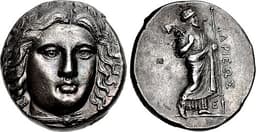
Idrieus
Emperor · Ancient
40.6Total

Julius Caesar
General · Ancient
82.8Total
Basic Information
Born
-380
-100
Died
-344
-44
Era
Ancient
Ancient
Nationality
Caria
Roman Republic
Occupation
Emperor
General
Civilization
Middle Eastern
Western
Score Comparison
Military (10%)
50.0
88.0
Political (20%)
30.8
78.0
Influence (20%)
44.8
85.0
Legacy (20%)
34.2
82.0
Leadership (15%)
48.4
80.0
Strategy (15%)
39.6
85.0
TOTAL
40.6
82.8
Idrieus — Complete Timeline
353 BC
Succeeded Mausolus as ruler of CariaPolitical Action◆ Major
Upon the death of his brother Mausolus, Idrieus became the Hecatomnid ruler of Caria. He continued the policies of his predecessors, maintaining Carian autonomy under Persian suzerainty and overseeing the region's administration.
SuccessionCarian Dynasty
Impact: regional
Construction of the Mausoleum at HalicarnassusCultural◆ Major
Idrieus and his sister-wife Ada completed the construction of the Mausoleum at Halicarnassus, the tomb of Mausolus. This structure became one of the Seven Wonders of the Ancient World, showcasing Carian wealth and Hellenistic architectural influence.
ArchitectureWonder of the World
Impact: globalconstructive
351 BC
Supported the Persian satrap revoltWar
Idrieus provided military support to the Persian satrap Artabazus of Phrygia during his revolt against Artaxerxes III. This action demonstrated Caria's complex relationship with the Achaemenid Empire, balancing autonomy with loyalty.
RevoltPersian Empire
Impact: regional
344 BC
Death and succession by AdaPolitical Action
Idrieus died in 344 BC, after ruling Caria for approximately nine years. His sister-wife Ada succeeded him as ruler, continuing the Hecatomnid dynasty's control over Caria until the arrival of Alexander the Great.
SuccessionCarian Dynasty
Impact: regional
Julius Caesar — Complete Timeline
58 BC
Gallic WarsWar◆ Major
Caesar, as proconsul of Gaul, launched a series of campaigns that conquered all of Gaul (modern France, Belgium, and parts of Switzerland). He fought numerous battles, including against the Helvetii, the Belgae, and the Gallic chieftain Vercingetorix. The wars brought immense wealth and a loyal army to Caesar.
Gallic WarsConquestRoman Expansion
Impact: regional
49 BC
Crossing the RubiconPolitical Action◆ Major
Caesar led Legio XIII across the Rubicon River into Italy, defying the Roman Senate's order to disband his army. This act triggered a civil war against Pompey and the Optimates, ultimately leading to Caesar's dictatorship and the end of the Roman Republic.
Roman Civil WarEnd of RepublicPower Struggle
Impact: global
48 BC
Battle of PharsalusWar◆ Major
Caesar's outnumbered army defeated the larger forces of Pompey the Great at Pharsalus in Greece. Caesar's tactical use of a reserve line to counter Pompey's cavalry charge proved decisive. Pompey fled to Egypt, where he was assassinated, leaving Caesar as the undisputed master of the Roman world.
Roman Civil WarBattleDecisive Victory
Impact: regional
44 BC
Appointment as Dictator for LifePolitical Action◆ Major
The Roman Senate appointed Caesar dictator perpetuo (dictator for life), granting him unprecedented personal power. This move concentrated military, legislative, and judicial authority in one person, effectively ending the Roman Republic's traditional system of checks and balances and alarming many senators.
DictatorshipEnd of RepublicPower Consolidation
Impact: regionaldestructive
Assassination on the Ides of MarchPolitical Action◆ Major
A group of Roman senators, led by Marcus Junius Brutus and Gaius Cassius Longinus, stabbed Caesar to death at a meeting of the Senate in the Theatre of Pompey. The assassination was intended to restore the Republic, but instead triggered another civil war that led to the rise of the Roman Empire.
AssassinationRoman PoliticsEnd of Republic
Impact: globaldestructive
Expert Analysis
idrieus-vs-julius-caesar
# The Crossroads of Power: Caesar and Idrieus
On a March morning in 44 BCE, Julius Caesar fell beneath twenty-three dagger blows in the Senate chamber, his blood pooling on the marble floor of Pompey’s theater. Across the Mediterranean, nearly three centuries earlier, a far quieter end came to Idrieus of Caria, a ruler whose name would fade into the footnotes of history while his family’s monument—the Mausoleum at Halicarnassus—rose to become one of the Seven Wonders of the ancient world. What separates a figure who reshapes the world from one who merely maintains it? The answer lies not in the accidents of birth but in the interplay of ambition, circumstance, and the courage to seize history by the throat.
Origins
Julius Caesar was born into the patrician Julian clan in 100 BCE, a family that traced its lineage to the goddess Venus but had lost much of its political clout. Rome was a republic in crisis—riven by class conflict, civil wars, and the fading authority of the Senate. Young Caesar grew up amid street violence and political purges, learning early that survival required cunning. His uncle by marriage, Gaius Marius, had been a populist general; his enemy, Sulla, a dictator who posted proscription lists of those to be killed. Caesar refused Sulla’s order to divorce his wife, fled Rome, and spent years in military service and rhetorical study, honing the skills that would later dazzle legions and senators alike.
Idrieus, born around 380 BCE, emerged from a very different world. Caria was a small, wealthy satrapy in southwestern Anatolia, a Persian province that had been ruled by the Hecatomnid dynasty since his father Hecatomnus. The family was of local Carian stock but served the Achaemenid Empire with pragmatic loyalty. Idrieus inherited a stable realm, a thriving economy based on trade and tribute, and a culture that blended Greek and Persian influences. The great challenge of his era was not revolution or conquest but continuity—keeping the favor of distant Persian kings while managing local Greek cities and rival satraps.
Rise to Power
Caesar’s ascent was a masterclass in calculated risk. He climbed the Roman political ladder—quaestor, aedile, praetor—through lavish public spectacles and strategic alliances. In 60 BCE, he formed the First Triumvirate with the wealthy Crassus and the powerful Pompey, an informal pact that let him secure the governorship of Gaul. Over the next eight years, Caesar conquered all of Gaul (modern France and Belgium), fighting over thirty battles and reportedly killing a million people. He wrote his own account, the *Commentarii*, which made him a legend in his own time. When the Senate ordered him to disband his army, he crossed the Rubicon River into Italy in 49 BCE, triggering a civil war. “The die is cast,” he reportedly said, and Rome fell to him within three months.
Idrieus’s rise was far more sedate. He succeeded his brother Mausolus as ruler of Caria in 353 BCE, after Mausolus’s death. Mausolus had been a formidable figure—he had moved the capital to Halicarnassus, built a fleet, and expanded Carian influence. Idrieus did not seize power; it passed to him as the next male heir. His sister-wife Ada ruled alongside him, as was Hecatomnid custom. There were no dramatic marches, no crossing of rivers. The key event of his early reign was completing the Mausoleum, the colossal tomb Mausolus had begun. It was an act of piety and political theater, but it was not Caesar’s theater.
Leadership & Governance
Caesar governed as a revolutionary. As dictator, he reformed the calendar (creating the Julian calendar still used in the Eastern Orthodox Church), granted citizenship to provincials, expanded the Senate, and launched massive public works. His military genius was unmatched: at the Siege of Alesia (52 BCE), he built double fortification lines to trap both the Gallic army and its relief force, a feat of logistics and nerve. Yet his political wisdom faltered. He centralized power too openly, accepted honors like a golden crown, and alienated the aristocracy. His reforms were brilliant but rushed, and his clemency toward former enemies—pardoning Brutus and Cassius—was seen as either magnanimity or naivety.
Idrieus ruled Caria with a lighter hand. He continued Mausolus’s policy of Hellenization, patronizing Greek art and architecture while remaining a loyal Persian vassal. In 351 BCE, he supported the satrap Artabazus of Phrygia in a revolt against the Persian king Artaxerxes III—a dangerous gamble. But the revolt failed, and Idrieus likely paid a price in lost influence, though he kept his throne. His military score of 47.8 reflects a ruler who fought no major wars of his own, and his political score of 39.6 suggests a cautious manager rather than a visionary. He maintained, not transformed.
Triumph & Tragedy
Caesar’s greatest triumph was his conquest of Gaul, which added a vast, wealthy province to Rome and made him the most powerful man in the Republic. His tragedy was the Ides of March in 44 BCE, when senators he had pardoned stabbed him to death, fearing he would crown himself king. He died at fifty-five, his work unfinished, leaving Rome to years of civil war.
Idrieus’s triumph was the Mausoleum, which became one of the Seven Wonders of the ancient world—a testament to his family’s wealth and ambition. His tragedy was obscurity. He died in 344 BCE after nine years of rule, and his sister-wife Ada succeeded him. Within a few decades, the Hecatomnid dynasty ended, and Caria was absorbed into Alexander the Great’s empire. Idrieus’s name survives only in inscriptions and the shadow of his brother’s monument.
Character & Destiny
Caesar was driven by an insatiable hunger for glory. Plutarch records that he once said, “I would rather be first in a little Iberian village than second in Rome.” His personality—audacious, charismatic, ruthless—shaped every decision. He gambled on Gaul, on the Rubicon, on clemency, and on dictatorship. He believed in his own destiny, and history proved him right, but at the cost of his life.
Idrieus was a steward, not a conqueror. He governed within the constraints of Persian suzerainty and local tradition. His character reflected his era—a time when small kingdoms survived by playing larger empires against each other, not by challenging them. He built a monument, not an empire.
Legacy
Caesar’s legacy is immeasurable. His name became synonymous with imperial power: “Kaiser” in German, “Tsar” in Russian. His military tactics are still studied, his writings remain classics, and his assassination set a pattern for political violence that echoes through history. His adopted heir, Octavian, became Augustus, the first Roman emperor.
Idrieus’s legacy is the Mausoleum—a word that entered English as the generic term for a grand tomb. His influence score of 59.7 is modest, his legacy score 45.1. He is remembered not for what he did, but for what he built.
Conclusion
The difference between Caesar and Idrieus is the difference between a wildfire and a hearth fire. Both burn, but one reshapes the landscape while the other warms a single room. Caesar lived at the breaking point of a republic, when one man’s ambition could topple centuries of tradition. Idrieus lived in a world of empires and satraps, where survival meant bending to the wind. Caesar asked, “What can I take?” Idrieus asked, “What can I keep?” In the end, Caesar changed the world and died for it; Idrieus preserved his world and was forgotten. Which is the greater fate? The reader must decide.
Rankings
🥇
Julius CaesarLeader
Mil: 88.0Pol: 78.0Inf: 85.0
82.8
🥈
Idrieus
Mil: 50.0Pol: 30.8Inf: 44.8
40.6
+42.2 behind
How This Comparison Works
Algorithm
Each figure is scored on 6 dimensions (0—100 scale) based on structured historical data: Military (10%), Political (20%), Influence (20%), Legacy (20%), Leadership (15%), Strategy (15%). The weighted total produces the final ranking.
Data Sources
Scores are computed from structured sub-indicators in the database. Scale factors adjust for era (Ancient ×0.85, Modern ×1.0) and civilization size (Eastern ×1.05, Other ×0.80) to account for differences in population and military scale.
Maximum 3 Figures
Comparisons are limited to 2—3 figures to ensure readability and statistical meaningfulness.
Error Margins
±5 points per dimension — Sub-scores are derived from historical records with inherent uncertainty. Two figures within 5 points on a dimension should be considered roughly equivalent in that area.
Total Score Accuracy
±3 points overall — The weighted combination of 6 dimensions produces a total score with approximately ±3 points of uncertainty. Differences of less than 3 points are not statistically significant— the figures are effectively tied.
Known Limitations
- Historical records are incomplete and uneven across civilizations
- Figures from oral-tradition societies may be underrepresented
- Occupation labels can misclassify multi-role figures
- Scores measure capability and impact, not moral character
- Quantitative scoring is a comparison tool, not absolute truth
Capability Radar
Military (10%) — Battles & Warfare
Battles
10
95
Win Rate
10
92
Expansion
15
97
Political (20%) — Governance & Reform
Reform
20
90
Diplomacy
30
85
Economy
25
82
Influence (20%) — Cultural & Global Reach
Cultural
15
88
Global
10
94
Legacy (20%) — Historical Impact
Historical
15
95
Longevity
10
96
Leadership (15%) — Power & Stability
Tenure
30
75
Stability
30
60
Strategy (15%) — Tactics & Innovation
Strategy
10
94
Tactics
10
96
Reform
5
88
Similar Comparisons
Comments & Discussion
No comments yet. Be the first to share your thoughts!