Loading...
Idrimi vs Orodes II
Orodes II leads by 8.6 pts · 2 figures compared
…

Idrimi
Emperor · Ancient
49.7Total
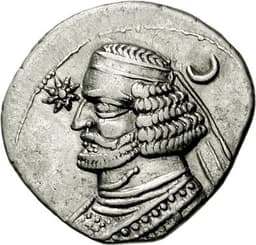
Orodes II
Emperor · Ancient
58.3Total
Basic Information
Born
-1480
-95
Died
-1430
-37
Era
Ancient
Ancient
Nationality
Alalakh
Parthian Empire
Occupation
Emperor
Emperor
Civilization
Middle Eastern
Middle Eastern
Score Comparison
Military (10%)
55.0
70.0
Political (20%)
42.3
68.0
Influence (20%)
48.6
54.1
Legacy (20%)
40.0
45.8
Leadership (15%)
65.0
74.0
Strategy (15%)
60.0
50.0
TOTAL
49.7
58.3
Idrimi — Complete Timeline
1450 BC
Inscription of Autobiography on StatueCultural◆ Major
Idrimi commissioned a statue of himself inscribed with an autobiographical account of his life. The text describes his exile, return to Alalakh, and military campaigns. It is one of the earliest known autobiographies from the ancient Near East, providing unique insight into Hurrian kingship and politics.
AutobiographyAlalakhHurrian
Impact: regionalconstructive
Orodes II — Complete Timeline
55 BC
Invasion of ArmeniaWar◆ Major
Orodes II invaded Armenia and installed his son Pacorus I as king, expanding Parthian influence into the Caucasus. This campaign brought Armenia into the Parthian orbit and set the stage for future conflicts with Rome over the region.
Armenian CampaignPacorusExpansion
Impact: regionalconstructive
53 BC
Battle of CarrhaeWar
Orodes II's general Surena annihilated a Roman army under Marcus Licinius Crassus at Carrhae in Mesopotamia. Crassus was killed, and the Parthians captured the legionary standards. This victory established Parthia as a major rival to Rome and avenged earlier Roman incursions.
Roman-Parthian WarsBattleCrassus
Impact: regionalconstructive
52 BC
Execution of SurenaPolitical Action◆ Major
Orodes II ordered the execution of his general Surena shortly after the victory at Carrhae, fearing his growing popularity and power. This act eliminated a capable commander and weakened Parthian military leadership.
Court IntrigueExecutionJealousy
Impact: nationaldestructive
Expert Analysis
Origins
Idrimi, a Hurrian king of Alalakh (modern-day Syria), was born around 1500 BCE. His early life is known from his autobiographical statue inscription: he was the son of a king but was forced into exile after a coup. He fled to Emar, then to Canaan, where he gathered followers. Orodes II, born around 90 BCE, was a prince of the Parthian Arsacid dynasty. He came to power amid the Parthian civil wars between his father Phraates III's sons. His early life was shaped by court intrigue and military training, typical for Parthian royalty.
Rise to Power
Idrimi's rise began when he returned from exile to reclaim his throne. With the support of the Hurrian populace and perhaps Hittite backing, he overthrew the usurper and became king of Alalakh. His autobiography details his seven-year exile and subsequent restoration. Orodes II rose to power after murdering his brother Mithridates IV, who had seized the throne. With help from the Suren clan and his general Surena, Orodes defeated Mithridates in 54 BCE, securing his rule. His key turning point was the Battle of Carrhae in 53 BCE, where his general Surena crushed a Roman invasion led by Crassus.
Leadership & Governance
Idrimi ruled Alalakh as a vassal under the Mitanni Empire. His governance focused on rebuilding the city, restoring temples, and maintaining order. His autobiography emphasizes his piety and justice. Idrimi scored 65.0 in leadership, reflecting his ability to regain his throne through persuasion and alliance. Orodes II, scoring 74.0 in leadership, governed the Parthian Empire through a feudal system, relying on powerful noble families like the Suren. His rule was marked by centralization attempts, but he struggled with controlling his generals, as evidenced by his execution of Surena.
Triumph & Tragedy
Idrimi's greatest success was his return from exile and restoration of his dynasty. He recorded his autobiography, a unique historical source. His failure was the limited extent of his kingdom; Alalakh remained a small state overshadowed by larger powers. Orodes II's triumph was the victory at Carrhae, which humiliated Rome and secured Parthian prestige. His tragedy was the execution of Surena, which weakened his military and led to internal instability. His invasion of Armenia was a success, but his son Pacorus I's later defeat and death in 38 BCE undid much of his gains.
Character & Destiny
Idrimi's character is revealed through his autobiography: he portrays himself as resilient, pious, and just. His destiny was to be a minor king remembered primarily for his inscription. Orodes II was calculating and ruthless, as seen in his elimination of rivals. His character led to his downfall: paranoia after Carrhae caused him to kill his best general, leading to decline. Historical assessments note Orodes as a capable ruler but ultimately overshadowed by his successors.
Legacy
Idrimi's legacy is his autobiography, one of the earliest first-person historical narratives. It provides insight into ancient Near Eastern kingship. He scores 40.0 in legacy. Orodes II's legacy is tied to the Battle of Carrhae, a symbol of Parthian resistance to Rome. However, his execution of Surena tarnished his reputation. He scores 45.8 in legacy. Neither figure had lasting institutional impact, but Orodes II's military success had greater geopolitical consequences.
Conclusion
Orodes II had a greater impact than Idrimi. His total score of 58.3 exceeds Idrimi's 49.7 by 8.6 points. Although both were ancient rulers, Orodes II's victory at Carrhae altered Roman-Parthian relations for centuries, while Idrimi's influence was confined to a small kingdom. Idrimi's autobiography is historically valuable but did not change the course of history. Therefore, Orodes II is the more consequential figure.
Rankings
🥇
Orodes IILeader
Mil: 70.0Pol: 68.0Inf: 54.1
58.3
🥈
Idrimi
Mil: 55.0Pol: 42.3Inf: 48.6
49.7
+8.6 behind
How This Comparison Works
Algorithm
Each figure is scored on 6 dimensions (0—100 scale) based on structured historical data: Military (10%), Political (20%), Influence (20%), Legacy (20%), Leadership (15%), Strategy (15%). The weighted total produces the final ranking.
Data Sources
Scores are computed from structured sub-indicators in the database. Scale factors adjust for era (Ancient ×0.85, Modern ×1.0) and civilization size (Eastern ×1.05, Other ×0.80) to account for differences in population and military scale.
Maximum 3 Figures
Comparisons are limited to 2—3 figures to ensure readability and statistical meaningfulness.
Error Margins
±5 points per dimension — Sub-scores are derived from historical records with inherent uncertainty. Two figures within 5 points on a dimension should be considered roughly equivalent in that area.
Total Score Accuracy
±3 points overall — The weighted combination of 6 dimensions produces a total score with approximately ±3 points of uncertainty. Differences of less than 3 points are not statistically significant— the figures are effectively tied.
Known Limitations
- Historical records are incomplete and uneven across civilizations
- Figures from oral-tradition societies may be underrepresented
- Occupation labels can misclassify multi-role figures
- Scores measure capability and impact, not moral character
- Quantitative scoring is a comparison tool, not absolute truth
Capability Radar
Military (10%) — Battles & Warfare
Battles
45
55
Win Rate
50
70
Expansion
40
50
Political (20%) — Governance & Reform
Reform
35
45
Diplomacy
50
55
Economy
30
50
Influence (20%) — Cultural & Global Reach
Cultural
30
40
Global
20
45
Legacy (20%) — Historical Impact
Historical
35
55
Longevity
25
40
Leadership (15%) — Power & Stability
Tenure
55
65
Stability
45
40
Strategy (15%) — Tactics & Innovation
Strategy
45
65
Tactics
40
60
Reform
30
40
Similar Comparisons
Comments & Discussion
No comments yet. Be the first to share your thoughts!