Loading...
Idriss Deby vs Julius Caesar
Julius Caesar leads by 23.9 pts · 2 figures compared
…
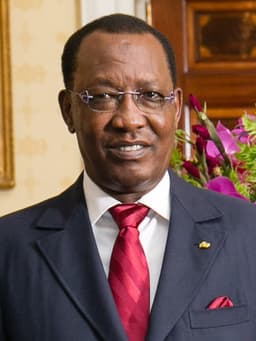
Idriss Deby
General · Modern
58.9Total

Julius Caesar
General · Ancient
82.8Total
Basic Information
Born
1952
-100
Died
—
-44
Era
Modern
Ancient
Nationality
Chad
Roman Republic
Occupation
General
General
Civilization
Other
Western
Score Comparison
Military (10%)
67.5
88.0
Political (20%)
68.0
78.0
Influence (20%)
55.7
85.0
Legacy (20%)
49.2
82.0
Leadership (15%)
68.0
80.0
Strategy (15%)
55.0
85.0
TOTAL
58.9
82.8
Idriss Deby — Complete Timeline
1990 AD
Seized Power in CoupPolitical Action
Idriss Deby, a former military commander, led a rebellion that overthrew President Hiss
Coup d'étatChadRebellion
Impact: national
1996 AD
Won First Multi-Party ElectionPolitical Action◆ Major
Deby won the 1996 presidential election, the first multi-party election in Chad's history. The election was criticized for irregularities but was seen as a step towards democratic transition.
ElectionDemocracyChad
Impact: national
2003 AD
Chad-Cameroon Pipeline CompletionOther◆ Major
The Chad-Cameroon Petroleum Development and Pipeline Project became operational, allowing Chad to export oil. The project brought significant revenue but also raised concerns about corruption and environmental impact.
Oil PipelineEconomyChad
Impact: national
2013 AD
Military Intervention in Northern MaliWar◆ Major
Chadian troops under Deby's command played a key role in the French-led intervention in Mali, fighting against Islamist insurgents. The intervention helped push back militants but resulted in Chadian casualties.
Military InterventionMaliCounterterrorism
Impact: regional
2021 AD
Killed on the Front LinesWar
President Idriss Deby was killed while visiting troops fighting rebels from the Front for Change and Concord in Chad (FACT) in northern Chad. His death on the battlefield was confirmed by the military.
DeathChadConflict
Impact: nationaltragic
Julius Caesar — Complete Timeline
58 BC
Gallic WarsWar◆ Major
Caesar, as proconsul of Gaul, launched a series of campaigns that conquered all of Gaul (modern France, Belgium, and parts of Switzerland). He fought numerous battles, including against the Helvetii, the Belgae, and the Gallic chieftain Vercingetorix. The wars brought immense wealth and a loyal army to Caesar.
Gallic WarsConquestRoman Expansion
Impact: regional
49 BC
Crossing the RubiconPolitical Action◆ Major
Caesar led Legio XIII across the Rubicon River into Italy, defying the Roman Senate's order to disband his army. This act triggered a civil war against Pompey and the Optimates, ultimately leading to Caesar's dictatorship and the end of the Roman Republic.
Roman Civil WarEnd of RepublicPower Struggle
Impact: global
48 BC
Battle of PharsalusWar◆ Major
Caesar's outnumbered army defeated the larger forces of Pompey the Great at Pharsalus in Greece. Caesar's tactical use of a reserve line to counter Pompey's cavalry charge proved decisive. Pompey fled to Egypt, where he was assassinated, leaving Caesar as the undisputed master of the Roman world.
Roman Civil WarBattleDecisive Victory
Impact: regional
44 BC
Appointment as Dictator for LifePolitical Action◆ Major
The Roman Senate appointed Caesar dictator perpetuo (dictator for life), granting him unprecedented personal power. This move concentrated military, legislative, and judicial authority in one person, effectively ending the Roman Republic's traditional system of checks and balances and alarming many senators.
DictatorshipEnd of RepublicPower Consolidation
Impact: regionaldestructive
Assassination on the Ides of MarchPolitical Action◆ Major
A group of Roman senators, led by Marcus Junius Brutus and Gaius Cassius Longinus, stabbed Caesar to death at a meeting of the Senate in the Theatre of Pompey. The assassination was intended to restore the Republic, but instead triggered another civil war that led to the rise of the Roman Empire.
AssassinationRoman PoliticsEnd of Republic
Impact: globaldestructive
Expert Analysis
idriss-deby-vs-julius-caesar
# The General Who Crossed Rivers
On the morning of March 15, 44 BCE, a man who had conquered Gaul, defeated his rivals in civil war, and made himself master of Rome walked into the Senate chamber and was stabbed thirty-three times. Julius Caesar fell dead at the base of Pompey’s statue, the blood of his assassins still on their hands. Nearly two thousand years later, on April 20, 2021, another general met his end in a very different way: Idriss Deby, president of Chad for thirty years, was killed while commanding troops on the front lines against rebels, a bullet finding him in a dusty desert battlefield. One died at the hands of his own senators, the other at the hands of his enemies. Yet both were generals who seized power, transformed their nations, and could not escape the violent logic of the worlds they had built.
Origins
Gaius Julius Caesar was born in 100 BCE into a patrician family that had seen better days. The Roman Republic was a cauldron of ambition and decay: senatorial oligarchy, landless mobs, and generals who commanded armies more loyal to themselves than to the state. Caesar’s uncle by marriage was Gaius Marius, a populist general who had reformed the army and broken political norms. His father died when Caesar was sixteen, leaving him to navigate a world of civil wars, proscriptions, and shifting alliances. The lesson was clear: power came from men with swords, not from ancestral prestige.
Idriss Déby Itno was born in 1952 in the village of Fada, in northern Chad, into the Zaghawa ethnic group, a nomadic people straddling the border with Sudan. Chad in the 1950s was a French colony, impoverished and fractured along religious and ethnic lines. Independence in 1960 brought little stability; civil war between the Muslim north and Christian south became the country’s permanent condition. Déby trained as a pilot in France, returned to Chad, and rose through the ranks under President Hissène Habré, another northern strongman who ruled through terror. Déby learned the same lesson as Caesar: in a broken state, the man who controls the army controls everything.
Rise to Power
Caesar’s path to power was long, patient, and brilliant. He climbed the traditional ladder of Roman offices: quaestor, aedile, praetor, consul. He borrowed enormous sums to fund spectacles that won the love of the Roman mob. He forged the First Triumvirate with Pompey and Crassus, two men more powerful than himself, and used their backing to secure command in Gaul. There, between 58 and 50 BCE, he conquered a territory larger than Italy, fought hundreds of tribes, crossed the Rhine and the English Channel, and built an army that worshipped him. When the Senate ordered him to disband his forces, Caesar crossed the Rubicon River in 49 BCE and marched on Rome. It was an act of treason, and he knew it. “The die is cast,” he reportedly said.
Déby’s rise was faster and more direct. In 1990, with the support of Libya and Sudan, he led a small rebel force from his base in Darfur and marched on the capital, N’Djamena. Habré’s army collapsed; the dictator fled to Senegal. Déby seized power in a coup on December 2, 1990, and declared himself president. He was thirty-eight years old. Unlike Caesar, who spent a decade building legitimacy through conquest, Déby simply took the state. But both men understood the same truth: the Republic—or the constitution—was a fiction. What mattered was who held the guns.
Leadership & Governance
Caesar’s rule as dictator was brief—less than five years—but transformative. He reformed the calendar, granted citizenship to Gauls, launched public works projects, and began centralizing authority in ways that would outlive him. His military genius was unquestioned: at Alesia, he besieged a Gallic army while simultaneously fighting off a relief force, a double-ring operation that remains a classic of military strategy. Politically, he was more cautious than his enemies feared, offering clemency to former opponents and trying to govern through traditional institutions. But his accumulation of titles—dictator for life, consul for ten years, tribune with sacrosanctity—made clear that the old Republic was dead. He ruled as a king in all but name.
Déby’s rule lasted thirty years, and in that time he became a master of survival. Chad remained one of the world’s poorest countries, but Déby navigated a nightmare of ethnic factions, regional rebellions, and foreign interference. He won a multi-party election in 1996—the first in Chad’s history—though international observers noted widespread irregularities. He completed the Chad-Cameroon oil pipeline in 2003, bringing billions in revenue, though little reached ordinary Chadians. His military strategy was pragmatic: he co-opted rivals, crushed rebellions with French support, and deployed Chadian troops in 2013 to fight Islamists in Mali, earning Western goodwill. He was, by the standards of Sahelian strongmen, a survivor. But he never reformed Chad’s institutions. The state remained a shell, and power remained personal.
Triumph & Tragedy
Caesar’s greatest triumph was Gaul. He conquered a land that had defeated the Romans before, brought back slaves and gold, and wrote the *Commentaries* that made him a literary as well as a military legend. His greatest tragedy was the civil war that followed. He defeated Pompey at Pharsalus in 48 BCE, then pursued him to Egypt, where he dallied with Cleopatra and nearly died in a naval battle. He returned to Rome to find the Republic exhausted, its institutions hollowed out. His assassination on the Ides of March was the tragic culmination: he had destroyed the old order but could not build a new one in time. “Et tu, Brute?”—whether he said it or not—captures the betrayal of a man who trusted his enemies too much.
Déby’s triumph was survival itself. He outlasted Habré, outlasted Libyan meddling, outlasted rebel groups that seemed to rise and fall with the seasons. He turned Chad into a reliable Western ally in the fight against terrorism, and his 2013 intervention in Mali was genuinely effective. His tragedy was that he never escaped the cycle of violence he inherited. Chad’s rebellions never stopped; they simply regrouped. In April 2021, when rebels from the Front for Change and Concord in Chad (FACT) crossed from Libya, Déby went to the front line to rally his troops. He was sixty-eight years old. He died in the desert, a general to the end.
Character & Destiny
Caesar was audacious, charming, coldly calculating, and utterly convinced of his own destiny. He gambled everything on Gaul, on the Rubicon, on forgiving his enemies—and each gamble paid off until the last one. His clemency was genuine, but it was also a political tool: he believed that mercy would bind his enemies to him. It did not. His character—the impatience, the arrogance, the refusal to play the old senatorial game—made him both revolutionary and doomed.
Déby was quieter, more patient, more tribal. He ruled not through charisma but through networks of kin, Zaghawa loyalists, and French support. He was a survivor, not a visionary. His death on the battlefield was not a grand gamble but a final act of duty—or perhaps of folly. He had spent thirty years avoiding the fate of Habré, who died in prison, only to die like a soldier.
Legacy
Caesar’s legacy is immeasurable. His adopted heir, Octavian, became Augustus, the first Roman emperor. The Republic became an empire, and the empire became the template for Western civilization for a thousand years. Caesar’s name became a title—Kaiser, Tsar—and his writings are still read. He is remembered as a genius, a tyrant, and a warning.
Déby’s legacy is smaller and sadder. He left Chad as he found it: poor, unstable, ruled by a military clique. His son Mahamat took power immediately after his death, continuing the dynasty. The country remains a client state, its oil wealth enriching a few, its people still struggling. Déby is remembered as a survivor who could not save his country.
Conclusion
Two generals, two rivers crossed. Caesar crossed the Rubicon and destroyed a republic. Déby crossed into N’Djamena and inherited a failed state. Both died by violence, but one changed the world, and the other could not change his country. The difference was not in their ambition—both wanted power—but in the civilizations they inherited. Rome was a machine waiting for a master; Chad was a wreck waiting for a miracle. Caesar built an empire because there was something to build on. Déby held together a nation because there was nothing else to do. In the end, the greatest general is not the one who conquers, but the one who leaves behind a world that can survive without him.
Rankings
🥇
Julius CaesarLeader
Mil: 88.0Pol: 78.0Inf: 85.0
82.8
🥈
Idriss Deby
Mil: 67.5Pol: 68.0Inf: 55.7
58.9
+23.9 behind
How This Comparison Works
Algorithm
Each figure is scored on 6 dimensions (0—100 scale) based on structured historical data: Military (10%), Political (20%), Influence (20%), Legacy (20%), Leadership (15%), Strategy (15%). The weighted total produces the final ranking.
Data Sources
Scores are computed from structured sub-indicators in the database. Scale factors adjust for era (Ancient ×0.85, Modern ×1.0) and civilization size (Eastern ×1.05, Other ×0.80) to account for differences in population and military scale.
Maximum 3 Figures
Comparisons are limited to 2—3 figures to ensure readability and statistical meaningfulness.
Error Margins
±5 points per dimension — Sub-scores are derived from historical records with inherent uncertainty. Two figures within 5 points on a dimension should be considered roughly equivalent in that area.
Total Score Accuracy
±3 points overall — The weighted combination of 6 dimensions produces a total score with approximately ±3 points of uncertainty. Differences of less than 3 points are not statistically significant— the figures are effectively tied.
Known Limitations
- Historical records are incomplete and uneven across civilizations
- Figures from oral-tradition societies may be underrepresented
- Occupation labels can misclassify multi-role figures
- Scores measure capability and impact, not moral character
- Quantitative scoring is a comparison tool, not absolute truth
Capability Radar
Military (10%) — Battles & Warfare
Battles
65
95
Win Rate
60
92
Expansion
55
97
Political (20%) — Governance & Reform
Reform
40
90
Diplomacy
55
85
Economy
35
82
Influence (20%) — Cultural & Global Reach
Cultural
30
88
Global
35
94
Legacy (20%) — Historical Impact
Historical
45
95
Longevity
40
96
Leadership (15%) — Power & Stability
Tenure
75
75
Stability
30
60
Strategy (15%) — Tactics & Innovation
Strategy
60
94
Tactics
55
96
Reform
70
88
Similar Comparisons
Comments & Discussion
The Gaul Who Crossed Deserts6/17/2026
"This comparison misses the core difference: Caesar's power came from charismatic command of citizen-legions who believed in his vision of Rome. Deby's power came from renting French fighter jets and buying off Zaghawa warlords. When Caesar died, he was about to launch a campaign against Parthia that would have reshaped Asia. When Deby died, he was trying to prevent his incompetent son from losing control of a few hundred rebels. The scales don't match—one shaped civilization, the other shaped a
史海钩沉6/17/2026
"拿德比跟恺撒比?这就像把村口卖豆腐的老王跟马云相提并论。德比执政三十年,除了把国家搞得更穷、更乱、更依赖法国外,有什么历史功绩?恺撒征服高卢、改革历法、重建罗马秩序,影响持续两千年。德比呢?死后半年叛军就打到家门口了。这不是对比,这是侮辱历史判断力。"
铁血叙事机6/17/2026
"完全同意那些说德比是'军阀总统'而非'伟大统帅'的观点。你们别忘了关键点:恺撒的死标志着共和时代的终结和帝国时代的开端,这是一个文明范式转换的节点。德比的死呢?除了引发一场小型内战和法国出兵维稳外,对非洲格局毫无影响。把一个地方性强权的暴毙和世界历史分水岭相提并论,这叫历史失真症。"
Chronicler91046/17/2026
"Comparing a French-trained tank commander turned president-for-life to Caesar is like comparing a sandstorm to a volcano. Deby's 'genius' was essentially French Foreign Legion firepower and ruthless clan management—he never crossed a Rubicon, he bribed the border guards. Caesar actually rewrote the rules of warfare and governance; Deby just maintained a failing state with oil money and mercenaries. Show me one reform or legion Deby raised that matched Caesar's Gallic Wars."
Chronicler92566/17/2026
"The only real parallel is that both died violently because of systems they created. Caesar's murder was a senatorial coup by men who feared losing power; Deby's death was a rebel ambush by men who wanted his power. But Caesar's assassins were philosophical failures who couldn't offer an alternative—they had to kill him because he'd already won. Deby's killers were just another militia with AK-47s. That's the difference between tragedy and mere news."