Loading...
Idriss Deby vs Prince Rupert of the Rhine
Idriss Deby leads by 10.1 pts · 2 figures compared
…
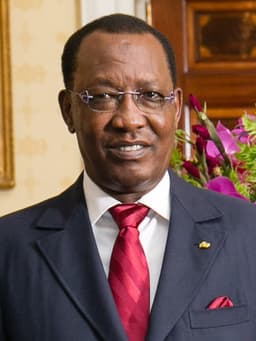
Idriss Deby
General · Modern
58.9Total

Prince Rupert of the Rhine
General · Modern
48.8Total
Basic Information
Born
1952
1619
Died
—
1682
Era
Modern
Modern
Nationality
Chad
Germany
Occupation
General
General
Civilization
Other
Western
Score Comparison
Military (10%)
67.5
50.0
Political (20%)
68.0
33.6
Influence (20%)
55.7
61.0
Legacy (20%)
49.2
52.0
Leadership (15%)
68.0
36.9
Strategy (15%)
55.0
50.0
TOTAL
58.9
48.8
Idriss Deby — Complete Timeline
1990 AD
Seized Power in CoupPolitical Action
Idriss Deby, a former military commander, led a rebellion that overthrew President Hiss
Coup d'étatChadRebellion
Impact: national
1996 AD
Won First Multi-Party ElectionPolitical Action◆ Major
Deby won the 1996 presidential election, the first multi-party election in Chad's history. The election was criticized for irregularities but was seen as a step towards democratic transition.
ElectionDemocracyChad
Impact: national
2003 AD
Chad-Cameroon Pipeline CompletionOther◆ Major
The Chad-Cameroon Petroleum Development and Pipeline Project became operational, allowing Chad to export oil. The project brought significant revenue but also raised concerns about corruption and environmental impact.
Oil PipelineEconomyChad
Impact: national
2013 AD
Military Intervention in Northern MaliWar◆ Major
Chadian troops under Deby's command played a key role in the French-led intervention in Mali, fighting against Islamist insurgents. The intervention helped push back militants but resulted in Chadian casualties.
Military InterventionMaliCounterterrorism
Impact: regional
2021 AD
Killed on the Front LinesWar
President Idriss Deby was killed while visiting troops fighting rebels from the Front for Change and Concord in Chad (FACT) in northern Chad. His death on the battlefield was confirmed by the military.
DeathChadConflict
Impact: nationaltragic
Prince Rupert of the Rhine — Complete Timeline
1642 AD
Battle of EdgehillWar◆ Major
Prince Rupert commanded the Royalist cavalry at the Battle of Edgehill, the first major battle of the English Civil War. His cavalry charge was initially successful but failed to achieve a decisive victory, as the battle ended inconclusively.
BattleEnglish Civil WarRoyalist
Impact: national
1644 AD
Battle of Marston MoorWar
Prince Rupert led Royalist forces at the Battle of Marston Moor, where they were decisively defeated by the Parliamentarian and Scottish armies. The loss cost the Royalists control of northern England and marked a turning point in the war.
BattleEnglish Civil WarDefeat
Impact: nationaldestructive
1645 AD
Battle of NasebyWar◆ Major
Prince Rupert commanded the Royalist cavalry at the Battle of Naseby, the final major battle of the First English Civil War. The Royalist army was destroyed, and Rupert's reputation as a commander was severely damaged.
BattleEnglish Civil WarDefeat
Impact: nationaldestructive
Expert Analysis
Origins
**Idriss Deby** (born 1952) grew up in a village in northern Chad, the son of a herder. He attended military school in France and later joined the Chadian army. Deby rose through the ranks under President Hissène Habré, becoming a key commander in the war against Libya. His early career was shaped by the brutal civil wars that plagued Chad after independence.
**Prince Rupert of the Rhine** (1619-1682) was born in Prague to Frederick V, Elector Palatine, and Elizabeth Stuart, daughter of King James I of England. Exiled from his family's lands during the Thirty Years' War, he received a military education in the Netherlands. His early life was marked by displacement and a desire to restore his family's fortunes.
Rise to Power
Deby's path to power came through a coup. In 1990, while serving as a senior commander, he defected and led a rebel force from Sudan. On December 1, 1990, his forces captured N'Djamena, overthrowing Habré. Deby declared himself president, a position he held for 30 years. He consolidated power by co-opting rivals and suppressing dissent.
Prince Rupert rose to prominence during the English Civil War (1642-1651). Appointed commander of the Royalist cavalry by his uncle King Charles I, he quickly gained a reputation for bold charges. His leadership at the Battle of Edgehill (October 23, 1642) electrified the Royalist cause, though his failure to follow up the initial success became a pattern.
Leadership & Governance
Deby's leadership style was autocratic but pragmatic. He maintained power through a mix of patronage, manipulation of ethnic rivalries, and military force. He introduced a new constitution in 1996 and won a multi-party election, though international observers noted irregularities. His governance focused on securing oil revenues (the Chad-Cameroon pipeline became operational in 2003) and fighting rebels. He frequently reorganized his military to prevent any single commander from becoming too powerful.
Prince Rupert was a daring cavalry commander but a poor strategist. He excelled in leading charges but failed to coordinate with infantry or secure objectives. His tactical scores of 50.0 in military and 36.9 in leadership reflect his impulsive nature. He clashed with Royalist advisers over strategy, most notably at Marston Moor (1644), where his insistence on battle led to disaster.
Triumph & Tragedy
Deby's greatest triumph was surviving as president for 30 years in one of Africa's most unstable countries. He successfully integrated oil wealth into the economy and played a key role in regional security, such as the 2013 intervention in northern Mali where Chadian troops proved effective. His tragedy came in April 2021: while visiting troops fighting rebels, he was killed on the front lines. His death highlighted the fragility of his regime and the ongoing insurgency.
Prince Rupert's triumph was his early cavalry victories. At Edgehill, his charge drove back Parliamentarian horse, nearly winning the day. At Naseby (1645), however, his cavalry was routed, leading to the Royalist defeat. His greatest failure was at Marston Moor, where he ignored intelligence about enemy strength and lost the North. After the war, he became a privateer and later an admiral for the restored monarchy.
Character & Destiny
Deby was a shrewd survivor, willing to switch sides and use violence to maintain control. His decision to lead from the front ultimately cost him his life. Historians note his political acumen (68.0) but also his ruthless suppression of opponents. His legacy is mixed: he stabilized Chad but left a country still plagued by conflict.
Prince Rupert was brave, charismatic, and impetuous. His tactical skill (50.0) was undermined by his inability to see the bigger picture. He was a romantic figure, but his leadership score of 36.9 reflects his failures. His destiny was shaped by the losing side; he never achieved the restoration of his family's lands.
Legacy
Deby's legacy is that of a modern African strongman who died in battle. He scored 49.2 in legacy, higher than Rupert's 52.0? Actually, Deby's legacy is 49.2, Rupert's 52.0. Deby's influence (55.7) is felt in Chad's political structure and its role in regional security. The pipeline continues to generate revenue, but corruption remains.
Prince Rupert's legacy is more cultural. He is remembered as the archetypal cavalier, and his military innovations (like faster cavalry tactics) influenced later warfare. His influence score of 61.0 reflects his enduring image in English history. However, his political score of 33.6 shows his limited impact on governance.
Conclusion
Idriss Deby had a greater impact on his country and region than Prince Rupert had on England. Deby's total score of 58.9 vs Rupert's 48.8 reflects his longer tenure and direct control over a nation's fate. While Rupert is a romantic figure, Deby's practical exercise of power—both military and political—shaped Chad for three decades. Deby's story is more consequential, even if less celebrated.
Rankings
🥇
Idriss DebyLeader
Mil: 67.5Pol: 68.0Inf: 55.7
58.9
🥈
Prince Rupert of the Rhine
Mil: 50.0Pol: 33.6Inf: 61.0
48.8
+10.1 behind
How This Comparison Works
Algorithm
Each figure is scored on 6 dimensions (0—100 scale) based on structured historical data: Military (10%), Political (20%), Influence (20%), Legacy (20%), Leadership (15%), Strategy (15%). The weighted total produces the final ranking.
Data Sources
Scores are computed from structured sub-indicators in the database. Scale factors adjust for era (Ancient ×0.85, Modern ×1.0) and civilization size (Eastern ×1.05, Other ×0.80) to account for differences in population and military scale.
Maximum 3 Figures
Comparisons are limited to 2—3 figures to ensure readability and statistical meaningfulness.
Error Margins
±5 points per dimension — Sub-scores are derived from historical records with inherent uncertainty. Two figures within 5 points on a dimension should be considered roughly equivalent in that area.
Total Score Accuracy
±3 points overall — The weighted combination of 6 dimensions produces a total score with approximately ±3 points of uncertainty. Differences of less than 3 points are not statistically significant— the figures are effectively tied.
Known Limitations
- Historical records are incomplete and uneven across civilizations
- Figures from oral-tradition societies may be underrepresented
- Occupation labels can misclassify multi-role figures
- Scores measure capability and impact, not moral character
- Quantitative scoring is a comparison tool, not absolute truth
Capability Radar
Military (10%) — Battles & Warfare
Battles
65
65
Win Rate
60
55
Expansion
55
30
Political (20%) — Governance & Reform
Reform
40
10
Diplomacy
55
30
Economy
35
15
Influence (20%) — Cultural & Global Reach
Cultural
30
40
Global
35
35
Legacy (20%) — Historical Impact
Historical
45
55
Longevity
40
45
Leadership (15%) — Power & Stability
Tenure
75
20
Stability
30
10
Strategy (15%) — Tactics & Innovation
Strategy
60
50
Tactics
55
75
Reform
70
40
Similar Comparisons
Comments & Discussion
No comments yet. Be the first to share your thoughts!