Loading...
Ikeda Terumasa vs Louis-Nicolas Davout
Louis-Nicolas Davout leads by 12.4 pts · 2 figures compared
…

Ikeda Terumasa
General · Modern
53.8Total
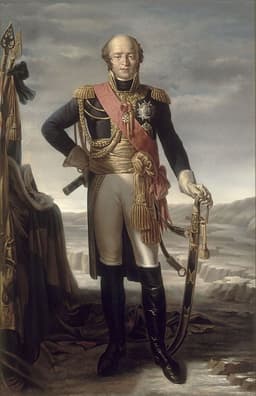
Louis-Nicolas Davout
General · Modern
66.2Total
Basic Information
Born
1565
1770
Died
1613
1823
Era
Modern
Modern
Nationality
Japan
France
Occupation
General
General
Civilization
Eastern
Western
Score Comparison
Military (10%)
38.3
65.0
Political (20%)
68.0
68.0
Influence (20%)
57.2
55.0
Legacy (20%)
54.0
72.0
Leadership (15%)
40.0
70.0
Strategy (15%)
60.0
72.0
TOTAL
53.8
66.2
Ikeda Terumasa — Complete Timeline
1584 AD
Marriage to Tokugawa Ieyasu's DaughterPolitical Action◆ Major
Ikeda Terumasa married Tokugawa Ieyasu's daughter, Tokuhime, becoming a son-in-law of the future shogun. This marriage cemented his loyalty to the Tokugawa clan and elevated his status among daimyo.
MarriageTokugawa AlliancePolitical
Impact: nationalconstructive
1600 AD
Battle of SekigaharaWar◆ Major
Terumasa fought for the Eastern Army under Tokugawa Ieyasu at Sekigahara. He commanded a large contingent and played a key role in the victory. After the battle, he was rewarded with the Himeji domain.
SekigaharaEastern ArmyVictory
Impact: nationalconstructive
1601 AD
Construction of Himeji CastleCultural◆ Major
Terumasa oversaw the expansion and renovation of Himeji Castle, transforming it into the largest and most fortified castle in Japan. The project took nine years and established the castle as a symbol of Tokugawa power.
Castle ConstructionHimejiArchitecture
Impact: nationalconstructive
1614 AD
Siege of OsakaWar
Terumasa participated in the Siege of Osaka, leading Tokugawa forces against the Toyotomi clan. His troops helped capture the outer defenses of Osaka Castle, contributing to the final defeat of the Toyotomi.
Siege of OsakaTokugawaCampaign
Impact: national
Louis-Nicolas Davout — Complete Timeline
1805 AD
Battle of AusterlitzWar
Davout commanded the III Corps on the right flank, holding off the main Austrian-Russian attack while Napoleon crushed the center. His corps marched 120 km in 48 hours to reach the battlefield. This victory destroyed the Third Coalition and established French dominance in Europe.
Napoleonic WarsBattleDecisive Victory
Impact: global
1806 AD
Battle of AuerstedtWar◆ Major
Davout's single corps of 26,000 men defeated the main Prussian army of 63,000 under the Duke of Brunswick. He used aggressive tactics and superior discipline to rout the Prussians. This victory, on the same day as Napoleon's victory at Jena, led to the collapse of Prussia.
Napoleonic WarsBattlePrussian Campaign
Impact: regional
1807 AD
Governor-General of the Duchy of WarsawPolitical Action
Davout was appointed governor-general of the newly created Duchy of Warsaw. He organized the Polish army and administration, implementing French legal and military reforms. His efficient governance helped secure Polish support for Napoleon's campaigns.
AdministrationPolandReform
Impact: regionalconstructive
1812 AD
Battle of BorodinoWar◆ Major
Davout commanded the I Corps in the center of the French line, leading assaults on the Russian fortifications. He was wounded but continued to command. The battle was a tactical draw but a strategic disaster for Napoleon, as the Russians withdrew and later forced the French retreat.
Napoleonic WarsBattleRussian Campaign
Impact: regional
1813 AD
Defended Hamburg during the War of the Sixth CoalitionWar◆ Major
Davout held Hamburg against a Prussian-Russian siege for over a year, using harsh measures including expelling civilians. He surrendered only after Napoleon's abdication. His defense was militarily competent but criticized for its brutality, tarnishing his reputation.
Napoleonic WarsSiegeControversy
Impact: regionaldestructive
1814 AD
Switched allegiance to Louis XVIII after Napoleon's first abdicationPolitical Action
After Napoleon's abdication, Davout submitted to the Bourbon monarchy and was made a peer of France. He did not join Napoleon during the Hundred Days until ordered to do so by the king. This pragmatic decision allowed him to retain his titles and avoid execution.
Political SurvivalBourbon RestorationAllegiance
Impact: national
Expert Analysis
Origins
Ikeda Terumasa was born in 1564 in Owari Province, Japan, the son of Ikeda Nobuteru, a prominent samurai serving Oda Nobunaga. His early life was marked by the chaos of the Sengoku period. After his father's death in 1584, Terumasa inherited the family leadership. In 1584, he married Tokuhime, the daughter of Tokugawa Ieyasu, cementing his loyalty to the future shogun. This marriage placed him in the inner circle of the Tokugawa clan.
Louis-Nicolas Davout was born in 1770 in Annoux, Burgundy, France, into a noble family. He studied at the École Royale Militaire in Paris and graduated in 1788 as a sub-lieutenant. His early career was shaped by the French Revolution, which he embraced, quickly rising through the ranks due to talent and republican fervor. By 1793, he was a general of brigade.
Rise to Power
Terumasa's rise came through loyalty and marriage. After marrying Tokugawa Ieyasu's daughter, he became a trusted ally. His first major test was the Battle of Sekigahara in 1600, where he commanded 4,500 troops for the Eastern Army. His performance impressed Ieyasu, leading to rewards: he was granted the fief of Himeji (520,000 koku) in 1603. This made him one of the most powerful daimyo in Japan.
Davout's rise was meteoric during the Napoleonic Wars. He became a close associate of Napoleon Bonaparte, who recognized his military genius. In 1804, he was made a Marshal of the Empire. His turning point was the Battle of Auerstedt in 1806, where his single corps of 26,000 men defeated the main Prussian army of 63,000. This victory earned him the title Duke of Auerstedt and solidified his reputation as an exceptional commander.
Leadership & Governance
Terumasa's leadership was typical of a Tokugawa loyalist: he focused on castle construction and local administration. His most notable achievement was the expansion of Himeji Castle from 1601 to 1609, transforming it into the largest and most fortified castle in Japan. He also implemented agricultural reforms and maintained stability in his domain. His governance was effective but unremarkable compared to other daimyo.
Davout was a strict disciplinarian and brilliant organizer. As governor-general of the Duchy of Warsaw (1807-1808), he implemented French legal codes and organized the Polish army. His leadership style was harsh but efficient; he demanded excellence and punished failure. On the battlefield, he was known for his aggressive tactics and meticulous planning. His III Corps was the best-trained in the Grande Armée.
Triumph & Tragedy
Terumasa's greatest success was completing Himeji Castle, a UNESCO World Heritage site today. He also fought in the Siege of Osaka (1614-1615), helping to destroy the Toyotomi clan. However, his political influence waned after Ieyasu's death; he was overshadowed by other Tokugawa loyalists. He died in 1613, before seeing the final consolidation of Tokugawa rule.
Davout's triumphs include Auerstedt (1806), where he scored a 72.0 in strategy, and Austerlitz (1805), where his corps held the right flank. He never lost a battle. However, his defense of Hamburg (1813-1814) was tragic: he held the city at all costs, expelling civilians and causing suffering. After Napoleon's abdication, Davout was forced to surrender, and his reputation suffered due to the harsh measures. He also failed to prevent the Allied invasion of France in 1814.
Character & Destiny
Terumasa was cautious and loyal, embodying the Tokugawa ideal of a dutiful retainer. His marriage to Ieyasu's daughter shaped his destiny: it brought him power but also limited his independence. He was not a great strategist—his military score is 38.3—but he was a capable administrator. His character ensured he prospered in peacetime but left little personal legacy beyond Himeji Castle.
Davout was known for his cold, stern demeanor and fierce loyalty to Napoleon. He was perhaps the most competent of Napoleon's marshals, with a military score of 65.0 and strategy of 72.0. His character—disciplined, ruthless, and brilliant—made him unbeatable on the battlefield but also earned him enemies. His destiny was tied to Napoleon's; after the emperor's fall, Davout's career ended, and he died in 1823, relatively forgotten.
Legacy
Terumasa's legacy is primarily architectural: Himeji Castle remains a symbol of Japanese feudal architecture and a major tourist attraction. He also contributed to the stability of the Tokugawa shogunate, but his individual impact is limited. His total score of 53.8 reflects his moderate influence.
Davout's legacy is as one of history's greatest military commanders. He is remembered as the "Iron Marshal" for his unbroken record of victories. His innovations in corps organization and logistics influenced later military thinkers. He scored 72.0 in legacy, reflecting his enduring reputation. However, his harshness in Hamburg tarnished his image.
Conclusion
Louis-Nicolas Davout had greater impact than Ikeda Terumasa. Davout's military achievements were exceptional: he never lost a battle, defeated a larger army at Auerstedt, and played a key role in Napoleon's campaigns. His leadership score of 70.0 and legacy of 72.0 far surpass Terumasa's 40.0 and 54.0. While Terumasa built a beautiful castle, Davout shaped European warfare. The score gap of 12.4 points reflects this: Davout's overall score of 66.2 versus Terumasa's 53.8. In the broader sweep of history, Davout's influence on military tactics and his undefeated record secure his place as the more significant figure.
Rankings
🥇
Louis-Nicolas DavoutLeader
Mil: 65.0Pol: 68.0Inf: 55.0
66.2
🥈
Ikeda Terumasa
Mil: 38.3Pol: 68.0Inf: 57.2
53.8
+12.4 behind
How This Comparison Works
Algorithm
Each figure is scored on 6 dimensions (0—100 scale) based on structured historical data: Military (10%), Political (20%), Influence (20%), Legacy (20%), Leadership (15%), Strategy (15%). The weighted total produces the final ranking.
Data Sources
Scores are computed from structured sub-indicators in the database. Scale factors adjust for era (Ancient ×0.85, Modern ×1.0) and civilization size (Eastern ×1.05, Other ×0.80) to account for differences in population and military scale.
Maximum 3 Figures
Comparisons are limited to 2—3 figures to ensure readability and statistical meaningfulness.
Error Margins
±5 points per dimension — Sub-scores are derived from historical records with inherent uncertainty. Two figures within 5 points on a dimension should be considered roughly equivalent in that area.
Total Score Accuracy
±3 points overall — The weighted combination of 6 dimensions produces a total score with approximately ±3 points of uncertainty. Differences of less than 3 points are not statistically significant— the figures are effectively tied.
Known Limitations
- Historical records are incomplete and uneven across civilizations
- Figures from oral-tradition societies may be underrepresented
- Occupation labels can misclassify multi-role figures
- Scores measure capability and impact, not moral character
- Quantitative scoring is a comparison tool, not absolute truth
Capability Radar
Military (10%) — Battles & Warfare
Battles
30
85
Win Rate
35
95
Expansion
25
80
Political (20%) — Governance & Reform
Reform
30
55
Diplomacy
50
50
Economy
40
45
Influence (20%) — Cultural & Global Reach
Cultural
45
60
Global
30
60
Legacy (20%) — Historical Impact
Historical
50
75
Longevity
55
65
Leadership (15%) — Power & Stability
Tenure
45
60
Stability
50
55
Strategy (15%) — Tactics & Innovation
Strategy
35
88
Tactics
40
92
Reform
20
75
Similar Comparisons
Comments & Discussion
No comments yet. Be the first to share your thoughts!