Loading...
This comparison has not been analyzed yet.
One-time AI generation (~1 minute). Scores and timeline are already available below.
Imad-ul-Mulk vs Louis of Male
Louis of Male leads by 7.4 pts · 2 figures compared
…

Imad-ul-Mulk
Emperor · Medieval
43.3Total
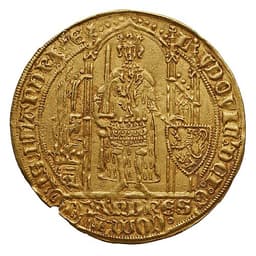
Louis of Male
Emperor · Medieval
50.7Total
Basic Information
Born
1490
1330
Died
1546
1384
Era
Medieval
Medieval
Nationality
India
Flanders
Occupation
Emperor
Emperor
Civilization
Indian
Western
Score Comparison
Military (10%)
50.0
50.0
Political (20%)
32.2
61.3
Influence (20%)
49.4
51.0
Legacy (20%)
39.2
42.5
Leadership (15%)
55.3
64.0
Strategy (15%)
30.3
35.7
TOTAL
43.3
50.7
Imad-ul-Mulk — Complete Timeline
1490 AD
Founded Imad Shahi DynastyPolitical Action◆ Major
Imad-ul-Mulk, a Bahmani governor, declared independence from the declining Bahmani Sultanate and established the Imad Shahi dynasty in Berar. This act was part of the fragmentation of the Bahmani kingdom into the Deccan sultanates.
Dynasty FoundingBerar SultanateBahmani Successor
Impact: regionalconstructive
1495 AD
Consolidation of BerarPolitical Action
Imad-ul-Mulk consolidated his control over the Berar region, establishing a stable administration and fortifying key strongholds. He maintained Berar's independence through diplomacy and military preparedness against neighboring sultanates.
ConsolidationBerar SultanateAdministration
Impact: regionalconstructive
1500 AD
Alliance with AhmadnagarPolitical Action
Imad-ul-Mulk formed an alliance with Ahmadnagar's Nizam Shahi dynasty against the Vijayanagara Empire and other Deccan rivals. This alliance helped secure Berar's borders and allowed for coordinated military campaigns.
AllianceDeccan PoliticsDiplomacy
Impact: regionalconstructive
Louis of Male — Complete Timeline
1360 AD
Economic Reforms in FlandersReform
Louis of Male implemented monetary reforms to stabilize the Flemish currency and promoted trade with England and the Hanseatic League. These policies strengthened the Flemish economy, particularly the cloth industry in Ghent and Bruges.
Economic PolicyTradeFlanders
Impact: regionalconstructive
1369 AD
Marriage of Margaret of Flanders to Philip the BoldPolitical Action
Louis of Male arranged the marriage of his daughter and heiress, Margaret, to Philip the Bold, Duke of Burgundy. This union eventually brought Flanders under Burgundian control after Louis's death, ending the Dampierre line's independent rule.
Marriage AllianceBurgundyFlanders
Impact: regional
1382 AD
Battle of RoosebekeWar◆ Major
Louis of Male, as Count of Flanders, led the Flemish army against the rebel forces of Ghent under Philip van Artevelde. The battle ended in a decisive victory for Louis, with Artevelde killed, but it did not end the rebellion and required French intervention.
BattleFlemish RebellionMedieval Warfare
Impact: regional
This comparison has not been analyzed yet.
One-time AI generation (~1 minute). Scores and timeline are already available below.
Rankings
🥇
Louis of MaleLeader
Mil: 50.0Pol: 61.3Inf: 51.0
50.7
🥈
Imad-ul-Mulk
Mil: 50.0Pol: 32.2Inf: 49.4
43.3
+7.4 behind
How This Comparison Works
Algorithm
Each figure is scored on 6 dimensions (0—100 scale) based on structured historical data: Military (10%), Political (20%), Influence (20%), Legacy (20%), Leadership (15%), Strategy (15%). The weighted total produces the final ranking.
Data Sources
Scores are computed from structured sub-indicators in the database. Scale factors adjust for era (Ancient ×0.85, Modern ×1.0) and civilization size (Eastern ×1.05, Other ×0.80) to account for differences in population and military scale.
Maximum 3 Figures
Comparisons are limited to 2—3 figures to ensure readability and statistical meaningfulness.
Error Margins
±5 points per dimension — Sub-scores are derived from historical records with inherent uncertainty. Two figures within 5 points on a dimension should be considered roughly equivalent in that area.
Total Score Accuracy
±3 points overall — The weighted combination of 6 dimensions produces a total score with approximately ±3 points of uncertainty. Differences of less than 3 points are not statistically significant— the figures are effectively tied.
Known Limitations
- Historical records are incomplete and uneven across civilizations
- Figures from oral-tradition societies may be underrepresented
- Occupation labels can misclassify multi-role figures
- Scores measure capability and impact, not moral character
- Quantitative scoring is a comparison tool, not absolute truth
Capability Radar
Military (10%) — Battles & Warfare
Battles
25
20
Win Rate
20
15
Expansion
30
15
Political (20%) — Governance & Reform
Reform
20
40
Diplomacy
25
55
Economy
20
50
Influence (20%) — Cultural & Global Reach
Cultural
15
30
Global
10
15
Legacy (20%) — Historical Impact
Historical
20
35
Longevity
15
20
Leadership (15%) — Power & Stability
Tenure
30
60
Stability
20
35
Strategy (15%) — Tactics & Innovation
Strategy
20
20
Tactics
20
15
Reform
15
10
Similar Comparisons
Comments & Discussion
No comments yet. Be the first to share your thoughts!