Loading...
Louis of Male vs Napoleon Bonaparte
Napoleon Bonaparte leads by 20.2 pts · 2 figures compared
…
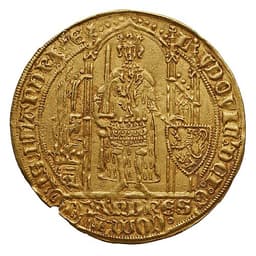
Louis of Male
Emperor · Medieval
50.7Total

Napoleon Bonaparte
General · Modern
70.9Total
Basic Information
Born
1330
1769
Died
1384
1821
Era
Medieval
Modern
Nationality
Flanders
France
Occupation
Emperor
General
Civilization
Western
Western
Score Comparison
Military (10%)
50.0
94.0
Political (20%)
61.3
72.0
Influence (20%)
51.0
40.0
Legacy (20%)
42.5
80.0
Leadership (15%)
64.0
78.0
Strategy (15%)
35.7
90.0
TOTAL
50.7
70.9
Louis of Male — Complete Timeline
1360 AD
Economic Reforms in FlandersReform
Louis of Male implemented monetary reforms to stabilize the Flemish currency and promoted trade with England and the Hanseatic League. These policies strengthened the Flemish economy, particularly the cloth industry in Ghent and Bruges.
Economic PolicyTradeFlanders
Impact: regionalconstructive
1369 AD
Marriage of Margaret of Flanders to Philip the BoldPolitical Action
Louis of Male arranged the marriage of his daughter and heiress, Margaret, to Philip the Bold, Duke of Burgundy. This union eventually brought Flanders under Burgundian control after Louis's death, ending the Dampierre line's independent rule.
Marriage AllianceBurgundyFlanders
Impact: regional
1382 AD
Battle of RoosebekeWar◆ Major
Louis of Male, as Count of Flanders, led the Flemish army against the rebel forces of Ghent under Philip van Artevelde. The battle ended in a decisive victory for Louis, with Artevelde killed, but it did not end the rebellion and required French intervention.
BattleFlemish RebellionMedieval Warfare
Impact: regional
Napoleon Bonaparte — Complete Timeline
1799 AD
Coup of 18 BrumaireOther◆ Major
Napoleon Bonaparte, with support from his brother Lucien and key political figures, overthrew the Directory in a bloodless coup. He established the Consulate with himself as First Consul, effectively becoming the ruler of France. This event ended the French Revolution's most unstable period.
French RevolutionCoupRise to Power
Impact: regional
1804 AD
Promulgation of the Napoleonic CodeOther◆ Major
Napoleon enacted the Civil Code of the French, known as the Napoleonic Code, a comprehensive set of laws that replaced the fragmented feudal legal systems. The code established legal equality, protected property rights, and secularized law. It became the basis for legal systems in many European and world countries.
Legal ReformNapoleonic CodeCivil Law
Impact: globalconstructive
1805 AD
Battle of AusterlitzWar◆ Major
Napoleon's Grande Arm
Napoleonic WarsBattleDecisive Victory
Impact: global
1812 AD
Invasion of RussiaWar◆ Major
Napoleon led the Grande Arm
Napoleonic WarsInvasionDisaster
Impact: globaldestructive
1815 AD
Battle of WaterlooWar◆ Major
Napoleon's French army was defeated by the combined forces of the Duke of Wellington's Anglo-Allied army and Gebhard Leberecht von Bl
Napoleonic WarsBattleFinal Defeat
Impact: globaldestructive
Expert Analysis
louis-of-male-vs-napoleon-bonaparte
# The Count Who Chose Survival, and the Emperor Who Chose Glory
On a June morning in 1815, Napoleon Bonaparte stood on a muddy ridge near Waterloo, watching his Imperial Guard advance for the final time. Forty-six years old, he had already conquered Europe, crowned himself emperor, and rewritten the laws of a continent. Across the centuries, in the winter of 1382, Louis of Male watched his own army crumple at Roosebeke, a Flemish count who had spent his reign dodging destruction rather than courting it. One man reached for the stars and burned; the other held onto what he had and faded. Why did they walk such different paths?
Origins
Napoleon was born in 1769 on Corsica, an island that had just become French, to a minor noble family of modest means. His father, Carlo, was a lawyer who maneuvered through the shifting loyalties of Mediterranean politics. Young Napoleon grew up speaking Italian, not French, and felt like an outsider—a hunger that never left him. The French Revolution, erupting when he was twenty, shattered the old order and opened doors that had been locked for centuries. A talented artillery officer could rise not by birth but by brilliance.
Louis of Male, born in 1330, inherited a different world. Flanders was the wealthiest region in northern Europe, its cities—Ghent, Bruges, Ypres—powered by cloth and trade. His father was Count Louis I, who had been killed at the Battle of Crécy in 1346, fighting for France against England. Young Louis inherited a title but also a tangle: Flanders lay between the ambitions of the French king and the English wool merchants who supplied its looms. His era demanded not conquest but balance.
Rise to Power
Napoleon’s rise was meteoric. In 1793, at twenty-four, he drove the British out of Toulon with a brilliant artillery plan. By 1796, he commanded the Army of Italy and turned a ragged force into a conquering machine, winning battle after battle against the Austrians. His 1798 Egyptian campaign was a gamble—part military, part scientific expedition—that ended in strategic failure but made him a legend. In 1799, he returned to France, overthrew the Directory in a coup, and made himself First Consul. By 1804, he crowned himself Emperor. The path was straight and steep, driven by ambition and a Europe in chaos.
Louis of Male rose not by storm but by survival. He became Count in 1346, at sixteen, with his father dead and Flanders in turmoil. The Hundred Years’ War raged; the English king, Edward III, claimed the French throne, and Flemish cities—dependent on English wool—leaned toward England. Louis chose France. He married Margaret of Brabant, a French ally, and spent years suppressing rebellions in Ghent and Bruges. His power came not from conquest but from patience, diplomacy, and the wealth of Flemish markets.
Leadership & Governance
Napoleon governed with a code. The Napoleonic Code of 1804 standardized French law, enshrining equality before the law, property rights, and secular administration. He built schools, roads, and a centralized bureaucracy. Militarily, he was a genius: at Austerlitz in 1805, he crushed the Russian and Austrian armies with a feigned retreat that became legend. His strategy was speed, deception, and decisive battle—he sought to annihilate his enemies in a single stroke. But he could not stop. By 1812, he invaded Russia with 600,000 men; six months later, fewer than 100,000 returned.
Louis of Male governed with a ledger. In 1360, he reformed Flemish currency, stabilizing the economy and promoting trade with England and the Hanseatic League. He understood that Flanders’ strength was not its army but its gold. When rebellion erupted in Ghent in 1379, led by Philip van Artevelde, Louis did not rush to battle. He waited, negotiated, and finally fought only when cornered. At Roosebeke in 1382, his army—aided by French knights—crushed the rebels. But he did not follow up with conquest; he restored order and returned to his counting houses.
Triumph & Tragedy
Napoleon’s triumph was Europe at his feet. By 1810, his empire stretched from Spain to Poland, and he married Marie Louise of Austria, sealing an alliance with the Habsburgs. His tragedy was the same ambition. The Russian campaign of 1812 was a catastrophe of logistics and hubris. Exiled to Elba in 1814, he escaped in 1815 and rallied France for a hundred days, only to meet Wellington at Waterloo. The battle was close—a matter of hours—but it ended in defeat and a second exile to Saint Helena, where he died in 1821, alone and bitter.
Louis of Male’s triumph was survival. He kept Flanders intact through plague, war, and rebellion, and he secured its future through marriage. In 1369, he betrothed his only daughter, Margaret, to Philip the Bold, Duke of Burgundy. This union—arranged with French blessing—meant that after Louis’s death in 1384, Flanders passed to the Burgundian dukes, who would build one of the most powerful states in Europe. His tragedy was that he was the last of his line. The Dampierre dynasty ended with him, swallowed by Burgundy. He had preserved Flanders but lost its independence.
Character & Destiny
Napoleon was driven by a vision of himself as a world-historical figure. “I am not a man, but a thing,” he once said. He believed in destiny, in the power of will, in the idea that history could be bent by a single mind. His personality was magnetic, ruthless, and insatiable. He could charm diplomats and terrify generals, but he could not stop. Every victory demanded another. His character led him to Moscow, to Waterloo, to the rock of Saint Helena.
Louis of Male was driven by a different motive: survival of his house. He was cautious, pragmatic, and patient. He allied with France because it was safer than England. He reformed currency because trade was more reliable than war. He arranged his daughter’s marriage because it secured the future—even if that future was not his own. His personality was that of a steward, not a conqueror. He did not seek to change history; he sought to ride it.
Legacy
Napoleon’s legacy is immense. The Napoleonic Code influenced legal systems across Europe and the Americas. His military tactics are still studied in war colleges. He reshaped nationalism, spreading the idea of a citizen army and a unified state. But he also left a trail of destruction: millions dead, borders redrawn, and a Europe that never fully trusted France again.
Louis of Male’s legacy is quieter. He is remembered as the last Dampierre count, the man who gave Flanders to Burgundy. His monetary reforms stabilized the Flemish economy, but his name is known mostly to specialists. The marriage he arranged led to the Burgundian state that would later challenge France itself. He did not conquer, but he shaped.
Conclusion
Standing at Waterloo, Napoleon could not imagine compromise. Standing at Roosebeke, Louis of Male could not imagine glory. One burned bright and fast; the other burned low and long. Their differences were not simply of talent but of era and temperament. Napoleon lived in a revolutionary age that rewarded ambition; Louis lived in a medieval age that rewarded prudence. Both succeeded on their own terms, and both failed on the same. The question they leave behind is not who was greater, but what kind of world each chose to build—and whether, in the end, we remember the blaze or the ember.
Rankings
🥇
Napoleon BonaparteLeader
Mil: 94.0Pol: 72.0Inf: 40.0
70.9
🥈
Louis of Male
Mil: 50.0Pol: 61.3Inf: 51.0
50.7
+20.2 behind
How This Comparison Works
Algorithm
Each figure is scored on 6 dimensions (0—100 scale) based on structured historical data: Military (10%), Political (20%), Influence (20%), Legacy (20%), Leadership (15%), Strategy (15%). The weighted total produces the final ranking.
Data Sources
Scores are computed from structured sub-indicators in the database. Scale factors adjust for era (Ancient ×0.85, Modern ×1.0) and civilization size (Eastern ×1.05, Other ×0.80) to account for differences in population and military scale.
Maximum 3 Figures
Comparisons are limited to 2—3 figures to ensure readability and statistical meaningfulness.
Error Margins
±5 points per dimension — Sub-scores are derived from historical records with inherent uncertainty. Two figures within 5 points on a dimension should be considered roughly equivalent in that area.
Total Score Accuracy
±3 points overall — The weighted combination of 6 dimensions produces a total score with approximately ±3 points of uncertainty. Differences of less than 3 points are not statistically significant— the figures are effectively tied.
Known Limitations
- Historical records are incomplete and uneven across civilizations
- Figures from oral-tradition societies may be underrepresented
- Occupation labels can misclassify multi-role figures
- Scores measure capability and impact, not moral character
- Quantitative scoring is a comparison tool, not absolute truth
Capability Radar
Military (10%) — Battles & Warfare
Battles
20
95
Win Rate
15
90
Expansion
15
95
Political (20%) — Governance & Reform
Reform
40
95
Diplomacy
55
80
Economy
50
85
Influence (20%) — Cultural & Global Reach
Cultural
30
85
Global
15
90
Legacy (20%) — Historical Impact
Historical
35
95
Longevity
20
90
Leadership (15%) — Power & Stability
Tenure
60
85
Stability
35
70
Strategy (15%) — Tactics & Innovation
Strategy
20
95
Tactics
15
98
Reform
10
92
Similar Comparisons
Comments & Discussion
CountCrunch6/17/2026
Waterloo was a tactical mess, not a glorious last stand. Napoleon’s Guard deployment was too late and too narrow—he should have hit Wellington’s center by 3 PM, not 7. Louis of Male, by contrast, knew his mercenaries couldn’t win at Roosebeke and pulled back early, preserving his treasury. Napoleon’s ego cost France 25,000 men in one afternoon; Louis’ prudence kept Flanders out of ruin for another decade. Give me the survivalist every time.
数据筛子6/17/2026
拿破仑的胜率被粉丝严重高估了。从1812到1815年,他打了八场大战,输了五场——莱比锡、拉罗蒂埃、滑铁卢,全是大败。路易·德·马勒呢?他在罗瑟贝克输了一仗,但之前统治了三十多年没崩盘。拿破仑靠的是短期概率爆发,路易靠的是长期风险评估。数据不撒谎:稳定比辉煌更稀有。什么帝国?就是一场冒险。
VarangianScholar6/17/2026
Classic tragedy of agency versus structure. Napoleon was an outsider who remade the game, but his destiny was baked into the Revolutionary moment—he had to keep winning or die. Louis of Male was constrained by Flanders’ complex urban autonomy; he couldn’t be a conqueror even if he wanted. The real difference isn’t character; it’s political context. Napoleon had the blank slate to write his own epic; Louis was stuck editing someone else’s manuscript.
民国老炮6/17/2026
你们把拿破仑捧成战神,可他就是个独裁赌徒。路易·德·马勒至少是本土统治者,懂得分寸。拿破仑在滑铁卢赌国运,把法国青年当骰子扔,结果全输光。历史上这种人多了:项羽、希特勒、拿破仑——都是野心家玩火自焚。路易虽然平庸,但对手下的民兵知道轻重,不拿老百姓当炮灰。宁要一个怂包公爵,不要一个亡国英雄。
FlemishBrewer6/17/2026
You’re missing the peasant view. Under Louis of Male, Ghent’s weavers had bread riots and tax revolts, sure, but under Napoleon, entire villages were drained of young men for the Grande Armée. Louis’ Flanders lost 10,000 at Roosebeke; Napoleon’s France lost 500,000 in Russia alone. The count rode out his reign with local bargains and bribes; the emperor burned two generations for a legacy. I’ll take the boring stability over the fireworks any day.