Loading...
Imagawa Yoshimoto vs Julius Caesar
Julius Caesar leads by 30.4 pts · 2 figures compared
…
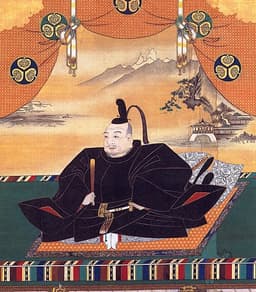
Imagawa Yoshimoto
Emperor · Modern
52.4Total

Julius Caesar
General · Ancient
82.8Total
Basic Information
Born
1519
-100
Died
1560
-44
Era
Modern
Ancient
Nationality
Japan
Roman Republic
Occupation
Emperor
General
Civilization
Eastern
Western
Score Comparison
Military (10%)
55.0
88.0
Political (20%)
48.0
78.0
Influence (20%)
52.5
85.0
Legacy (20%)
43.3
82.0
Leadership (15%)
65.0
80.0
Strategy (15%)
60.0
85.0
TOTAL
52.4
82.8
Imagawa Yoshimoto — Complete Timeline
1536 AD
Became Daimyo of Suruga ProvincePolitical Action◆ Major
Imagawa Yoshimoto became daimyo of Suruga Province after a succession dispute. He consolidated control over the Imagawa clan and expanded their territory through alliances and military campaigns.
DaimyoSurugaImagawa
Impact: regional
1554 AD
Formed the Three-Way Alliance with Takeda and HojoPolitical Action◆ Major
Imagawa Yoshimoto formed a tripartite alliance with Takeda Shingen and Hojo Ujiyasu, securing his borders and allowing him to focus on expansion into central Japan. This alliance was a key diplomatic achievement.
AllianceTakedaHojo
Impact: regionalconstructive
1560 AD
Battle of OkehazamaWar
Imagawa Yoshimoto led a large army into Owari Province but was ambushed and killed by Oda Nobunaga's forces at the Battle of Okehazama. His death shattered the Imagawa clan's power and marked Nobunaga's rise.
BattleOda NobunagaDeath
Impact: nationaltragic
Julius Caesar — Complete Timeline
58 BC
Gallic WarsWar◆ Major
Caesar, as proconsul of Gaul, launched a series of campaigns that conquered all of Gaul (modern France, Belgium, and parts of Switzerland). He fought numerous battles, including against the Helvetii, the Belgae, and the Gallic chieftain Vercingetorix. The wars brought immense wealth and a loyal army to Caesar.
Gallic WarsConquestRoman Expansion
Impact: regional
49 BC
Crossing the RubiconPolitical Action◆ Major
Caesar led Legio XIII across the Rubicon River into Italy, defying the Roman Senate's order to disband his army. This act triggered a civil war against Pompey and the Optimates, ultimately leading to Caesar's dictatorship and the end of the Roman Republic.
Roman Civil WarEnd of RepublicPower Struggle
Impact: global
48 BC
Battle of PharsalusWar◆ Major
Caesar's outnumbered army defeated the larger forces of Pompey the Great at Pharsalus in Greece. Caesar's tactical use of a reserve line to counter Pompey's cavalry charge proved decisive. Pompey fled to Egypt, where he was assassinated, leaving Caesar as the undisputed master of the Roman world.
Roman Civil WarBattleDecisive Victory
Impact: regional
44 BC
Appointment as Dictator for LifePolitical Action◆ Major
The Roman Senate appointed Caesar dictator perpetuo (dictator for life), granting him unprecedented personal power. This move concentrated military, legislative, and judicial authority in one person, effectively ending the Roman Republic's traditional system of checks and balances and alarming many senators.
DictatorshipEnd of RepublicPower Consolidation
Impact: regionaldestructive
Assassination on the Ides of MarchPolitical Action◆ Major
A group of Roman senators, led by Marcus Junius Brutus and Gaius Cassius Longinus, stabbed Caesar to death at a meeting of the Senate in the Theatre of Pompey. The assassination was intended to restore the Republic, but instead triggered another civil war that led to the rise of the Roman Empire.
AssassinationRoman PoliticsEnd of Republic
Impact: globaldestructive
Expert Analysis
imagawa-yoshimoto-vs-julius-caesar
# The Crossing and the Ambush: Two Generals, One Fateful Moment
On a spring morning in 1560, a vast army of perhaps 25,000 men marched through the tall grass of Owari Province, banners fluttering in the wind. At its head rode Imagawa Yoshimoto, a daimyo at the height of his power, confident that the province of a minor warlord named Oda Nobunaga would soon fall. He did not know that within hours, a sudden thunderstorm would mask the approach of a much smaller force, and his head would be paraded through the streets of Nagoya. A century and a half earlier and half a world away, another general stood on the banks of a small river in northern Italy. The Rubicon was little more than a stream, but crossing it meant civil war, the destruction of a republic, and the birth of an empire. Julius Caesar did not hesitate. Two men, two civilizations, two paths to power—one who built an empire and one who lost everything in a single afternoon. What made the difference?
Origins
Julius Caesar was born into the chaos of the late Roman Republic, a world of senatorial intrigue, civil wars, and crumbling traditions. His family, the Julii, claimed descent from the goddess Venus, but they were not among the wealthiest or most powerful. Caesar’s father died when he was sixteen, leaving him to navigate a brutal political landscape where survival depended on alliances, debts, and sheer audacity. He was a product of a civilization that valued oratory, military glory, and law—a world where a man could rise through sheer force of will.
Imagawa Yoshimoto, born in 1519, emerged from a very different crucible: the Sengoku period of Japan, an era of “warring states” where central authority had collapsed and provincial lords fought for supremacy. The Imagawa clan was powerful, controlling Suruga Province, but Yoshimoto inherited a realm threatened by rivals like the Takeda and the Hojo. He was a cultured man, a poet and a patron of the arts, but his world demanded iron discipline and strategic marriage alliances. His path was not one of individual ambition but of clan survival—a system where honor, lineage, and collective duty mattered more than personal glory.
Rise to Power
Caesar’s ascent was a masterclass in political calculation. He allied with Pompey and Crassus in the First Triumvirate, secured the governorship of Gaul, and spent nearly a decade conquering a territory that made him immensely wealthy and popular with his legions. Every step was deliberate: he borrowed fortunes to fund public spectacles, courted the common people against the Senate, and wrote his own commentaries to shape his legend. His was a rise built on debt, war, and propaganda.
Yoshimoto’s path was more traditional within the Japanese context. In 1536, after a succession dispute, he became daimyo of Suruga and immediately set about consolidating power. He reformed his clan’s administration, codified laws, and in 1554 formed the Three-Way Alliance with Takeda Shingen and Hojo Ujiyasu—a diplomatic masterstroke that secured his borders. His rise was measured, cautious, and built on stability rather than audacity. He was a consolidator, not a revolutionary.
Leadership & Governance
Caesar governed as he conquered: with a blend of clemency and iron. He granted citizenship to Gauls, reformed the calendar, and initiated massive public works. His military genius lay in speed and adaptability—at Alesia, he built fortifications around a besieged city and then built another ring to repel a relief army, winning against overwhelming odds. His political wisdom was equally sharp: he knew that mercy could be more powerful than revenge, and he pardoned many of his enemies, only to be killed by those he had spared.
Yoshimoto, by contrast, governed as a traditional daimyo. His strength was in organization and alliance. The Three-Way Alliance allowed him to focus on expansion without fear of attack from the Takeda or Hojo. He was a capable administrator, but his military thinking was conventional. When he marched into Owari in 1560, he brought a massive army, confident that numbers would prevail. He did not anticipate that Nobunaga would use the terrain and a sudden rainstorm to launch a lightning strike. Yoshimoto’s strategy was static; Caesar’s was dynamic.
Triumph & Tragedy
Caesar’s greatest triumph was the conquest of Gaul, which made him the richest man in Rome and gave him a loyal army. His most devastating failure was trusting the Senate after his victory in the civil war. On the Ides of March in 44 BCE, sixty senators stabbed him to death in the Theatre of Pompey. He had won everything and lost everything in a single moment of misplaced trust.
Yoshimoto’s tragedy was more abrupt. His greatest moment was the alliance that made him the most powerful daimyo in central Japan. His failure was the Battle of Okehazama in 1560. Leading a large army into Owari, he stopped to rest and celebrate at a narrow gorge. Nobunaga’s small force, perhaps 3,000 men, used a sudden thunderstorm as cover to strike his camp. Yoshimoto, caught off guard, was killed in the chaos. His ambition ended in a field of wet grass.
Character & Destiny
Caesar was a gambler who calculated his risks. He crossed the Rubicon knowing that there was no return. “The die is cast,” he reportedly said, embracing uncertainty. His personality—arrogant, brilliant, ruthless—shaped every decision. He believed in his own star, and for a time, the universe seemed to agree.
Yoshimoto was a planner, a poet-warrior who valued order. He wrote verses even as he marched to war. “Life is like a dream in a dream,” he is said to have composed before Okehazama. His personality was cautious, cultured, and ultimately unprepared for the chaotic genius of Nobunaga. He trusted in numbers and alliances, not in the unpredictable fury of a desperate enemy.
Legacy
Caesar’s legacy is immeasurable. His name became synonymous with imperial power—Kaiser and Tsar derive from it. The Julian calendar lasted for 1,600 years. His writings are still studied in military academies. He transformed Rome from a republic into an empire, for better or worse. His score of 83.3 reflects a figure who shaped the entire Western world.
Yoshimoto’s legacy is more modest, a score of 62.6. He is remembered primarily as the man who lost to Nobunaga, the catalyst for a new era. His alliance system collapsed after his death, and the Imagawa clan faded into obscurity. Yet his story endures as a cautionary tale—a reminder that power is fragile, that a single moment of overconfidence can undo years of careful work.
Conclusion
One man crossed a river and changed the world. Another marched through a field and met his end. The difference between Caesar and Yoshimoto is not merely one of skill or luck—it is a difference of civilization, of the very rules of the game. In Rome, a man could reinvent himself, defy tradition, and seize power through individual brilliance. In Sengoku Japan, even the most powerful daimyo was bound by clan, alliance, and a rigid code of honor. Caesar’s ambition was limitless; Yoshimoto’s was contained. One died at the hands of his peers, the other at the hands of a rival. Both were mortal, but only one became immortal. The lesson is not that one was greater than the other—it is that history rewards audacity, but only when the audacity is matched by the moment. Caesar’s moment was the Rubicon. Yoshimoto’s was Okehazama. One man crossed; the other did not see it coming.
Rankings
🥇
Julius CaesarLeader
Mil: 88.0Pol: 78.0Inf: 85.0
82.8
🥈
Imagawa Yoshimoto
Mil: 55.0Pol: 48.0Inf: 52.5
52.4
+30.4 behind
How This Comparison Works
Algorithm
Each figure is scored on 6 dimensions (0—100 scale) based on structured historical data: Military (10%), Political (20%), Influence (20%), Legacy (20%), Leadership (15%), Strategy (15%). The weighted total produces the final ranking.
Data Sources
Scores are computed from structured sub-indicators in the database. Scale factors adjust for era (Ancient ×0.85, Modern ×1.0) and civilization size (Eastern ×1.05, Other ×0.80) to account for differences in population and military scale.
Maximum 3 Figures
Comparisons are limited to 2—3 figures to ensure readability and statistical meaningfulness.
Error Margins
±5 points per dimension — Sub-scores are derived from historical records with inherent uncertainty. Two figures within 5 points on a dimension should be considered roughly equivalent in that area.
Total Score Accuracy
±3 points overall — The weighted combination of 6 dimensions produces a total score with approximately ±3 points of uncertainty. Differences of less than 3 points are not statistically significant— the figures are effectively tied.
Known Limitations
- Historical records are incomplete and uneven across civilizations
- Figures from oral-tradition societies may be underrepresented
- Occupation labels can misclassify multi-role figures
- Scores measure capability and impact, not moral character
- Quantitative scoring is a comparison tool, not absolute truth
Capability Radar
Military (10%) — Battles & Warfare
Battles
45
95
Win Rate
40
92
Expansion
60
97
Political (20%) — Governance & Reform
Reform
35
90
Diplomacy
45
85
Economy
40
82
Influence (20%) — Cultural & Global Reach
Cultural
35
88
Global
20
94
Legacy (20%) — Historical Impact
Historical
40
95
Longevity
30
96
Leadership (15%) — Power & Stability
Tenure
50
75
Stability
30
60
Strategy (15%) — Tactics & Innovation
Strategy
50
94
Tactics
55
96
Reform
30
88
Similar Comparisons
Comments & Discussion
马革裹尸郎6/17/2026
这没法比!今川义元就是个诗会宅男,领兵打仗还穿着公家礼服摆谱。桶狭间那场,天降暴雨他就傻乎乎地休息,被织田信长三千人端了老巢。这种将领放到罗马活不过三天。而凯撒?人家在阿莱西亚困死维钦托利,在高卢屠了百万蛮族。一个是军事家,一个是纸糊的。别拿将军跟摇滚明星比。
BatteringRam Caesar6/17/2026
This comparison is fundamentally broken because it confuses two totally different phases of command. Caesar crossed the Rubicon as a seasoned veteran who had already conquered Gaul, built a loyal army, and faced down Pompey. Imagawa Yoshimoto was still in the *rising* phase, trying to consolidate power. The real tragedy of Imagawa is that he never got a chance to show if he could've been a Caesar—he was ambushed mid-campaign, not after a decade of dominance. Apples to half-eaten oranges.
数据骑兵6/17/2026
看清楚了:今川义元在桶狭间带了大概两万五千人,史料说实际能战者就一万多,而且他自己写诗取乐,前线哨兵都放假了。而凯撒在法萨卢斯战役只损失了200人,打退庞培四万大军。指挥效率天差地别!一个是心不在焉的老爷,一个是靠纪律和快速决策碾压对手的天才。数字不会骗人:凯撒的胜率高达90%以上,今川呢?一场就完了。
Classics Counterpoint6/17/2026
You're all missing the cultural context. Caesar's world had a century of civil wars, so crossing a river to start one wasn't unique—it was just really dramatic. Imagawa Yoshimoto existed in a system where overturning the shogunate was much harder; he was trying to play the Sengoku game by the old rules of alliances and gradual expansion. Caesar was a revolutionary, Imagawa was an establishment man. Different games, different rules. One died because his game was already obsolete.
后院军师6/17/2026
我最烦这种关公战秦琼的帖子。今川义元死前可是控制着日本最富庶的东海道,领地年收入超百万石,比织田信长强多了。他栽就栽在低估了对手的狠劲和那场倒霉的暴雨。凯撒牛是因为他写了自传,历史由胜利者书写。要是桶狭间那天织田被反杀,今川统一日本,现在你们吹的就是“今川大帝”,谁还记得凯撒?运气面前,战术只是点缀。