Loading...
This comparison has not been analyzed yet.
One-time AI generation (~1 minute). Scores and timeline are already available below.
Imagawa Yoshimoto vs Yambio
Imagawa Yoshimoto leads by 3.2 pts · 2 figures compared
…
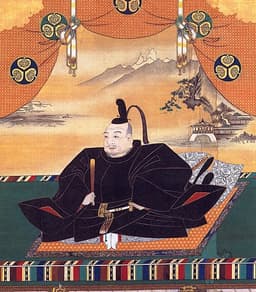
Imagawa Yoshimoto
Emperor · Modern
52.4Total

Yambio
Emperor · Modern
49.2Total
Basic Information
Born
1519
1830
Died
1560
1905
Era
Modern
Modern
Nationality
Japan
Sudan
Occupation
Emperor
Emperor
Civilization
Eastern
Other
Score Comparison
Military (10%)
55.0
20.0
Political (20%)
48.0
48.0
Influence (20%)
52.5
52.5
Legacy (20%)
43.3
42.5
Leadership (15%)
65.0
74.0
Strategy (15%)
60.0
51.7
TOTAL
52.4
49.2
Imagawa Yoshimoto — Complete Timeline
1536 AD
Became Daimyo of Suruga ProvincePolitical Action◆ Major
Imagawa Yoshimoto became daimyo of Suruga Province after a succession dispute. He consolidated control over the Imagawa clan and expanded their territory through alliances and military campaigns.
DaimyoSurugaImagawa
Impact: regional
1554 AD
Formed the Three-Way Alliance with Takeda and HojoPolitical Action◆ Major
Imagawa Yoshimoto formed a tripartite alliance with Takeda Shingen and Hojo Ujiyasu, securing his borders and allowing him to focus on expansion into central Japan. This alliance was a key diplomatic achievement.
AllianceTakedaHojo
Impact: regionalconstructive
1560 AD
Battle of OkehazamaWar
Imagawa Yoshimoto led a large army into Owari Province but was ambushed and killed by Oda Nobunaga's forces at the Battle of Okehazama. His death shattered the Imagawa clan's power and marked Nobunaga's rise.
BattleOda NobunagaDeath
Impact: nationaltragic
Yambio — Complete Timeline
1885 AD
Resistance against Mahdist invasionWar◆ Major
Yambio led Azande forces in resisting the Mahdist invasion of the Azande kingdom in southern Sudan. The Azande used guerrilla tactics and fortified settlements to defend their territory against the numerically superior Mahdist army.
Mahdist WarResistanceAzande
Impact: regional
1898 AD
Conflict with British forcesWar◆ Major
Yambio engaged British colonial forces advancing into the Azande region from the south. The Azande fought to maintain their independence against the Anglo-Egyptian conquest of Sudan, but were eventually defeated by superior firepower.
Colonial WarResistanceBritish
Impact: regional
1905 AD
Death in battleWar◆ Major
Yambio was killed in battle against British-led forces in the Azande kingdom. His death marked the end of organized Azande resistance and the incorporation of the region into Anglo-Egyptian Sudan.
Colonial WarDeathAzande
Impact: regionaltragic
This comparison has not been analyzed yet.
One-time AI generation (~1 minute). Scores and timeline are already available below.
Rankings
🥇
Imagawa YoshimotoLeader
Mil: 55.0Pol: 48.0Inf: 52.5
52.4
🥈
Yambio
Mil: 20.0Pol: 48.0Inf: 52.5
49.2
+3.2 behind
How This Comparison Works
Algorithm
Each figure is scored on 6 dimensions (0—100 scale) based on structured historical data: Military (10%), Political (20%), Influence (20%), Legacy (20%), Leadership (15%), Strategy (15%). The weighted total produces the final ranking.
Data Sources
Scores are computed from structured sub-indicators in the database. Scale factors adjust for era (Ancient ×0.85, Modern ×1.0) and civilization size (Eastern ×1.05, Other ×0.80) to account for differences in population and military scale.
Maximum 3 Figures
Comparisons are limited to 2—3 figures to ensure readability and statistical meaningfulness.
Error Margins
±5 points per dimension — Sub-scores are derived from historical records with inherent uncertainty. Two figures within 5 points on a dimension should be considered roughly equivalent in that area.
Total Score Accuracy
±3 points overall — The weighted combination of 6 dimensions produces a total score with approximately ±3 points of uncertainty. Differences of less than 3 points are not statistically significant— the figures are effectively tied.
Known Limitations
- Historical records are incomplete and uneven across civilizations
- Figures from oral-tradition societies may be underrepresented
- Occupation labels can misclassify multi-role figures
- Scores measure capability and impact, not moral character
- Quantitative scoring is a comparison tool, not absolute truth
Capability Radar
Military (10%) — Battles & Warfare
Battles
45
45
Win Rate
40
40
Expansion
60
40
Political (20%) — Governance & Reform
Reform
35
35
Diplomacy
45
40
Economy
40
30
Influence (20%) — Cultural & Global Reach
Cultural
35
30
Global
20
15
Legacy (20%) — Historical Impact
Historical
40
35
Longevity
30
20
Leadership (15%) — Power & Stability
Tenure
50
55
Stability
30
35
Strategy (15%) — Tactics & Innovation
Strategy
50
45
Tactics
55
50
Reform
30
30
Similar Comparisons
Comments & Discussion
No comments yet. Be the first to share your thoughts!