Loading...
Imran Khan vs Tun Abdul Razak
Tun Abdul Razak leads by 2.0 pts · 2 figures compared
…
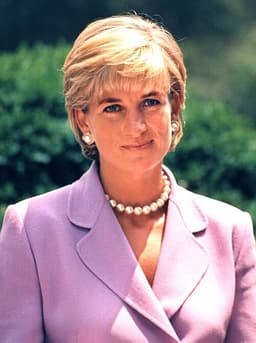
Imran Khan
Politician · Modern
54.8Total

Tun Abdul Razak
Politician · Modern
56.8Total
Basic Information
Born
1952
1922
Died
—
—
Era
Modern
Modern
Nationality
Pakistan
Malaysia
Occupation
Politician
Politician
Civilization
Indian
Eastern
Score Comparison
Military (10%)
42.1
12.5
Political (20%)
54.7
75.0
Influence (20%)
61.0
62.0
Legacy (20%)
45.0
52.0
Leadership (15%)
65.7
80.0
Strategy (15%)
60.0
37.6
TOTAL
54.8
56.8
Imran Khan — Complete Timeline
1992 AD
Captained Pakistan to Cricket World Cup VictoryCultural◆ Major
Imran Khan captained the Pakistan national cricket team to victory in the 1992 Cricket World Cup, defeating England in the final. This was Pakistan's first World Cup win and a defining moment in its sporting history.
Cricket World CupSportsNational Pride
Impact: nationalconstructive
1996 AD
Founded the Pakistan Tehreek-e-Insaf (PTI) PartyPolitical Action◆ Major
Imran Khan founded the Pakistan Tehreek-e-Insaf (PTI) political party, advocating for justice, anti-corruption, and welfare state. The party initially struggled to gain traction but later became a major force.
PTIPolitical PartyAnti-Corruption
Impact: nationalconstructive
2018 AD
Elected Prime Minister of PakistanPolitical Action
Imran Khan led PTI to victory in the 2018 general election and became Prime Minister of Pakistan. His government focused on anti-corruption, economic reforms, and social welfare programs.
Prime MinisterElection VictoryAnti-Corruption
Impact: nationalconstructive
2022 AD
Ousted by No-Confidence VotePolitical Action◆ Major
Imran Khan was removed from office through a no-confidence vote in the National Assembly, losing his majority after defections. He became the first Pakistani prime minister to be ousted by such a vote.
No-Confidence VoteOusterPolitical Crisis
Impact: nationaldestructive
2023 AD
Arrested on Corruption ChargesPolitical Action◆ Major
Imran Khan was arrested on corruption charges, sparking nationwide protests by his supporters. His arrest deepened political polarization and raised questions about judicial independence.
ArrestCorruption ChargesProtests
Impact: nationaldestructive
Tun Abdul Razak — Complete Timeline
1969 AD
Oversaw the May 13 Incident ResponsePolitical Action◆ Major
As Deputy Prime Minister, Razak was a key figure in the government's response to the May 13 racial riots in Kuala Lumpur. He declared a state of emergency and suspended Parliament, leading to the establishment of the National Operations Council.
RiotsEmergencyRace Relations
Impact: nationaldestructive
1970 AD
Became Second Prime Minister of MalaysiaPolitical Action◆ Major
Razak succeeded Tunku Abdul Rahman as Prime Minister of Malaysia. He took office during a period of racial tension following the 1969 race riots and sought to promote national unity through his policies.
Prime MinisterSuccessionNational Unity
Impact: nationalconstructive
1971 AD
Launched the New Economic Policy (NEP)Reform◆ Major
As Prime Minister, Razak introduced the New Economic Policy, a comprehensive affirmative action plan aimed at eradicating poverty and restructuring society to eliminate the identification of race with economic function. It gave preferential treatment to Bumiputera (ethnic Malays).
Economic PolicyAffirmative ActionBumiputera
Impact: nationalconstructive
1973 AD
Formed the Barisan Nasional CoalitionPolitical Action◆ Major
Razak expanded the ruling Alliance Party into the Barisan Nasional (National Front), a broader multi-racial coalition that included former opposition parties. This coalition dominated Malaysian politics for decades.
CoalitionPolitical AllianceBarisan Nasional
Impact: nationalconstructive
Expert Analysis
Origins
Imran Khan was born on October 5, 1952, in Lahore, Pakistan, into a Pashtun family with a background in engineering and education. He studied at the University of Oxford, graduating in Philosophy, Politics, and Economics. His early life was marked by a focus on cricket, which became his initial path to fame. Tun Abdul Razak was born on March 11, 1922, in Pekan, Pahang, Malaysia, into an aristocratic Malay family. He studied law in England at Lincoln's Inn and later at the University of Cambridge. Razak's early exposure to politics came through his father, a district officer, and his own involvement in Malay nationalism.
Rise to Power
Imran Khan rose to prominence as a cricketer, captaining Pakistan to its first Cricket World Cup victory in 1992. He founded the Pakistan Tehreek-e-Insaf (PTI) in 1996, initially with limited electoral success. His rise to political power accelerated after 2013, culminating in the 2018 general election where PTI won the most seats, making him Prime Minister on August 18, 2018. Tun Abdul Razak rose through the ranks of the United Malays National Organisation (UMNO). He served as Deputy Prime Minister under Tunku Abdul Rahman and played a key role during the May 13, 1969 racial riots. He became Prime Minister on September 22, 1970, succeeding Tunku.
Leadership & Governance
Imran Khan's leadership style was populist and confrontational. He advocated for anti-corruption, economic self-reliance, and a welfare state. His government's signature program, the Sehat Sahulat Program, provided health insurance to low-income families. However, his governance was hampered by economic crises, inflation, and political instability. He scored 65.7 in leadership but struggled with coalition management. Tun Abdul Razak was a pragmatic and consensus-building leader. He launched the New Economic Policy (NEP) in 1971, which aimed to eradicate poverty and restructure society to address ethnic imbalances. He expanded the ruling coalition into the Barisan Nasional, ensuring political stability. His leadership score of 80.0 reflects his effective governance and ability to unite diverse groups.
Triumph & Tragedy
Imran Khan's triumph was leading Pakistan to World Cup victory and becoming Prime Minister, but his tenure ended in a no-confidence vote in April 2022, making him the first Pakistani PM to be ousted. He was later arrested on corruption charges in May 2023, sparking protests. His political score of 54.7 reflects mixed achievements. Tun Abdul Razak's triumph was the NEP, which significantly reduced poverty and expanded the Malay middle class. However, the NEP also created patronage and ethnic tensions. His legacy is marred by the authoritarian response to the May 13 incident, including suspension of parliament. He scored 75.0 in political influence.
Character & Destiny
Imran Khan's character is defined by his stubbornness and anti-establishment stance. His confrontational style led to conflicts with military and judiciary, contributing to his downfall. He has a total score of 54.8, indicating moderate overall impact. Tun Abdul Razak was methodical and diplomatic. He built coalitions and implemented long-term policies. His character of inclusive leadership shaped Malaysia's development for decades. His total score of 56.8 edges out Khan.
Legacy
Imran Khan's legacy is mixed: he inspired a new political movement but left a divided Pakistan. His anti-corruption rhetoric persists. Tun Abdul Razak's NEP remains the cornerstone of Malaysian policy, though debated. The Barisan Nasional coalition dominated politics until 2018. Razak's legacy score of 52.0 reflects enduring but controversial impact.
Conclusion
Tun Abdul Razak had greater impact. His policies transformed Malaysia's socio-economic structure, with scores of 75.0 in political and 80.0 in leadership versus Khan's 54.7 and 65.7. Razak's strategic governance brought stability, while Khan's tenure was marked by chaos. Despite Khan's global fame, Razak's institutional changes outlast his own.
Rankings
🥇
Tun Abdul RazakLeader
Mil: 12.5Pol: 75.0Inf: 62.0
56.8
🥈
Imran Khan
Mil: 42.1Pol: 54.7Inf: 61.0
54.8
+2.0 behind
How This Comparison Works
Algorithm
Each figure is scored on 6 dimensions (0—100 scale) based on structured historical data: Military (10%), Political (20%), Influence (20%), Legacy (20%), Leadership (15%), Strategy (15%). The weighted total produces the final ranking.
Data Sources
Scores are computed from structured sub-indicators in the database. Scale factors adjust for era (Ancient ×0.85, Modern ×1.0) and civilization size (Eastern ×1.05, Other ×0.80) to account for differences in population and military scale.
Maximum 3 Figures
Comparisons are limited to 2—3 figures to ensure readability and statistical meaningfulness.
Error Margins
±5 points per dimension — Sub-scores are derived from historical records with inherent uncertainty. Two figures within 5 points on a dimension should be considered roughly equivalent in that area.
Total Score Accuracy
±3 points overall — The weighted combination of 6 dimensions produces a total score with approximately ±3 points of uncertainty. Differences of less than 3 points are not statistically significant— the figures are effectively tied.
Known Limitations
- Historical records are incomplete and uneven across civilizations
- Figures from oral-tradition societies may be underrepresented
- Occupation labels can misclassify multi-role figures
- Scores measure capability and impact, not moral character
- Quantitative scoring is a comparison tool, not absolute truth
Capability Radar
Military (10%) — Battles & Warfare
Battles
42
16
Win Rate
46
17
Expansion
51
20
Political (20%) — Governance & Reform
Reform
40
85
Diplomacy
50
75
Economy
35
80
Influence (20%) — Cultural & Global Reach
Cultural
55
55
Global
50
55
Legacy (20%) — Historical Impact
Historical
40
70
Longevity
30
60
Leadership (15%) — Power & Stability
Tenure
45
65
Stability
20
70
Strategy (15%) — Tactics & Innovation
Strategy
50
21
Tactics
58
26
Reform
56
27
Similar Comparisons
Comments & Discussion
No comments yet. Be the first to share your thoughts!