Loading...
Ali Abdullah Saleh vs Imran Khan
Imran Khan leads by 7.2 pts · 2 figures compared
…
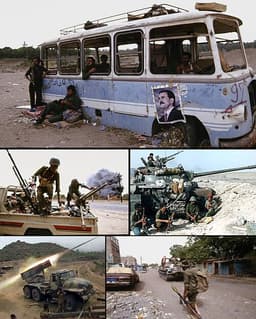
Ali Abdullah Saleh
Politician · Modern
47.6Total
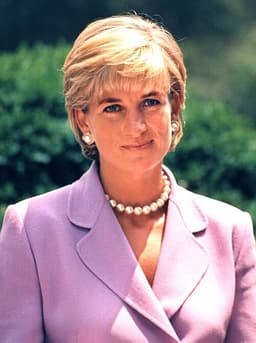
Imran Khan
Politician · Modern
54.8Total
Basic Information
Born
1947
1952
Died
—
—
Era
Modern
Modern
Nationality
Yemen
Pakistan
Occupation
Politician
Politician
Civilization
Middle Eastern
Indian
Score Comparison
Military (10%)
50.0
42.1
Political (20%)
35.1
54.7
Influence (20%)
51.0
61.0
Legacy (20%)
41.7
45.0
Leadership (15%)
74.0
65.7
Strategy (15%)
30.3
60.0
TOTAL
47.6
54.8
Ali Abdullah Saleh — Complete Timeline
1990 AD
Unification of North and South YemenPolitical Action
Ali Abdullah Saleh, as president of North Yemen, negotiated the unification with South Yemen on May 22, 1990. He became president of the unified Republic of Yemen, a major achievement in Arab unity.
UnificationYemenArab Unity
Impact: regionalconstructive
Support for Saddam Hussein in Gulf WarPolitical Action◆ Major
Saleh initially supported Iraq's invasion of Kuwait, straining relations with Saudi Arabia and the West. This led to the expulsion of nearly a million Yemeni workers from Saudi Arabia and economic hardship.
Gulf WarDiplomacyEconomic Crisis
Impact: regionaldestructive
1994 AD
Yemeni Civil War of 1994War◆ Major
After southern leaders attempted secession, Saleh's forces crushed the rebellion in a brief civil war. This solidified his control over a unified Yemen but deepened regional divisions.
Civil WarSecessionConflict
Impact: nationaldestructive
2011 AD
Arab Spring Protests and ResignationPolitical Action
Mass protests erupted against Saleh's 33-year rule. After months of violence and a failed assassination attempt, he agreed to a Gulf Cooperation Council-brokered deal to step down in exchange for immunity.
Arab SpringProtestsResignation
Impact: nationaltragic
2017 AD
Killing by Houthi ForcesWar◆ Major
After switching sides in the Yemeni Civil War to ally with the Houthis, Saleh was killed by Houthi forces on December 4, 2017, while trying to flee Sanaa. His death ended a complex political career.
DeathCivil WarHouthis
Impact: nationaltragic
Imran Khan — Complete Timeline
1992 AD
Captained Pakistan to Cricket World Cup VictoryCultural◆ Major
Imran Khan captained the Pakistan national cricket team to victory in the 1992 Cricket World Cup, defeating England in the final. This was Pakistan's first World Cup win and a defining moment in its sporting history.
Cricket World CupSportsNational Pride
Impact: nationalconstructive
1996 AD
Founded the Pakistan Tehreek-e-Insaf (PTI) PartyPolitical Action◆ Major
Imran Khan founded the Pakistan Tehreek-e-Insaf (PTI) political party, advocating for justice, anti-corruption, and welfare state. The party initially struggled to gain traction but later became a major force.
PTIPolitical PartyAnti-Corruption
Impact: nationalconstructive
2018 AD
Elected Prime Minister of PakistanPolitical Action
Imran Khan led PTI to victory in the 2018 general election and became Prime Minister of Pakistan. His government focused on anti-corruption, economic reforms, and social welfare programs.
Prime MinisterElection VictoryAnti-Corruption
Impact: nationalconstructive
2022 AD
Ousted by No-Confidence VotePolitical Action◆ Major
Imran Khan was removed from office through a no-confidence vote in the National Assembly, losing his majority after defections. He became the first Pakistani prime minister to be ousted by such a vote.
No-Confidence VoteOusterPolitical Crisis
Impact: nationaldestructive
2023 AD
Arrested on Corruption ChargesPolitical Action◆ Major
Imran Khan was arrested on corruption charges, sparking nationwide protests by his supporters. His arrest deepened political polarization and raised questions about judicial independence.
ArrestCorruption ChargesProtests
Impact: nationaldestructive
Expert Analysis
Origins
Ali Abdullah Saleh was born on March 21, 1947, in Beit al-Ahmar, a village in the Sanhan tribe of North Yemen. He received minimal formal education, attending a local Quranic school before joining the military at age 11. His early career was shaped by the tribal and military networks of North Yemen, serving under various officers before rising through the ranks. Imran Khan was born on October 5, 1952, in Lahore, Pakistan, into a middle-class Pashtun family. He studied at Aitchison College and the Royal Grammar School, Worcester, before graduating from Keble College, Oxford, with a degree in Philosophy, Politics, and Economics. His background was cosmopolitan and athletic, contrasting sharply with Saleh's tribal roots.
Rise to Power
Saleh's rise began in the 1970s when he became a key figure in the military. In 1978, after the assassination of President Ahmad al-Ghashmi, Saleh was elected president by the People's Constituent Assembly at age 31. He consolidated power by balancing tribal allegiances and co-opting rivals. His pivotal moment came in 1990 when he negotiated the unification of North and South Yemen, becoming president of the unified Republic of Yemen. Imran Khan's rise was unconventional. He gained fame as a cricketer, captaining Pakistan to its first World Cup victory in 1992. After retiring, he entered politics, founding the Pakistan Tehreek-e-Insaf (PTI) in 1996. For years, PTI struggled, but Khan's anti-corruption message gained traction after 2010. He was elected Prime Minister in 2018, leading a coalition government.
Leadership & Governance
Saleh ruled Yemen with a patronage system, distributing resources to tribal allies to maintain control. He scored 74.0 in leadership but only 30.3 in strategy, reflecting his short-term focus. His governance was marked by corruption and nepotism; by 2011, Yemen was one of the poorest countries in the Arab world. In contrast, Khan's leadership score of 65.7 and strategy score of 60.0 indicate a more structured approach. As PM, he focused on anti-corruption, launching initiatives like the Pakistan Tehreek-e-Insaf's 'Naya Pakistan' vision. However, his governance faced challenges: economic instability, inflation, and opposition from military elites. Saleh's rule was autocratic, while Khan attempted democratic reforms but was constrained by institutional forces.
Triumph & Tragedy
Saleh's greatest success was the unification of Yemen in 1990, a rare achievement in a divided region. He also crushed a secessionist civil war in 1994, solidifying his power. However, his tragedies were profound: his support for Saddam Hussein in the 1990 Gulf War led to the expulsion of nearly a million Yemeni workers from Saudi Arabia, devastating the economy. The Arab Spring protests ended his rule in 2011, and his later alliance with Houthi rebels backfired, leading to his death in 2017. Khan's triumph was leading Pakistan to World Cup victory in 1992, a unifying national moment. As PM, he secured a $6 billion IMF bailout and initiated the Ehsaas welfare program. Yet his tenure ended in tragedy: he became the first Pakistani PM removed by a no-confidence vote in 2022, and his subsequent arrest on corruption charges sparked widespread protests, deepening political polarization.
Character & Destiny
Saleh was a cunning survivor who played tribal and regional powers against each other. His character was defined by opportunism and a lack of ideological commitment, which ultimately led to his downfall when he switched sides in the Yemeni Civil War. Historical assessments view him as a skilled manipulator but a poor state-builder, with a legacy score of 41.7. Khan, by contrast, is seen as idealistic and charismatic but prone to confrontation. His stubbornness and refusal to compromise alienated allies and empowered opponents. His character drove his rise but also his fall, as he failed to build durable coalitions. His legacy score of 45.0 reflects a mixed impact: admired for integrity but criticized for governance failures.
Legacy
Saleh's legacy is the unification of Yemen, but his rule left the country fractured and impoverished. The Houthi takeover and ongoing civil war are partly consequences of his policies. His influence score of 51.0 indicates moderate regional impact. Khan's legacy is more complex: he transformed Pakistani politics by mobilizing a youth vote and challenging the traditional two-party system. His anti-corruption rhetoric resonated, but his government's achievements were limited. His influence score of 61.0 is higher, reflecting his global profile as a sports icon and political figure. Both men left their countries in turmoil: Yemen in a devastating war, Pakistan in political instability.
Conclusion
Imran Khan had a greater impact than Ali Abdullah Saleh, despite both facing significant failures. Khan's total score of 54.8 versus Saleh's 47.6 reflects his higher influence and strategic approach. Khan's ability to inspire a mass movement and challenge entrenched elites reshaped Pakistan's political landscape, even if his governance fell short. Saleh's unification of Yemen was a historic achievement, but his long rule ultimately weakened the state and set the stage for civil war. While neither left a positive legacy, Khan's impact on political consciousness and institutional change was more profound, earning him a higher place in historical comparison.
Rankings
🥇
Imran KhanLeader
Mil: 42.1Pol: 54.7Inf: 61.0
54.8
🥈
Ali Abdullah Saleh
Mil: 50.0Pol: 35.1Inf: 51.0
47.6
+7.2 behind
How This Comparison Works
Algorithm
Each figure is scored on 6 dimensions (0—100 scale) based on structured historical data: Military (10%), Political (20%), Influence (20%), Legacy (20%), Leadership (15%), Strategy (15%). The weighted total produces the final ranking.
Data Sources
Scores are computed from structured sub-indicators in the database. Scale factors adjust for era (Ancient ×0.85, Modern ×1.0) and civilization size (Eastern ×1.05, Other ×0.80) to account for differences in population and military scale.
Maximum 3 Figures
Comparisons are limited to 2—3 figures to ensure readability and statistical meaningfulness.
Error Margins
±5 points per dimension — Sub-scores are derived from historical records with inherent uncertainty. Two figures within 5 points on a dimension should be considered roughly equivalent in that area.
Total Score Accuracy
±3 points overall — The weighted combination of 6 dimensions produces a total score with approximately ±3 points of uncertainty. Differences of less than 3 points are not statistically significant— the figures are effectively tied.
Known Limitations
- Historical records are incomplete and uneven across civilizations
- Figures from oral-tradition societies may be underrepresented
- Occupation labels can misclassify multi-role figures
- Scores measure capability and impact, not moral character
- Quantitative scoring is a comparison tool, not absolute truth
Capability Radar
Military (10%) — Battles & Warfare
Battles
30
42
Win Rate
25
46
Expansion
25
51
Political (20%) — Governance & Reform
Reform
20
40
Diplomacy
40
50
Economy
15
35
Influence (20%) — Cultural & Global Reach
Cultural
20
55
Global
25
50
Legacy (20%) — Historical Impact
Historical
30
40
Longevity
20
30
Leadership (15%) — Power & Stability
Tenure
75
45
Stability
10
20
Strategy (15%) — Tactics & Innovation
Strategy
30
50
Tactics
35
58
Reform
20
56
Similar Comparisons
Comments & Discussion
No comments yet. Be the first to share your thoughts!