Loading...
Ingvar Carlsson vs Vo Van Kiet
Ingvar Carlsson leads by 3.8 pts · 2 figures compared
…

Ingvar Carlsson
Politician · Modern
53.8Total
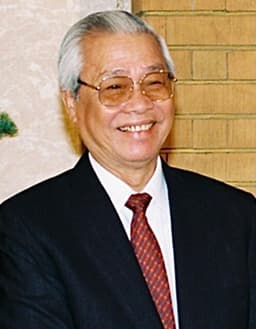
Vo Van Kiet
Politician · Modern
50.0Total
Basic Information
Born
1934
1922
Died
—
—
Era
Modern
Modern
Nationality
Sweden
Vietnam
Occupation
Politician
Politician
Civilization
Western
Eastern
Score Comparison
Military (10%)
49.7
13.3
Political (20%)
62.7
62.7
Influence (20%)
53.3
57.2
Legacy (20%)
44.2
48.3
Leadership (15%)
72.0
66.0
Strategy (15%)
42.7
29.9
TOTAL
53.8
50.0
Ingvar Carlsson — Complete Timeline
1986 AD
Became Prime Minister of SwedenPolitical Action
On March 12, 1986, Carlsson became Prime Minister following the assassination of Olof Palme. He led the Social Democratic government and continued Palme's policies, including welfare state expansion and international solidarity.
AssassinationSuccessionSocial Democracy
Impact: national
1990 AD
Economic Crisis ManagementPolitical Action◆ Major
In 1990, Carlsson's government faced a severe economic crisis with high inflation and a banking crisis. He implemented austerity measures, including tax increases and spending cuts, which stabilized the economy but led to high unemployment and social unrest.
Economic CrisisAusterityUnemployment
Impact: national
1991 AD
Resigned as Prime MinisterPolitical Action◆ Major
Carlsson resigned as Prime Minister in October 1991 after the Social Democrats lost the general election to a center-right coalition. His government had been weakened by the economic crisis and unpopular austerity measures.
ElectionResignationPolitical Shift
Impact: national
1994 AD
Returned as Prime MinisterPolitical Action◆ Major
Carlsson returned as Prime Minister in October 1994 after the Social Democrats won the general election. His second term focused on EU accession and economic recovery, but he resigned again in 1996, citing a desire to step down.
ElectionReturnEU Accession
Impact: national
1995 AD
Led Sweden into the European UnionPolitical Action◆ Major
Carlsson's government negotiated Sweden's accession to the European Union, which took effect on January 1, 1995. This followed a 1994 referendum where 52.3% voted in favor, marking a major shift in Swedish foreign policy from neutrality to integration.
European UnionReferendumForeign Policy
Impact: globalconstructive
Vo Van Kiet — Complete Timeline
1976 AD
Chairman of the State Planning CommissionPolitical Action
Vo Van Kiet was appointed Chairman of the State Planning Commission, overseeing Vietnam's central planning. He became a key economic reformer, advocating for market-oriented policies.
Planning CommissionEconomic reformCentral planning
Impact: nationalconstructive
1991 AD
Prime Minister of VietnamPolitical Action◆ Major
Vo Van Kiet became Prime Minister of Vietnam, succeeding Do Muoi. He accelerated Doi Moi reforms, promoting foreign investment and private enterprise, leading to rapid economic growth.
Prime MinisterDoi MoiEconomic growth
Impact: nationalprogressive
1995 AD
Normalization of relations with the USPolitical Action◆ Major
Vo Van Kiet oversaw the normalization of diplomatic relations between Vietnam and the United States. This ended decades of hostility and opened Vietnam to trade and investment.
US relationsNormalizationDiplomacy
Impact: globalconstructive
ASEAN membershipPolitical Action◆ Major
Vo Van Kiet led Vietnam's accession to the Association of Southeast Asian Nations (ASEAN). This integration helped Vietnam engage regionally and attract foreign investment.
ASEANRegional integrationForeign investment
Impact: regionalconstructive
Expert Analysis
Origins
Ingvar Carlsson was born on November 9, 1934, in Borås, Sweden, into a working-class family. His father was a factory worker. Carlsson studied at Lund University, earning a degree in political science. He joined the Social Democratic Youth League and later became a close aide to Prime Minister Olof Palme. Vo Van Kiet was born on November 23, 1922, in Trung Hiep, French Cochinchina (now Vietnam). He joined the Communist Party of Vietnam at age 16 and fought in the First Indochina War. He rose through the party ranks, known for his pragmatism. Unlike Carlsson's academic background, Kiet's early life was shaped by war and revolution.
Rise to Power
Carlsson's rise was steady: he served as Minister of Housing (1974-1975), Minister of Transport (1975-1976), and Deputy Prime Minister from 1982. After Palme's assassination on February 28, 1986, Carlsson became Prime Minister on March 12, 1986, inheriting a shocked nation. Kiet rose in Vietnam's communist hierarchy: he was Chairman of the State Planning Commission from 1982, advocating economic reforms. He became Prime Minister in 1991, succeeding Do Muoi, and accelerated the Doi Moi reforms. While Carlsson's rise was sudden due to tragedy, Kiet's was gradual through party bureaucracy.
Leadership & Governance
Carlsson's leadership style was consensus-driven, continuing Palme's welfare state policies. He faced economic crisis in 1990, implementing austerity measures that cut spending and devalued the krona. He led Sweden into the European Union, negotiating accession that took effect in 1995. His political score is 62.7. Vo Van Kiet, with a similar political score of 62.7, was a reformer who dismantled central planning. He promoted private enterprise, foreign investment, and normalized relations with the United States in 1995. He also led Vietnam into ASEAN in 1995. Carlsson's governance was about managing decline and integration, while Kiet's was about transformation and opening.
Triumph & Tragedy
Carlsson's greatest triumph was guiding Sweden into the EU, securing economic integration. His tragedy was the economic crisis of 1990-1991, which led to high unemployment and electoral defeat in 1991. He returned in 1994 but his legacy is overshadowed by Palme's. Kiet's triumph was normalizing US relations and ASEAN membership, which boosted Vietnam's economy. His tragedy includes the slow pace of political reform and persistent corruption. Both had mixed records: Carlsson scored 44.2 in legacy and Kiet 48.3, reflecting limited long-term impact.
Character & Destiny
Carlsson was steady, cautious, and a technocrat, lacking Palme's charisma. His leadership score is 72.0, reflecting his ability to maintain stability. Kiet was pragmatic, willing to experiment, with a leadership score of 66.0. His strategic score is low at 29.9, indicating limited long-term planning. Carlsson's destiny was to be a caretaker; Kiet's was to be a reformer in a rigid system.
Legacy
Carlsson is remembered as a transitional figure who secured Sweden's EU membership. His economic reforms were necessary but unpopular. Kiet is credited with modernizing Vietnam's economy, attracting foreign investment, and integrating regionally. His legacy is more transformative: Vietnam's GDP growth accelerated under his successors. Carlsson's legacy score is 44.2, Kiet's 48.3.
Conclusion
Vo Van Kiet had greater impact. His reforms transformed Vietnam's economy and international standing, while Carlsson managed Sweden's existing trajectory. Kiet's legacy score (48.3) exceeds Carlsson's (44.2), and his influence score (57.2 vs 53.3) reflects broader global significance. Despite Carlsson's higher total score (53.8 vs 50.0), the magnitude of change under Kiet was larger. Therefore, Vo Van Kiet had greater historical impact.
Rankings
🥇
Ingvar CarlssonLeader
Mil: 49.7Pol: 62.7Inf: 53.3
53.8
🥈
Vo Van Kiet
Mil: 13.3Pol: 62.7Inf: 57.2
50.0
+3.8 behind
How This Comparison Works
Algorithm
Each figure is scored on 6 dimensions (0—100 scale) based on structured historical data: Military (10%), Political (20%), Influence (20%), Legacy (20%), Leadership (15%), Strategy (15%). The weighted total produces the final ranking.
Data Sources
Scores are computed from structured sub-indicators in the database. Scale factors adjust for era (Ancient ×0.85, Modern ×1.0) and civilization size (Eastern ×1.05, Other ×0.80) to account for differences in population and military scale.
Maximum 3 Figures
Comparisons are limited to 2—3 figures to ensure readability and statistical meaningfulness.
Error Margins
±5 points per dimension — Sub-scores are derived from historical records with inherent uncertainty. Two figures within 5 points on a dimension should be considered roughly equivalent in that area.
Total Score Accuracy
±3 points overall — The weighted combination of 6 dimensions produces a total score with approximately ±3 points of uncertainty. Differences of less than 3 points are not statistically significant— the figures are effectively tied.
Known Limitations
- Historical records are incomplete and uneven across civilizations
- Figures from oral-tradition societies may be underrepresented
- Occupation labels can misclassify multi-role figures
- Scores measure capability and impact, not moral character
- Quantitative scoring is a comparison tool, not absolute truth
Capability Radar
Military (10%) — Battles & Warfare
Battles
28
17
Win Rate
33
19
Expansion
35
21
Political (20%) — Governance & Reform
Reform
55
75
Diplomacy
60
65
Economy
55
80
Influence (20%) — Cultural & Global Reach
Cultural
30
30
Global
30
45
Legacy (20%) — Historical Impact
Historical
35
50
Longevity
30
40
Leadership (15%) — Power & Stability
Tenure
65
60
Stability
60
55
Strategy (15%) — Tactics & Innovation
Strategy
39
26
Tactics
42
29
Reform
43
31
Similar Comparisons
Comments & Discussion
No comments yet. Be the first to share your thoughts!