Loading...
Quintino Bocaiuva vs Vo Van Kiet
Vo Van Kiet leads by 2.4 pts · 2 figures compared
…
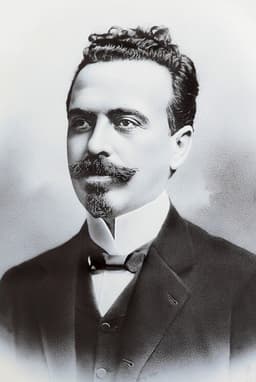
Quintino Bocaiuva
Politician · Modern
47.6Total
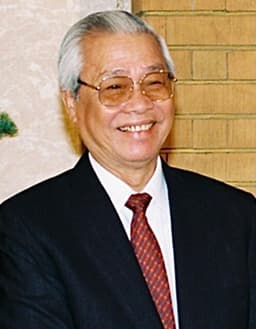
Vo Van Kiet
Politician · Modern
50.0Total
Basic Information
Born
1836
1922
Died
1912
—
Era
Modern
Modern
Nationality
Brazil
Vietnam
Occupation
Politician
Politician
Civilization
Western
Eastern
Score Comparison
Military (10%)
49.5
13.3
Political (20%)
53.8
62.7
Influence (20%)
53.3
57.2
Legacy (20%)
44.2
48.3
Leadership (15%)
40.0
66.0
Strategy (15%)
42.5
29.9
TOTAL
47.6
50.0
Quintino Bocaiuva — Complete Timeline
1870 AD
Founded the newspaper 'A República'Cultural◆ Major
Bocaiuva founded the newspaper 'A Rep
PressPropagandaRepublicanism
Impact: nationalconstructive
1873 AD
Participated in the Republican Convention of ItuPolitical Action◆ Major
Bocaiuva participated in the Republican Convention of Itu, which formally organized the Republican Party of S
Political PartyRepublicanismConvention
Impact: nationalconstructive
1889 AD
Appointed Minister of Foreign AffairsPolitical Action◆ Major
Quintino Bocaiuva was appointed Minister of Foreign Affairs in the provisional government of the First Brazilian Republic. He was responsible for securing international recognition of the new regime and establishing its foreign policy.
DiplomacyForeign PolicyRepublic
Impact: nationalconstructive
1890 AD
Signed the Treaty of MontevideoPolitical Action◆ Major
As Foreign Minister, Bocaiuva signed the Treaty of Montevideo with Uruguay, resolving border disputes between the two countries. This treaty helped stabilize relations in the Southern Cone.
TreatyBorder DisputeDiplomacy
Impact: regionalconstructive
Vo Van Kiet — Complete Timeline
1976 AD
Chairman of the State Planning CommissionPolitical Action
Vo Van Kiet was appointed Chairman of the State Planning Commission, overseeing Vietnam's central planning. He became a key economic reformer, advocating for market-oriented policies.
Planning CommissionEconomic reformCentral planning
Impact: nationalconstructive
1991 AD
Prime Minister of VietnamPolitical Action◆ Major
Vo Van Kiet became Prime Minister of Vietnam, succeeding Do Muoi. He accelerated Doi Moi reforms, promoting foreign investment and private enterprise, leading to rapid economic growth.
Prime MinisterDoi MoiEconomic growth
Impact: nationalprogressive
1995 AD
Normalization of relations with the USPolitical Action◆ Major
Vo Van Kiet oversaw the normalization of diplomatic relations between Vietnam and the United States. This ended decades of hostility and opened Vietnam to trade and investment.
US relationsNormalizationDiplomacy
Impact: globalconstructive
ASEAN membershipPolitical Action◆ Major
Vo Van Kiet led Vietnam's accession to the Association of Southeast Asian Nations (ASEAN). This integration helped Vietnam engage regionally and attract foreign investment.
ASEANRegional integrationForeign investment
Impact: regionalconstructive
Expert Analysis
Origins
Quintino Bocaiuva (born 1836) was a Brazilian journalist and politician from Rio de Janeiro. He was educated in law and became a leading republican propagandist, co-founding the Republican Party of São Paulo. His early career was shaped by the decline of the Brazilian Empire and the growth of abolitionist and republican movements.
Vo Van Kiet (born 1922) was a Vietnamese revolutionary and politician from the Mekong Delta. He joined the Viet Minh in the 1940s, fighting against French colonial rule. His early experiences in wartime logistics and local governance shaped his pragmatic approach to economic management.
Rise to Power
Bocaiuva rose to prominence through journalism and political organizing. He founded the newspaper 'A República' in 1870, which became a key voice for republicanism. He participated in the Republican Convention of Itu in 1873, formalizing the party's structure. His influence peaked with the proclamation of the republic in 1889, when he was appointed Minister of Foreign Affairs in the provisional government.
Vo Van Kiet rose through the ranks of the Communist Party of Vietnam. He held key economic posts, including Chairman of the State Planning Commission (1982-1987). His role in implementing market reforms during the Sixth Party Congress (1986) propelled him to become Prime Minister in 1991, succeeding Do Muoi. He accelerated the Doi Moi reforms, opening Vietnam's economy.
Leadership & Governance
Bocaiuva's governance was marked by diplomatic pragmatism. As Foreign Minister (1889-1891), he signed the Treaty of Montevideo (1890) with Uruguay, resolving border disputes. He also negotiated recognition of the new republic by major powers. However, his political score of 53.8 reflects limited executive power; he was not president and his influence waned after the early republic.
Vo Van Kiet's leadership score of 66.0 reflects his role in transforming Vietnam's economy. He promoted foreign investment, private enterprise, and normalized relations with the US (1995). He also led Vietnam into ASEAN (1995), integrating the country regionally. His political score of 62.7 indicates effectiveness within a single-party system, balancing reform with party orthodoxy.
Triumph & Tragedy
Bocaiuva's greatest success was securing international recognition for Brazil's republic. His Treaty of Montevideo stabilized the southern border. However, his legacy score of 44.2 reflects limited lasting impact; he is remembered more as a propagandist than a statesman. His failure to build a broader political movement limited his influence.
Vo Van Kiet's greatest success was overseeing Vietnam's economic transformation. GDP growth averaged 8% during his tenure (1991-1997). Normalizing relations with the US and joining ASEAN opened Vietnam to global markets. However, his strategy score of 29.9 suggests weaknesses in long-term planning; some reforms created income inequality and environmental issues. He also faced criticism for slow political liberalization.
Character & Destiny
Bocaiuva was a passionate republican ideologue, but his character score of 40.0 reflects a lack of decisive leadership. He was more comfortable as a journalist and diplomat than as a political infighter. His destiny was tied to the early republic, but he was overshadowed by stronger figures like Deodoro da Fonseca.
Vo Van Kiet was a pragmatic reformer, with a leadership score of 66.0. He navigated the Communist Party's internal factions to push economic liberalization. His character was defined by perseverance; he survived the war and political purges to become a key architect of modern Vietnam.
Legacy
Bocaiuva's legacy is modest: he is remembered as a founding father of the Brazilian Republic, but his specific contributions are often overlooked. His newspaper 'A República' is a historical footnote. His influence score of 53.3 reflects his role in the republican movement, but his legacy score of 44.2 indicates limited enduring impact.
Vo Van Kiet's legacy is more substantial. He is credited with transforming Vietnam from a centrally-planned economy to a 'socialist-oriented market economy'. His reforms lifted millions out of poverty. The normalization with the US and ASEAN membership remain pillars of Vietnam's foreign policy. His influence score of 57.2 and legacy score of 48.3 reflect this.
Conclusion
While Bocaiuva played a key role in Brazil's transition to republicanism, his impact was limited to the founding period and his diplomatic achievements were modest. Vo Van Kiet, with a total score of 50.0 against Bocaiuva's 47.6, had a greater impact on his country's development. Kiet's economic reforms transformed Vietnam's trajectory, integrating it into the global economy and improving living standards. Bocaiuva's legacy is more symbolic than substantive. Therefore, Vo Van Kiet had a greater historical impact.
Rankings
🥇
Vo Van KietLeader
Mil: 13.3Pol: 62.7Inf: 57.2
50.0
🥈
Quintino Bocaiuva
Mil: 49.5Pol: 53.8Inf: 53.3
47.6
+2.4 behind
How This Comparison Works
Algorithm
Each figure is scored on 6 dimensions (0—100 scale) based on structured historical data: Military (10%), Political (20%), Influence (20%), Legacy (20%), Leadership (15%), Strategy (15%). The weighted total produces the final ranking.
Data Sources
Scores are computed from structured sub-indicators in the database. Scale factors adjust for era (Ancient ×0.85, Modern ×1.0) and civilization size (Eastern ×1.05, Other ×0.80) to account for differences in population and military scale.
Maximum 3 Figures
Comparisons are limited to 2—3 figures to ensure readability and statistical meaningfulness.
Error Margins
±5 points per dimension — Sub-scores are derived from historical records with inherent uncertainty. Two figures within 5 points on a dimension should be considered roughly equivalent in that area.
Total Score Accuracy
±3 points overall — The weighted combination of 6 dimensions produces a total score with approximately ±3 points of uncertainty. Differences of less than 3 points are not statistically significant— the figures are effectively tied.
Known Limitations
- Historical records are incomplete and uneven across civilizations
- Figures from oral-tradition societies may be underrepresented
- Occupation labels can misclassify multi-role figures
- Scores measure capability and impact, not moral character
- Quantitative scoring is a comparison tool, not absolute truth
Capability Radar
Military (10%) — Battles & Warfare
Battles
29
17
Win Rate
32
19
Expansion
34
21
Political (20%) — Governance & Reform
Reform
55
75
Diplomacy
60
65
Economy
30
80
Influence (20%) — Cultural & Global Reach
Cultural
30
30
Global
20
45
Legacy (20%) — Historical Impact
Historical
40
50
Longevity
25
40
Leadership (15%) — Power & Stability
Tenure
40
60
Stability
35
55
Strategy (15%) — Tactics & Innovation
Strategy
38
26
Tactics
40
29
Reform
45
31
Similar Comparisons
Comments & Discussion
No comments yet. Be the first to share your thoughts!