Loading...
Inigo Urkullu vs Salva Kiir
Inigo Urkullu leads by 1.6 pts · 2 figures compared
…

Inigo Urkullu
Politician · Modern
46.8Total
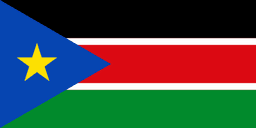
Salva Kiir
Politician · Modern
45.2Total
Basic Information
Born
1961
1951
Died
—
—
Era
Modern
Modern
Nationality
Spain
South Sudan
Occupation
Politician
Politician
Civilization
Western
Other
Score Comparison
Military (10%)
12.6
29.8
Political (20%)
45.0
29.3
Influence (20%)
51.8
51.0
Legacy (20%)
43.3
41.7
Leadership (15%)
72.0
62.2
Strategy (15%)
41.9
52.8
TOTAL
46.8
45.2
Inigo Urkullu — Complete Timeline
2012 AD
Elected Lehendakari of the Basque CountryPolitical Action◆ Major
Urkullu was elected as the seventh Lehendakari (President) of the Basque Autonomous Community, representing the Basque Nationalist Party (PNV). His election marked a continuation of moderate Basque nationalism and a focus on economic recovery and self-government within Spain.
Basque PoliticsElectionAutonomy
Impact: regionalconstructive
2016 AD
Re-elected Lehendakari for Second TermPolitical Action◆ Major
Urkullu was re-elected as Lehendakari after the PNV won the Basque parliamentary elections. His second term focused on consolidating economic growth, expanding social policies, and negotiating a new fiscal pact with the Spanish government.
Basque PoliticsRe-electionGovernance
Impact: regionalconstructive
2017 AD
Negotiated the Economic Agreement with SpainPolitical Action◆ Major
Urkullu's government successfully negotiated a new Economic Agreement (Concierto Econ
Basque PoliticsFiscal AutonomyNegotiation
Impact: regionalconstructive
2018 AD
Led Response to ETA's DissolutionPolitical Action◆ Major
Urkullu led the Basque government's response to the final dissolution of the armed group ETA. He promoted a policy of reconciliation and support for victims, while navigating the political implications of the end of decades of conflict in the Basque Country.
Basque PoliticsPeace ProcessETA
Impact: regionalconstructive
2020 AD
Re-elected Lehendakari for Third TermPolitical Action◆ Major
Urkullu secured a third term as Lehendakari after the PNV won the 2020 Basque elections. His leadership during the COVID-19 pandemic and continued advocacy for Basque self-government were central to his re-election.
Basque PoliticsRe-electionPandemic Response
Impact: regionalconstructive
Salva Kiir — Complete Timeline
2005 AD
Succession as SPLM leaderPolitical Action◆ Major
Following the death of John Garang in a helicopter crash, Salva Kiir succeeded him as leader of the Sudan People's Liberation Movement (SPLM) and as President of Southern Sudan. Kiir inherited the task of implementing the Comprehensive Peace Agreement (CPA).
SuccessionSPLMSouthern Sudan
Impact: regional
2011 AD
South Sudanese independence referendumPolitical Action◆ Major
Kiir oversaw the January 2011 referendum on self-determination for South Sudan, as stipulated by the CPA. The vote resulted in 98.83% support for independence. South Sudan formally declared independence on July 9, 2011, with Kiir becoming its first president.
IndependenceReferendumStatehood
Impact: regionalconstructive
2013 AD
Outbreak of South Sudanese Civil WarWar◆ Major
A political power struggle between Kiir and former Vice President Riek Machar escalated into a full-scale civil war. Fighting along ethnic lines (Dinka vs. Nuer) led to tens of thousands of deaths and a humanitarian crisis, with widespread atrocities committed by both sides.
Civil WarEthnic ConflictHumanitarian Crisis
Impact: nationaldestructive
2018 AD
Revitalized Peace AgreementPolitical Action◆ Major
Kiir signed the Revitalized Agreement on the Resolution of the Conflict in South Sudan (R-ARCSS) with Riek Machar and other opposition groups. The agreement established a transitional unity government, with Machar returning as First Vice President in 2020, though implementation remained fragile.
Peace AgreementPower-SharingTransition
Impact: nationalconstructive
Expert Analysis
Origins
**Inigo Urkullu** was born in 1961 in Alonsotegi, Basque Country, Spain. He studied teaching and later law, joining the Basque Nationalist Party (PNV) in his youth. His father was a businessman, and his family instilled Basque nationalist values. Urkullu rose through PNV ranks, focusing on institutional politics and dialogue.
**Salva Kiir** was born in 1951 in Akon, South Sudan, into the Dinka ethnic group. He had little formal education, joining the Anyanya rebel movement in the First Sudanese Civil War. After the 1972 Addis Ababa Agreement, he joined the Sudanese military, but later defected to the Sudan People's Liberation Army (SPLA) under John Garang. Kiir's early life was shaped by conflict and ethnic loyalty.
Rise to Power
Urkullu became PNV president in 2008, succeeding Josu Jon Imaz. He focused on modernizing the party and promoting Basque self-government. In 2012, he was elected Lehendakari (President of the Basque Country) after the PNV won regional elections. His rise was marked by coalition-building and moderate nationalism, distancing from ETA's violence.
Kiir rose to prominence as a senior SPLA commander. In 2005, after the Comprehensive Peace Agreement, he became First Vice President of Sudan and President of Southern Sudan. John Garang's death in a 2005 helicopter crash propelled Kiir to lead the SPLM. He oversaw the 2011 independence referendum, leading South Sudan to statehood. His rise was rooted in military hierarchy and ethnic politics.
Leadership & Governance
Urkullu's leadership style is consensual and technocratic. He governed through pacts, negotiating the Economic Agreement (Concierto Económico) with Spain in 2017, securing Basque fiscal autonomy. He promoted reconciliation after ETA's 2018 dissolution, supporting victims and fostering peace. His governance focused on economic growth, education, and healthcare, scoring 72.0 in leadership.
Kiir's leadership is authoritarian and militaristic. He centralized power, dismissing rivals and fueling ethnic tensions. His governance was marked by corruption, nepotism, and human rights abuses. The 2013 civil war erupted after he accused Riek Machar of plotting a coup. Kiir signed the 2018 Revitalized Peace Agreement but failed to implement it fully. He scored 29.3 in political acumen and 52.8 in strategy.
Triumph & Tragedy
Urkullu's greatest success was navigating the Basque Country through ETA's dissolution and achieving economic stability. His tragedy lies in limited autonomy; the Basque Country remains part of Spain, and full independence remains elusive. His influence score of 51.8 reflects regional impact.
Kiir's triumph was overseeing South Sudan's independence in 2011, fulfilling a long struggle. His tragedy is the ensuing civil war, which killed over 400,000 and displaced millions. He failed to build a unified nation, instead entrenching ethnic divisions. His legacy score of 41.7 is marred by conflict.
Character & Destiny
Urkullu is pragmatic, patient, and moderate. His character shaped a destiny of incremental progress: securing Basque rights through dialogue. He avoided violence and extremism, earning respect across Spanish politics. His total score of 46.8 reflects steady but limited impact.
Kiir is stubborn, secretive, and ethnically loyal. His character led to a destiny of war and fragmentation. He struggled with governance, prioritizing personal power over national unity. His total score of 45.2 is slightly lower, reflecting catastrophic outcomes.
Legacy
Urkullu's legacy is a stable, prosperous Basque Country with enhanced autonomy. He demonstrated that moderate nationalism can achieve gains within Spain. His economic agreement model may influence other regions.
Kiir's legacy is independence overshadowed by civil war. South Sudan remains one of the world's poorest, most fragile states. He is remembered as a leader who failed to transition from rebel to statesman.
Conclusion
Inigo Urkullu had a greater positive impact. While his influence was regional, he achieved peace, economic growth, and political stability. Salva Kiir's leadership led to catastrophic violence and state failure. Despite independence, his score of 45.2 versus Urkullu's 46.8 reflects a net negative contribution to history.
Rankings
🥇
Inigo UrkulluLeader
Mil: 12.6Pol: 45.0Inf: 51.8
46.8
🥈
Salva Kiir
Mil: 29.8Pol: 29.3Inf: 51.0
45.2
+1.6 behind
How This Comparison Works
Algorithm
Each figure is scored on 6 dimensions (0—100 scale) based on structured historical data: Military (10%), Political (20%), Influence (20%), Legacy (20%), Leadership (15%), Strategy (15%). The weighted total produces the final ranking.
Data Sources
Scores are computed from structured sub-indicators in the database. Scale factors adjust for era (Ancient ×0.85, Modern ×1.0) and civilization size (Eastern ×1.05, Other ×0.80) to account for differences in population and military scale.
Maximum 3 Figures
Comparisons are limited to 2—3 figures to ensure readability and statistical meaningfulness.
Error Margins
±5 points per dimension — Sub-scores are derived from historical records with inherent uncertainty. Two figures within 5 points on a dimension should be considered roughly equivalent in that area.
Total Score Accuracy
±3 points overall — The weighted combination of 6 dimensions produces a total score with approximately ±3 points of uncertainty. Differences of less than 3 points are not statistically significant— the figures are effectively tied.
Known Limitations
- Historical records are incomplete and uneven across civilizations
- Figures from oral-tradition societies may be underrepresented
- Occupation labels can misclassify multi-role figures
- Scores measure capability and impact, not moral character
- Quantitative scoring is a comparison tool, not absolute truth
Capability Radar
Military (10%) — Battles & Warfare
Battles
23
5
Win Rate
23
5
Expansion
30
5
Political (20%) — Governance & Reform
Reform
55
20
Diplomacy
65
25
Economy
60
10
Influence (20%) — Cultural & Global Reach
Cultural
30
20
Global
20
25
Legacy (20%) — Historical Impact
Historical
30
30
Longevity
30
20
Leadership (15%) — Power & Stability
Tenure
60
55
Stability
65
5
Strategy (15%) — Tactics & Innovation
Strategy
30
5
Tactics
37
5
Reform
36
5
Similar Comparisons
Comments & Discussion
No comments yet. Be the first to share your thoughts!