Loading...
This comparison has not been analyzed yet.
One-time AI generation (~1 minute). Scores and timeline are already available below.
Inukai Tsuyoshi vs Mwai Kibaki
Mwai Kibaki leads by 7.1 pts · 2 figures compared
…
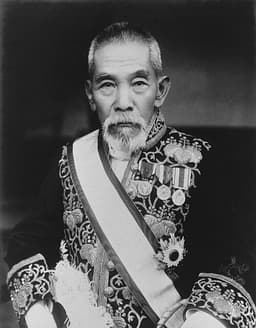
Inukai Tsuyoshi
Politician · Modern
46.0Total

Mwai Kibaki
Politician · Modern
53.1Total
Basic Information
Born
1855
1931
Died
1932
—
Era
Modern
Modern
Nationality
Japan
Kenya
Occupation
Politician
Politician
Civilization
Eastern
Other
Score Comparison
Military (10%)
16.1
42.8
Political (20%)
48.0
60.0
Influence (20%)
51.8
54.1
Legacy (20%)
44.2
45.0
Leadership (15%)
64.0
72.0
Strategy (15%)
35.7
42.7
TOTAL
46.0
53.1
Inukai Tsuyoshi — Complete Timeline
1931 AD
Appointed Prime MinisterPolitical Action◆ Major
Inukai Tsuyoshi became Prime Minister of Japan during a period of rising militarism and economic crisis. He sought to restrain the military's influence and resolve the Manchurian crisis diplomatically.
Prime MinisterJapan1930s
Impact: national
1932 AD
Assassinated in the May 15 IncidentPolitical Action
Inukai Tsuyoshi was assassinated by a group of young naval officers and army cadets in the May 15 Incident. His murder marked the end of party cabinets in pre-war Japan and accelerated the shift toward military-dominated government.
AssassinationMay 15 IncidentMilitarism
Impact: nationaltragic
Mwai Kibaki — Complete Timeline
2002 AD
2002 Kenyan general electionPolitical Action◆ Major
Mwai Kibaki, as candidate of the National Rainbow Coalition (NARC), won the presidential election, defeating Uhuru Kenyatta of the Kenya African National Union (KANU). This ended KANU's 39-year rule and marked Kenya's first peaceful transfer of power since independence.
ElectionDemocratic TransitionNARC
Impact: nationalprogressive
2003 AD
Free primary education policyReform◆ Major
Kibaki's government introduced free primary education, abolishing tuition fees for public primary schools. This policy led to a surge in enrollment from 5.9 million to 7.2 million children within a year, significantly improving access to education across Kenya.
Education ReformSocial PolicyAccess
Impact: nationalprogressive
Economic recovery strategyReform◆ Major
Kibaki implemented the Economic Recovery Strategy for Wealth and Employment Creation (ERS), focusing on macroeconomic stability, infrastructure investment, and privatization. Kenya's GDP growth averaged over 5% annually from 2004 to 2007, reversing a decade of stagnation.
Economic ReformGrowthInfrastructure
Impact: nationalconstructive
2007 AD
2007-2008 Kenyan post-election violencePolitical Action◆ Major
After Kibaki was declared winner of the disputed 2007 presidential election, opposition supporters protested, leading to ethnic violence that killed over 1,100 people and displaced 600,000. The crisis ended with a power-sharing agreement that created a coalition government with Raila Odinga as Prime Minister.
Election DisputeEthnic ViolencePower-Sharing
Impact: nationaltragic
2010 AD
Promulgation of the 2010 ConstitutionReform◆ Major
Kibaki oversaw the passage of a new constitution in a national referendum, which devolved power to 47 counties, introduced a bill of rights, and limited presidential powers. The constitution was a key outcome of the 2008 peace agreement and reshaped Kenya's governance structure.
Constitutional ReformDevolutionGovernance
Impact: nationalprogressive
This comparison has not been analyzed yet.
One-time AI generation (~1 minute). Scores and timeline are already available below.
Rankings
🥇
Mwai KibakiLeader
Mil: 42.8Pol: 60.0Inf: 54.1
53.1
🥈
Inukai Tsuyoshi
Mil: 16.1Pol: 48.0Inf: 51.8
46.0
+7.1 behind
How This Comparison Works
Algorithm
Each figure is scored on 6 dimensions (0—100 scale) based on structured historical data: Military (10%), Political (20%), Influence (20%), Legacy (20%), Leadership (15%), Strategy (15%). The weighted total produces the final ranking.
Data Sources
Scores are computed from structured sub-indicators in the database. Scale factors adjust for era (Ancient ×0.85, Modern ×1.0) and civilization size (Eastern ×1.05, Other ×0.80) to account for differences in population and military scale.
Maximum 3 Figures
Comparisons are limited to 2—3 figures to ensure readability and statistical meaningfulness.
Error Margins
±5 points per dimension — Sub-scores are derived from historical records with inherent uncertainty. Two figures within 5 points on a dimension should be considered roughly equivalent in that area.
Total Score Accuracy
±3 points overall — The weighted combination of 6 dimensions produces a total score with approximately ±3 points of uncertainty. Differences of less than 3 points are not statistically significant— the figures are effectively tied.
Known Limitations
- Historical records are incomplete and uneven across civilizations
- Figures from oral-tradition societies may be underrepresented
- Occupation labels can misclassify multi-role figures
- Scores measure capability and impact, not moral character
- Quantitative scoring is a comparison tool, not absolute truth
Capability Radar
Military (10%) — Battles & Warfare
Battles
15
21
Win Rate
16
24
Expansion
18
28
Political (20%) — Governance & Reform
Reform
40
65
Diplomacy
45
55
Economy
35
75
Influence (20%) — Cultural & Global Reach
Cultural
30
30
Global
20
35
Legacy (20%) — Historical Impact
Historical
40
40
Longevity
25
30
Leadership (15%) — Power & Stability
Tenure
55
60
Stability
20
50
Strategy (15%) — Tactics & Innovation
Strategy
21
29
Tactics
26
34
Reform
30
38
Similar Comparisons
Comments & Discussion
No comments yet. Be the first to share your thoughts!