Loading...
Ion Iliescu vs Lavrentiy Beria
Lavrentiy Beria leads by 6.5 pts · 2 figures compared
…

Ion Iliescu
Politician · Modern
52.1Total
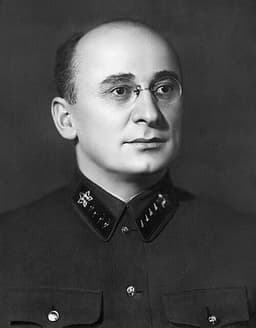
Lavrentiy Beria
Politician · Modern
58.6Total
Basic Information
Born
1930
1899
Died
—
1953
Era
Modern
Modern
Nationality
Romania
Russia
Occupation
Politician
Politician
Civilization
Western
Western
Score Comparison
Military (10%)
49.9
50.0
Political (20%)
68.0
60.0
Influence (20%)
54.1
61.0
Legacy (20%)
45.0
52.0
Leadership (15%)
53.2
79.8
Strategy (15%)
41.2
44.3
TOTAL
52.1
58.6
Ion Iliescu — Complete Timeline
1990 AD
Election as First Post-Communist President of RomaniaPolitical Action◆ Major
Ion Iliescu was elected President of Romania on May 20, 1990, with 85% of the vote, following the fall of Nicolae Ceau
ElectionPost-CommunismRomania
Impact: nationalconstructive
1991 AD
Mineriad of 1991Political Action◆ Major
Iliescu called on miners to suppress anti-government protests in Bucharest in September 1991. The miners attacked protesters and opposition figures, resulting in deaths and injuries. The event damaged Romania's democratic image and led to international condemnation.
ViolenceProtestsRomania
Impact: nationaldestructive
Signing of the Romanian ConstitutionPolitical Action◆ Major
Iliescu oversaw the adoption of Romania's new constitution on December 8, 1991, which established a semi-presidential system. The constitution was approved by referendum and laid the legal foundation for Romania's post-communist state.
ConstitutionReformRomania
Impact: nationalconstructive
2000 AD
Second Presidency and EU IntegrationPolitical Action◆ Major
Iliescu was re-elected president in 2000 and served until 2004. During his second term, he pursued NATO and EU integration, leading to Romania's invitation to join NATO in 2002 and the start of EU accession negotiations.
EU IntegrationNATORomania
Impact: nationalconstructive
Lavrentiy Beria — Complete Timeline
1938 AD
Appointment as Head of the NKVDPolitical Action
Beria was appointed People's Commissar for Internal Affairs (NKVD) in November 1938, replacing Nikolai Yezhov. He reorganized the security apparatus, ending the Great Purge's mass executions while expanding the Gulag system and intensifying political surveillance.
NKVDSecurity ServicesStalin
Impact: nationaldestructive
1945 AD
Oversight of the Soviet Atomic Bomb ProjectInvention◆ Major
Beria was appointed to oversee the Soviet atomic bomb project in 1945, using NKVD resources to accelerate development. He managed espionage networks that obtained Western nuclear secrets and directed the construction of facilities, leading to the first Soviet atomic test in 1949.
Nuclear WeaponsCold WarEspionage
Impact: global
1953 AD
Arrest and Execution after Stalin's DeathPolitical Action◆ Major
After Stalin's death in March 1953, Beria was arrested in June 1953 by his Politburo colleagues, including Khrushchev and Malenkov, who feared his power. He was tried secretly, found guilty of treason and other crimes, and executed on December 23, 1953.
Power StruggleExecutionDe-Stalinization
Impact: nationaltragic
Expert Analysis
Origins
Ion Iliescu was born on March 3, 1930, in Oltenița, Romania, into a middle-class family. His father was a railway worker, and his mother a housewife. Iliescu joined the Romanian Communist Party in 1953 and studied at the Polytechnic University of Bucharest, later earning a degree in hydroelectric engineering from the Moscow State University in 1955. His early career included work as an engineer and later as a party activist.
Lavrentiy Beria was born on March 29, 1899, in Merkheuli, Georgia, then part of the Russian Empire. His family was poor; his father was a peasant. Beria joined the Bolsheviks in 1917 and worked in the Cheka (secret police) from 1921. He studied at the Baku Polytechnic Institute but did not graduate. His early career was defined by his ruthless work in the Soviet security apparatus in the Caucasus.
Rise to Power
Iliescu rose through the ranks of the Romanian Communist Party, becoming a member of the Central Committee in 1968. He served as secretary for propaganda and later as a deputy prime minister under Nicolae Ceaușescu. However, he fell out of favor in the 1970s and was sidelined. After the Romanian Revolution in December 1989, Iliescu emerged as a leader of the National Salvation Front, which took power. He won the presidency in May 1990 with 85% of the vote, capitalizing on his anti-Ceaușescu stance and promises of reform.
Beria's rise was more sinister. He became the head of the Georgian Communist Party in 1931, and then moved to Moscow in 1938, where he was appointed People's Commissar for Internal Affairs (NKVD) in November 1938, replacing Nikolai Yezhov. He quickly reorganized the NKVD, ending the Great Purge but expanding his own power. During World War II, he managed Soviet intelligence and security, and after the war, he oversaw the Soviet atomic bomb project, which succeeded in 1949.
Leadership & Governance
Iliescu's leadership style was cautious and pragmatic. As president, he advocated for a gradual transition from communism to capitalism, avoiding shock therapy. He signed the Romanian Constitution in 1991, establishing a semi-presidential system. However, his governance was marred by authoritarian tendencies, such as calling on miners to suppress protests in 1991 (the Mineriad), which resulted in violence. His political score of 68.0 reflects his ability to maintain power, but his leadership score of 53.2 suggests a lack of decisive reform.
Beria's governance was characterized by terror and efficiency. He used the NKVD to control every aspect of Soviet life, with a network of informants and executions. He was instrumental in the Soviet atomic bomb project, scoring 79.8 in leadership for his organizational skills. However, his strategy score of 44.3 indicates a lack of long-term vision beyond consolidating his own power. He was a master of bureaucracy but also a perpetrator of mass repression.
Triumph & Tragedy
Iliescu's greatest triumph was overseeing Romania's transition from communism and its integration into NATO and the EU, which began during his second term (2000-2004). However, his legacy is tainted by the Mineriads and the violent suppression of protesters, which damaged Romania's democratic image. His failure to implement rapid economic reforms led to prolonged hardship for many Romanians.
Beria's triumph was the successful development of the Soviet atomic bomb, which he managed through ruthless espionage and forced labor. His tragedy was his arrest and execution in 1953, just months after Stalin's death, by his former colleagues who feared his power. He died disgraced, and his name became synonymous with Stalinist terror.
Character & Destiny
Iliescu was a survivor, adept at navigating political shifts. He was not a charismatic leader but a calculated one, often criticized for his lack of democratic commitment. His character led him to prioritize stability over freedom, which shaped his legacy as a transitional figure rather than a reformer.
Beria was a ruthless and ambitious opportunist. He was known for his intelligence and cruelty, and his character made him indispensable to Stalin but also a threat to others. His destiny was sealed by his own power grab, leading to his execution.
Legacy
Iliescu's legacy is mixed: he is seen as the father of Romanian democracy by some, but as a neo-communist by others. His political influence scored 54.1, and his legacy 45.0. He left a semi-presidential system and a path to EU membership, but his authoritarian methods persist in Romania's political culture.
Beria's legacy is overwhelmingly negative. He is remembered as one of history's most brutal secret police chiefs. His influence on Soviet security apparatus was profound, but his name is erased from official histories. His legacy score of 52.0 reflects the lasting impact of his terror.
Conclusion
Comparing total scores, Beria (58.6) edges out Iliescu (52.1), but impact is not solely numerical. Beria's role in the Soviet atomic bomb project changed global power dynamics, while Iliescu's transition management was crucial for Romania. However, Beria's methods were far more destructive. In terms of historical impact, Beria's actions had greater global consequences, but Iliescu's legacy is more positive overall. Taking a stance: Beria had greater impact on world history through the atomic bomb and Stalinist terror, but Iliescu's influence was more localized and less harmful. Thus, for sheer magnitude of effect, Beria's impact is greater, despite his evil.
Rankings
🥇
Lavrentiy BeriaLeader
Mil: 50.0Pol: 60.0Inf: 61.0
58.6
🥈
Ion Iliescu
Mil: 49.9Pol: 68.0Inf: 54.1
52.1
+6.5 behind
How This Comparison Works
Algorithm
Each figure is scored on 6 dimensions (0—100 scale) based on structured historical data: Military (10%), Political (20%), Influence (20%), Legacy (20%), Leadership (15%), Strategy (15%). The weighted total produces the final ranking.
Data Sources
Scores are computed from structured sub-indicators in the database. Scale factors adjust for era (Ancient ×0.85, Modern ×1.0) and civilization size (Eastern ×1.05, Other ×0.80) to account for differences in population and military scale.
Maximum 3 Figures
Comparisons are limited to 2—3 figures to ensure readability and statistical meaningfulness.
Error Margins
±5 points per dimension — Sub-scores are derived from historical records with inherent uncertainty. Two figures within 5 points on a dimension should be considered roughly equivalent in that area.
Total Score Accuracy
±3 points overall — The weighted combination of 6 dimensions produces a total score with approximately ±3 points of uncertainty. Differences of less than 3 points are not statistically significant— the figures are effectively tied.
Known Limitations
- Historical records are incomplete and uneven across civilizations
- Figures from oral-tradition societies may be underrepresented
- Occupation labels can misclassify multi-role figures
- Scores measure capability and impact, not moral character
- Quantitative scoring is a comparison tool, not absolute truth
Capability Radar
Military (10%) — Battles & Warfare
Battles
29
28
Win Rate
32
29
Expansion
34
35
Political (20%) — Governance & Reform
Reform
55
70
Diplomacy
55
60
Economy
45
65
Influence (20%) — Cultural & Global Reach
Cultural
30
30
Global
35
65
Legacy (20%) — Historical Impact
Historical
40
70
Longevity
30
40
Leadership (15%) — Power & Stability
Tenure
60
75
Stability
40
55
Strategy (15%) — Tactics & Innovation
Strategy
39
40
Tactics
38
43
Reform
42
45
Similar Comparisons
Comments & Discussion
No comments yet. Be the first to share your thoughts!