Loading...
This comparison has not been analyzed yet.
One-time AI generation (~1 minute). Scores and timeline are already available below.
Iskander Mirza vs Iwakura Tomomi
Iwakura Tomomi leads by 3.1 pts · 2 figures compared
…
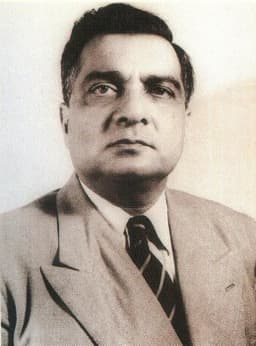
Iskander Mirza
Politician · Modern
48.9Total
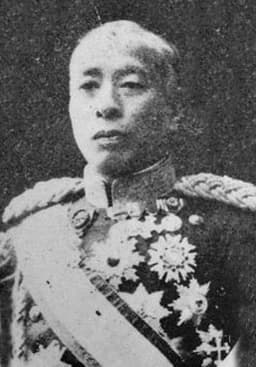
Iwakura Tomomi
Politician · Modern
52.0Total
Basic Information
Born
1899
1825
Died
1969
1883
Era
Modern
Modern
Nationality
Pakistan
Japan
Occupation
Politician
Politician
Civilization
Indian
Eastern
Score Comparison
Military (10%)
49.6
10.4
Political (20%)
39.4
59.3
Influence (20%)
51.0
58.3
Legacy (20%)
41.7
52.0
Leadership (15%)
58.8
72.0
Strategy (15%)
60.0
37.1
TOTAL
48.9
52.0
Iskander Mirza — Complete Timeline
1956 AD
Appointment as First President of PakistanPolitical Action◆ Major
Iskander Mirza became the first President of Pakistan on March 23, 1956, when the country adopted its first constitution. He had previously served as the last Governor-General. His presidency was marked by political instability and factional infighting.
PresidencyConstitutionPakistan
Impact: national
1958 AD
Imposition of Martial LawPolitical Action
On October 7, 1958, Iskander Mirza abrogated the constitution, dissolved the government, and imposed martial law, appointing General Ayub Khan as Chief Martial Law Administrator. This ended Pakistan's first parliamentary experiment.
Martial LawCoupPakistan
Impact: nationaldestructive
Exile After CoupPolitical Action◆ Major
Within weeks of imposing martial law, Iskander Mirza was forced into exile by Ayub Khan on October 27, 1958. Ayub Khan took over as President, and Mirza lived the rest of his life in London, never returning to Pakistan.
ExileCoupAyub Khan
Impact: nationaltragic
Iwakura Tomomi — Complete Timeline
1868 AD
Role in the Meiji RestorationPolitical Action◆ Major
Iwakura Tomomi was a key court noble who supported the imperial restoration. He helped coordinate the overthrow of the Tokugawa shogunate and the establishment of the Meiji government, serving as a bridge between the court and the samurai rebels.
Meiji RestorationPolitical change
Impact: nationalconstructive
1871 AD
Leadership of the Iwakura MissionPolitical Action
Iwakura Tomomi led the Iwakura Mission, a diplomatic tour of the United States and Europe. The mission studied Western political, economic, and military systems, providing crucial knowledge for Japan's modernization.
DiplomacyModernization
Impact: nationalconstructive
1880 AD
Suppression of the Freedom and People's Rights MovementPolitical Action
Iwakura Tomomi supported the suppression of the Freedom and People's Rights Movement, which demanded democratic reforms. He believed in gradual reform under imperial authority, leading to the arrest of activists and restrictions on political speech.
Political repressionDemocracy
Impact: nationaldestructive
1881 AD
Drafting of the Meiji ConstitutionPolitical Action◆ Major
Iwakura Tomomi chaired the committee that drafted the Meiji Constitution. He advocated for a strong imperial system with limited parliamentary powers, influencing the final document that established Japan's modern government.
ConstitutionGovernment
Impact: nationalconstructive
This comparison has not been analyzed yet.
One-time AI generation (~1 minute). Scores and timeline are already available below.
Rankings
🥇
Iwakura TomomiLeader
Mil: 10.4Pol: 59.3Inf: 58.3
52.0
🥈
Iskander Mirza
Mil: 49.6Pol: 39.4Inf: 51.0
48.9
+3.1 behind
How This Comparison Works
Algorithm
Each figure is scored on 6 dimensions (0—100 scale) based on structured historical data: Military (10%), Political (20%), Influence (20%), Legacy (20%), Leadership (15%), Strategy (15%). The weighted total produces the final ranking.
Data Sources
Scores are computed from structured sub-indicators in the database. Scale factors adjust for era (Ancient ×0.85, Modern ×1.0) and civilization size (Eastern ×1.05, Other ×0.80) to account for differences in population and military scale.
Maximum 3 Figures
Comparisons are limited to 2—3 figures to ensure readability and statistical meaningfulness.
Error Margins
±5 points per dimension — Sub-scores are derived from historical records with inherent uncertainty. Two figures within 5 points on a dimension should be considered roughly equivalent in that area.
Total Score Accuracy
±3 points overall — The weighted combination of 6 dimensions produces a total score with approximately ±3 points of uncertainty. Differences of less than 3 points are not statistically significant— the figures are effectively tied.
Known Limitations
- Historical records are incomplete and uneven across civilizations
- Figures from oral-tradition societies may be underrepresented
- Occupation labels can misclassify multi-role figures
- Scores measure capability and impact, not moral character
- Quantitative scoring is a comparison tool, not absolute truth
Capability Radar
Military (10%) — Battles & Warfare
Battles
41
15
Win Rate
44
17
Expansion
52
23
Political (20%) — Governance & Reform
Reform
30
75
Diplomacy
35
80
Economy
25
55
Influence (20%) — Cultural & Global Reach
Cultural
20
50
Global
25
60
Legacy (20%) — Historical Impact
Historical
30
70
Longevity
20
65
Leadership (15%) — Power & Stability
Tenure
40
60
Stability
15
65
Strategy (15%) — Tactics & Innovation
Strategy
53
20
Tactics
53
27
Reform
56
27
Similar Comparisons
Comments & Discussion
No comments yet. Be the first to share your thoughts!