Loading...
Iskander Mirza vs Julius Caesar
Julius Caesar leads by 33.9 pts · 2 figures compared
…
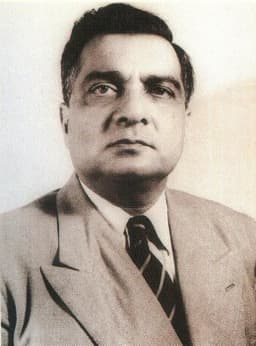
Iskander Mirza
Politician · Modern
48.9Total

Julius Caesar
General · Ancient
82.8Total
Basic Information
Born
1899
-100
Died
1969
-44
Era
Modern
Ancient
Nationality
Pakistan
Roman Republic
Occupation
Politician
General
Civilization
Indian
Western
Score Comparison
Military (10%)
49.6
88.0
Political (20%)
39.4
78.0
Influence (20%)
51.0
85.0
Legacy (20%)
41.7
82.0
Leadership (15%)
58.8
80.0
Strategy (15%)
60.0
85.0
TOTAL
48.9
82.8
Iskander Mirza — Complete Timeline
1956 AD
Appointment as First President of PakistanPolitical Action◆ Major
Iskander Mirza became the first President of Pakistan on March 23, 1956, when the country adopted its first constitution. He had previously served as the last Governor-General. His presidency was marked by political instability and factional infighting.
PresidencyConstitutionPakistan
Impact: national
1958 AD
Imposition of Martial LawPolitical Action
On October 7, 1958, Iskander Mirza abrogated the constitution, dissolved the government, and imposed martial law, appointing General Ayub Khan as Chief Martial Law Administrator. This ended Pakistan's first parliamentary experiment.
Martial LawCoupPakistan
Impact: nationaldestructive
Exile After CoupPolitical Action◆ Major
Within weeks of imposing martial law, Iskander Mirza was forced into exile by Ayub Khan on October 27, 1958. Ayub Khan took over as President, and Mirza lived the rest of his life in London, never returning to Pakistan.
ExileCoupAyub Khan
Impact: nationaltragic
Julius Caesar — Complete Timeline
58 BC
Gallic WarsWar◆ Major
Caesar, as proconsul of Gaul, launched a series of campaigns that conquered all of Gaul (modern France, Belgium, and parts of Switzerland). He fought numerous battles, including against the Helvetii, the Belgae, and the Gallic chieftain Vercingetorix. The wars brought immense wealth and a loyal army to Caesar.
Gallic WarsConquestRoman Expansion
Impact: regional
49 BC
Crossing the RubiconPolitical Action◆ Major
Caesar led Legio XIII across the Rubicon River into Italy, defying the Roman Senate's order to disband his army. This act triggered a civil war against Pompey and the Optimates, ultimately leading to Caesar's dictatorship and the end of the Roman Republic.
Roman Civil WarEnd of RepublicPower Struggle
Impact: global
48 BC
Battle of PharsalusWar◆ Major
Caesar's outnumbered army defeated the larger forces of Pompey the Great at Pharsalus in Greece. Caesar's tactical use of a reserve line to counter Pompey's cavalry charge proved decisive. Pompey fled to Egypt, where he was assassinated, leaving Caesar as the undisputed master of the Roman world.
Roman Civil WarBattleDecisive Victory
Impact: regional
44 BC
Appointment as Dictator for LifePolitical Action◆ Major
The Roman Senate appointed Caesar dictator perpetuo (dictator for life), granting him unprecedented personal power. This move concentrated military, legislative, and judicial authority in one person, effectively ending the Roman Republic's traditional system of checks and balances and alarming many senators.
DictatorshipEnd of RepublicPower Consolidation
Impact: regionaldestructive
Assassination on the Ides of MarchPolitical Action◆ Major
A group of Roman senators, led by Marcus Junius Brutus and Gaius Cassius Longinus, stabbed Caesar to death at a meeting of the Senate in the Theatre of Pompey. The assassination was intended to restore the Republic, but instead triggered another civil war that led to the rise of the Roman Empire.
AssassinationRoman PoliticsEnd of Republic
Impact: globaldestructive
Expert Analysis
iskander-mirza-vs-julius-caesar
# The Rubicon and the Coup
On October 7, 1958, Iskander Mirza sat in the Governor’s House in Karachi and signed a proclamation that would end his own political life. He abrogated the constitution, dismissed the government, and handed power to the military. Within twenty days, his own army chief would exile him, and he would die eleven years later in London, a forgotten man in a foreign land. Compare this to January 10, 49 BCE, when Julius Caesar stood at the banks of the Rubicon River in northern Italy. He knew that crossing that small stream with his legions meant civil war—and likely death if he failed. He crossed anyway, and within four years, he was master of the Roman world. Why did one man’s gamble secure immortality, while another’s desperate move led only to obscurity? The answer lies not merely in their choices, but in the worlds they inherited and the characters they forged.
Origins
Julius Caesar was born into the chaos of the late Roman Republic, a world of senatorial intrigue, populist uprisings, and crumbling aristocratic norms. His family, the Julii, claimed descent from the goddess Venus, but they were politically marginal by the time of his birth in 100 BCE. Young Caesar grew up in a Rome where ambitious men like Marius and Sulla had already shown that military glory could override constitutional tradition. He learned early that the Republic’s old rules were dying, and that a man who could command armies and sway crowds might rewrite them entirely.
Iskander Mirza was born in 1899 in Murshidabad, British India, into a world of colonial order and aristocratic Muslim privilege. His grandfather had been a nawab; his father served the British Raj. Mirza was educated at the elite Aligarh Muslim University and then at Sandhurst, the British military academy. He was a product of the imperial system—trained to administer, not to inspire. Where Caesar learned to read the passions of a Roman crowd, Mirza learned to manage files and obey superiors. The Republic gave Caesar a stage for ambition; the Raj gave Mirza a desk.
Rise to Power
Caesar’s ascent was a masterclass in strategic patience. He served as a military tribune, then quaestor in Spain, then aedile in Rome, where he spent vast sums on games and buildings to win popular favor. In 63 BCE, he became pontifex maximus, the chief priest of Rome, and then praetor. But his true breakthrough came in 58 BCE, when he secured the governorship of Gaul. Over eight years, he conquered a territory larger than Italy, amassed a fortune, and forged a loyal army that would follow him anywhere. When the Senate ordered him to disband his forces, he refused. The Rubicon crossing in 49 BCE was not a gamble born of desperation; it was a calculated escalation by a man who had already chosen his path.
Mirza’s rise was smoother and more bureaucratic. After a career in the British Indian Army and then the civil service, he became a key administrator in Pakistan’s early years. He served as defense secretary, governor of East Bengal, and then governor-general in 1955. When Pakistan adopted its first constitution on March 23, 1956, Mirza became its first president. But his power was never rooted in popular support or military conquest. It came from the corridors of bureaucracy and the favor of generals. He was a fixer, not a founder.
Leadership & Governance
Caesar governed as a revolutionary reformer. As dictator, he overhauled the Roman calendar, granted citizenship to provincials, initiated public works, and reorganized debt laws. His military genius was unquestioned—he wrote his own commentaries on the Gallic Wars, which remain studied in military academies today. But his political wisdom was more ambiguous. He centralized power, packed the Senate with his supporters, and accepted the title “dictator for life.” He believed that only strong, personal rule could save Rome from its oligarchic dysfunction. He was right about the problem, but wrong about how Rome would accept the cure.
Mirza governed as a conservative pragmatist. He saw Pakistan’s fledgling democracy as chaotic and corrupt—which it was. He believed that only a strong, disciplined administration could hold the country together. But his solution was not reform; it was suppression. He dismissed elected governments, manipulated political factions, and ultimately imposed martial law. His military score of 52.2 reflects a man who never led troops in battle; his political score of 72.0 shows a competent but unprincipled operator. Where Caesar built a new order, Mirza merely tried to preserve the old one by force.
Triumph & Tragedy
Caesar’s greatest triumph was his conquest of Gaul, a feat that added a vast province to the Roman world and made him the richest man in the Republic. His most devastating failure was his assassination on the Ides of March, 44 BCE, when sixty senators stabbed him to death in the Senate chamber. He had centralized power so completely that his enemies saw no other way to stop him. His dying moment—pulling his toga over his face as he fell—became the defining image of classical tragedy.
Mirza’s greatest moment was becoming Pakistan’s first president, a symbol of national unity after years of constitutional crisis. His most devastating failure was the coup he himself set in motion. By imposing martial law on October 7, 1958, he believed he could control the army. But within twenty days, General Ayub Khan forced him into exile. Mirza died in 1969 in London, buried in a small ceremony, remembered by few. His tragedy was not a dramatic assassination but a slow, quiet erasure.
Character & Destiny
Caesar was audacious, charismatic, and ruthless. He pardoned his enemies, but only after defeating them. He slept with his rivals’ wives, but also promoted their sons. He understood that in politics, perception is reality. His personality drove him to take risks that would have destroyed lesser men—and it worked, until it didn’t. His destiny was to be both the destroyer of the Republic and the architect of the Empire.
Mirza was cautious, calculating, and ultimately fearful. He saw threats everywhere and trusted no one. He tried to rule by balancing factions, but never built a base of his own. His personality drove him to avoid decisive action until it was too late—and then to take the wrong decisive action. His destiny was to be a footnote in a story he could not control.
Legacy
Caesar’s legacy is monumental. His name became synonymous with imperial rule—Kaiser, Tsar, Caesar. His reforms shaped Western governance for centuries. His death triggered the end of the Republic and the birth of the Roman Empire. Today, he is remembered as a military genius, a political visionary, and a warning against unchecked ambition.
Mirza’s legacy is modest. He is remembered in Pakistan as the president who gave way to military dictatorship. His score of 55.8 for legacy reflects a man who left no enduring institutions, no great reforms, no inspiring story. He is a cautionary tale about what happens when a leader lacks both a vision and a base.
Conclusion
Standing at the Rubicon, Caesar knew that history would remember him no matter what. Standing at his desk in Karachi, Mirza probably knew the same—but he was wrong. The difference is not merely in their achievements, but in their understanding of power. Caesar built power from the ground up, through war, patronage, and personal charisma. Mirza borrowed power from institutions and assumed it would last. In the end, Caesar’s gamble made him immortal; Mirza’s caution made him invisible. The Rubicon and the coup both changed history—but only one of them changed it forever.
Rankings
🥇
Julius CaesarLeader
Mil: 88.0Pol: 78.0Inf: 85.0
82.8
🥈
Iskander Mirza
Mil: 49.6Pol: 39.4Inf: 51.0
48.9
+33.9 behind
How This Comparison Works
Algorithm
Each figure is scored on 6 dimensions (0—100 scale) based on structured historical data: Military (10%), Political (20%), Influence (20%), Legacy (20%), Leadership (15%), Strategy (15%). The weighted total produces the final ranking.
Data Sources
Scores are computed from structured sub-indicators in the database. Scale factors adjust for era (Ancient ×0.85, Modern ×1.0) and civilization size (Eastern ×1.05, Other ×0.80) to account for differences in population and military scale.
Maximum 3 Figures
Comparisons are limited to 2—3 figures to ensure readability and statistical meaningfulness.
Error Margins
±5 points per dimension — Sub-scores are derived from historical records with inherent uncertainty. Two figures within 5 points on a dimension should be considered roughly equivalent in that area.
Total Score Accuracy
±3 points overall — The weighted combination of 6 dimensions produces a total score with approximately ±3 points of uncertainty. Differences of less than 3 points are not statistically significant— the figures are effectively tied.
Known Limitations
- Historical records are incomplete and uneven across civilizations
- Figures from oral-tradition societies may be underrepresented
- Occupation labels can misclassify multi-role figures
- Scores measure capability and impact, not moral character
- Quantitative scoring is a comparison tool, not absolute truth
Capability Radar
Military (10%) — Battles & Warfare
Battles
41
95
Win Rate
44
92
Expansion
52
97
Political (20%) — Governance & Reform
Reform
30
90
Diplomacy
35
85
Economy
25
82
Influence (20%) — Cultural & Global Reach
Cultural
20
88
Global
25
94
Legacy (20%) — Historical Impact
Historical
30
95
Longevity
20
96
Leadership (15%) — Power & Stability
Tenure
40
75
Stability
15
60
Strategy (15%) — Tactics & Innovation
Strategy
53
94
Tactics
53
96
Reform
56
88
Similar Comparisons
Comments & Discussion
No comments yet. Be the first to share your thoughts!