Loading...
Ismail I vs Richard of Cornwall
Ismail I leads by 21.8 pts · 2 figures compared
…
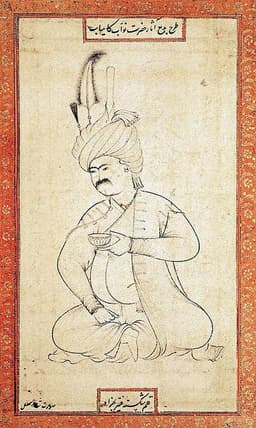
Ismail I
Emperor · Medieval
67.2Total

Richard of Cornwall
Emperor · Medieval
45.4Total
Basic Information
Born
1487
1209
Died
1524
1272
Era
Medieval
Medieval
Nationality
Persia
Holy Roman Empire
Occupation
Emperor
Emperor
Civilization
Middle Eastern
Western
Score Comparison
Military (10%)
78.0
50.0
Political (20%)
78.0
40.8
Influence (20%)
40.0
51.8
Legacy (20%)
80.0
40.0
Leadership (15%)
72.0
55.3
Strategy (15%)
69.1
30.3
TOTAL
67.2
45.4
Ismail I — Complete Timeline
1501 AD
Proclamation as Shah of IranPolitical Action
Ismail I proclaimed himself Shah of Iran at Tabriz, founding the Safavid dynasty. He declared Twelver Shia Islam the state religion, a move that distinguished Iran from its Sunni neighbors and shaped its religious identity.
FoundingState ReligionShia Islam
Impact: regionalconstructive
1508 AD
Conquest of BaghdadWar◆ Major
Ismail I captured Baghdad from the Aq Qoyunlu confederation. This conquest extended Safavid control over Mesopotamia and secured the shrine cities of Najaf and Karbala, important Shia pilgrimage sites.
ConquestMesopotamiaShia Shrines
Impact: regional
1514 AD
Battle of ChaldiranWar
Ismail I's army was defeated by the Ottoman Empire under Sultan Selim I at Chaldiran. The Ottomans used superior artillery and gunpowder tactics, forcing Ismail to retreat and ending his expansion into Anatolia.
BattleOttoman-Safavid WarMilitary Defeat
Impact: regionaltragic
Richard of Cornwall — Complete Timeline
1257 AD
Elected King of GermanyPolitical Action◆ Major
Richard of Cornwall was elected King of Germany by a faction of prince-electors, opposing Alfonso X of Castile. This election was part of the Great Interregnum, with Richard receiving support from the English crown and the Papacy.
ElectionGreat InterregnumEnglish Influence
Impact: regional
Crowned King of GermanyPolitical Action◆ Major
Richard of Cornwall was crowned King of Germany in Aachen by the Archbishop of Cologne. His coronation was contested by Alfonso X, and Richard's authority was largely confined to the Rhineland and parts of southern Germany.
CoronationGreat InterregnumRival Claimant
Impact: regional
1262 AD
Returned to EnglandPolitical Action
Richard of Cornwall returned to England after spending several years in Germany. His departure weakened his influence in the Holy Roman Empire, and he never returned, leaving the German throne contested until the end of the Great Interregnum.
ReturnEnglandGreat Interregnum
Impact: regional
1272 AD
Died in EnglandOther◆ Major
Richard of Cornwall died at Berkhamsted Castle in England. His death ended his claim to the German throne, and he was succeeded by Rudolf of Habsburg, who ended the Great Interregnum.
DeathGreat InterregnumEnd of Claim
Impact: regional
Expert Analysis
Origins
Ismail I was born in 1487 in Ardabil, Persia, into the Safavid order, a Sufi movement with militant Shia tendencies. His father, Shaykh Haydar, and grandfather, Shaykh Junayd, were leaders who cultivated a following of Turkmen tribes known as Qizilbash ("Red Heads") for their distinctive headgear. Ismail's father died in battle when he was a child, and he was raised in hiding under the protection of loyal followers in Gilan. From a young age, he was groomed as a messianic figure, believed by his followers to be a descendant of the Prophet Muhammad and the hidden Imam.
Richard of Cornwall was born in 1209 in Winchester, England, as the second son of King John of England and Isabella of Angoulême. As a younger prince, he was not expected to inherit the throne but was given the earldom of Cornwall by his brother, King Henry III. He grew up in the turbulent aftermath of the Magna Carta, with a strong sense of duty to the crown. Richard was well-educated in law and administration, and he amassed significant wealth through mining and land management, making him one of the richest men in England.
Rise to Power
Ismail I emerged from hiding at age 14 in 1501, leading his Qizilbash followers in a rebellion against the Aq Qoyunlu confederation that controlled much of Persia. He captured Tabriz in the same year and proclaimed himself Shah of Iran, founding the Safavid dynasty. His rise was swift, fueled by religious fervor and military success. He declared Twelver Shia Islam the state religion, a radical move that unified his realm but also set the stage for conflict with the Sunni Ottoman Empire. By 1510, he had conquered most of Persia and parts of Mesopotamia, including Baghdad in 1508.
Richard of Cornwall's rise to power came through election rather than conquest. In 1256, following the death of the German king Conrad IV, the Holy Roman Empire fell into a period of uncertainty known as the Great Interregnum. A faction of prince-electors, seeking a candidate independent of the rival Hohenstaufen and Habsburg claimants, elected Richard as King of Germany on January 13, 1257. His election was opposed by another faction that chose Alfonso X of Castile. Richard was crowned in Aachen on May 17, 1257, but his authority was limited to a few regions, and he never gained universal recognition.
Leadership & Governance
Ismail I ruled as an absolute monarch with a theocratic bent. He combined political power with spiritual authority, presenting himself as the representative of the hidden Imam and even as a divine figure to his Qizilbash followers. His governance was characterized by the imposition of Shia Islam: he ordered the cursing of the first three caliphs, demolished Sunni shrines, and invited Shia scholars from elsewhere. He also implemented a land grant system (tuyul) to reward his Qizilbash commanders, which created a loyal military elite but also decentralized power. Ismail's leadership style was charismatic and aggressive, but he relied heavily on tribal loyalties rather than institutional structures.
Richard of Cornwall, by contrast, was a king in name only. He spent only a few years in Germany (1257–1259 and 1262–1263) and governed largely through deputies. His rule was marked by absenteeism and a focus on his English interests. He did not attempt to impose major reforms or unite the fractious German principalities. Instead, he used his wealth to buy support, but his authority was weak. His political score of 40.8 reflects his ineffectiveness as a ruler, while Ismail's political score of 78.0 indicates a more decisive and transformative governance.
Triumph & Tragedy
Ismail I's greatest triumph was founding the Safavid dynasty and establishing Shia Islam as the state religion, a legacy that persists in Iran today. His military campaigns, scoring 78.0, were initially highly successful, conquering vast territories. However, his greatest tragedy was the Battle of Chaldiran in 1514, where his army was decisively defeated by the Ottoman Sultan Selim I. The Ottomans used artillery and gunpowder tactics that the Safavids lacked, forcing Ismail to abandon his capital and marking the end of his expansion. He never fully recovered psychologically, becoming withdrawn and drinking heavily until his death in 1524.
Richard of Cornwall's triumph was his election as King of Germany, a rare honor for an English prince. He also played a key role in English politics, serving as regent for Henry III and negotiating with rebellious barons. His wealth allowed him to live comfortably and fund crusades. However, his tragedy was the futility of his kingship. He never effectively ruled Germany, and his claim was contested until his death in 1272. His influence score of 51.8 is modest, and his legacy is largely forgotten outside specialist circles.
Character & Destiny
Ismail I was a charismatic and fanatical leader, driven by religious conviction and a sense of messianic destiny. His early successes made him overconfident, and his defeat at Chaldiran shattered his aura of invincibility. He became melancholic and passive in his later years, leading to a decline in Safavid power. His character shaped his fate: his aggressive imposition of Shia Islam created enduring divisions but also a strong national identity.
Richard of Cornwall was pragmatic and diplomatic, but also cautious and self-interested. He preferred wealth and comfort to the burdens of imperial rule. His decision to return to England rather than fight for his German crown showed his lack of ambition. His character led to a largely forgotten reign, but he avoided the catastrophic failures that befell more ambitious rulers.
Legacy
Ismail I's legacy is profound: he is the founder of the Safavid dynasty, which ruled Iran for over 200 years, and the architect of Iran's Shia identity. His influence score of 40.0 is lower than his total score suggests, but his legacy score of 80.0 reflects the enduring impact of his religious policies. Modern Iran still bears his imprint. Richard of Cornwall's legacy is minimal. His election did not lead to lasting English influence in Germany, and he is remembered mainly as a footnote in the history of the Holy Roman Empire. His legacy score of 40.0 is fitting.
Conclusion
Ismail I had a far greater impact on history than Richard of Cornwall. With a total score of 67.2 against 45.4, the 21.8-point gap underscores his superiority in military, political, and leadership dimensions. Ismail founded a dynasty and a religious identity that shaped a nation for centuries. Richard, despite his high birth, achieved little of lasting significance. Ismail's failures at Chaldiran do not diminish his transformative role, while Richard's election was a hollow honor. The clear position is that Ismail I was the more consequential figure, and his legacy endures while Richard's fades.
Rankings
🥇
Ismail ILeader
Mil: 78.0Pol: 78.0Inf: 40.0
67.2
🥈
Richard of Cornwall
Mil: 50.0Pol: 40.8Inf: 51.8
45.4
+21.8 behind
How This Comparison Works
Algorithm
Each figure is scored on 6 dimensions (0—100 scale) based on structured historical data: Military (10%), Political (20%), Influence (20%), Legacy (20%), Leadership (15%), Strategy (15%). The weighted total produces the final ranking.
Data Sources
Scores are computed from structured sub-indicators in the database. Scale factors adjust for era (Ancient ×0.85, Modern ×1.0) and civilization size (Eastern ×1.05, Other ×0.80) to account for differences in population and military scale.
Maximum 3 Figures
Comparisons are limited to 2—3 figures to ensure readability and statistical meaningfulness.
Error Margins
±5 points per dimension — Sub-scores are derived from historical records with inherent uncertainty. Two figures within 5 points on a dimension should be considered roughly equivalent in that area.
Total Score Accuracy
±3 points overall — The weighted combination of 6 dimensions produces a total score with approximately ±3 points of uncertainty. Differences of less than 3 points are not statistically significant— the figures are effectively tied.
Known Limitations
- Historical records are incomplete and uneven across civilizations
- Figures from oral-tradition societies may be underrepresented
- Occupation labels can misclassify multi-role figures
- Scores measure capability and impact, not moral character
- Quantitative scoring is a comparison tool, not absolute truth
Capability Radar
Military (10%) — Battles & Warfare
Battles
75
20
Win Rate
80
25
Expansion
80
10
Political (20%) — Governance & Reform
Reform
90
15
Diplomacy
65
45
Economy
60
50
Influence (20%) — Cultural & Global Reach
Cultural
85
20
Global
70
20
Legacy (20%) — Historical Impact
Historical
85
25
Longevity
80
15
Leadership (15%) — Power & Stability
Tenure
70
40
Stability
55
30
Strategy (15%) — Tactics & Innovation
Strategy
75
20
Tactics
70
15
Reform
85
5
Similar Comparisons
Comments & Discussion
No comments yet. Be the first to share your thoughts!