Loading...
Ismail I vs Julius Caesar
Julius Caesar leads by 15.6 pts · 2 figures compared
…
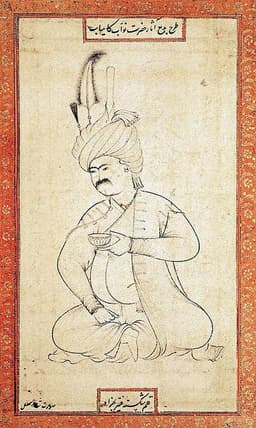
Ismail I
Emperor · Medieval
67.2Total

Julius Caesar
General · Ancient
82.8Total
Basic Information
Born
1487
-100
Died
1524
-44
Era
Medieval
Ancient
Nationality
Persia
Roman Republic
Occupation
Emperor
General
Civilization
Middle Eastern
Western
Score Comparison
Military (10%)
78.0
88.0
Political (20%)
78.0
78.0
Influence (20%)
40.0
85.0
Legacy (20%)
80.0
82.0
Leadership (15%)
72.0
80.0
Strategy (15%)
69.1
85.0
TOTAL
67.2
82.8
Ismail I — Complete Timeline
1501 AD
Proclamation as Shah of IranPolitical Action
Ismail I proclaimed himself Shah of Iran at Tabriz, founding the Safavid dynasty. He declared Twelver Shia Islam the state religion, a move that distinguished Iran from its Sunni neighbors and shaped its religious identity.
FoundingState ReligionShia Islam
Impact: regionalconstructive
1508 AD
Conquest of BaghdadWar◆ Major
Ismail I captured Baghdad from the Aq Qoyunlu confederation. This conquest extended Safavid control over Mesopotamia and secured the shrine cities of Najaf and Karbala, important Shia pilgrimage sites.
ConquestMesopotamiaShia Shrines
Impact: regional
1514 AD
Battle of ChaldiranWar
Ismail I's army was defeated by the Ottoman Empire under Sultan Selim I at Chaldiran. The Ottomans used superior artillery and gunpowder tactics, forcing Ismail to retreat and ending his expansion into Anatolia.
BattleOttoman-Safavid WarMilitary Defeat
Impact: regionaltragic
Julius Caesar — Complete Timeline
58 BC
Gallic WarsWar◆ Major
Caesar, as proconsul of Gaul, launched a series of campaigns that conquered all of Gaul (modern France, Belgium, and parts of Switzerland). He fought numerous battles, including against the Helvetii, the Belgae, and the Gallic chieftain Vercingetorix. The wars brought immense wealth and a loyal army to Caesar.
Gallic WarsConquestRoman Expansion
Impact: regional
49 BC
Crossing the RubiconPolitical Action◆ Major
Caesar led Legio XIII across the Rubicon River into Italy, defying the Roman Senate's order to disband his army. This act triggered a civil war against Pompey and the Optimates, ultimately leading to Caesar's dictatorship and the end of the Roman Republic.
Roman Civil WarEnd of RepublicPower Struggle
Impact: global
48 BC
Battle of PharsalusWar◆ Major
Caesar's outnumbered army defeated the larger forces of Pompey the Great at Pharsalus in Greece. Caesar's tactical use of a reserve line to counter Pompey's cavalry charge proved decisive. Pompey fled to Egypt, where he was assassinated, leaving Caesar as the undisputed master of the Roman world.
Roman Civil WarBattleDecisive Victory
Impact: regional
44 BC
Appointment as Dictator for LifePolitical Action◆ Major
The Roman Senate appointed Caesar dictator perpetuo (dictator for life), granting him unprecedented personal power. This move concentrated military, legislative, and judicial authority in one person, effectively ending the Roman Republic's traditional system of checks and balances and alarming many senators.
DictatorshipEnd of RepublicPower Consolidation
Impact: regionaldestructive
Assassination on the Ides of MarchPolitical Action◆ Major
A group of Roman senators, led by Marcus Junius Brutus and Gaius Cassius Longinus, stabbed Caesar to death at a meeting of the Senate in the Theatre of Pompey. The assassination was intended to restore the Republic, but instead triggered another civil war that led to the rise of the Roman Empire.
AssassinationRoman PoliticsEnd of Republic
Impact: globaldestructive
Expert Analysis
ismail-i-vs-julius-caesar
# The Dictator and the Shah
On a winter morning in 1514, a young Persian king watched his army shatter on the plains of Chaldiran. Ottoman cannon fire tore through his cavalry, and for the first time, Ismail I tasted defeat. Fourteen centuries earlier and fifteen hundred miles to the west, another commander stood at the Rubicon River, knowing that crossing it meant war with his own republic. One man built an empire in a single lifetime; the other founded a dynasty that would endure for two centuries. Their paths diverged not merely in geography but in the very nature of power itself.
Origins
Julius Caesar was born into the twilight of the Roman Republic, a world of senatorial intrigue, civil wars, and restless legions. His family, the Julii, claimed descent from the goddess Venus, but their political standing was modest. Caesar’s uncle by marriage, Gaius Marius, had been a populist reformer, and the young patrician inherited both his ambition and his enemies. The Republic was already dying—its institutions corroded by the concentration of wealth in a few hands, its armies loyal to generals rather than the state. Caesar grew up breathing the air of crisis.
Ismail I emerged from a very different world. Born in 1487 to the Safavid order, a Sufi brotherhood in the mountains of northwestern Persia, he was the son of a sheikh who claimed descent from the Prophet Muhammad. His father and older brother were murdered when Ismail was a child, and he spent his youth in hiding among loyal followers. The Safavids were not merely a political family; they were a religious movement, and Ismail was raised as both a warrior and a messianic figure. His followers believed he was the Mahdi, the hidden imam, or even a manifestation of God. Where Caesar inherited a political crisis, Ismail inherited a holy war.
Rise to Power
Caesar’s ascent was a masterpiece of calculated risk. He served as a military tribune, then quaestor in Spain, then aedile in Rome, spending borrowed fortunes on public games to win the people’s favor. In 60 BCE, at age forty, he forged the First Triumvirate with Pompey and Crassus, an alliance that gave him command of Gaul. Over the next eight years, he conquered a territory larger than Italy, writing his own propaganda in elegant Latin. The Gallic Wars made him a legend and his legions fanatically loyal. When the Senate ordered him to disband his army, Caesar crossed the Rubicon in 49 BCE, declaring war on the Republic itself. He was fifty-one years old.
Ismail’s rise was swifter and more violent. At fourteen, he emerged from hiding with a band of seven thousand followers, mostly Turkoman tribesmen from the Qizilbash confederation—so named for their distinctive red hats. In 1501, he captured Tabriz and proclaimed himself Shah of Iran, just fourteen years old. He declared Twelver Shia Islam the state religion, a radical move in a mostly Sunni region. Within seven years, he conquered most of Persia, including Baghdad in 1508, crushing the Aq Qoyunlu confederation. Caesar had to navigate a complex political system; Ismail simply swept it away with religious fervor and cavalry charges.
Leadership & Governance
Caesar governed as a reformer. As dictator, he overhauled the calendar, granted citizenship to provincials, reformed debt laws, and initiated massive public works. His military genius lay in logistics and speed—he built bridges across the Rhine in ten days, besieged Alesia with double fortifications, and always led from the front. His political wisdom, however, was flawed. He pardoned his enemies, only to be betrayed; he centralized power, only to be stabbed by his friends. His strategy score of 88.0 matches his military rating, but his political score of 78.0 suggests a man who understood power better than the people who wielded it.
Ismail ruled as a theocratic warrior-king. He established the Safavid bureaucracy, blending Persian administrative traditions with Qizilbash military loyalty. He built mosques, patronized Persian art, and enforced Shia orthodoxy with a zeal that alienated his Sunni neighbors. His military score of 64.7 and strategy of 55.4 reflect a commander who relied on shock tactics and religious inspiration rather than tactical sophistication. At Chaldiran, he refused to use gunpowder weapons, considering them cowardly, and his cavalry was annihilated by Ottoman artillery. He never fully recovered.
Triumph & Tragedy
Caesar’s greatest triumph was his conquest of Gaul—a feat that doubled Roman territory and made him the most powerful man in the Mediterranean. His greatest tragedy was his assassination on the Ides of March, 44 BCE, at the hands of senators he had pardoned. He died with twenty-three stab wounds, falling at the foot of a statue of his rival Pompey. His last words, according to legend, were “Et tu, Brute?”—a recognition that the Republic he had destroyed could not forgive him for saving it.
Ismail’s greatest triumph was the founding of the Safavid dynasty itself. In less than a decade, he transformed a Sufi order into an empire that would last until 1736. His greatest tragedy was Chaldiran. After the defeat, he retreated to his palace and reportedly never smiled again. He died in 1524 at just thirty-six, possibly from alcoholism or despair. His empire survived, but his personal vision of an invincible, messianic king was shattered.
Character & Destiny
Caesar was a gambler who calculated every throw of the dice. He was vain, ambitious, and ruthless, but also generous, witty, and capable of genuine clemency. His personality shaped history because he understood that the Republic could not be saved; it had to be replaced. His destiny was to be the bridge between republic and empire, a role that required both genius and tragedy.
Ismail was a believer who trusted in destiny itself. He was charismatic, brave, and utterly convinced of his divine mission. His personality shaped history because he gave Persia a national identity that survives today—Shia Islam as a marker of Iranian distinctiveness. His destiny was to be a founder, not a conqueror. Where Caesar mastered politics, Ismail mastered faith.
Legacy
Caesar’s legacy is the Roman Empire, the Latin language, and the very concept of the dictator as a world-historical figure. His name became a title—Kaiser, Tsar, Caesar. His writings survive, his reforms lasted centuries, and his assassination made him a martyr. His influence score of 85.0 and legacy of 82.0 reflect a man who shaped the West more than almost any other.
Ismail’s legacy is modern Iran. He made Shia Islam the state religion, a decision that still defines the country’s identity. The Safavid dynasty he founded created a Persian renaissance in art, architecture, and literature. His influence score of 75.0 and legacy of 70.0 are lower than Caesar’s, but his impact on the Middle East is equally profound. He did not change the world; he changed a civilization.
Conclusion
Caesar and Ismail both built empires on the ruins of old orders—one political, one religious. Caesar’s Rome became a universal empire that absorbed all gods; Ismail’s Persia became a bastion of a single faith. One died at the height of his power, the other in the shadow of defeat. Yet both understood a truth that transcends time: that the most dangerous thing in history is a man who believes he is destiny’s instrument. Caesar believed he was Rome; Ismail believed he was God’s shadow. In the end, both were mortal—and both are immortal.
Rankings
🥇
Julius CaesarLeader
Mil: 88.0Pol: 78.0Inf: 85.0
82.8
🥈
Ismail I
Mil: 78.0Pol: 78.0Inf: 40.0
67.2
+15.6 behind
How This Comparison Works
Algorithm
Each figure is scored on 6 dimensions (0—100 scale) based on structured historical data: Military (10%), Political (20%), Influence (20%), Legacy (20%), Leadership (15%), Strategy (15%). The weighted total produces the final ranking.
Data Sources
Scores are computed from structured sub-indicators in the database. Scale factors adjust for era (Ancient ×0.85, Modern ×1.0) and civilization size (Eastern ×1.05, Other ×0.80) to account for differences in population and military scale.
Maximum 3 Figures
Comparisons are limited to 2—3 figures to ensure readability and statistical meaningfulness.
Error Margins
±5 points per dimension — Sub-scores are derived from historical records with inherent uncertainty. Two figures within 5 points on a dimension should be considered roughly equivalent in that area.
Total Score Accuracy
±3 points overall — The weighted combination of 6 dimensions produces a total score with approximately ±3 points of uncertainty. Differences of less than 3 points are not statistically significant— the figures are effectively tied.
Known Limitations
- Historical records are incomplete and uneven across civilizations
- Figures from oral-tradition societies may be underrepresented
- Occupation labels can misclassify multi-role figures
- Scores measure capability and impact, not moral character
- Quantitative scoring is a comparison tool, not absolute truth
Capability Radar
Military (10%) — Battles & Warfare
Battles
75
95
Win Rate
80
92
Expansion
80
97
Political (20%) — Governance & Reform
Reform
90
90
Diplomacy
65
85
Economy
60
82
Influence (20%) — Cultural & Global Reach
Cultural
85
88
Global
70
94
Legacy (20%) — Historical Impact
Historical
85
95
Longevity
80
96
Leadership (15%) — Power & Stability
Tenure
70
75
Stability
55
60
Strategy (15%) — Tactics & Innovation
Strategy
75
94
Tactics
70
96
Reform
85
88
Similar Comparisons
Comments & Discussion
No comments yet. Be the first to share your thoughts!