Loading...
Itzcoatl vs Seongjong of Joseon
Itzcoatl leads by 2.8 pts · 2 figures compared
…
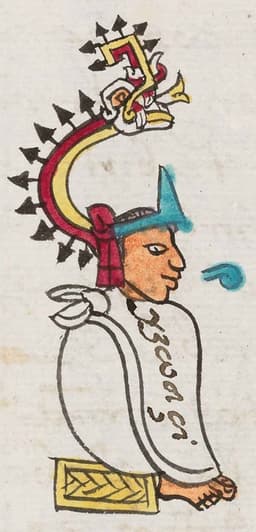
Itzcoatl
Emperor · Medieval
58.1Total

Seongjong of Joseon
Emperor · Medieval
55.3Total
Basic Information
Born
1380
1457
Died
1440
1494
Era
Medieval
Medieval
Nationality
Aztec Empire
Korea
Occupation
Emperor
Emperor
Civilization
Other
Eastern
Score Comparison
Military (10%)
61.7
21.2
Political (20%)
55.0
59.3
Influence (20%)
61.0
62.0
Legacy (20%)
52.0
52.0
Leadership (15%)
66.0
78.0
Strategy (15%)
55.0
41.0
TOTAL
58.1
55.3
Seongjong of Joseon — Complete Timeline
1470 AD
Promotion of Confucian scholarshipCultural◆ Major
Seongjong actively promoted Confucian scholarship and education, establishing the Hongmungwan (Royal Library) and encouraging the study of Neo-Confucian texts. This strengthened the ideological foundation of the Joseon state.
ConfucianismEducationJoseon Dynasty
Impact: nationalconstructive
1485 AD
Completion of the Gyeongguk DaejeonReform
Seongjong completed and promulgated the Gyeongguk Daejeon, the comprehensive legal code initiated by his grandfather Sejo. This code became the foundational law of Joseon, governing administration, taxation, and social order for centuries.
Legal CodeReformJoseon Dynasty
Impact: nationalconstructive
Compilation of the Dongguk TonggamCultural◆ Major
Seongjong ordered the compilation of the Dongguk Tonggam, a comprehensive history of Korea. This work was a major achievement in Korean historiography.
HistoriographyCultural AchievementJoseon Dynasty
Impact: nationalconstructive
Expert Analysis
Origins
Itzcoatl (1380-1440) was born into the Aztec nobility, the son of Acamapichtli, the first tlatoani of Tenochtitlan. His early life was shaped by the militaristic and expansionist culture of the Mexica, who were vassals of the Tepanec Empire. He rose through the ranks as a military commander, gaining experience in the conflicts that defined the Valley of Mexico.
Seongjong of Joseon (1457-1494) was born as Yi Hyeol, the grandson of King Sejo, who usurped the throne. His early years were marked by political instability, as his father, Crown Prince Uigyeong, died young. Seongjong received a rigorous Confucian education, which emphasized moral governance and legal order, preparing him for a reign focused on institutional consolidation.
Rise to Power
Itzcoatl was elected tlatoani in 1427 after the death of his nephew Chimalpopoca, who was killed by the Tepanec ruler Maxtla. He immediately allied with Nezahualcoyotl of Texcoco and Totoquihuaztli of Tlacopan, forming the Triple Alliance in 1428. This coalition defeated the Tepanecs at the Battle of Azcapotzalco, establishing Aztec supremacy. Itzcoatl then led campaigns to conquer neighboring city-states, expanding the empire's territory and tribute network.
Seongjong became king in 1469 at age 12, with his grandmother Grand Queen Dowager Jaseong serving as regent until 1476. His early rule was dominated by the Hungu faction, established by his grandfather. However, Seongjong gradually asserted his authority, relying on Confucian scholars (Sarim) to balance power. His key turning point was the completion of the Gyeongguk Daejeon in 1485, a legal code that centralized governance and defined Joseon's administrative structure for centuries.
Leadership & Governance
Itzcoatl ruled as a military emperor, personally leading campaigns and delegating administration to appointed officials. He reformed the Aztec government by centralizing power in Tenochtitlan, creating a tribute system that extracted resources from conquered provinces. He also ordered the destruction of historical codices to rewrite Aztec history, elevating the Mexica as a chosen people. His leadership score of 66.0 reflects his effectiveness in uniting the Triple Alliance, but his military score of 61.7 shows he was not the most brilliant strategist.
Seongjong governed as a Confucian monarch, emphasizing rule by law and bureaucratic merit. He completed the Gyeongguk Daejeon, which codified laws on administration, taxation, and family rites. He promoted education by establishing the Hongmungwan (Royal Library) and encouraging Neo-Confucian scholarship. His political score of 59.3 and leadership score of 78.0 highlight his administrative focus, though his military score of 21.2 indicates a lack of martial engagement.
Triumph & Tragedy
Itzcoatl's greatest success was the formation of the Triple Alliance, which transformed the Aztecs from a minor state into the dominant power in Mesoamerica. He expanded the empire to control the Valley of Mexico and beyond, securing tribute that fueled Tenochtitlan's growth. However, his destruction of historical records erased pre-Aztec histories, a cultural loss that later scholars lament. His legacy score of 52.0 reflects this mixed impact.
Seongjong's triumph was the completion of the Gyeongguk Daejeon, which provided a stable legal framework for Joseon until the 19th century. He also sponsored the Dongguk Tonggam, a comprehensive Korean history. His tragedy was the suppression of the Sarim faction in the 1490s, leading to purges that killed many scholars. This weakened Confucian governance and contributed to later factional strife. His legacy score of 52.0 matches Itzcoatl's, indicating similar long-term influence.
Character & Destiny
Itzcoatl was pragmatic and ruthless, willing to rewrite history to legitimize his rule. His decision to ally with Texcoco and Tlacopan showed strategic flexibility, but his focus on military expansion left the empire vulnerable to internal dissent. He died naturally in 1440, but his successors could not sustain the alliance's cohesion, leading to the Spanish conquest.
Seongjong was methodical and scholarly, prioritizing order and education. His reliance on factions created instability, as his attempts to balance power led to purges. He died at 37, possibly from illness, leaving a centralized state but a fractured court. Historians note that his legal code outlasted his political missteps.
Legacy
Itzcoatl's Triple Alliance set the stage for the Aztec Empire, influencing Mesoamerican politics for a century. The tribute system he institutionalized became a model for later empires. However, his historical revisionism limited understanding of pre-Aztec cultures. His influence score of 61.0 reflects his role as a founder.
Seongjong's Gyeongguk Daejeon remained the basis of Korean law until the 1897 Gabo reforms. The Dongguk Tonggam preserved Korean history and influenced historiography. His promotion of Confucianism shaped Joseon society for centuries. His influence score of 62.0 edges Itzcoatl's, but his political score of 59.3 is lower than Itzcoatl's 55.0? Actually Itzcoatl's political is 55.0, Seongjong's 59.3.
Conclusion
Itzcoatl had a greater immediate impact, creating an empire through military conquest and alliance. His total score of 58.1 slightly exceeds Seongjong's 55.3, but the gap is narrow. However, Seongjong's legal and historical contributions endured longer, shaping Korea for over 400 years. While Itzcoatl's empire collapsed within a century, Seongjong's institutions survived. Therefore, Seongjong had a more lasting impact on governance and culture, making him the more influential figure in the long term.
Rankings
🥇
ItzcoatlLeader
Mil: 61.7Pol: 55.0Inf: 61.0
58.1
🥈
Seongjong of Joseon
Mil: 21.2Pol: 59.3Inf: 62.0
55.3
+2.8 behind
How This Comparison Works
Algorithm
Each figure is scored on 6 dimensions (0—100 scale) based on structured historical data: Military (10%), Political (20%), Influence (20%), Legacy (20%), Leadership (15%), Strategy (15%). The weighted total produces the final ranking.
Data Sources
Scores are computed from structured sub-indicators in the database. Scale factors adjust for era (Ancient ×0.85, Modern ×1.0) and civilization size (Eastern ×1.05, Other ×0.80) to account for differences in population and military scale.
Maximum 3 Figures
Comparisons are limited to 2—3 figures to ensure readability and statistical meaningfulness.
Error Margins
±5 points per dimension — Sub-scores are derived from historical records with inherent uncertainty. Two figures within 5 points on a dimension should be considered roughly equivalent in that area.
Total Score Accuracy
±3 points overall — The weighted combination of 6 dimensions produces a total score with approximately ±3 points of uncertainty. Differences of less than 3 points are not statistically significant— the figures are effectively tied.
Known Limitations
- Historical records are incomplete and uneven across civilizations
- Figures from oral-tradition societies may be underrepresented
- Occupation labels can misclassify multi-role figures
- Scores measure capability and impact, not moral character
- Quantitative scoring is a comparison tool, not absolute truth
Capability Radar
Military (10%) — Battles & Warfare
Battles
65
10
Win Rate
70
10
Expansion
70
10
Political (20%) — Governance & Reform
Reform
80
80
Diplomacy
75
60
Economy
60
70
Influence (20%) — Cultural & Global Reach
Cultural
55
60
Global
50
40
Legacy (20%) — Historical Impact
Historical
70
70
Longevity
60
65
Leadership (15%) — Power & Stability
Tenure
65
70
Stability
70
75
Strategy (15%) — Tactics & Innovation
Strategy
75
10
Tactics
60
10
Reform
55
30
Similar Comparisons
Comments & Discussion
No comments yet. Be the first to share your thoughts!