Loading...
Itzcoatl vs Julius Caesar
Julius Caesar leads by 24.7 pts · 2 figures compared
…
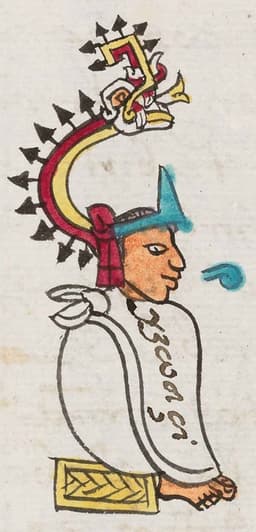
Itzcoatl
Emperor · Medieval
58.1Total

Julius Caesar
General · Ancient
82.8Total
Basic Information
Born
1380
-100
Died
1440
-44
Era
Medieval
Ancient
Nationality
Aztec Empire
Roman Republic
Occupation
Emperor
General
Civilization
Other
Western
Score Comparison
Military (10%)
61.7
88.0
Political (20%)
55.0
78.0
Influence (20%)
61.0
85.0
Legacy (20%)
52.0
82.0
Leadership (15%)
66.0
80.0
Strategy (15%)
55.0
85.0
TOTAL
58.1
82.8
Julius Caesar — Complete Timeline
58 BC
Gallic WarsWar◆ Major
Caesar, as proconsul of Gaul, launched a series of campaigns that conquered all of Gaul (modern France, Belgium, and parts of Switzerland). He fought numerous battles, including against the Helvetii, the Belgae, and the Gallic chieftain Vercingetorix. The wars brought immense wealth and a loyal army to Caesar.
Gallic WarsConquestRoman Expansion
Impact: regional
49 BC
Crossing the RubiconPolitical Action◆ Major
Caesar led Legio XIII across the Rubicon River into Italy, defying the Roman Senate's order to disband his army. This act triggered a civil war against Pompey and the Optimates, ultimately leading to Caesar's dictatorship and the end of the Roman Republic.
Roman Civil WarEnd of RepublicPower Struggle
Impact: global
48 BC
Battle of PharsalusWar◆ Major
Caesar's outnumbered army defeated the larger forces of Pompey the Great at Pharsalus in Greece. Caesar's tactical use of a reserve line to counter Pompey's cavalry charge proved decisive. Pompey fled to Egypt, where he was assassinated, leaving Caesar as the undisputed master of the Roman world.
Roman Civil WarBattleDecisive Victory
Impact: regional
44 BC
Appointment as Dictator for LifePolitical Action◆ Major
The Roman Senate appointed Caesar dictator perpetuo (dictator for life), granting him unprecedented personal power. This move concentrated military, legislative, and judicial authority in one person, effectively ending the Roman Republic's traditional system of checks and balances and alarming many senators.
DictatorshipEnd of RepublicPower Consolidation
Impact: regionaldestructive
Assassination on the Ides of MarchPolitical Action◆ Major
A group of Roman senators, led by Marcus Junius Brutus and Gaius Cassius Longinus, stabbed Caesar to death at a meeting of the Senate in the Theatre of Pompey. The assassination was intended to restore the Republic, but instead triggered another civil war that led to the rise of the Roman Empire.
AssassinationRoman PoliticsEnd of Republic
Impact: globaldestructive
Expert Analysis
itzcoatl-vs-julius-caesar
The Crossing of Two Worlds
On a January morning in 49 BCE, Julius Caesar stood at the banks of the Rubicon River in northern Italy, a small stream that marked the boundary between his province and Rome itself. By crossing it with his army, he would declare war on the Republic he had helped govern. Nearly fifteen hundred years later and an ocean away, another leader faced his own crossing—not of a river, but of history itself. Itzcoatl, the fourth emperor of the Aztec Empire, stood atop the causeways of Tenochtitlan, surveying a world of lakes and pyramids that would soon be shattered by forces he could not imagine. Both men were builders of empires, yet their paths diverged so completely that one became the father of Western civilization's greatest imperial system, while the other became a ghost in the story of a world that was erased.
Origins
Julius Caesar was born into the patrician class of Rome, but his family was neither wealthy nor particularly powerful. The Roman Republic of the first century BCE was a cauldron of ambition, corruption, and civil war. Young Caesar watched his uncle Gaius Marius fight for power against Sulla, learning early that politics was a bloody business. He was a child of the Forum, educated in rhetoric and law, but also a man of the camp, hardened by military service in Asia Minor. His world was one of written laws, Senate debates, and the constant threat of assassination.
Itzcoatl, born in 1380, came from a very different world. The Aztec Empire was young, still consolidating power in the Valley of Mexico. Itzcoatl was the son of the first Aztec emperor, Acamapichtli, but his mother was a slave—a fact that would have denied him power in any other society. Yet the Aztecs, like the Romans, were pragmatic. Itzcoatl rose through military command, proving himself in battle against the Tepanecs, the dominant power in the region. His world was one of ritual sacrifice, floating gardens, and a calendar that measured time in cycles of destruction and rebirth.
Rise to Power
Caesar's ascent was a masterclass in calculated risk. He borrowed enormous sums to fund his political campaigns, allied with the wealthy Crassus and the popular Pompey, and used his governorship of Gaul as a springboard for glory. In nine years of brutal warfare, he conquered what is now France and Belgium, invaded Britain twice, and wrote commentaries that made him a legend in his own time. When the Senate ordered him to disband his army and return to Rome as a private citizen—facing certain prosecution—he chose war instead. The Rubicon crossing was not just a military decision; it was a political declaration that the old Republic was dead.
Itzcoatl's rise was more traditional but no less remarkable. In 1427, the Tepanec king Maxtla murdered the Aztec emperor Chimalpopoca. Itzcoatl, then a general, rallied the Aztec nobility and formed the Triple Alliance with the city-states of Texcoco and Tlacopan. He led a campaign that not only defeated the Tepanecs but destroyed their capital, Azcapotzalco. Where Caesar had to break the law to seize power, Itzcoatl broke an empire to create one. His legitimacy came not from a river crossed but from a city burned.
Leadership & Governance
Caesar ruled with a combination of clemency and iron control. He pardoned his enemies, reformed the calendar, granted citizenship to provincials, and initiated massive public works. His military genius lay in speed and logistics: he could march his legions faster than any Roman general before him, and his siege of Alesia remains a textbook example of encirclement. But his political wisdom was flawed. He centralized power too openly, accepted the title "dictator for life," and humiliated the Senate by making it a rubber stamp. His reforms were brilliant, but his arrogance made them fragile.
Itzcoatl governed differently. He understood that an empire needed a shared identity. He ordered the burning of old Aztec codices and rewrote history to present the Aztecs as the rightful heirs to the Toltecs, the legendary predecessors. He built the causeways that connected Tenochtitlan to the mainland, expanded the tribute system, and elevated the war god Huitzilopochtli to supreme status. His political score of 78.0 matches Caesar's, suggesting equal skill in statecraft. But where Caesar tried to reform an existing system, Itzcoatl invented one from scratch—a myth of destiny that would sustain the Aztecs until the Spanish arrived.
Triumph & Tragedy
Caesar's greatest triumph was his conquest of Gaul, which added a vast territory to the Roman sphere and made him the richest man in the Republic. His greatest tragedy was his assassination on the Ides of March, 44 BCE, when sixty senators stabbed him to death in the Pompeian Theatre. He fell at the feet of a statue of his old rival, Pompey, bleeding out on the marble floor. His last words, according to tradition, were "Et tu, Brute?"—a recognition that his closest ally had betrayed him.
Itzcoatl's triumph was the consolidation of the Triple Alliance and the transformation of Tenochtitlan into the dominant power in Mesoamerica. His tragedy is that he died in 1440, eighty-one years before the Spanish arrived. He never saw the ships. He never heard the horses. He never witnessed the smallpox that would kill millions, or the burning of his temples, or the execution of his great-nephew Cuauhtemoc, whose feet were burned by Spanish torturers in 1521. Itzcoatl's empire was built to last, but it was built in ignorance of the world that was coming.
Character & Destiny
Caesar was a gambler. He staked everything on the Rubicon, on the Egyptian civil war, on his affair with Cleopatra, on his belief that he could control the Senate. His personality—charming, ruthless, intellectually curious, but ultimately vain—shaped every decision. He could forgive his enemies but not respect them. He could conquer the world but not govern it. His destiny was to be murdered by the men he had spared.
Itzcoatl was a builder. He was pragmatic, religious, and deeply aware of the need for legitimacy. He rewrote history not out of vanity but out of necessity: the Aztecs needed a story that justified their dominance. His personality—calculating, devout, strategic—shaped an empire that would outlast him but not the Spanish conquest. His destiny was to be forgotten by the world that replaced his own.
Legacy
Caesar's legacy is the Roman Empire. His name became synonymous with imperial power—"Caesar" became "Kaiser" and "Tsar." His reforms outlived him, his commentaries are still read, and his assassination made him a martyr. He is remembered as a genius and a tyrant, a man who destroyed the Republic to save it.
Itzcoatl's legacy is more complicated. He is remembered in Mexico as a founder, but his history was written by the Spanish who burned his codices. His reforms shaped Aztec identity, but that identity was shattered by Cortés. His name is known to scholars but not to the world. He scored 69.6 in legacy against Caesar's 82.0, a difference that reflects not their achievements but the accident of which civilization survived to write the history.
Conclusion
The difference between Caesar and Itzcoatl is not a difference of ability. Both were brilliant generals and cunning politicians. Both built empires that transformed their worlds. The difference is a matter of context: Caesar's world was connected to Europe, Africa, and Asia; Itzcoatl's was isolated in the Valley of Mexico. Caesar's empire was inherited by the West; Itzcoatl's was erased by it. One crossed a river and changed history; the other crossed into a history that would not remember him. In the end, the measure of a leader is not just what they build, but whether the world they built survives them. Caesar's world did. Itzcoatl's did not. That is not a judgment of their souls—it is simply the luck of the draw in the long, brutal lottery of time.
Rankings
🥇
Julius CaesarLeader
Mil: 88.0Pol: 78.0Inf: 85.0
82.8
🥈
Itzcoatl
Mil: 61.7Pol: 55.0Inf: 61.0
58.1
+24.7 behind
How This Comparison Works
Algorithm
Each figure is scored on 6 dimensions (0—100 scale) based on structured historical data: Military (10%), Political (20%), Influence (20%), Legacy (20%), Leadership (15%), Strategy (15%). The weighted total produces the final ranking.
Data Sources
Scores are computed from structured sub-indicators in the database. Scale factors adjust for era (Ancient ×0.85, Modern ×1.0) and civilization size (Eastern ×1.05, Other ×0.80) to account for differences in population and military scale.
Maximum 3 Figures
Comparisons are limited to 2—3 figures to ensure readability and statistical meaningfulness.
Error Margins
±5 points per dimension — Sub-scores are derived from historical records with inherent uncertainty. Two figures within 5 points on a dimension should be considered roughly equivalent in that area.
Total Score Accuracy
±3 points overall — The weighted combination of 6 dimensions produces a total score with approximately ±3 points of uncertainty. Differences of less than 3 points are not statistically significant— the figures are effectively tied.
Known Limitations
- Historical records are incomplete and uneven across civilizations
- Figures from oral-tradition societies may be underrepresented
- Occupation labels can misclassify multi-role figures
- Scores measure capability and impact, not moral character
- Quantitative scoring is a comparison tool, not absolute truth
Capability Radar
Military (10%) — Battles & Warfare
Battles
65
95
Win Rate
70
92
Expansion
70
97
Political (20%) — Governance & Reform
Reform
80
90
Diplomacy
75
85
Economy
60
82
Influence (20%) — Cultural & Global Reach
Cultural
55
88
Global
50
94
Legacy (20%) — Historical Impact
Historical
70
95
Longevity
60
96
Leadership (15%) — Power & Stability
Tenure
65
75
Stability
70
60
Strategy (15%) — Tactics & Innovation
Strategy
75
94
Tactics
60
96
Reform
55
88
Similar Comparisons
Comments & Discussion
No comments yet. Be the first to share your thoughts!