Loading...
Ivan Asen II vs Mahendravarman I
Ivan Asen II leads by 4.6 pts · 2 figures compared
…
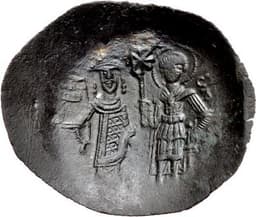
Ivan Asen II
Emperor · Medieval
63.3Total
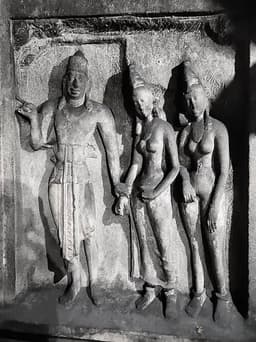
Mahendravarman I
Emperor · Medieval
58.7Total
Basic Information
Born
1190
600
Died
1241
630
Era
Medieval
Medieval
Nationality
Bulgaria
India
Occupation
Emperor
Emperor
Civilization
Western
Indian
Score Comparison
Military (10%)
78.0
60.0
Political (20%)
72.0
62.7
Influence (20%)
61.0
55.0
Legacy (20%)
52.0
52.0
Leadership (15%)
66.0
66.0
Strategy (15%)
65.4
66.3
TOTAL
63.3
58.7
Ivan Asen II — Complete Timeline
1218 AD
Expansion of the Second Bulgarian EmpireWar◆ Major
Ivan Asen II expanded Bulgarian territory through campaigns against the Latin Empire and the Kingdom of Thessalonica. He captured Adrianople and extended Bulgarian influence into the Peloponnese.
ExpansionLatin EmpireThessalonica
Impact: regional
1230 AD
Battle of KlokotnitsaWar
Ivan Asen II defeated the Despotate of Epirus at Klokotnitsa. The victory restored Bulgarian control over Thrace, Macedonia, and Albania, making Bulgaria the dominant power in the Balkans.
BattleBalkan DominanceEpirus
Impact: regional
Construction of the Church of the Holy Forty MartyrsCultural
Ivan Asen II built the Church of the Holy Forty Martyrs in Veliko Tarnovo to commemorate his victory at Klokotnitsa. The church became a major cultural and religious monument.
ArchitectureChurchMonument
Impact: nationalconstructive
1235 AD
Restoration of the Bulgarian PatriarchatePolitical Action◆ Major
Ivan Asen II secured recognition of the Bulgarian Patriarchate from the Ecumenical Patriarch of Constantinople. This restored the autocephalous status of the Bulgarian Church, enhancing national prestige.
ChurchPatriarchateReligious Independence
Impact: regionalconstructive
Mahendravarman I — Complete Timeline
610 AD
Patronage of Cave Temples at MandagapattuCultural◆ Major
Mahendravarman I excavated the first rock-cut cave temple at Mandagapattu, dedicated to Brahma, Vishnu, and Shiva. This innovation initiated the Pallava tradition of rock-cut architecture, influencing later temples across South India.
Rock-cut ArchitecturePallava ArtReligious Patronage
Impact: regionalconstructive
Conversion to Jainism and Patronage of Jain MonksCultural
Mahendravarman I initially patronized Jainism and built Jain cave temples, such as the one at Sittannavasal. He later converted to Shaivism under the influence of the saint Appar, reflecting religious shifts in the Pallava court.
Religious ConversionJainismShaivism
Impact: regional
620 AD
Defeat by Chalukya Pulakeshin IIWar◆ Major
Mahendravarman I suffered a military defeat against the Chalukya king Pulakeshin II, who invaded the Pallava kingdom. This loss resulted in the temporary loss of northern territories and demonstrated the military rivalry between the Pallavas and Chalukyas.
Pallava-Chalukya ConflictMilitary DefeatTerritorial Loss
Impact: regionaldestructive
630 AD
Construction of the Shore Temple at MamallapuramCultural◆ Major
Mahendravarman I built the Shore Temple, a structural granite temple at Mamallapuram. This temple is a major example of early Dravidian architecture and a UNESCO World Heritage site. It was dedicated to Shiva and marked a shift from rock-cut to structural temple building.
Pallava ArchitectureTemple BuildingDravidian Style
Impact: regionalconstructive
Expert Analysis
Origins
Ivan Asen II (born c. 1190s) was the son of Tsar Ivan Asen I, one of the founders of the Second Bulgarian Empire. He grew up during the tumultuous period after the Fourth Crusade, when the Byzantine Empire had fragmented. The Asen dynasty emerged from the Vlach-Bulgarian uprising of 1185–1187, and Ivan Asen II inherited a kingdom struggling to consolidate its gains against the Latin Empire, Epirus, and the Byzantines. His early life was marked by exile and political instability, as his uncle Boril usurped the throne after his father's death, forcing Ivan Asen II to flee to the Rus' principalities.
Mahendravarman I (reigned 600–630 CE) was the son of the Pallava king Simhavishnu, who had revived the Pallava dynasty after the Kalabhra interregnum. Born into a Tamil royal family in Kanchipuram, he received a comprehensive education in statecraft, literature, and the arts. His early years were shaped by the ongoing rivalry with the Chalukyas of Badami, who had previously raided Pallava territories. Mahendravarman I inherited a stable kingdom but faced immediate military threats from the north.
Rise to Power
Ivan Asen II seized the throne in 1218 after a coup that deposed his cousin Boril. He quickly consolidated power by securing the support of the Bulgarian nobility and the Orthodox Church. His first major military campaign was against the Latin Empire, which had captured key territories in Thrace. In 1222, he defeated the Latins at the Battle of Adrianople, but his most decisive victory came in 1230 at the Battle of Klokotnitsa against the Despotate of Epirus, which was then the dominant power in the Balkans. This victory allowed him to expand Bulgarian control over Thrace, Macedonia, and Albania, making Bulgaria the largest state in the Balkans.
Mahendravarman I rose to power upon his father's death around 600 CE. He inherited a kingdom that had been revived under Simhavishnu but faced constant pressure from the Chalukya king Pulakeshin II. Mahendravarman I initially focused on administrative consolidation and cultural patronage. He introduced the usage of Tamil in inscriptions, replacing Sanskrit, and promoted the excavation of rock-cut temples. His major turning point was his decision to patronize cave temples at Mandagapattu in 610 CE, which marked the beginning of Pallava rock-cut architecture. However, his military campaigns against the Chalukyas were less successful; he suffered a major defeat to Pulakeshin II around 620 CE, leading to the temporary loss of northern territories.
Leadership & Governance
Ivan Asen II governed as an autocratic emperor but maintained close ties with the Orthodox Church. He skillfully used diplomacy to isolate his enemies, forming alliances with the Latin Empire and the Kingdom of Hungary when expedient. He reestablished the Bulgarian Patriarchate in 1235, securing ecclesiastical independence from Constantinople, which boosted national unity. His administrative reforms included codifying laws and strengthening the feudal system. He was known for his clemency toward defeated enemies, often integrating them into his court.
Mahendravarman I was a patron of the arts and a scholar himself. He composed the Sanskrit play *Mattavilasa Prahasana* and was a musician. His governance emphasized cultural development: he commissioned numerous rock-cut cave temples, including those at Mandagapattu, Mamandur, and Sittannavasal. He also built the Shore Temple at Mamallapuram, a structural granite temple that became a UNESCO World Heritage site. Politically, he faced challenges from the Chalukyas and had to defend his realm multiple times. He initially patronized Jainism but later converted to Shaivism, reflecting the religious fluidity of the period.
Triumph & Tragedy
Ivan Asen II's greatest triumph was the Battle of Klokotnitsa (1230), where he captured the Epirote despot Theodore Komnenos Doukas and annexed his territories. He also successfully restored the Bulgarian Patriarchate, a major symbolic victory. However, his later years were marked by the Mongol invasion of the Balkans; while he avoided direct confrontation by paying tribute, the Mongols devastated his neighbors, weakening the region. His death in 1241 led to a succession crisis that fragmented his empire.
Mahendravarman I's triumph was his architectural legacy: the cave temples at Mandagapattu and the Shore Temple are masterpieces of Dravidian architecture. His patronage of arts and literature left a lasting impact on Tamil culture. His tragedy was his military failure against the Chalukyas; his defeat to Pulakeshin II around 620 CE resulted in the loss of territories and damaged his reputation. Additionally, his conversion from Jainism to Shaivism may have alienated some Jain subjects.
Character & Destiny
Ivan Asen II was pragmatic and strategic, often choosing diplomacy over war. He was religiously tolerant, allowing the Catholic Church some influence while bolstering Orthodoxy. His character is reflected in his epithet 'the Great' (though not officially), and his decision to build the Church of the Holy Forty Martyrs as a victory monument. His destiny was intertwined with the rise of the Second Bulgarian Empire, but his inability to secure a stable succession led to its decline.
Mahendravarman I was a polymath and aesthete, more interested in cultural achievements than military expansion. His nickname 'Vichitrachitta' (curious-minded) reflects his intellectual curiosity. His character shaped his destiny: his focus on art and religion brought cultural renaissance but left his kingdom vulnerable to external threats. The defeat by Pulakeshin II was a direct consequence of his neglect of military preparedness.
Legacy
Ivan Asen II's legacy is the brief restoration of Bulgarian hegemony in the Balkans. The Second Bulgarian Empire reached its territorial peak under him, and the restored Patriarchate endured for centuries. His military score of 78.0 and political score of 72.0 reflect his effective leadership. However, his influence score of 61.0 and legacy score of 52.0 indicate that his achievements were relatively short-lived. He is remembered in Bulgaria as a national hero, but his impact beyond the region is limited.
Mahendravarman I's legacy is primarily cultural. His rock-cut cave temples laid the foundation for later Pallava and Chola architecture. The Shore Temple at Mamallapuram remains a symbol of Indian art. His patronage of Tamil inscriptions promoted vernacular literature. Despite a military score of 60.0 and political score of 62.7, his influence score of 55.0 and legacy score of 52.0 are comparable to Ivan Asen II's. However, his architectural contributions have global recognition, as evidenced by UNESCO World Heritage status.
Conclusion
Ivan Asen II had a greater immediate impact on the political landscape of the Balkans, scoring higher overall (63.3 vs 58.7). His military victories and restoration of the patriarchate reshaped the region for decades. Mahendravarman I, while culturally significant, had less geopolitical influence. Therefore, Ivan Asen II is the more impactful figure.
Rankings
🥇
Ivan Asen IILeader
Mil: 78.0Pol: 72.0Inf: 61.0
63.3
🥈
Mahendravarman I
Mil: 60.0Pol: 62.7Inf: 55.0
58.7
+4.6 behind
How This Comparison Works
Algorithm
Each figure is scored on 6 dimensions (0—100 scale) based on structured historical data: Military (10%), Political (20%), Influence (20%), Legacy (20%), Leadership (15%), Strategy (15%). The weighted total produces the final ranking.
Data Sources
Scores are computed from structured sub-indicators in the database. Scale factors adjust for era (Ancient ×0.85, Modern ×1.0) and civilization size (Eastern ×1.05, Other ×0.80) to account for differences in population and military scale.
Maximum 3 Figures
Comparisons are limited to 2—3 figures to ensure readability and statistical meaningfulness.
Error Margins
±5 points per dimension — Sub-scores are derived from historical records with inherent uncertainty. Two figures within 5 points on a dimension should be considered roughly equivalent in that area.
Total Score Accuracy
±3 points overall — The weighted combination of 6 dimensions produces a total score with approximately ±3 points of uncertainty. Differences of less than 3 points are not statistically significant— the figures are effectively tied.
Known Limitations
- Historical records are incomplete and uneven across civilizations
- Figures from oral-tradition societies may be underrepresented
- Occupation labels can misclassify multi-role figures
- Scores measure capability and impact, not moral character
- Quantitative scoring is a comparison tool, not absolute truth
Capability Radar
Military (10%) — Battles & Warfare
Battles
75
55
Win Rate
85
60
Expansion
75
55
Political (20%) — Governance & Reform
Reform
65
65
Diplomacy
75
60
Economy
60
60
Influence (20%) — Cultural & Global Reach
Cultural
55
75
Global
40
55
Legacy (20%) — Historical Impact
Historical
60
70
Longevity
50
65
Leadership (15%) — Power & Stability
Tenure
70
70
Stability
65
65
Strategy (15%) — Tactics & Innovation
Strategy
80
60
Tactics
70
65
Reform
60
50
Similar Comparisons
Comments & Discussion
No comments yet. Be the first to share your thoughts!