Loading...
Ivan Asen II vs Sundiata Keita
Sundiata Keita leads by 2.2 pts · 2 figures compared
…
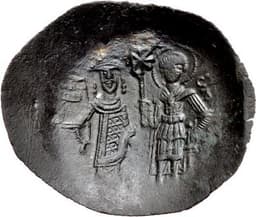
Ivan Asen II
Emperor · Medieval
63.3Total
Sundiata Keita
Emperor · Medieval
65.5Total
Basic Information
Born
1190
1217
Died
1241
1255
Era
Medieval
Medieval
Nationality
Bulgaria
Mali Empire
Occupation
Emperor
Emperor
Civilization
Western
Other
Score Comparison
Military (10%)
78.0
72.0
Political (20%)
72.0
70.0
Influence (20%)
61.0
40.0
Legacy (20%)
52.0
80.0
Leadership (15%)
66.0
72.0
Strategy (15%)
65.4
70.0
TOTAL
63.3
65.5
Ivan Asen II — Complete Timeline
1218 AD
Expansion of the Second Bulgarian EmpireWar◆ Major
Ivan Asen II expanded Bulgarian territory through campaigns against the Latin Empire and the Kingdom of Thessalonica. He captured Adrianople and extended Bulgarian influence into the Peloponnese.
ExpansionLatin EmpireThessalonica
Impact: regional
1230 AD
Battle of KlokotnitsaWar
Ivan Asen II defeated the Despotate of Epirus at Klokotnitsa. The victory restored Bulgarian control over Thrace, Macedonia, and Albania, making Bulgaria the dominant power in the Balkans.
BattleBalkan DominanceEpirus
Impact: regional
Construction of the Church of the Holy Forty MartyrsCultural
Ivan Asen II built the Church of the Holy Forty Martyrs in Veliko Tarnovo to commemorate his victory at Klokotnitsa. The church became a major cultural and religious monument.
ArchitectureChurchMonument
Impact: nationalconstructive
1235 AD
Restoration of the Bulgarian PatriarchatePolitical Action◆ Major
Ivan Asen II secured recognition of the Bulgarian Patriarchate from the Ecumenical Patriarch of Constantinople. This restored the autocephalous status of the Bulgarian Church, enhancing national prestige.
ChurchPatriarchateReligious Independence
Impact: regionalconstructive
Sundiata Keita — Complete Timeline
1235 AD
Battle of KirinaWar
Sundiata Keita led the Mandinka coalition against Soumaoro Kant
BattleMali EmpireSosso
Impact: regional
Proclamation as MansaPolitical Action◆ Major
After the Battle of Kirina, Sundiata was proclaimed Mansa (emperor) of the Mali Empire at the Kouroukan Fouga assembly. He established a constitution and divided the empire into provinces, laying the administrative foundation of Mali.
CoronationConstitutionAdministration
Impact: regionalconstructive
1240 AD
Conquest of GhanaWar◆ Major
Sundiata conquered the remnants of the Ghana Empire, incorporating its territory into Mali. This gave Mali control over the trans-Saharan gold trade routes, significantly increasing its wealth and power.
ConquestGhana EmpireGold Trade
Impact: regional
Establishment of Niani as CapitalPolitical Action
Sundiata established Niani as the capital of the Mali Empire. The city became a center of trade and governance, located near gold fields and on trade routes, facilitating the empire's economic growth.
CapitalNianiTrade Center
Impact: regionalconstructive
1245 AD
Introduction of Cotton CultivationReform
Sundiata promoted the cultivation of cotton and the weaving of cloth, which became a major industry in Mali. This economic reform diversified the empire's economy and increased its self-sufficiency.
AgricultureCottonEconomic Reform
Impact: regionalconstructive
Expert Analysis
Origins
Ivan Asen II (born c. 1195) was the son of Tsar Ivan Asen I, one of the founders of the Second Bulgarian Empire. His early life was marked by the empire's struggle against the Byzantine Empire and internal dynastic conflicts. After his father's assassination in 1196, Ivan Asen II spent years in exile, possibly in the Rus' principalities, before returning to claim the throne in 1218. Sundiata Keita (born c. 1217) was the son of Nare Fa Maghan, king of the Mandinka people in West Africa. According to the Epic of Sundiata, he was a weak child but later grew strong. His early life was disrupted by the invasion of Soumaoro Kanté, the sorcerer-king of the Sosso, who forced Sundiata into exile. He found refuge in the kingdom of Mema, where he honed his military skills.
Rise to Power
Ivan Asen II ascended the throne in 1218 after overthrowing his cousin Boril, who had usurped power. Boril's rule had weakened Bulgaria, losing territories to the Latin Empire and Hungary. Ivan Asen II quickly consolidated power by neutralizing rivals and securing alliances. In 1230, he defeated Theodore Komnenos Doukas of Epirus at the Battle of Klokotnitsa, a turning point that restored Bulgarian control over Thrace, Macedonia, and Albania. Sundiata Keita rose to prominence by uniting the Mandinka clans against Soumaoro Kanté. After years in exile, he returned with an army and defeated Soumaoro at the Battle of Kirina (c. 1235). Following this victory, he was proclaimed Mansa (emperor) at the Kouroukan Fouga assembly, which established a constitution and government for the Mali Empire.
Leadership & Governance
Ivan Asen II was known for his diplomatic and inclusive governance. He secured recognition of the autocephalous Bulgarian Patriarchate in 1235, strengthening the church's independence. He also maintained peace with the Latin Empire and Hungary through strategic marriages. His leadership style was pragmatic, focusing on territorial consolidation rather than endless expansion. Sundiata Keita established a centralized government with a constitution that divided the empire into provinces ruled by trusted generals. He promoted economic reforms, including the cultivation of cotton and weaving, and controlled the trans-Saharan gold trade. His leadership was charismatic, uniting diverse ethnic groups under the Mali Empire.
Triumph & Tragedy
Ivan Asen II's greatest triumph was the Battle of Klokotnitsa, which made Bulgaria the dominant power in the Balkans. He also built the Church of the Holy Forty Martyrs to commemorate his victory. However, his later years saw setbacks: the Mongols invaded Bulgaria in 1241, and Ivan Asen II died soon after, leaving a weakened empire. Sundiata Keita's triumph was founding the Mali Empire and conquering the remnants of the Ghana Empire, giving Mali control over gold trade. He established Niani as a capital and promoted economic growth. His tragedy was his early death (c. 1255), which led to succession disputes among his sons, though Mali continued to thrive under later rulers.
Character & Destiny
Ivan Asen II was a cautious strategist, scoring 65.4 in strategy. His political score of 72.0 reflects his diplomatic skill. He avoided overextension but failed to prepare for the Mongol threat. Sundiata Keita, with a leadership score of 72.0, was a unifier who inspired loyalty. His military score of 72.0 and strategy of 70.0 show balanced capabilities. His destiny was to create an empire that outlasted him, while Ivan Asen II's empire declined after his death.
Legacy
Ivan Asen II's legacy is mixed: he restored Bulgaria's power but his achievements were undone within decades. His church building remains a cultural symbol. His legacy score is 52.0. Sundiata Keita's legacy score of 80.0 reflects the Mali Empire's lasting influence as a center of trade, learning, and culture. He is remembered as the "Lion King" and his epic is still recited. His impact on West African history is profound.
Conclusion
Sundiata Keita had greater impact. His total score of 65.5 edges Ivan Asen II's 63.3, but more importantly, his legacy score of 80.0 dwarfs Ivan's 52.0. Sundiata founded an empire that lasted centuries and shaped West African civilization, while Ivan Asen II's restoration was temporary. Sundiata's influence on trade, culture, and governance was more enduring. Ivan Asen II was a skilled ruler but his impact was regional and short-lived.
Rankings
🥇
Sundiata KeitaLeader
Mil: 72.0Pol: 70.0Inf: 40.0
65.5
🥈
Ivan Asen II
Mil: 78.0Pol: 72.0Inf: 61.0
63.3
+2.2 behind
How This Comparison Works
Algorithm
Each figure is scored on 6 dimensions (0—100 scale) based on structured historical data: Military (10%), Political (20%), Influence (20%), Legacy (20%), Leadership (15%), Strategy (15%). The weighted total produces the final ranking.
Data Sources
Scores are computed from structured sub-indicators in the database. Scale factors adjust for era (Ancient ×0.85, Modern ×1.0) and civilization size (Eastern ×1.05, Other ×0.80) to account for differences in population and military scale.
Maximum 3 Figures
Comparisons are limited to 2—3 figures to ensure readability and statistical meaningfulness.
Error Margins
±5 points per dimension — Sub-scores are derived from historical records with inherent uncertainty. Two figures within 5 points on a dimension should be considered roughly equivalent in that area.
Total Score Accuracy
±3 points overall — The weighted combination of 6 dimensions produces a total score with approximately ±3 points of uncertainty. Differences of less than 3 points are not statistically significant— the figures are effectively tied.
Known Limitations
- Historical records are incomplete and uneven across civilizations
- Figures from oral-tradition societies may be underrepresented
- Occupation labels can misclassify multi-role figures
- Scores measure capability and impact, not moral character
- Quantitative scoring is a comparison tool, not absolute truth
Capability Radar
Military (10%) — Battles & Warfare
Battles
75
75
Win Rate
85
85
Expansion
75
90
Political (20%) — Governance & Reform
Reform
65
80
Diplomacy
75
75
Economy
60
80
Influence (20%) — Cultural & Global Reach
Cultural
55
85
Global
40
80
Legacy (20%) — Historical Impact
Historical
60
90
Longevity
50
85
Leadership (15%) — Power & Stability
Tenure
70
70
Stability
65
75
Strategy (15%) — Tactics & Innovation
Strategy
80
85
Tactics
70
80
Reform
60
70
Similar Comparisons
Comments & Discussion
No comments yet. Be the first to share your thoughts!