Loading...
Ivan Asen II vs Philip VI of France
Ivan Asen II leads by 13.2 pts · 2 figures compared
…
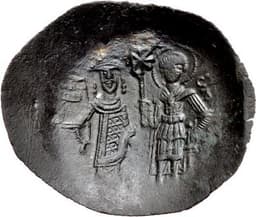
Ivan Asen II
Emperor · Medieval
63.3Total

Philip VI of France
Emperor · Medieval
50.1Total
Basic Information
Born
1190
1293
Died
1241
1350
Era
Medieval
Medieval
Nationality
Bulgaria
France
Occupation
Emperor
Emperor
Civilization
Western
Western
Score Comparison
Military (10%)
78.0
38.3
Political (20%)
72.0
35.1
Influence (20%)
61.0
55.7
Legacy (20%)
52.0
49.2
Leadership (15%)
66.0
58.8
Strategy (15%)
65.4
60.0
TOTAL
63.3
50.1
Ivan Asen II — Complete Timeline
1218 AD
Expansion of the Second Bulgarian EmpireWar◆ Major
Ivan Asen II expanded Bulgarian territory through campaigns against the Latin Empire and the Kingdom of Thessalonica. He captured Adrianople and extended Bulgarian influence into the Peloponnese.
ExpansionLatin EmpireThessalonica
Impact: regional
1230 AD
Battle of KlokotnitsaWar
Ivan Asen II defeated the Despotate of Epirus at Klokotnitsa. The victory restored Bulgarian control over Thrace, Macedonia, and Albania, making Bulgaria the dominant power in the Balkans.
BattleBalkan DominanceEpirus
Impact: regional
Construction of the Church of the Holy Forty MartyrsCultural
Ivan Asen II built the Church of the Holy Forty Martyrs in Veliko Tarnovo to commemorate his victory at Klokotnitsa. The church became a major cultural and religious monument.
ArchitectureChurchMonument
Impact: nationalconstructive
1235 AD
Restoration of the Bulgarian PatriarchatePolitical Action◆ Major
Ivan Asen II secured recognition of the Bulgarian Patriarchate from the Ecumenical Patriarch of Constantinople. This restored the autocephalous status of the Bulgarian Church, enhancing national prestige.
ChurchPatriarchateReligious Independence
Impact: regionalconstructive
Philip VI of France — Complete Timeline
1328 AD
Accession as First Valois KingPolitical Action◆ Major
Upon the death of Charles IV, Philip VI became king of France as the first of the Valois dynasty. His claim was based on Salic law, which excluded female succession. This accession was contested by Edward III of England, leading to the Hundred Years' War.
DynastySuccessionValois
Impact: regional
1340 AD
Battle of SluysWar◆ Major
Philip VI's French fleet was destroyed by the English navy at Sluys. The English victory gave them control of the English Channel and allowed them to invade France. This naval battle was a major setback for Philip and a key early engagement of the Hundred Years' War.
Naval BattleHundred Years' WarEnglish Channel
Impact: regionaldestructive
1346 AD
Battle of CrécyWar
Philip VI's army was decisively defeated by Edward III at Cr
BattleLongbowHundred Years' War
Impact: regionaldestructive
1348 AD
Black Death Arrives in FranceOther◆ Major
The bubonic plague reached France during Philip VI's reign, causing massive population loss. The pandemic disrupted the economy, weakened the monarchy, and led to social unrest. Philip's government struggled to respond effectively to the crisis.
PlaguePandemicPopulation Loss
Impact: globaltragic
Expert Analysis
Origins
Ivan Asen II was born around 1190, the son of Tsar Ivan Asen I, founder of the Second Bulgarian Empire. He grew up in the turbulent period after the fall of the First Bulgarian Empire and the restoration of Bulgarian independence from Byzantine rule. His family was deeply involved in consolidating the new state, and he was likely educated in the court of Veliko Tarnovo, learning military and administrative skills. After his father's assassination in 1196, his uncle Kaloyan ruled, but after Kaloyan's death in 1207, Ivan Asen's cousin Boril seized power. Ivan Asen spent years in exile among the Cumans and later returned to claim the throne in 1218.
Philip VI of France was born in 1293, the son of Charles of Valois and Margaret of Anjou. He belonged to the Capetian dynasty through his father, but his line was junior. He was not initially destined for kingship; his cousin Charles IV was king. Philip was raised as a noble, with training in chivalry and warfare. When Charles IV died in 1328 without a male heir, Philip's claim under Salic law prevailed over that of Edward III of England, who claimed through his mother. Thus Philip became the first Valois king.
Rise to Power
Ivan Asen II's rise began after he overthrew Boril in 1218, with support from the Cumans and discontented nobles. He quickly consolidated power by marrying Anna Maria, daughter of King Andrew II of Hungary, to secure peace on his northern border. His major turning point came in 1230 at the Battle of Klokotnitsa, where he defeated Theodore Komnenos Doukas of Epirus, capturing him and much of his army. This victory allowed Ivan Asen to annex vast territories in Thrace, Macedonia, and Albania, making Bulgaria the dominant power in the Balkans. He also secured the restoration of the Bulgarian Patriarchate in 1235, gaining ecclesiastical independence.
Philip VI's rise was smoother. He became king in 1328 with little opposition, but his reign was immediately challenged by the English claim. He asserted his authority by confiscating the Duchy of Aquitaine from Edward III in 1337, which triggered the Hundred Years War. His early years saw diplomatic maneuvering, but he lacked the military prowess to match his ambitions.
Leadership & Governance
Ivan Asen II governed with a focus on stability and expansion. He maintained peace with Hungary and the Latin Empire through marriages and treaties. He reformed the administration, appointing loyal nobles to govern conquered lands. His military campaigns were carefully planned; he avoided overextension and secured his gains through fortifications. He also patronized the Orthodox Church, building the Church of the Holy Forty Martyrs as a symbol of his victory and piety.
Philip VI's governance was marked by financial strain due to war. He relied on feudal levies and mercenaries, but his tax policies alienated nobles and commoners. He centralised royal power but faced constant rebellion and the Black Death in 1348, which devastated the population and economy. His leadership during the Battle of Crécy in 1346 was disastrous; he ordered a cavalry charge into entrenched English archers, resulting in heavy losses. He scored 38.3 in military, reflecting his poor strategic choices.
Triumph & Tragedy
Ivan Asen II's greatest triumph was the Battle of Klokotnitsa and the subsequent expansion of Bulgaria. He also achieved the restoration of the patriarchate, enhancing national prestige. However, his later years saw setbacks: his alliance with the Nicaean Empire against the Latin Empire collapsed, and he failed to capture Constantinople. His death in 1241 left a vulnerable empire that soon declined under weaker successors.
Philip VI's triumph was establishing the Valois dynasty, which ruled France until 1589. He also managed to hold off Edward III's early campaigns, but his greatest tragedy was Crécy, where his army was routed. The loss of the French fleet at Sluys in 1340 gave England naval dominance. The Black Death compounded his failures, and he died in 1350 with France in crisis.
Character & Destiny
Ivan Asen II was pragmatic and cautious, preferring diplomacy and strategic marriages to reckless warfare. His decision to release captured Theodore Komnenos Doukas after a period of captivity showed clemency but later led to renewed conflict. His character shaped his success: he built a strong state but lacked the ruthlessness to secure its permanence.
Philip VI was chivalric but indecisive. He relied on traditional feudal tactics and failed to adapt to new military realities. His stubbornness at Crécy, ignoring advice to wait, led to defeat. Historical assessments note his inability to inspire loyalty or manage finances effectively.
Legacy
Ivan Asen II is remembered as one of Bulgaria's greatest rulers, with a legacy of territorial expansion and cultural patronage. The Church of the Holy Forty Martyrs remains a national symbol. However, his empire crumbled after his death, limiting his long-term influence. He scores 52.0 in legacy.
Philip VI's legacy is mixed. He founded the Valois dynasty and started the Hundred Years War, which ultimately transformed France into a centralized state. However, his failures contributed to the war's length and cost. He scores 49.2 in legacy.
Conclusion
Ivan Asen II had a greater immediate impact, restoring Bulgarian power and achieving military dominance with a score of 78.0 compared to Philip's 38.3. However, Philip's actions set in motion the Hundred Years War, which reshaped European politics. In terms of long-term influence, Philip's legacy is more significant, but his personal leadership was inferior. Overall, Ivan Asen II was the more effective ruler, but his impact was more regional. The total scores reflect this: Ivan Asen II 63.3, Philip VI 50.1.
Rankings
🥇
Ivan Asen IILeader
Mil: 78.0Pol: 72.0Inf: 61.0
63.3
🥈
Philip VI of France
Mil: 38.3Pol: 35.1Inf: 55.7
50.1
+13.2 behind
How This Comparison Works
Algorithm
Each figure is scored on 6 dimensions (0—100 scale) based on structured historical data: Military (10%), Political (20%), Influence (20%), Legacy (20%), Leadership (15%), Strategy (15%). The weighted total produces the final ranking.
Data Sources
Scores are computed from structured sub-indicators in the database. Scale factors adjust for era (Ancient ×0.85, Modern ×1.0) and civilization size (Eastern ×1.05, Other ×0.80) to account for differences in population and military scale.
Maximum 3 Figures
Comparisons are limited to 2—3 figures to ensure readability and statistical meaningfulness.
Error Margins
±5 points per dimension — Sub-scores are derived from historical records with inherent uncertainty. Two figures within 5 points on a dimension should be considered roughly equivalent in that area.
Total Score Accuracy
±3 points overall — The weighted combination of 6 dimensions produces a total score with approximately ±3 points of uncertainty. Differences of less than 3 points are not statistically significant— the figures are effectively tied.
Known Limitations
- Historical records are incomplete and uneven across civilizations
- Figures from oral-tradition societies may be underrepresented
- Occupation labels can misclassify multi-role figures
- Scores measure capability and impact, not moral character
- Quantitative scoring is a comparison tool, not absolute truth
Capability Radar
Military (10%) — Battles & Warfare
Battles
75
45
Win Rate
85
30
Expansion
75
25
Political (20%) — Governance & Reform
Reform
65
30
Diplomacy
75
35
Economy
60
25
Influence (20%) — Cultural & Global Reach
Cultural
55
30
Global
40
35
Legacy (20%) — Historical Impact
Historical
60
55
Longevity
50
40
Leadership (15%) — Power & Stability
Tenure
70
55
Stability
65
20
Strategy (15%) — Tactics & Innovation
Strategy
80
40
Tactics
70
35
Reform
60
20
Similar Comparisons
Comments & Discussion
No comments yet. Be the first to share your thoughts!