Loading...
Ivan the Terrible vs Ranjit Singh
Ivan the Terrible leads by 1.8 pts · 2 figures compared
…
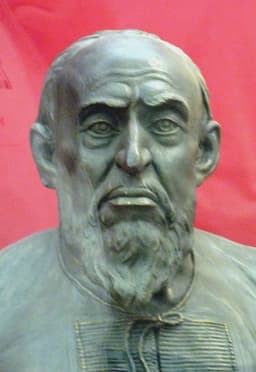
Ivan the Terrible
Emperor · Modern
65.0Total

Ranjit Singh
Emperor · Modern
63.2Total
Basic Information
Born
1530
1780
Died
1584
1839
Era
Modern
Modern
Nationality
Russia
India
Occupation
Emperor
Emperor
Civilization
Western
Indian
Score Comparison
Military (10%)
74.7
78.0
Political (20%)
60.0
59.6
Influence (20%)
72.0
58.3
Legacy (20%)
55.0
52.0
Leadership (15%)
68.0
80.0
Strategy (15%)
66.3
69.1
TOTAL
65.0
63.2
Ivan the Terrible — Complete Timeline
1547 AD
Coronation as First Tsar of RussiaPolitical Action
Ivan IV was crowned as the first Tsar of All Russia, adopting the title of Caesar. This coronation asserted Russia's independence from Mongol influence and claimed imperial status. It marked the beginning of centralized autocratic rule in Russia.
CoronationTsarAutocracy
Impact: national
1552 AD
Conquest of KazanWar◆ Major
Ivan IV led a Russian army to conquer the Khanate of Kazan, ending Tatar rule in the Volga region. The siege lasted several weeks and resulted in the annexation of the khanate. This victory opened the way for Russian expansion into Siberia and the Caspian region.
ConquestKazanExpansion
Impact: regional
1558 AD
Livonian WarWar◆ Major
Ivan IV launched a war against the Livonian Confederation to gain access to the Baltic Sea. The war lasted 25 years and involved Poland-Lithuania, Sweden, and Denmark. It ended in Russian defeat, with Ivan failing to secure a Baltic port.
WarBalticDefeat
Impact: regionaldestructive
1565 AD
Establishment of the OprichninaReform
Ivan IV created the Oprichnina, a separate territory and state apparatus under his direct control. He used the Oprichniki, a corps of secret police, to eliminate his political opponents. This policy led to widespread terror, executions, and confiscation of lands.
TerrorOprichninaRepression
Impact: nationaldestructive
1570 AD
Massacre of NovgorodWar◆ Major
Ivan IV led the Oprichniki in a brutal campaign against the city of Novgorod, suspected of treason. Thousands of inhabitants were killed, and the city was looted and destroyed. This massacre broke the power of Novgorod and terrorized the Russian population.
MassacreNovgorodTerror
Impact: regionaldestructive
1581 AD
Killing of His Son IvanOther◆ Major
Ivan IV struck and killed his eldest son and heir, Ivan Ivanovich, during an argument. The tsarevich died from his injuries days later. This event left Russia without a capable successor and contributed to the Time of Troubles after Ivan's death.
PatricideSuccessionTragedy
Impact: nationaltragic
Ranjit Singh — Complete Timeline
1799 AD
Capture of LahoreWar◆ Major
Ranjit Singh captured Lahore from the Bhangi Misl, establishing it as his capital. This victory marked the beginning of the Sikh Empire and consolidated his control over the Punjab region.
Military CampaignCapital
Impact: regional
1801 AD
Coronation as MaharajaPolitical Action◆ Major
Ranjit Singh was formally crowned Maharaja of Punjab at Lahore, establishing the Sikh Empire. His coronation unified the Sikh misls under a single ruler and created a centralized state.
CoronationState Formation
Impact: regionalconstructive
1809 AD
Treaty of Amritsar with the BritishPolitical Action◆ Major
Ranjit Singh signed the Treaty of Amritsar with the British East India Company, establishing the Sutlej River as the boundary between Sikh and British territories. This treaty ensured peace with the British and allowed Ranjit Singh to focus on expansion westward.
TreatyDiplomacy
Impact: regional
1813 AD
Capture of the Koh-i-Noor DiamondWar
Ranjit Singh acquired the Koh-i-Noor diamond from the Afghan ruler Shuja Shah Durrani as part of a treaty. The diamond became a symbol of Sikh wealth and power, later passing to the British after the annexation of Punjab.
TreasureSymbol
Impact: regional
1818 AD
Annexation of MultanWar◆ Major
Ranjit Singh's forces captured Multan after a prolonged siege, extending Sikh rule into southern Punjab. This victory brought the rich trading city and its surrounding territories under Sikh control.
Military CampaignExpansion
Impact: regional
1822 AD
Modernization of the Sikh ArmyReform◆ Major
Ranjit Singh modernized the Sikh army by employing European officers, particularly French and Italian, to train troops in Western military tactics. He also established a foundry for artillery, creating a formidable military force.
Military ReformModernization
Impact: regionalconstructive
Expert Analysis
Origins
Ivan IV Vasilyevich, born 1530, was the son of Grand Prince Vasily III of Moscow and Elena Glinskaya. His father died when Ivan was three, and his mother when he was eight, leaving him in a hostile court environment. He was neglected and abused by boyar factions, which fostered his deep-seated suspicion and cruelty. Ivan was educated by Metropolitan Macarius, who instilled in him a sense of divine mission.
Ranjit Singh, born 1780 in Gujranwala (now Pakistan), was the son of Maha Singh, a Sikh misl leader. His father died when Ranjit was 12, and he was raised by his mother Raj Kaur and mother-in-law Sada Kaur. He received military training and was exposed to the fractured Sikh confederacy. At 18, he contracted smallpox, losing sight in one eye, but his ambition remained undimmed.
Rise to Power
Ivan was crowned the first Tsar of All Russia in 1547 at age 16, adopting the title 'Tsar' to assert independence from Mongol influence. Early in his reign, he implemented reforms like the Zemsky Sobor and new law code. His first major military success was the conquest of the Khanate of Kazan in 1552, which eliminated Tatar power in the Volga region and opened Siberia. However, after the death of his wife Anastasia in 1560, Ivan became increasingly paranoid. In 1565, he established the Oprichnina, a separate territory and secret police force, to crush boyar opposition. This marked his transition from reformer to tyrant.
Ranjit Singh rose by unifying the Sikh misls. In 1799, at age 19, he captured Lahore from the Bhangi Misl and made it his capital. He skillfully used diplomacy and marriage alliances to consolidate power. In 1801, he was formally crowned Maharaja of Punjab. His expansion continued with the annexation of Amritsar in 1805 and Multan in 1818. He also signed the Treaty of Amritsar with the British in 1809, establishing the Sutlej River as a boundary, which secured his western flank while he focused on expanding north and west.
Leadership & Governance
Ivan's leadership was characterized by centralization through terror. He created the Oprichnina, a state within a state, where his Oprichniki—black-robed horsemen—carried out brutal purges. In 1570, he led a massacre in Novgorod, killing thousands of suspected traitors. His Livonian War (1558–1583) drained resources and ended in failure. Ivan scored 60.0 in political leadership, reflecting his erratic governance. He also executed his own son in a fit of rage in 1581, leaving no capable heir.
Ranjit Singh scored 80.0 in leadership. He ruled through a meritocratic system, employing both Sikhs, Hindus, and Muslims in his administration. He modernized the Sikh army (Fauj-i-Khas) with European officers, particularly French and Italian, to train troops in Western tactics. He maintained religious tolerance, forbidding forced conversions and respecting all faiths. His governance brought stability and prosperity to Punjab, with efficient tax collection and infrastructure development.
Triumph & Tragedy
Ivan's greatest triumph was the conquest of Kazan and Astrakhan, which expanded Russia's territory and secured the Volga trade route. He also began the conquest of Siberia. His greatest tragedy was the Livonian War, which lasted 25 years, exhausted Russia's resources, and ended in defeat. The Oprichnina devastated the economy and society, leading to a period of instability known as the Time of Troubles after his death. His paranoia and violence ultimately weakened the state he sought to strengthen.
Ranjit Singh's triumph was the creation of the Sikh Empire, a unified state that stretched from the Sutlej to the Khyber Pass. He successfully resisted British expansion and maintained independence. His tragedy was that after his death in 1839, the empire quickly disintegrated due to weak successors and internal strife, leading to British annexation in 1849. His modernization efforts, while effective, were not institutionalized enough to survive him.
Character & Destiny
Ivan's character was shaped by childhood trauma and paranoia. He was intelligent but prone to fits of rage. His religious piety coexisted with extreme cruelty. He saw himself as God's chosen ruler, which justified his atrocities. This character led to his downfall: his terror alienated allies, his war exhausted the state, and his filicide ended the dynasty. Historians assess him as a complex figure, capable of reform but ultimately destructive.
Ranjit Singh was pragmatic and charismatic. Despite his physical disability (blind in one eye, pockmarked face), he commanded respect. He was known for his strategic acumen and ability to judge character. His tolerance and fairness earned loyalty from diverse subjects. His destiny was to build an empire that could not outlast him, as he failed to establish stable succession. His son Kharak Singh proved incompetent, leading to rapid decline.
Legacy
Ivan's legacy is mixed. He established the autocratic tradition of the Russian tsardom, influencing later rulers like Peter the Great. However, his methods of terror set a precedent for state violence. His scores: Military 74.7, Political 60.0, Influence 72.0, Legacy 55.0. He is remembered as 'the Terrible' (more accurately 'the Awe-Inspiring'), a symbol of absolute power.
Ranjit Singh is celebrated as the 'Lion of Punjab' for unifying the Sikhs and creating a prosperous state. His legacy includes the Sikh Empire's military traditions and the Golden Temple's renovation. His scores: Military 78.0, Political 59.6, Influence 58.3, Legacy 52.0. He is remembered as a secular ruler who resisted British colonialism.
Conclusion
Ranjit Singh had greater impact in terms of positive state-building and legacy. While Ivan scored higher overall (65.0 vs 63.2), Ranjit's leadership (80.0) and military (78.0) scores reflect his more effective governance. Ivan's terror and failed wars left Russia weakened, while Ranjit's empire, though short-lived, provided stability and cultural flourishing. In the long run, Ranjit Singh's model of inclusive rule and military modernization was more constructive than Ivan's autocratic terror.
Rankings
🥇
Ivan the TerribleLeader
Mil: 74.7Pol: 60.0Inf: 72.0
65.0
🥈
Ranjit Singh
Mil: 78.0Pol: 59.6Inf: 58.3
63.2
+1.8 behind
How This Comparison Works
Algorithm
Each figure is scored on 6 dimensions (0—100 scale) based on structured historical data: Military (10%), Political (20%), Influence (20%), Legacy (20%), Leadership (15%), Strategy (15%). The weighted total produces the final ranking.
Data Sources
Scores are computed from structured sub-indicators in the database. Scale factors adjust for era (Ancient ×0.85, Modern ×1.0) and civilization size (Eastern ×1.05, Other ×0.80) to account for differences in population and military scale.
Maximum 3 Figures
Comparisons are limited to 2—3 figures to ensure readability and statistical meaningfulness.
Error Margins
±5 points per dimension — Sub-scores are derived from historical records with inherent uncertainty. Two figures within 5 points on a dimension should be considered roughly equivalent in that area.
Total Score Accuracy
±3 points overall — The weighted combination of 6 dimensions produces a total score with approximately ±3 points of uncertainty. Differences of less than 3 points are not statistically significant— the figures are effectively tied.
Known Limitations
- Historical records are incomplete and uneven across civilizations
- Figures from oral-tradition societies may be underrepresented
- Occupation labels can misclassify multi-role figures
- Scores measure capability and impact, not moral character
- Quantitative scoring is a comparison tool, not absolute truth
Capability Radar
Military (10%) — Battles & Warfare
Battles
75
75
Win Rate
65
80
Expansion
80
80
Political (20%) — Governance & Reform
Reform
90
80
Diplomacy
40
78
Economy
50
75
Influence (20%) — Cultural & Global Reach
Cultural
60
65
Global
65
55
Legacy (20%) — Historical Impact
Historical
75
70
Longevity
70
60
Leadership (15%) — Power & Stability
Tenure
85
85
Stability
20
70
Strategy (15%) — Tactics & Innovation
Strategy
70
82
Tactics
60
78
Reform
85
85
Similar Comparisons
Comments & Discussion
No comments yet. Be the first to share your thoughts!