Loading...
Ivan V vs Sultan Qaboos of Oman
Sultan Qaboos of Oman leads by 8.7 pts · 2 figures compared
…
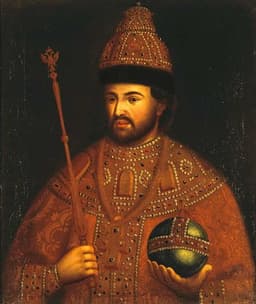
Ivan V
Emperor · Modern
46.0Total
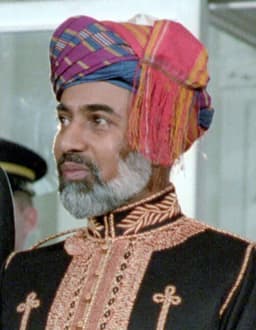
Sultan Qaboos of Oman
Emperor · Modern
54.7Total
Basic Information
Born
1666
1940
Died
1696
—
Era
Modern
Modern
Nationality
Russia
Oman
Occupation
Emperor
Emperor
Civilization
Western
Middle Eastern
Score Comparison
Military (10%)
10.6
14.9
Political (20%)
68.0
72.0
Influence (20%)
60.0
61.0
Legacy (20%)
35.0
47.5
Leadership (15%)
33.6
72.0
Strategy (15%)
60.0
45.0
TOTAL
46.0
54.7
Ivan V — Complete Timeline
1682 AD
Coronation as Co-Tsar with Peter IPolitical Action◆ Major
Following the death of Feodor III, Ivan V was crowned co-tsar alongside his half-brother Peter I, with his sister Sophia Alekseyevna acting as regent. This arrangement was forced by the Streltsy uprising and aimed to prevent a succession crisis, but Ivan's mental disabilities left him as a figurehead.
SuccessionRegencyStreltsy Uprising
Impact: national
Streltsy Uprising of 1682Political Action◆ Major
The Moscow Streltsy (musketeers) revolted, demanding that Ivan V be crowned tsar alongside Peter I. The uprising resulted in the massacre of several Naryshkin family members and the installation of Sophia as regent. Ivan's role was passive, but the event defined his reign.
RebellionRegencyViolence
Impact: nationaldestructive
Reign as Figurehead Co-TsarPolitical Action
From 1682 to 1696, Ivan V served as co-tsar with Peter I, but due to his mental and physical disabilities, he took no part in governance. Real power was held by his sister Sophia until 1689, and then by Peter. Ivan's reign was nominal, and he remained a ceremonial figure.
FigureheadCo-RulerCeremonial
Impact: national
Sultan Qaboos of Oman — Complete Timeline
1970 AD
Modernization and Infrastructure DevelopmentReform◆ Major
Qaboos used oil revenues to build modern infrastructure: roads, schools, hospitals, and ports. He also established a modern government, including a cabinet and a consultative council, transforming Oman from a feudal state.
DevelopmentInfrastructureEducation
Impact: nationalconstructive
Accession as Sultan of OmanPolitical Action
Qaboos bin Said overthrew his father, Sultan Said bin Taimur, in a bloodless coup with British support. He became Sultan and immediately began modernizing Oman, ending its isolation.
CoupModernizationOman
Impact: national
1975 AD
End of the Dhofar RebellionWar◆ Major
Qaboos successfully ended the Dhofar Rebellion, a Marxist insurgency in southern Oman, through a combination of military force and development programs. This secured his rule and unified the country.
Civil WarDhofarCounterinsurgency
Impact: national
1980 AD
Oman's Neutral Foreign PolicyPolitical Action◆ Major
Qaboos established Oman as a neutral mediator in regional conflicts, maintaining diplomatic ties with both Iran and the West. This policy allowed Oman to host secret talks between the US and Iran.
DiplomacyNeutralityMediation
Impact: regionalconstructive
2020 AD
Death Without HeirOther◆ Major
Qaboos died on January 10, 2020, without a direct heir. He had named his successor, Haitham bin Tariq, in a sealed letter, ensuring a smooth transition. His death marked the end of a 50-year reign.
DeathSuccessionEnd of Era
Impact: nationaltragic
Expert Analysis
Origins
**Ivan V** was born on September 6, 1666, in Moscow, Russia, to Tsar Alexis I and Maria Miloslavskaya. He was the younger half-brother of Peter the Great. Ivan suffered from physical and mental disabilities, including poor eyesight and speech impediments, which historians attribute to possible scurvy or rickets. His education was limited, and he was largely overshadowed by his more vigorous half-brother. The Miloslavsky family, particularly his sister Sophia, used him as a pawn in court intrigues.
**Sultan Qaboos bin Said** was born on November 18, 1940, in Salalah, Oman, to Sultan Said bin Taimur and Mazoon al-Mashani. He was the only son of the sultan. Qaboos received a privileged education: he studied at the Royal Military Academy Sandhurst in England and served briefly in the British Army. He later underwent administrative training in local government. His father kept him isolated in Salalah for years, fearing a coup, which fueled Qaboos's desire for change.
Rise to Power
**Ivan V** became co-tsar in 1682 at age 16 following the death of Tsar Feodor III. The Streltsy Uprising in May 1682, incited by the Miloslavsky faction, forced the coronation of Ivan alongside Peter I, with Sophia as regent. Ivan was a figurehead; real power lay with Sophia until Peter overthrew her in 1689. Ivan remained co-tsar in name until his death in 1696, but he never exercised authority.
**Sultan Qaboos** seized power on July 23, 1970, by overthrowing his father in a bloodless coup supported by British advisers. His father had isolated Oman from the world, banning education, electricity, and modern medicine. Qaboos immediately announced modernization plans and ended the Dhofar Rebellion (1965-1975) through military force and development programs. He established himself as an absolute ruler but used his power to transform the country.
Leadership & Governance
**Ivan V** was a nominal co-tsar with no real leadership. His political score of 68.0 reflects his symbolic role, but his leadership score is 33.6 due to his inability to govern. He attended ceremonies but made no decisions. Governance was handled by Sophia and later Peter. Ivan's only contribution was providing legitimacy to the regency and later to Peter's rule.
**Sultan Qaboos** scored 72.0 in leadership and 72.0 in political. He governed as an absolute monarch but with a vision for modernization. He used oil revenues to build infrastructure: roads, schools, hospitals, ports. He established a cabinet, a consultative council, and a legal code. He balanced tribal, religious, and regional interests. His foreign policy was neutral, maintaining ties with Iran, the US, and the UK. He mediated regional disputes, such as the Iran–Saudi Arabia tensions. His governance was centralized but effective.
Triumph & Tragedy
**Ivan V** 's greatest triumph was simply surviving until 1696, providing a stable transition for Peter the Great. His tragedy was being a disabled pawn in a power struggle, unable to shape his own destiny. He died at age 29, leaving no significant legacy.
**Sultan Qaboos** 's triumphs include ending the Dhofar Rebellion, modernizing Oman from a medieval state to a developed nation, and establishing a neutral foreign policy that gave Oman influence beyond its size. His tragedies include the lack of a direct heir; his death in 2020 without children led to a succession plan via sealed letter. Also, his absolute rule meant no democratic institutions developed, leaving Oman vulnerable after his death. His legacy score of 47.5 reflects his transformative but incomplete modernization.
Character & Destiny
**Ivan V** was described as gentle but mentally and physically weak. His character was shaped by his disabilities; he accepted his role as a figurehead. His destiny was to be overshadowed by Peter the Great. Historical assessments note he was a passive victim of circumstance.
**Sultan Qaboos** was reserved, intelligent, and decisive. He had a clear vision for Oman and used his absolute power to achieve it. He was a skilled diplomat and mediator. His character combined authoritarian control with a genuine desire to improve his people's lives. His destiny was to transform Oman but leave no democratic legacy. Historians praise his modernization but note the lack of political freedom.
Legacy
**Ivan V** 's legacy is minimal. He is remembered as a footnote in Russian history, the co-tsar who did nothing. His total score of 46.0 reflects his lack of impact. He did not influence Russia's development.
**Sultan Qaboos** 's legacy is substantial. He transformed Oman from a closed, poor state into a modern, stable country. He established infrastructure, education, and healthcare. His foreign policy made Oman a respected mediator. However, his absolute rule left no democratic institutions, and his death raised questions about succession. His total score of 54.7 is higher than Ivan's 46.0, reflecting his greater impact. He is remembered as the father of modern Oman.
Conclusion
Sultan Qaboos of Oman had a greater impact than Ivan V. Qaboos scored 54.7 overall, compared to Ivan's 46.0. Qaboos actively transformed a nation, while Ivan was a passive figurehead. Qaboos's leadership (72.0 vs 33.6) and political skill (72.0 vs 68.0) drove real change. Ivan's role was symbolic, while Qaboos's was substantive. In historical impact, Qaboos clearly surpasses Ivan V.
Rankings
🥇
Sultan Qaboos of OmanLeader
Mil: 14.9Pol: 72.0Inf: 61.0
54.7
🥈
Ivan V
Mil: 10.6Pol: 68.0Inf: 60.0
46.0
+8.7 behind
How This Comparison Works
Algorithm
Each figure is scored on 6 dimensions (0—100 scale) based on structured historical data: Military (10%), Political (20%), Influence (20%), Legacy (20%), Leadership (15%), Strategy (15%). The weighted total produces the final ranking.
Data Sources
Scores are computed from structured sub-indicators in the database. Scale factors adjust for era (Ancient ×0.85, Modern ×1.0) and civilization size (Eastern ×1.05, Other ×0.80) to account for differences in population and military scale.
Maximum 3 Figures
Comparisons are limited to 2—3 figures to ensure readability and statistical meaningfulness.
Error Margins
±5 points per dimension — Sub-scores are derived from historical records with inherent uncertainty. Two figures within 5 points on a dimension should be considered roughly equivalent in that area.
Total Score Accuracy
±3 points overall — The weighted combination of 6 dimensions produces a total score with approximately ±3 points of uncertainty. Differences of less than 3 points are not statistically significant— the figures are effectively tied.
Known Limitations
- Historical records are incomplete and uneven across civilizations
- Figures from oral-tradition societies may be underrepresented
- Occupation labels can misclassify multi-role figures
- Scores measure capability and impact, not moral character
- Quantitative scoring is a comparison tool, not absolute truth
Capability Radar
Military (10%) — Battles & Warfare
Battles
39
5
Win Rate
39
5
Expansion
42
10
Political (20%) — Governance & Reform
Reform
0
85
Diplomacy
0
80
Economy
0
80
Influence (20%) — Cultural & Global Reach
Cultural
0
50
Global
0
55
Legacy (20%) — Historical Impact
Historical
5
55
Longevity
5
40
Leadership (15%) — Power & Stability
Tenure
5
95
Stability
5
85
Strategy (15%) — Tactics & Innovation
Strategy
48
15
Tactics
48
10
Reform
53
60
Similar Comparisons
Comments & Discussion
No comments yet. Be the first to share your thoughts!