Loading...
Haile Selassie vs Sultan Qaboos of Oman
Haile Selassie leads by 2.8 pts · 2 figures compared
…

Haile Selassie
Emperor · Modern
57.5Total
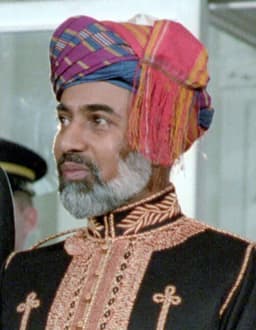
Sultan Qaboos of Oman
Emperor · Modern
54.7Total
Basic Information
Born
1892
1940
Died
1975
—
Era
Modern
Modern
Nationality
Ethiopia
Oman
Occupation
Emperor
Emperor
Civilization
Other
Middle Eastern
Score Comparison
Military (10%)
25.0
14.9
Political (20%)
55.0
72.0
Influence (20%)
65.0
61.0
Legacy (20%)
55.0
47.5
Leadership (15%)
72.0
72.0
Strategy (15%)
60.0
45.0
TOTAL
57.5
54.7
Haile Selassie — Complete Timeline
1930 AD
Coronation as EmperorPolitical Action◆ Major
Haile Selassie was crowned Emperor of Ethiopia at Addis Ababa, taking the throne name Haile Selassie I. The coronation was a grand ceremony attended by foreign dignitaries, symbolizing Ethiopia's sovereignty.
CoronationEmperorSovereignty
Impact: nationalconstructive
1936 AD
Italian Invasion and ExileWar
Italy invaded Ethiopia, and Haile Selassie's forces were defeated. He fled into exile in England, where he appealed to the League of Nations for help, famously denouncing the invasion and the failure of collective security.
InvasionExileLeague of Nations
Impact: globaltragic
Address to the League of NationsPolitical Action◆ Major
Haile Selassie addressed the League of Nations in Geneva, condemning Italy's use of chemical weapons and the League's failure to protect Ethiopia. His speech became a symbol of African resistance and international justice.
SpeechLeague of NationsChemical Weapons
Impact: global
1941 AD
Return to Ethiopia and RestorationWar◆ Major
Haile Selassie returned to Ethiopia with British forces, leading a campaign to liberate the country from Italian occupation. He was restored to the throne, reestablishing Ethiopian independence.
LiberationRestorationBritish Alliance
Impact: nationalconstructive
1955 AD
Constitution of 1955Reform◆ Major
Haile Selassie promulgated a new constitution that established a bicameral parliament and limited civil rights. While it allowed for some representation, it maintained imperial authority and did not create a fully democratic system.
ConstitutionParliamentReform
Impact: national
1974 AD
Overthrow and DeathPolitical Action
Haile Selassie was overthrown by the Derg, a Marxist military junta, after a period of famine and unrest. He was placed under house arrest and died in 1975 under disputed circumstances, ending the Solomonic dynasty.
CoupDergEnd of Dynasty
Impact: nationaltragic
Sultan Qaboos of Oman — Complete Timeline
1970 AD
Modernization and Infrastructure DevelopmentReform◆ Major
Qaboos used oil revenues to build modern infrastructure: roads, schools, hospitals, and ports. He also established a modern government, including a cabinet and a consultative council, transforming Oman from a feudal state.
DevelopmentInfrastructureEducation
Impact: nationalconstructive
Accession as Sultan of OmanPolitical Action
Qaboos bin Said overthrew his father, Sultan Said bin Taimur, in a bloodless coup with British support. He became Sultan and immediately began modernizing Oman, ending its isolation.
CoupModernizationOman
Impact: national
1975 AD
End of the Dhofar RebellionWar◆ Major
Qaboos successfully ended the Dhofar Rebellion, a Marxist insurgency in southern Oman, through a combination of military force and development programs. This secured his rule and unified the country.
Civil WarDhofarCounterinsurgency
Impact: national
1980 AD
Oman's Neutral Foreign PolicyPolitical Action◆ Major
Qaboos established Oman as a neutral mediator in regional conflicts, maintaining diplomatic ties with both Iran and the West. This policy allowed Oman to host secret talks between the US and Iran.
DiplomacyNeutralityMediation
Impact: regionalconstructive
2020 AD
Death Without HeirOther◆ Major
Qaboos died on January 10, 2020, without a direct heir. He had named his successor, Haitham bin Tariq, in a sealed letter, ensuring a smooth transition. His death marked the end of a 50-year reign.
DeathSuccessionEnd of Era
Impact: nationaltragic
Expert Analysis
Origins
Haile Selassie was born Tafari Makonnen on July 23, 1892, in Ejersa Goro, Ethiopia, to a noble family. His father was a governor and cousin to Emperor Menelik II. Selassie was educated at home by French missionaries and Ethiopian clergy, gaining fluency in French and Amharic. He became a provincial governor at age 14, showing early administrative skill.
Sultan Qaboos bin Said was born on November 18, 1940, in Salalah, Oman, to Sultan Said bin Taimur. He was educated privately in Oman, then at the Royal Military Academy Sandhurst in England (1960-1962). After Sandhurst, he served briefly in the British Army and studied local government in England. His father kept him isolated in Salalah for years, fearing a coup.
Rise to Power
Selassie rose through the Ethiopian court system. He was appointed governor of Harar in 1910. In 1916, he helped depose Emperor Iyasu V and became regent for Empress Zewditu. Over the next decade, he consolidated power, modernizing the army and government. In 1928, he was crowned Negus (King). After Zewditu's death in 1930, he became Emperor on November 2, 1930.
Qaboos seized power in a bloodless coup on July 23, 1970, with British support. He overthrew his father, Sultan Said, who had isolated Oman and banned modern development. Qaboos immediately began reforms, ending slavery, opening schools, and using oil revenues for infrastructure.
Leadership & Governance
Selassie ruled as an absolute monarch but introduced Ethiopia's first constitution in 1931, creating a bicameral parliament with limited powers. He centralized the state, reduced feudal autonomy, and promoted education and healthcare. However, his regime remained autocratic, with land reforms favoring the nobility. During the 1973 oil crisis, his government failed to address famine in Wollo province, contributing to his downfall.
Qaboos modernized Oman from a medieval state into a developed nation. He established a cabinet, a consultative council (Majlis al-Shura), and promoted education and women's rights. He pursued a neutral foreign policy, mediating conflicts like the Iran-Iraq War and the Yemeni civil war. His governance was personalist, with no political parties or free press, but he maintained stability through oil wealth and development.
Triumph & Tragedy
Selassie's greatest triumph was his 1936 speech to the League of Nations, where he condemned Italy's invasion and chemical weapons use, becoming a symbol of anti-colonial resistance. He was restored to the throne in 1941 after British forces defeated the Italians. He also founded the Organization of African Unity in 1963, making Addis Ababa its headquarters. His tragedies include the failed land reforms that sparked the 1974 revolution, his overthrow by the Derg, and his controversial death under mysterious circumstances in 1975.
Qaboos's triumphs include ending the Dhofar Rebellion in 1975 through military force and development, transforming Oman's economy, and establishing a stable foreign policy. His tragedies include the lack of succession planning: he died without an heir in 2020, forcing a sealed-letter succession. His later years saw limited political reform and growing debt.
Character & Destiny
Selassie was charismatic, diplomatic, and deeply religious (Ethiopian Orthodox). His faith in international institutions like the League and UN proved misplaced as major powers ignored Ethiopia. His reluctance to delegate power and address inequality led to his downfall. Rastafarians revere him as a divine figure, a destiny he never endorsed.
Qaboos was reserved, methodical, and pragmatic. He valued stability over democracy, using oil wealth to buy loyalty. His isolation by his father shaped his cautious approach. He avoided conflict with neighbors, preferring mediation. His lack of an heir was a calculated risk that succeeded but left uncertainty.
Legacy
Selassie's legacy is mixed: he is revered in Rastafarianism and as a Pan-African icon, but criticized for autocracy and failure to modernize Ethiopia. His OAU foundation remains a key achievement. Ethiopia's current constitution acknowledges his role but his reign is seen as a feudal era. He scored 55.0 in legacy.
Qaboos is remembered as Oman's father of modernisation. He built infrastructure, education, and healthcare from scratch. His neutral foreign policy is a model for small states. However, his personalist system left weak institutions. He scored 47.5 in legacy.
Conclusion
Haile Selassie had greater global impact despite his domestic failures. His influence on decolonization and Pan-Africanism (scoring 65.0 in influence) surpasses Qaboos's regional modernisation. Selassie's total score of 57.5 edges Qaboos's 54.7, reflecting his broader historical significance. While Qaboos transformed Oman effectively, Selassie's symbolic weight on the world stage gives him the edge in this comparison.
Rankings
🥇
Haile SelassieLeader
Mil: 25.0Pol: 55.0Inf: 65.0
57.5
🥈
Sultan Qaboos of Oman
Mil: 14.9Pol: 72.0Inf: 61.0
54.7
+2.8 behind
How This Comparison Works
Algorithm
Each figure is scored on 6 dimensions (0—100 scale) based on structured historical data: Military (10%), Political (20%), Influence (20%), Legacy (20%), Leadership (15%), Strategy (15%). The weighted total produces the final ranking.
Data Sources
Scores are computed from structured sub-indicators in the database. Scale factors adjust for era (Ancient ×0.85, Modern ×1.0) and civilization size (Eastern ×1.05, Other ×0.80) to account for differences in population and military scale.
Maximum 3 Figures
Comparisons are limited to 2—3 figures to ensure readability and statistical meaningfulness.
Error Margins
±5 points per dimension — Sub-scores are derived from historical records with inherent uncertainty. Two figures within 5 points on a dimension should be considered roughly equivalent in that area.
Total Score Accuracy
±3 points overall — The weighted combination of 6 dimensions produces a total score with approximately ±3 points of uncertainty. Differences of less than 3 points are not statistically significant— the figures are effectively tied.
Known Limitations
- Historical records are incomplete and uneven across civilizations
- Figures from oral-tradition societies may be underrepresented
- Occupation labels can misclassify multi-role figures
- Scores measure capability and impact, not moral character
- Quantitative scoring is a comparison tool, not absolute truth
Capability Radar
Military (10%) — Battles & Warfare
Battles
45
5
Win Rate
40
5
Expansion
30
10
Political (20%) — Governance & Reform
Reform
60
85
Diplomacy
75
80
Economy
50
80
Influence (20%) — Cultural & Global Reach
Cultural
70
50
Global
70
55
Legacy (20%) — Historical Impact
Historical
75
55
Longevity
65
40
Leadership (15%) — Power & Stability
Tenure
85
95
Stability
40
85
Strategy (15%) — Tactics & Innovation
Strategy
50
15
Tactics
35
10
Reform
55
60
Similar Comparisons
Comments & Discussion
No comments yet. Be the first to share your thoughts!