Loading...
This comparison has not been analyzed yet.
One-time AI generation (~1 minute). Scores and timeline are already available below.
Iyasu I vs John III Sobieski
John III Sobieski leads by 5.8 pts · 2 figures compared
…
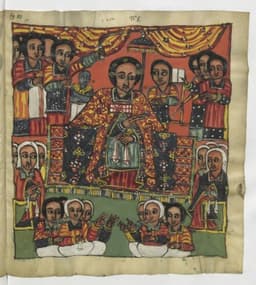
Iyasu I
Emperor · Modern
61.4Total

John III Sobieski
Emperor · Modern
67.2Total
Basic Information
Born
1654
1629
Died
1706
1696
Era
Modern
Modern
Nationality
Ethiopia
Poland
Occupation
Emperor
Emperor
Civilization
Other
Western
Score Comparison
Military (10%)
50.0
60.0
Political (20%)
78.0
67.2
Influence (20%)
59.0
68.0
Legacy (20%)
52.0
69.3
Leadership (15%)
78.0
66.0
Strategy (15%)
52.5
68.5
TOTAL
61.4
67.2
Iyasu I — Complete Timeline
1685 AD
Campaign against the OromoWar
Iyasu I led a military campaign against the Oromo peoples who were raiding into Ethiopian territory. His forces achieved several victories, pushing back the Oromo and securing the borders of the empire for a period.
Military CampaignBorder SecurityOromo
Impact: regional
1690 AD
Administrative Reforms of Iyasu IReform◆ Major
Iyasu I implemented comprehensive administrative reforms to centralize imperial authority. He reorganized the provincial governance system, standardized tax collection, and strengthened the role of the central bureaucracy, reducing the power of regional nobles.
CentralizationTaxationBureaucracy
Impact: nationalconstructive
Construction of the Church of Debre Berhan SelassieCultural
Iyasu I commissioned the construction of the Church of Debre Berhan Selassie in Gondar. The church became renowned for its intricate ceiling paintings of angels and is considered a masterpiece of Ethiopian religious art.
ChurchArtArchitecture
Impact: nationalconstructive
John III Sobieski — Complete Timeline
1673 AD
Battle of Khotyn (1673)War◆ Major
As a hetman, John Sobieski led Polish-Lithuanian forces to a decisive victory over the Ottoman Empire at the Battle of Khotyn. This victory, before his kingship, established his reputation as a military commander and contributed to his election as king the following year.
BattleOttoman WarsMilitary Career
Impact: regional
1674 AD
Elected King of PolandPolitical Action◆ Major
John Sobieski was elected King of Poland and Grand Duke of Lithuania by the nobility. His election came after the abdication of Michael Korybut Wi
ElectionMonarchyPoland
Impact: nationalconstructive
1683 AD
Battle of ViennaWar
John III Sobieski led the Polish-Lithuanian army and the Holy League to a decisive victory over the Ottoman Empire at the Battle of Vienna. He personally commanded the largest cavalry charge in history, breaking the Ottoman siege and halting their expansion into Europe.
BattleOttoman WarsHoly League
Impact: globalconstructive
This comparison has not been analyzed yet.
One-time AI generation (~1 minute). Scores and timeline are already available below.
Rankings
🥇
John III SobieskiLeader
Mil: 60.0Pol: 67.2Inf: 68.0
67.2
🥈
Iyasu I
Mil: 50.0Pol: 78.0Inf: 59.0
61.4
+5.8 behind
How This Comparison Works
Algorithm
Each figure is scored on 6 dimensions (0—100 scale) based on structured historical data: Military (10%), Political (20%), Influence (20%), Legacy (20%), Leadership (15%), Strategy (15%). The weighted total produces the final ranking.
Data Sources
Scores are computed from structured sub-indicators in the database. Scale factors adjust for era (Ancient ×0.85, Modern ×1.0) and civilization size (Eastern ×1.05, Other ×0.80) to account for differences in population and military scale.
Maximum 3 Figures
Comparisons are limited to 2—3 figures to ensure readability and statistical meaningfulness.
Error Margins
±5 points per dimension — Sub-scores are derived from historical records with inherent uncertainty. Two figures within 5 points on a dimension should be considered roughly equivalent in that area.
Total Score Accuracy
±3 points overall — The weighted combination of 6 dimensions produces a total score with approximately ±3 points of uncertainty. Differences of less than 3 points are not statistically significant— the figures are effectively tied.
Known Limitations
- Historical records are incomplete and uneven across civilizations
- Figures from oral-tradition societies may be underrepresented
- Occupation labels can misclassify multi-role figures
- Scores measure capability and impact, not moral character
- Quantitative scoring is a comparison tool, not absolute truth
Capability Radar
Military (10%) — Battles & Warfare
Battles
55
75
Win Rate
60
80
Expansion
45
55
Political (20%) — Governance & Reform
Reform
80
50
Diplomacy
65
72
Economy
70
55
Influence (20%) — Cultural & Global Reach
Cultural
55
65
Global
40
68
Legacy (20%) — Historical Impact
Historical
60
78
Longevity
50
70
Leadership (15%) — Power & Stability
Tenure
70
70
Stability
60
45
Strategy (15%) — Tactics & Innovation
Strategy
55
82
Tactics
50
85
Reform
65
60
Similar Comparisons
Comments & Discussion
No comments yet. Be the first to share your thoughts!