Loading...
John III Sobieski vs Muhammad Quli Qutb Shah
John III Sobieski leads by 6.7 pts · 2 figures compared
…

John III Sobieski
Emperor · Modern
67.2Total
Muhammad Quli Qutb Shah
Emperor · Modern
60.5Total
Basic Information
Born
1629
1580
Died
1696
1611
Era
Modern
Modern
Nationality
Poland
India
Occupation
Emperor
Emperor
Civilization
Western
Indian
Score Comparison
Military (10%)
60.0
45.0
Political (20%)
67.2
72.0
Influence (20%)
68.0
65.0
Legacy (20%)
69.3
55.0
Leadership (15%)
66.0
72.0
Strategy (15%)
68.5
43.7
TOTAL
67.2
60.5
John III Sobieski — Complete Timeline
1673 AD
Battle of Khotyn (1673)War◆ Major
As a hetman, John Sobieski led Polish-Lithuanian forces to a decisive victory over the Ottoman Empire at the Battle of Khotyn. This victory, before his kingship, established his reputation as a military commander and contributed to his election as king the following year.
BattleOttoman WarsMilitary Career
Impact: regional
1674 AD
Elected King of PolandPolitical Action◆ Major
John Sobieski was elected King of Poland and Grand Duke of Lithuania by the nobility. His election came after the abdication of Michael Korybut Wi
ElectionMonarchyPoland
Impact: nationalconstructive
1683 AD
Battle of ViennaWar
John III Sobieski led the Polish-Lithuanian army and the Holy League to a decisive victory over the Ottoman Empire at the Battle of Vienna. He personally commanded the largest cavalry charge in history, breaking the Ottoman siege and halting their expansion into Europe.
BattleOttoman WarsHoly League
Impact: globalconstructive
Muhammad Quli Qutb Shah — Complete Timeline
1591 AD
Foundation of Hyderabad cityCultural
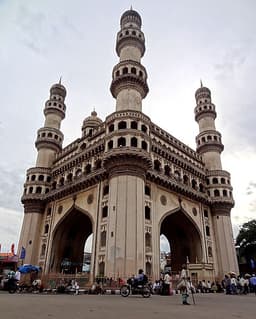
Muhammad Quli Qutb Shah founded the city of Hyderabad on the banks of the Musi River, moving the capital from Golconda. He designed the city with a grid layout and built the Charminar as its centerpiece.
Urban PlanningFoundingArchitecture
Impact: regionalconstructive
Construction of the CharminarCultural◆ Major
Muhammad Quli Qutb Shah built the Charminar, a monumental arch with four minarets, in the center of Hyderabad. The structure became a symbol of the city and a center for trade and public gatherings.
ArchitectureMonument
Impact: regionalconstructive
1595 AD
Patronage of Dakhni Urdu literatureCultural◆ Major
Muhammad Quli Qutb Shah was a poet and patron of Dakhni Urdu literature. He composed a divan (collection of poems) and encouraged other poets to write in the vernacular language.
LiteraturePoetryLanguage
Impact: regionalconstructive
1605 AD
War against the Mughal EmpireWar◆ Major
Muhammad Quli Qutb Shah fought a war against the Mughal Empire under Emperor Jahangir, defending Golconda's independence. The conflict ended with a treaty that maintained the status quo.
WarMughalDefense
Impact: regional
1610 AD
Construction of the Mecca MasjidCultural
Muhammad Quli Qutb Shah began construction of the Mecca Masjid in Hyderabad, one of the largest mosques in India. The mosque was built with bricks brought from Mecca, giving it its name.
ArchitectureReligion
constructive
Expert Analysis
Origins
John III Sobieski was born on August 17, 1629, in Olesko, Poland, into a noble family of the Polish-Lithuanian Commonwealth. His father, Jakub Sobieski, was a castellan and voivode, and his mother, Zofia Teofillia Daniłowicz, was from a prominent Ruthenian family. Sobieski studied at the Jagiellonian University and later traveled across Europe, learning military tactics and diplomacy. His early military experience came during the Khmelnytsky Uprising and the Russo-Polish War, where he served as a commander.
Muhammad Quli Qutb Shah was born in 1565 in Golconda, India, into the Qutb Shahi dynasty. He was the fifth sultan of the Golconda Sultanate, succeeding his father, Ibrahim Quli Qutb Shah. His mother was a noblewoman of the Qutb Shahi court. Muhammad Quli received a thorough education in Persian, Arabic, and Islamic sciences, and was trained in statecraft and military command from a young age. His formative years were marked by the cultural and political flourishing of the Deccan region.
Rise to Power
Sobieski's rise began with his military successes. In 1667, he defeated the Cossacks and Tatars at the Battle of Podhajce, earning him the title of Hetman of the Crown. His greatest early victory came in 1673 at the Battle of Khotyn, where he led Polish-Lithuanian forces against the Ottoman Empire. This triumph made him a national hero. Following the abdication of King Michael Korybut Wiśniowiecki in 1673, Sobieski was elected King of Poland and Grand Duke of Lithuania on May 21, 1674, taking the name John III.
Muhammad Quli Qutb Shah ascended the throne in 1580 at age 15 after his father's death. His early reign was dominated by regents, but he soon asserted control. He consolidated power by centralizing administration and expanding the sultanate's territory through diplomatic marriages and military campaigns. His most significant political move was the foundation of Hyderabad city in 1591, which he designed as a new capital to reduce the influence of the old nobility in Golconda.
Leadership & Governance
Sobieski's leadership was defined by his military command. As king, he focused on defending the Commonwealth against Ottoman expansion. He formed the Holy League with the Holy Roman Empire and Venice to counter the Ottoman threat. His governance was constrained by the Polish-Lithuanian Sejm (parliament), which limited royal power. Sobieski struggled with internal opposition from nobles who resented his centralizing efforts. He implemented reforms to strengthen the army but faced financial limitations.
Muhammad Quli Qutb Shah was a builder and patron. He founded Hyderabad with a grid plan, building the Charminar and Mecca Masjid. He promoted trade by offering tax incentives to merchants and established a cosmopolitan culture. Politically, he maintained Golconda's independence against the Mughal Empire, fighting a war with Jahangir that ended in a stalemate. He patronized Dakhni Urdu literature, composing poetry himself. His governance was more autocratic than Sobieski's, but he fostered economic and cultural growth.
Triumph & Tragedy
Sobieski's greatest triumph was the Battle of Vienna on September 12, 1683, where he led the largest cavalry charge in history (20,000 horsemen) to break the Ottoman siege. This victory saved Vienna and turned the tide of the Great Turkish War. His tragedy was the failure to capitalize fully on the victory; the Holy League's campaigns stagnated after his death, and the Treaty of Karlowitz (1699) came too late for him to see. He also faced domestic strife, including the Lubomirski rebellion and conflicts with the nobility.
Muhammad Quli Qutb Shah's triumph was the founding of Hyderabad, which became a major commercial and cultural center. His patronage of literature led to the flourishing of Dakhni Urdu. His tragedy was the eventual decline of the Qutb Shahi dynasty; his successors could not maintain independence, and Golconda fell to the Mughals in 1687. He also faced military defeats, including a failed campaign against the Mughals, and his city-building projects strained the treasury.
Character & Destiny
Sobieski was a bold and decisive commander, known for his personal courage in battle. He was also a diplomat, forging alliances with the Habsburgs and the Pope. His character was marked by a sense of duty to Christendom, but his political naivety often undermined his goals. He trusted allies who later abandoned Polish interests. Historians note that his military genius was not matched by political acumen, leading to unfulfilled potential.
Muhammad Quli Qutb Shah was a visionary urban planner and a patron of the arts. He was tolerant of Hindus and other faiths, appointing Hindus to high positions. His character was that of a builder rather than a warrior; he preferred diplomacy and cultural development over military conquest. However, his focus on construction and literature sometimes led to neglect of military preparedness, which ultimately contributed to the dynasty's vulnerability.
Legacy
Sobieski's legacy is tied to the Battle of Vienna, which is celebrated as a turning point in European history. He is remembered as the savior of Christendom and a national hero in Poland. His military reforms influenced later Polish commanders. However, his political legacy is limited; the Commonwealth continued to decline after his death. He scored 69.3 in legacy, reflecting his enduring symbolic importance.
Muhammad Quli Qutb Shah's legacy is the city of Hyderabad, which remains a major urban center. The Charminar and Mecca Masjid are iconic landmarks. His patronage of Dakhni Urdu laid the foundation for the language's literary tradition. However, his political legacy is modest; the Qutb Shahi dynasty was short-lived. He scored 55.0 in legacy, lower than Sobieski due to the limited duration of his dynasty's influence.
Conclusion
John III Sobieski had a greater impact than Muhammad Quli Qutb Shah. Sobieski's victory at Vienna altered the course of European history, halting Ottoman expansion into Central Europe. His military score of 60.0 and strategy score of 68.5 reflect his effectiveness on the battlefield, while his total score of 67.2 edges out Qutb Shah's 60.5. Although Qutb Shah's urban planning and cultural patronage were significant, they were regional in scope. Sobieski's actions had continental consequences. The 6.7-point gap in total scores underscores his greater influence. Sobieski is the more impactful figure.
Rankings
🥇
John III SobieskiLeader
Mil: 60.0Pol: 67.2Inf: 68.0
67.2
🥈
Muhammad Quli Qutb Shah
Mil: 45.0Pol: 72.0Inf: 65.0
60.5
+6.7 behind
How This Comparison Works
Algorithm
Each figure is scored on 6 dimensions (0—100 scale) based on structured historical data: Military (10%), Political (20%), Influence (20%), Legacy (20%), Leadership (15%), Strategy (15%). The weighted total produces the final ranking.
Data Sources
Scores are computed from structured sub-indicators in the database. Scale factors adjust for era (Ancient ×0.85, Modern ×1.0) and civilization size (Eastern ×1.05, Other ×0.80) to account for differences in population and military scale.
Maximum 3 Figures
Comparisons are limited to 2—3 figures to ensure readability and statistical meaningfulness.
Error Margins
±5 points per dimension — Sub-scores are derived from historical records with inherent uncertainty. Two figures within 5 points on a dimension should be considered roughly equivalent in that area.
Total Score Accuracy
±3 points overall — The weighted combination of 6 dimensions produces a total score with approximately ±3 points of uncertainty. Differences of less than 3 points are not statistically significant— the figures are effectively tied.
Known Limitations
- Historical records are incomplete and uneven across civilizations
- Figures from oral-tradition societies may be underrepresented
- Occupation labels can misclassify multi-role figures
- Scores measure capability and impact, not moral character
- Quantitative scoring is a comparison tool, not absolute truth
Capability Radar
Military (10%) — Battles & Warfare
Battles
75
30
Win Rate
80
35
Expansion
55
30
Political (20%) — Governance & Reform
Reform
50
65
Diplomacy
72
55
Economy
55
70
Influence (20%) — Cultural & Global Reach
Cultural
65
70
Global
68
50
Legacy (20%) — Historical Impact
Historical
78
65
Longevity
70
70
Leadership (15%) — Power & Stability
Tenure
70
60
Stability
45
60
Strategy (15%) — Tactics & Innovation
Strategy
82
30
Tactics
85
30
Reform
60
25
Similar Comparisons
Comments & Discussion
No comments yet. Be the first to share your thoughts!