Loading...
This comparison has not been analyzed yet.
One-time AI generation (~1 minute). Scores and timeline are already available below.
Jamasp vs Shamshi-Adad V
Jamasp leads by 9.2 pts · 2 figures compared
…
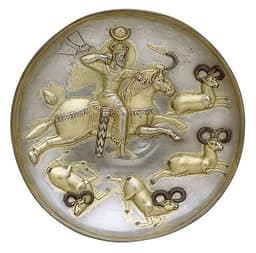
Jamasp
Emperor · Ancient
48.2Total

Shamshi-Adad V
Emperor · Ancient
39.0Total
Basic Information
Born
480
-823
Died
530
-811
Era
Ancient
Ancient
Nationality
Sasanian Empire
Assyria
Occupation
Emperor
Emperor
Civilization
Middle Eastern
Middle Eastern
Score Comparison
Military (10%)
45.6
45.0
Political (20%)
40.8
26.4
Influence (20%)
56.4
44.8
Legacy (20%)
39.2
35.0
Leadership (15%)
55.3
41.5
Strategy (15%)
52.8
43.7
TOTAL
48.2
39.0
Jamasp — Complete Timeline
496 AD
Installation by NoblesPolitical Action◆ Major
Jamasp was installed as king of the Sasanian Empire by the nobility after they deposed his brother Kavad I. His reign was part of the internal power struggles following Kavad's attempts to centralize power and reduce noble influence.
InstallationNobilityPower Struggle
Impact: national
498 AD
Restoration of Kavad IPolitical Action◆ Major
Jamasp was overthrown when Kavad I returned from exile with Hephthalite military support. Jamasp abdicated peacefully to avoid civil war, and Kavad was restored to the throne, ending Jamasp's brief reign of about two years.
AbdicationRestorationCivil War Averted
Impact: national
Peaceful AbdicationPolitical Action
Jamasp chose to abdicate rather than fight his brother Kavad I for the throne. This decision prevented a civil war and allowed Kavad to resume his reforms, though Jamasp's own reign left little lasting impact.
AbdicationPeaceKavad I
Impact: nationalconstructive
Shamshi-Adad V — Complete Timeline
823 BC
Suppression of the Rebellion of Ashur-danin-palWar◆ Major
Shamshi-Adad V, as crown prince, led the suppression of the rebellion by his brother Ashur-danin-pal. He defeated the rebel forces and recaptured the cities of Ashur and Nineveh, securing his succession to the throne.
Civil WarRebellionSuccession
Impact: national
820 BC
Marriage to SammuramatPolitical Action
Shamshi-Adad V married Sammuramat, a Babylonian princess. She later became a powerful regent and is identified by some scholars with the legendary Semiramis, known for building projects and military campaigns.
MarriageAllianceSammuramat
Impact: national
818 BC
Campaign against BabylonWar◆ Major
Shamshi-Adad V led a campaign against the Babylonian king Marduk-zakir-shumi I, defeating him and forcing him to pay tribute. This reasserted Assyrian dominance over Babylon after a period of decline.
Military CampaignBabylonTribute
Impact: regional
This comparison has not been analyzed yet.
One-time AI generation (~1 minute). Scores and timeline are already available below.
Rankings
🥇
JamaspLeader
Mil: 45.6Pol: 40.8Inf: 56.4
48.2
🥈
Shamshi-Adad V
Mil: 45.0Pol: 26.4Inf: 44.8
39.0
+9.2 behind
How This Comparison Works
Algorithm
Each figure is scored on 6 dimensions (0—100 scale) based on structured historical data: Military (10%), Political (20%), Influence (20%), Legacy (20%), Leadership (15%), Strategy (15%). The weighted total produces the final ranking.
Data Sources
Scores are computed from structured sub-indicators in the database. Scale factors adjust for era (Ancient ×0.85, Modern ×1.0) and civilization size (Eastern ×1.05, Other ×0.80) to account for differences in population and military scale.
Maximum 3 Figures
Comparisons are limited to 2—3 figures to ensure readability and statistical meaningfulness.
Error Margins
±5 points per dimension — Sub-scores are derived from historical records with inherent uncertainty. Two figures within 5 points on a dimension should be considered roughly equivalent in that area.
Total Score Accuracy
±3 points overall — The weighted combination of 6 dimensions produces a total score with approximately ±3 points of uncertainty. Differences of less than 3 points are not statistically significant— the figures are effectively tied.
Known Limitations
- Historical records are incomplete and uneven across civilizations
- Figures from oral-tradition societies may be underrepresented
- Occupation labels can misclassify multi-role figures
- Scores measure capability and impact, not moral character
- Quantitative scoring is a comparison tool, not absolute truth
Capability Radar
Military (10%) — Battles & Warfare
Battles
38
25
Win Rate
43
30
Expansion
47
20
Political (20%) — Governance & Reform
Reform
0
15
Diplomacy
10
25
Economy
0
20
Influence (20%) — Cultural & Global Reach
Cultural
0
15
Global
0
10
Legacy (20%) — Historical Impact
Historical
5
20
Longevity
0
10
Leadership (15%) — Power & Stability
Tenure
5
30
Stability
5
20
Strategy (15%) — Tactics & Innovation
Strategy
48
20
Tactics
51
25
Reform
56
10
Similar Comparisons
Comments & Discussion
No comments yet. Be the first to share your thoughts!