Loading...
Jamasp vs Napoleon Bonaparte
Napoleon Bonaparte leads by 22.7 pts · 2 figures compared
…
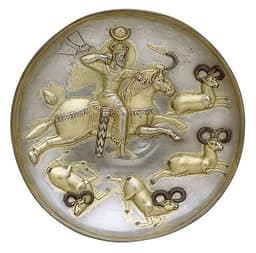
Jamasp
Emperor · Ancient
48.2Total

Napoleon Bonaparte
General · Modern
70.9Total
Basic Information
Born
480
1769
Died
530
1821
Era
Ancient
Modern
Nationality
Sasanian Empire
France
Occupation
Emperor
General
Civilization
Middle Eastern
Western
Score Comparison
Military (10%)
45.6
94.0
Political (20%)
40.8
72.0
Influence (20%)
56.4
40.0
Legacy (20%)
39.2
80.0
Leadership (15%)
55.3
78.0
Strategy (15%)
52.8
90.0
TOTAL
48.2
70.9
Jamasp — Complete Timeline
496 AD
Installation by NoblesPolitical Action◆ Major
Jamasp was installed as king of the Sasanian Empire by the nobility after they deposed his brother Kavad I. His reign was part of the internal power struggles following Kavad's attempts to centralize power and reduce noble influence.
InstallationNobilityPower Struggle
Impact: national
498 AD
Restoration of Kavad IPolitical Action◆ Major
Jamasp was overthrown when Kavad I returned from exile with Hephthalite military support. Jamasp abdicated peacefully to avoid civil war, and Kavad was restored to the throne, ending Jamasp's brief reign of about two years.
AbdicationRestorationCivil War Averted
Impact: national
Peaceful AbdicationPolitical Action
Jamasp chose to abdicate rather than fight his brother Kavad I for the throne. This decision prevented a civil war and allowed Kavad to resume his reforms, though Jamasp's own reign left little lasting impact.
AbdicationPeaceKavad I
Impact: nationalconstructive
Napoleon Bonaparte — Complete Timeline
1799 AD
Coup of 18 BrumaireOther◆ Major
Napoleon Bonaparte, with support from his brother Lucien and key political figures, overthrew the Directory in a bloodless coup. He established the Consulate with himself as First Consul, effectively becoming the ruler of France. This event ended the French Revolution's most unstable period.
French RevolutionCoupRise to Power
Impact: regional
1804 AD
Promulgation of the Napoleonic CodeOther◆ Major
Napoleon enacted the Civil Code of the French, known as the Napoleonic Code, a comprehensive set of laws that replaced the fragmented feudal legal systems. The code established legal equality, protected property rights, and secularized law. It became the basis for legal systems in many European and world countries.
Legal ReformNapoleonic CodeCivil Law
Impact: globalconstructive
1805 AD
Battle of AusterlitzWar◆ Major
Napoleon's Grande Arm
Napoleonic WarsBattleDecisive Victory
Impact: global
1812 AD
Invasion of RussiaWar◆ Major
Napoleon led the Grande Arm
Napoleonic WarsInvasionDisaster
Impact: globaldestructive
1815 AD
Battle of WaterlooWar◆ Major
Napoleon's French army was defeated by the combined forces of the Duke of Wellington's Anglo-Allied army and Gebhard Leberecht von Bl
Napoleonic WarsBattleFinal Defeat
Impact: globaldestructive
Expert Analysis
jamasp-vs-napoleon-bonaparte
# The Emperor Who Chose Peace, and the General Who Conquered the World
On a spring morning in 498, a king named Jamasp stepped down from the throne of the Sasanian Empire. He had ruled for barely two years—installed by nobles who had deposed his brother, then abandoned when that brother returned with an army of Hephthalite mercenaries. Rather than fight, Jamasp abdicated. He walked away, and the empire breathed a sigh of relief. A civil war was averted. The story ends there, in quiet dignity.
Half a world away and thirteen centuries later, another man stood before his troops in the snows of Russia. Napoleon Bonaparte, Emperor of the French, had marched six hundred thousand men into the heart of the tsar’s domain. He had taken Moscow. But the city burned, the winter came, and the Grand Army began to die. Napoleon did not abdicate then—not yet. He would fight on, through defeat after defeat, until the allies finally cornered him in 1814. Even then, he would try again, return from exile, and gamble everything on one last battle at Waterloo.
Two men. Two moments. One chose peace; the other chose war until the very end. Why?
Origins
Jamasp was born around 480, into the turbulent world of late antiquity. The Sasanian Empire, then the great rival of Rome and Byzantium, was a realm of rigid hierarchy, Zoroastrian orthodoxy, and constant pressure from steppe nomads. His brother Kavad I was a reformer—unpopular with the nobility for his attempts to curb their power and embrace new religious ideas. Jamasp, by contrast, seems to have been a conservative figure, acceptable to the nobles precisely because he was less threatening. He was a placeholder king, not a revolutionary.
Napoleon was born in 1769 on the island of Corsica, a place recently annexed by France. His family was minor nobility, but poor. He spoke Italian before French. He was an outsider in every sense—small, ambitious, and hungry. The French Revolution, which erupted when he was twenty, shattered the old order and opened doors that would have been locked in any other era. A young artillery officer from nowhere could rise to command armies, then to rule a continent. His world was one of chaos and opportunity.
Jamasp inherited a stable system and tried not to break it. Napoleon inherited a revolution and tried to bend it to his will.
Rise to Power
Jamasp did not rise. He was placed. In 496, the Sasanian nobility, led by the powerful Zarmihr clan, deposed Kavad I—partly for his centralizing reforms, partly for his sympathy toward the Mazdakite movement, a radical egalitarian sect. They needed a new king, and Jamasp, Kavad’s younger brother, was compliant. He accepted the crown. But his authority was never his own. The nobles held the real power, and Jamasp knew it.
Napoleon’s rise was the opposite. It was earned, fought for, and seized. In 1793, at the Siege of Toulon, he planned the artillery assault that drove out the British. At twenty-four, he was a brigadier general. In 1796, he took command of the ragged Army of Italy and turned it into a conquering force, winning battle after battle against the Austrians. By 1799, he had enough fame and ambition to stage a coup—the 18 Brumaire—and make himself First Consul. In 1804, he crowned himself Emperor. Every step was a gamble, every promotion a victory.
Jamasp was chosen. Napoleon chose himself.
Leadership & Governance
As king, Jamasp did little. His reign is a blank in the historical record—no wars, no reforms, no monuments. The key event of his rule was his departure. In 498, Kavad returned with Hephthalite cavalry, and the nobles who had backed Jamasp melted away. Rather than spill blood, Jamasp abdicated. He lived quietly for another thirty years, and Kavad resumed his reforms. The empire continued.
Napoleon governed like a force of nature. He reformed French law into the Napoleonic Code—a rational, secular system that influenced legal thinking across Europe and the world. He centralized the state, created the Bank of France, and built schools and roads. He also waged war on an epic scale. From 1803 to 1815, he fought Austria, Prussia, Russia, Britain, and Spain—often simultaneously. He won at Austerlitz in 1805, at Jena in 1806, at Wagram in 1809. He installed his brothers on thrones. He redrew the map of Europe.
But his military genius was also his flaw. He could not stop. He invaded Russia in 1812, and the campaign destroyed his Grand Army. He fought on after Leipzig in 1813, when his allies abandoned him. He refused compromise. "I am the revolution," he once said, but by the end, he was fighting to preserve his own power, not any ideal.
Triumph & Tragedy
Jamasp’s triumph was invisible. By abdicating, he prevented a civil war that might have shattered the Sasanian state. His tragedy is that we remember him only for stepping aside. He was a footnote in his brother’s story.
Napoleon’s triumphs were dazzling. Austerlitz, where he crushed the combined armies of Russia and Austria, is still studied as a masterpiece of strategy. His tragedy was hubris. The invasion of Russia, the Peninsular War in Spain, the final gamble at Waterloo—each was a miscalculation born of overconfidence. He died in exile on Saint Helena in 1821, alone and bitter.
Character & Destiny
Jamasp seems to have lacked ambition. Or perhaps he understood something that Napoleon never did: that power is not always worth the price. He was a realist, not a dreamer. He accepted his limits and chose survival over glory.
Napoleon was driven by an insatiable will. "Impossible is a word to be found only in the dictionary of fools," he said. He believed he could shape history with his own hands. And for a time, he did. But that same will made him incapable of retreat, of compromise, of peace. He could not abdicate until he was forced to, and even then, he tried to return.
Legacy
Jamasp is barely remembered. His name appears in a few chronicles, a footnote in Sasanian history. The average educated reader has never heard of him. His legacy is negative: he was the king who did nothing.
Napoleon is one of the most famous figures in history. His military campaigns are taught in staff colleges. His legal code survives in France and beyond. He reshaped Europe and inspired nationalism, liberalism, and dictatorship. His legacy is contested—tyrant or reformer, genius or madman—but it is immense.
Conclusion
Jamasp and Napoleon stand at opposite ends of the spectrum of human ambition. One chose peace and was forgotten. One chose war and became legend. But the question lingers: which was wiser? Napoleon conquered the world and lost everything. Jamasp surrendered a throne and kept his life, his dignity, and his empire. Perhaps the greatest victory is knowing when not to fight.
Rankings
🥇
Napoleon BonaparteLeader
Mil: 94.0Pol: 72.0Inf: 40.0
70.9
🥈
Jamasp
Mil: 45.6Pol: 40.8Inf: 56.4
48.2
+22.7 behind
How This Comparison Works
Algorithm
Each figure is scored on 6 dimensions (0—100 scale) based on structured historical data: Military (10%), Political (20%), Influence (20%), Legacy (20%), Leadership (15%), Strategy (15%). The weighted total produces the final ranking.
Data Sources
Scores are computed from structured sub-indicators in the database. Scale factors adjust for era (Ancient ×0.85, Modern ×1.0) and civilization size (Eastern ×1.05, Other ×0.80) to account for differences in population and military scale.
Maximum 3 Figures
Comparisons are limited to 2—3 figures to ensure readability and statistical meaningfulness.
Error Margins
±5 points per dimension — Sub-scores are derived from historical records with inherent uncertainty. Two figures within 5 points on a dimension should be considered roughly equivalent in that area.
Total Score Accuracy
±3 points overall — The weighted combination of 6 dimensions produces a total score with approximately ±3 points of uncertainty. Differences of less than 3 points are not statistically significant— the figures are effectively tied.
Known Limitations
- Historical records are incomplete and uneven across civilizations
- Figures from oral-tradition societies may be underrepresented
- Occupation labels can misclassify multi-role figures
- Scores measure capability and impact, not moral character
- Quantitative scoring is a comparison tool, not absolute truth
Capability Radar
Military (10%) — Battles & Warfare
Battles
38
95
Win Rate
43
90
Expansion
47
95
Political (20%) — Governance & Reform
Reform
0
95
Diplomacy
10
80
Economy
0
85
Influence (20%) — Cultural & Global Reach
Cultural
0
85
Global
0
90
Legacy (20%) — Historical Impact
Historical
5
95
Longevity
0
90
Leadership (15%) — Power & Stability
Tenure
5
85
Stability
5
70
Strategy (15%) — Tactics & Innovation
Strategy
48
95
Tactics
51
98
Reform
56
92
Similar Comparisons
Comments & Discussion
THE\_PEACE\_BLITZ6/17/2026
This comparison misses the core strategic difference: Jamasp was essentially a caretaker emperor dealing with a short-term succession crisis, while Napoleon faced existential threats from all of Europe. Jamasp's "abdication" was a calculated risk that kept his family in power—Kavad later returned to rule successfully. Napoleon's refusal to quit actually preserved his legacy. He lost, sure, but the Napoleonic Code still governs half of Europe. Jamasp's "legacy"? A brief mention in the Shahnameh.
\_反战史观6/17/2026
把完全不对等的两个历史人物硬凑对比,简直荒谬。Jamasp面对的是兄弟间的政变内斗,放弃王位相当于现代CEO主动辞职,保全了萨珊王朝的稳定延续。拿破仑拿整个法国赌个人野心,六百万士兵活活冻死在俄国,就为维持他所谓的"荣耀"?一个是智者止损,一个是赌徒硬撑。真正的问题是:为什么我们的历史叙事总是赞美后者?
JANUS\_THE\_OPTIMIST6/17/2026
Look closer: both men faced the same fundamental choice between honor and destruction, but made opposite calls. Napoleon had clearer alternatives—after Moscow, he could have negotiated a withdrawal that preserved the Grande Armée. The Prussians offered him terms after Leipzig. He refused everything, driven by Napoleonic hubris. Jamasp, by contrast, had no backing left and likely prevented a genocidal Hephthalite sack of Ctesiphon. This isn't strength vs. weakness; it's wisdom vs. stubbornness. R
铁骑悲歌6/17/2026
数据不会撒谎。拿破仑六百万人出征,最后四万人活着回来,95.3%的死亡率!Jamasp的短暂统治期间士兵死亡几乎为零。军史专家总爱吹拿破仑的战术天才,怎么没人算算他毁灭了多少家庭?Jamasp放弃王位的那个春天,没人写诗赞美他,但路边的农民还能继续种地,商人还敢出门经商。如果"伟大"意味着让无数人送死,我宁可要这种"懦弱"的和平。