Loading...
Jambyn Batmonkh vs Julius Caesar
Julius Caesar leads by 33.1 pts · 2 figures compared
…
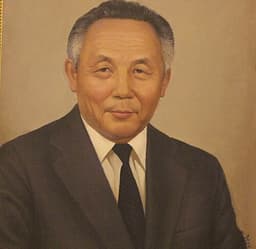
Jambyn Batmonkh
Politician · Modern
49.7Total

Julius Caesar
General · Ancient
82.8Total
Basic Information
Born
1926
-100
Died
—
-44
Era
Modern
Ancient
Nationality
Mongolia
Roman Republic
Occupation
Politician
General
Civilization
Eastern
Western
Score Comparison
Military (10%)
14.6
88.0
Political (20%)
68.0
78.0
Influence (20%)
52.5
85.0
Legacy (20%)
44.2
82.0
Leadership (15%)
72.0
80.0
Strategy (15%)
30.6
85.0
TOTAL
49.7
82.8
Jambyn Batmonkh — Complete Timeline
1984 AD
Became General Secretary of the Mongolian People's Revolutionary PartyPolitical Action◆ Major
Batmonkh succeeded Yumjaagiin Tsedenbal as General Secretary of the MPRP, becoming the leader of Mongolia. He was seen as a reformist within the communist framework.
LeadershipCommunist Party
Impact: national
1986 AD
Initiated Economic Reforms Under PerestroikaReform◆ Major
Batmonkh introduced limited economic reforms inspired by Gorbachev's perestroika, including decentralization of state enterprises and encouragement of private enterprise. The reforms were modest but signaled a shift from Stalinist economics.
Economic ReformPerestroika
Impact: nationalconstructive
1990 AD
Peacefully Resigned After the 1990 Democratic RevolutionPolitical Action
Following massive pro-democracy protests in 1990, Batmonkh resigned as General Secretary and President, peacefully transferring power to a transitional government. This was a key moment in Mongolia's transition to democracy.
ResignationDemocratic TransitionPeaceful
Impact: nationalconstructive
1992 AD
Oversaw the Adoption of a New ConstitutionPolitical Action◆ Major
As a member of the transitional government, Batmonkh supported the adoption of a new democratic constitution in 1992, which established a multi-party system and protected civil liberties.
ConstitutionDemocracyReform
Impact: nationalconstructive
Julius Caesar — Complete Timeline
58 BC
Gallic WarsWar◆ Major
Caesar, as proconsul of Gaul, launched a series of campaigns that conquered all of Gaul (modern France, Belgium, and parts of Switzerland). He fought numerous battles, including against the Helvetii, the Belgae, and the Gallic chieftain Vercingetorix. The wars brought immense wealth and a loyal army to Caesar.
Gallic WarsConquestRoman Expansion
Impact: regional
49 BC
Crossing the RubiconPolitical Action◆ Major
Caesar led Legio XIII across the Rubicon River into Italy, defying the Roman Senate's order to disband his army. This act triggered a civil war against Pompey and the Optimates, ultimately leading to Caesar's dictatorship and the end of the Roman Republic.
Roman Civil WarEnd of RepublicPower Struggle
Impact: global
48 BC
Battle of PharsalusWar◆ Major
Caesar's outnumbered army defeated the larger forces of Pompey the Great at Pharsalus in Greece. Caesar's tactical use of a reserve line to counter Pompey's cavalry charge proved decisive. Pompey fled to Egypt, where he was assassinated, leaving Caesar as the undisputed master of the Roman world.
Roman Civil WarBattleDecisive Victory
Impact: regional
44 BC
Appointment as Dictator for LifePolitical Action◆ Major
The Roman Senate appointed Caesar dictator perpetuo (dictator for life), granting him unprecedented personal power. This move concentrated military, legislative, and judicial authority in one person, effectively ending the Roman Republic's traditional system of checks and balances and alarming many senators.
DictatorshipEnd of RepublicPower Consolidation
Impact: regionaldestructive
Assassination on the Ides of MarchPolitical Action◆ Major
A group of Roman senators, led by Marcus Junius Brutus and Gaius Cassius Longinus, stabbed Caesar to death at a meeting of the Senate in the Theatre of Pompey. The assassination was intended to restore the Republic, but instead triggered another civil war that led to the rise of the Roman Empire.
AssassinationRoman PoliticsEnd of Republic
Impact: globaldestructive
Expert Analysis
jambyn-batmonkh-vs-julius-caesar
# The Dictator and the Resigner: Caesar and Batmonkh at History’s Crossroads
On a March morning in 44 BCE, Julius Caesar fell beneath twenty-three senatorial daggers, his blood pooling on the floor of the Pompeian Senate House. His last breath ended a life that had bent the Roman Republic into an empire. One thousand nine hundred and thirty-four years later, in the spring of 1990, Jambyn Batmonkh walked out of the Mongolian People’s Revolutionary Party headquarters in Ulaanbaatar, having signed away his absolute power without a single shot fired. One died clinging to glory; the other lived by letting go. What explains the chasm between these two men, both leaders of their nations, both facing the end of an age?
Origins
Caesar was born into the twilight of the Roman Republic, a world of senatorial intrigue and conquest. His patrician family, the Julii, claimed descent from the goddess Venus, but their fortunes had faded. Young Gaius grew up in a Rome where military glory was the surest path to political power, where a man could win legions and provinces by his own sword. The Republic rewarded ambition, but it also punished it—Caesar’s own uncle by marriage, Gaius Marius, had died in civil war. This was a world where greatness demanded risk, and risk often demanded blood.
Jambyn Batmonkh entered a very different world in 1926, the year Mongolia was solidifying its status as the second communist state on Earth. Born into a herding family in the northern province of Khövsgöl, he knew the harsh steppe winters and the collectivization campaigns that followed. His education came through Soviet-sponsored schools, his worldview shaped by Moscow’s Marxism-Leninism. Where Caesar inherited a culture of competitive ambition, Batmonkh inherited one of ideological conformity. The only path to power was through the party apparatus, where loyalty and bureaucratic competence mattered more than battlefield charisma.
Rise to Power
Caesar’s ascent was a masterclass in audacity. He borrowed fortunes to fund games and bribes, won command in Spain, then forged the First Triumvirate with Pompey and Crassus. His conquest of Gaul between 58 and 50 BCE was not merely a military campaign—it was a political engine. Every victory, every tribe subdued, every gold coin looted, built his personal legend and his army’s devotion. When the Senate ordered him to disband his legions, he crossed the Rubicon River in 49 BCE, a decision that meant civil war or death. He chose war.
Batmonkh’s rise was quieter, a slow climb through the party ranks. He became a professor of political economy, then a party official, then a deputy. In 1984, when the aging leader Yumjaagiin Tsedenbal was ousted in a Moscow-backed coup, Batmonkh succeeded him as General Secretary. He was not a revolutionary; he was a manager, chosen for his reliability. Where Caesar seized power by breaking the rules, Batmonkh received it by following them.
Leadership & Governance
Caesar governed as he conquered—decisively, ruthlessly, and with an eye on posterity. As dictator, he reformed the calendar, granted citizenship to provincials, and launched massive public works. His military genius lay in speed and surprise: at the Battle of Alesia in 52 BCE, he besieged a Gallic army while simultaneously defending against a relief force, a feat of tactical brilliance. But his political wisdom faltered. He centralized power too openly, accepted a lifetime dictatorship, and humiliated the Senate. His reforms were visionary, but his style was autocratic.
Batmonkh governed in a system that punished initiative. His score of 86.0 in leadership, higher than Caesar’s 82.0, reflects a different kind of strength: the ability to manage a transition without collapse. In 1986, he introduced limited economic reforms inspired by Mikhail Gorbachev’s perestroika, decentralizing state enterprises. But these were cautious steps, not leaps. When massive pro-democracy protests erupted in 1990, Batmonkh did not call in tanks. He negotiated. He resigned as General Secretary and President, then supported the adoption of a new democratic constitution in 1992. His governance was not about glory; it was about survival—his nation’s, not his own.
Triumph & Tragedy
Caesar’s greatest triumph was the conquest of Gaul, a feat that added a vast province to Rome and made him the richest man in the Republic. His most devastating failure was his own assassination on the Ides of March, 44 BCE. He had warned that the Republic was a hollow shell, but he could not fill it without breaking it. His tragedy was that he saw the future—a world of emperors—but could not live to rule it.
Batmonkh’s triumph was a peaceful resignation that prevented a bloodbath. In 1990, Mongolia had no tradition of democratic transition, no history of peaceful power transfer. Yet Batmonkh stepped aside, a decision that saved lives and allowed Mongolia to become a stable democracy. His tragedy is that he is largely forgotten. His legacy score of 62.0, compared to Caesar’s 82.0, reflects this obscurity. He did not conquer, did not build monuments, did not die dramatically. He simply left.
Character & Destiny
Caesar was driven by an insatiable need for recognition. He once said, “It is easier to find men who will volunteer to die than to find those who are willing to endure pain with patience.” He could not endure the pain of obscurity. His character—arrogant, brilliant, reckless—shaped his destiny. He chose civil war over compromise, dictatorship over reform, and death over retirement.
Batmonkh was driven by something rarer: a sense of responsibility that transcended ego. He understood that his power was borrowed, not owned. When the protests came, he could have ordered a massacre; many communist leaders did. Instead, he chose patience. His character—pragmatic, modest, unheroic—shaped a different destiny. He chose retirement over resistance, peace over power, and obscurity over infamy.
Legacy
Caesar’s legacy is immortal. His name became a title—Kaiser, Tsar—and his reforms shaped Western governance for two millennia. He is remembered as a military genius, a political visionary, and a cautionary tale about ambition. His score of 88.0 in military and 85.0 in influence reflects a man who changed the course of history.
Batmonkh’s legacy is quieter but no less profound. Mongolia’s peaceful transition to democracy is a rarity in the post-Soviet world. While other nations descended into war or autocracy, Mongolia built a functioning democracy. Batmonkh’s role in that transition—his willingness to step aside—is the foundation of that success. His leadership score of 86.0, higher than Caesar’s, suggests a different kind of greatness: the wisdom to know when to stop.
Conclusion
Caesar and Batmonkh stand at opposite ends of the human drama. One built an empire and died for it; the other dismantled a dictatorship and lived to see peace. Caesar’s story is one of ambition, glory, and tragic pride. Batmonkh’s is one of duty, restraint, and quiet courage. Both were leaders of their nations at moments of profound change. But where Caesar chose to fight history, Batmonkh chose to serve it. In the end, the dictator who conquered Gaul is remembered by millions; the resigner who saved Mongolia is known to few. Perhaps that is the final irony: history rewards those who cling to power, even as it punishes them, and forgets those who let it go.
Rankings
🥇
Julius CaesarLeader
Mil: 88.0Pol: 78.0Inf: 85.0
82.8
🥈
Jambyn Batmonkh
Mil: 14.6Pol: 68.0Inf: 52.5
49.7
+33.1 behind
How This Comparison Works
Algorithm
Each figure is scored on 6 dimensions (0—100 scale) based on structured historical data: Military (10%), Political (20%), Influence (20%), Legacy (20%), Leadership (15%), Strategy (15%). The weighted total produces the final ranking.
Data Sources
Scores are computed from structured sub-indicators in the database. Scale factors adjust for era (Ancient ×0.85, Modern ×1.0) and civilization size (Eastern ×1.05, Other ×0.80) to account for differences in population and military scale.
Maximum 3 Figures
Comparisons are limited to 2—3 figures to ensure readability and statistical meaningfulness.
Error Margins
±5 points per dimension — Sub-scores are derived from historical records with inherent uncertainty. Two figures within 5 points on a dimension should be considered roughly equivalent in that area.
Total Score Accuracy
±3 points overall — The weighted combination of 6 dimensions produces a total score with approximately ±3 points of uncertainty. Differences of less than 3 points are not statistically significant— the figures are effectively tied.
Known Limitations
- Historical records are incomplete and uneven across civilizations
- Figures from oral-tradition societies may be underrepresented
- Occupation labels can misclassify multi-role figures
- Scores measure capability and impact, not moral character
- Quantitative scoring is a comparison tool, not absolute truth
Capability Radar
Military (10%) — Battles & Warfare
Battles
13
95
Win Rate
17
92
Expansion
20
97
Political (20%) — Governance & Reform
Reform
50
90
Diplomacy
55
85
Economy
45
82
Influence (20%) — Cultural & Global Reach
Cultural
30
88
Global
25
94
Legacy (20%) — Historical Impact
Historical
35
95
Longevity
30
96
Leadership (15%) — Power & Stability
Tenure
60
75
Stability
65
60
Strategy (15%) — Tactics & Innovation
Strategy
24
94
Tactics
29
96
Reform
27
88
Similar Comparisons
Comments & Discussion
No comments yet. Be the first to share your thoughts!